Ten years ago, serious photography training meant moving to New York, Los Angeles, or another major city with established art schools. You'd pay big-city rent, commute to campus, and hope your savings lasted through graduation.
That's changed. Today you can earn legitimate photography credentials from your kitchen table—or while traveling, working full-time, or raising kids. An online photography degree gives you structured curriculum, professional mentors, and recognized credentials. You won't need to quit your day job or drain your savings on relocation costs.
Here's the problem: program quality varies wildly. Some schools provide challenging assignments, experienced instructors, and real portfolio-building opportunities. Others? Basically expensive YouTube channels that mail you a certificate.
Whether you invest wisely or waste money depends on what you know about accreditation, curriculum depth, equipment expectations, and how programs actually prepare you for paid work.
You'll find all of that covered here—program formats, what different credentials cost, quality red flags to watch for, realistic career outcomes, and how to actually succeed once you enroll.
What Is an Online Photography Degree?
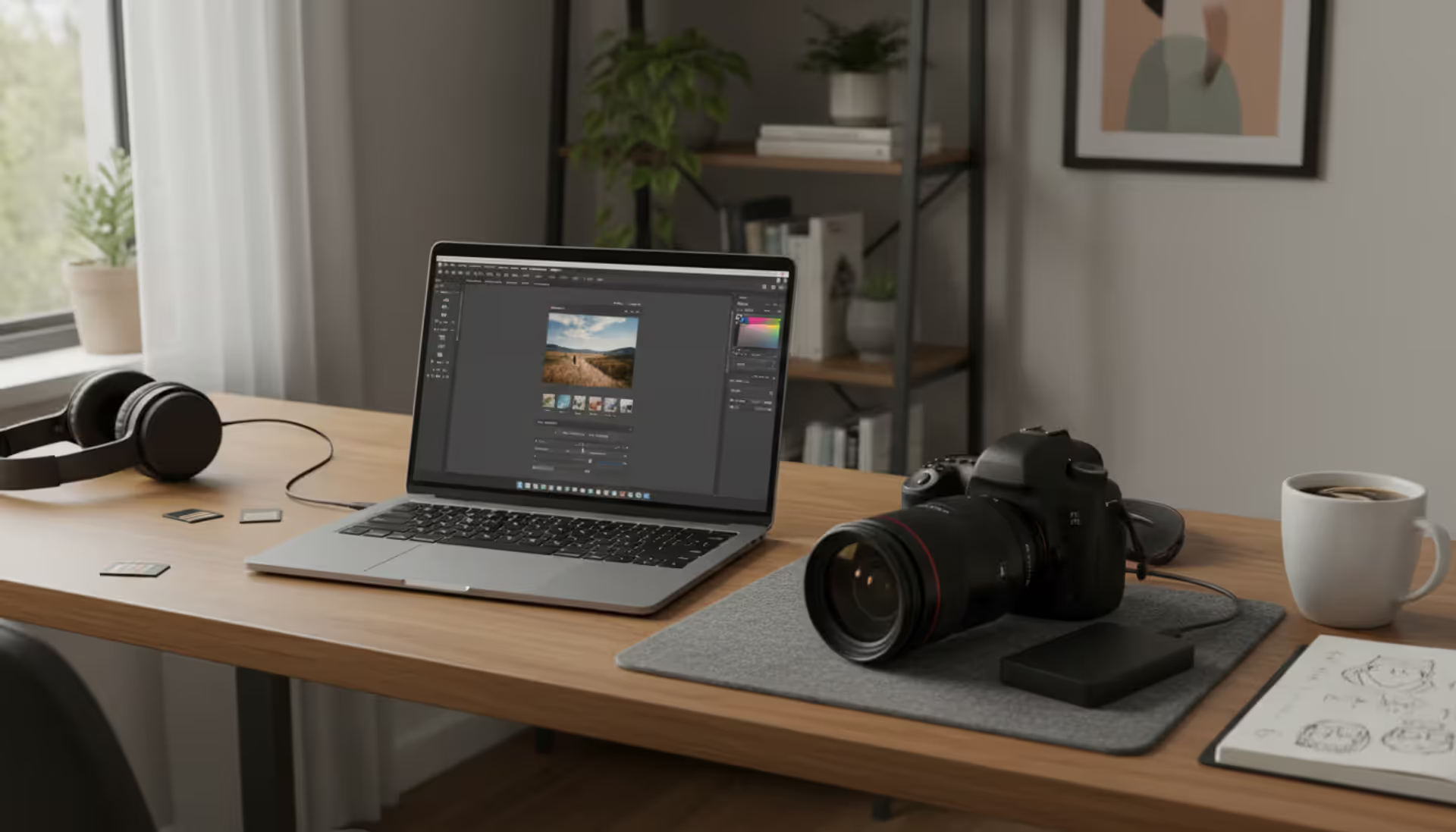
Think of an online photography degree as formal training delivered through your internet connection instead of a physical classroom. You'll learn technical fundamentals—how exposure works, composition principles, lighting techniques, editing workflows—plus business skills, photography history, and how to tell stories visually.
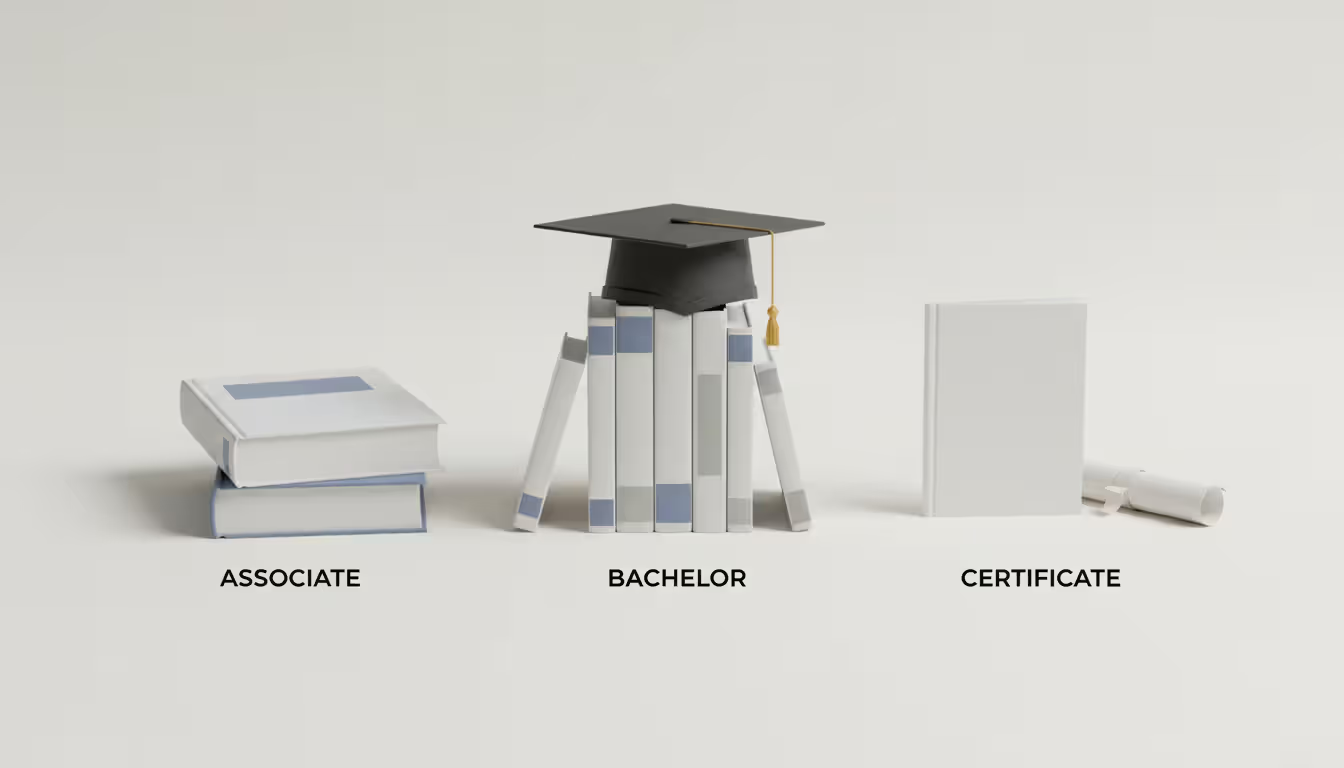
Three main credential types exist:
Associate's degrees take about two years if you're studying full-time (that's 60 credits). They teach core techniques and prepare you for assistant positions or starter freelance work. Plenty of students use these as stepping stones before transferring into four-year programs.
Bachelor's degrees require four years and 120 credits. You'll dig deeper into specializations like commercial work, photojournalism, or gallery-focused fine art. Expect general education requirements too—composition courses, humanities, sciences—that build skills beyond camera operation.
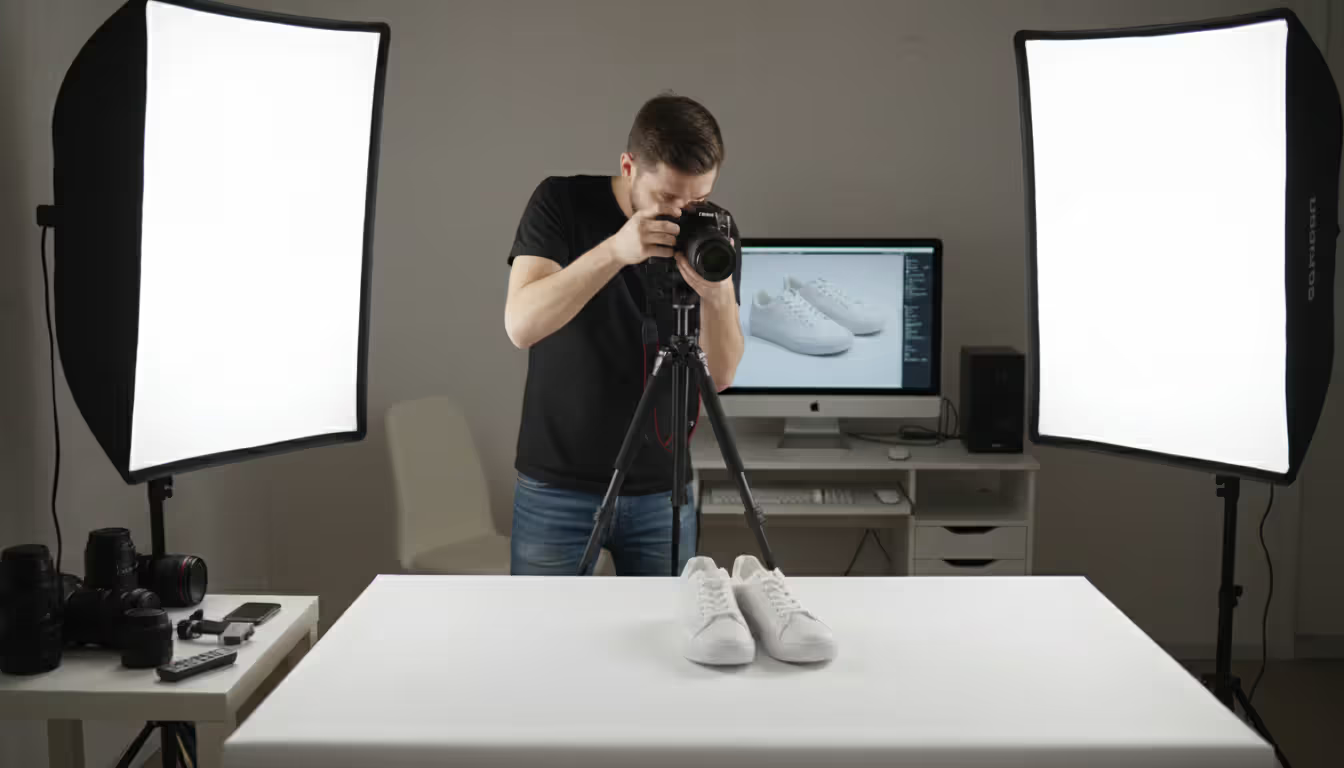
Certificate and diploma programs last anywhere from three months to a year. These target working photographers who need specific skills (say, product photography for e-commerce or advanced retouching) without committing years to a full degree.
Author: Caleb Renshaw;
Source: maryelizabethphoto.com
Delivery format matters just as much as the credential itself. Fully online programs handle everything remotely. You watch lectures when convenient, submit projects digitally, participate in online critiques, and never set foot on campus. Hybrid formats combine online coursework with occasional in-person intensives—maybe a weekend workshop or week-long residency where you access professional studios and meet classmates face-to-face.
Most programs today focus on digital work. You'll find a digital photography degree online as the standard approach. Film photography appears occasionally as historical context, but contemporary curricula emphasize digital capture, RAW file processing, color management, and software proficiency. Budget significant time for Adobe Creative Suite, Capture One, or similar platforms.
One myth worth busting: online doesn't mean easy. Legitimate programs demand the same effort as campus versions. You'll still shoot hundreds of frames weekly, revise artist statements repeatedly, and defend creative decisions during critiques—just through video calls instead of physical classrooms.
Types of Online Photography Degrees Available
Associate's Degree Programs
Associate's programs teach technical foundations without the four-year time investment. Typical curriculum covers camera mechanics, lighting basics, composition theory, fundamental retouching, and introductory business practices.
These work well if you want credentials faster or aren't sure photography will become your main career. Total tuition typically runs $8,000–$20,000 depending on whether you choose community college or a private institution.
Graduates often work as photography assistants, second shooters at weddings, or in retail photo departments while building freelance portfolios. Many transfer credits toward bachelor's programs later when they're ready to specialize.
The catch: associate's degrees rarely qualify you for teaching jobs or senior positions at media companies. They create opportunities but may not advance your career as far as bachelor's credentials.
Author: Caleb Renshaw;
Source: maryelizabethphoto.com
Bachelor's Degree Programs
Bachelor's programs provide depth and focused specialization. Beyond technical mastery, curriculum includes visual culture studies, photojournalism ethics, marketing strategies, copyright law, and systematic portfolio development. Most programs require capstone projects—gallery exhibitions, published photo essays, commercial campaigns—demonstrating you're ready for professional work.
Four-year programs also develop transferable capabilities. Research methods, critical analysis, and written communication courses strengthen your ability to conceptualize projects, write grant applications, and articulate artistic vision—skills that separate hobbyists from professionals.
Total tuition ranges from $30,000 at public universities to over $100,000 at high-end private schools. Financial aid and merit scholarships often cut out-of-pocket costs substantially.
Bachelor's degrees matter most for photojournalism positions, teaching roles, museum work, or corporate photography jobs. Freelancers may find credentials less critical than portfolio strength, but structured learning accelerates skill development considerably.
Certificate and Diploma Programs
Certificates target narrow competencies: newborn photography, real estate imaging, advanced compositing, drone certification. Programs last 3–12 months and cost $2,000–$10,000.
These suit career changers who already hold degrees in other fields, or working photographers adding specializations. A portrait photographer might pursue product photography certification to diversify revenue streams.
The limitation: certificates carry less weight with employers than degrees. They're professional development tools rather than comprehensive credentials. If you're starting from zero, associate's or bachelor's programs provide stronger foundations.
Accreditation and Program Quality Factors
Accreditation separates real schools from scams. Regional accreditation—granted by organizations like the Higher Learning Commission or Middle States Commission—represents the gold standard. Credits from regionally accredited schools transfer more easily, and employers recognize these credentials without question.
National accreditation applies to specialized vocational schools. While legitimate, these face more scrutiny, and credits often won't transfer to regionally accredited universities. Check accreditation status through the U.S. Department of Education's database before you pay anything.
Faculty credentials deserve scrutiny. Instructors should be practicing professionals or recognized artists, not just career academics. Check whether they exhibit work in galleries, publish in respected outlets, or maintain active client lists. Real-world experience produces practical instruction.
Equipment and software requirements reveal program seriousness. Quality programs specify camera standards (full-frame sensors, interchangeable lenses), lighting gear (strobes, modifiers), and software licenses. If a program claims you can complete everything on a smartphone, it's not preparing you for professional markets.
Portfolio development opportunities should run throughout the curriculum, not just appear in your final semester. Look for programs offering regular critiques, exhibition opportunities, and connections to working professionals who review student work.
Major red flag: programs promising you'll "never need equipment" because everything happens in cloud simulations. Photography is physical craft. You must handle cameras, experiment with actual light, and troubleshoot technical problems in real shooting conditions.
When evaluating the best online photography degree options, ask admissions offices for graduate employment statistics, average portfolio quality (request samples), and where alumni work now. Strong programs track outcomes and share this data openly.
Cost Breakdown and Financial Aid Options
Photography education costs swing wildly. Community college associate's programs may charge $150 per credit ($9,000 total), while elite private universities exceed $800 per credit ($96,000 for bachelor's completion).
Here's how tuition breaks down across institution types:
School Type
Degree Level
Total Program Cost
Typical Duration
Accreditation Type
Community College
Associate's
$8,000–$15,000
2 years
Regional
Public University (In-State)
Bachelor's
$30,000–$50,000
4 years
Regional
Public University (Out-of-State)
Bachelor's
$60,000–$90,000
4 years
Regional
Private University
Bachelor's
$80,000–$120,000
4 years
Regional
For-Profit Online School
Associate's/Bachelor's
$40,000–$75,000
2–4 years
Regional or National
Certificate Program
Certificate
$2,000–$10,000
3–12 months
Varies
The cheapest online photography degree programs typically come from in-state community colleges or public universities. Tuition is just part of total expense, though. Plan for:
Camera equipment: $2,000–$5,000 for professional body, lenses, and basic lighting
Software subscriptions: $600 annually for Adobe Creative Cloud
Computer upgrades: $1,500–$3,000 for machines that handle RAW processing efficiently
Storage solutions: $200–$500 yearly for cloud backup and external drives
Printing and portfolio materials: $500–$1,500 for final presentations
Financial aid includes federal Pell Grants (up to $7,395 for 2025–2026), subsidized loans, work-study programs, and school-specific scholarships. Many institutions offer merit-based photography scholarships requiring portfolio submissions with applications.
Payment plans spread tuition across monthly installments instead of lump sums. Some employers provide tuition reimbursement if photography skills benefit your current role—worth checking before assuming you'll self-fund completely.
Smart money strategy: start at community college, then transfer to a four-year school. You'll earn the same bachelor's degree for substantially less money, assuming you confirm credit transfer agreements beforehand.
Top Schools Offering Online Photography Degrees
Several institutions built strong track records for online photography degrees:
Academy of Art University runs a fully online BFA in Photography with advertising, editorial, and fine art concentrations. The program emphasizes portfolio building and includes virtual critiques with industry professionals. Tuition runs approximately $850 per credit.
Rocky Mountain College of Art + Design delivers an online BFA in Photography with commercial and fine art tracks. Students access industry-standard software and participate in online exhibitions. The program requires occasional on-campus intensives in Denver.
New York Institute of Photography offers certificate programs and professional diplomas completely online. Courses focus on specific niches—wedding photography, travel photography, photojournalism—with mentorship from practicing professionals. Duration spans six-month to two-year timeframes.
Savannah College of Art and Design (SCAD) provides an online BFA in Photography covering commercial, editorial, and fine art applications. SCAD's creative industry reputation strengthens networking opportunities. Tuition approaches $39,000 annually.
Liberty University delivers an affordable online BA in Photography emphasizing photojournalism and commercial applications. As a private Christian university, curriculum integrates faith perspectives. Tuition runs approximately $390 per credit.
Full Sail University specializes in creative media education with an online Commercial Photography BFA. The accelerated program finishes in 29 months. Career development services connect students with industry contacts.
Author: Caleb Renshaw;
Source: maryelizabethphoto.com
Southern New Hampshire University offers among the more affordable online BA programs in Photography, with tuition around $320 per credit. The program balances technical proficiency with liberal arts education.
When comparing schools, verify they offer specializations matching your goals. A photojournalism concentration won't serve you well if you're planning a wedding photography business. Similarly, fine art programs emphasize conceptual development over commercial viability—valuable for gallery careers but less relevant for product photographers.
Career Paths and Salary Expectations
Photography degrees prepare graduates for varied roles, though income swings significantly based on specialization, location, and whether you freelance or take staff positions.
Job Title
Median Annual Salary (2026)
Typical Education Required
Job Outlook (2024–2034)
Commercial Photographer
$48,500
Bachelor's preferred
+4% (average)
Photojournalist
$44,200
Bachelor's required
-8% (declining)
Portrait/Event Photographer
$41,800
Associate's or certificate
+5% (average)
Fine Art Photographer
$38,600 (highly variable)
Bachelor's or MFA
+3% (slower than average)
Photo Editor
$52,300
Bachelor's required
+2% (slower than average)
Product Photographer
$46,900
Associate's or bachelor's
+6% (faster than average)
Freelance photographers face more income volatility. Established wedding photographers in major markets may earn $80,000–$150,000 annually, while newcomers might generate $20,000–$35,000 until building reputation.
Portfolio strength matters more than credentials in freelance markets. Clients care whether you deliver the aesthetic they want, not where you studied. However, degrees provide structured time developing that portfolio while learning business fundamentals—pricing strategies, contracts, copyright protection—that self-taught photographers often ignore until costly mistakes happen.
Staff positions at media organizations, museums, or corporations typically require bachelor's degrees minimum. These roles offer stability, benefits, and predictable paychecks, though salaries rarely match what successful freelancers earn.
Teaching photography—whether at universities, community colleges, or workshops—usually requires bachelor's degrees at minimum, with many positions preferring MFAs. Adjunct instructors start around $3,000 per course, while tenure-track positions range from $45,000–$75,000 depending on institution type.
The strongest career approach combines multiple revenue streams: corporate clients for steady income, personal projects for creative fulfillment, occasional teaching for community connection, and licensing for passive revenue.
How to Apply and Succeed in an Online Photography Program
Application requirements vary by institution and degree level. Most bachelor's programs want:
High school transcripts or GED
SAT/ACT scores (increasingly optional at many schools)
Portfolio submission (10–20 images demonstrating technical competence and creative vision)
Personal statement explaining your goals and why photography matters to you
Letters of recommendation from teachers or employers
Portfolio quality determines admission to competitive programs. Don't submit your entire catalog—curate images showing range (portraits, landscapes, conceptual work) and technical control (proper exposure, sharp focus, intentional composition). Skip heavy filters or gimmicky effects that distract from fundamental skills.
If your portfolio feels weak, consider completing a certificate course or community college photography class before applying to bachelor's programs. Just a few months of structured instruction dramatically improves image quality.
Reliable high-speed internet (minimum 25 Mbps download)
Computer with 16GB+ RAM and dedicated graphics card
Calibrated monitor for accurate color editing
External hard drives for backup (follow the 3-2-1 rule: three copies, two media types, one off-site)
Video conferencing capability for virtual critiques
Time management separates successful online students from strugglers. Without fixed class schedules, procrastination becomes tempting. Block specific hours for coursework just as you would for in-person classes. Treat assignments as client deadlines—non-negotiable commitments.
Building your portfolio while studying requires intentionality. Don't just complete assignments for grades; treat each project as potential portfolio material. Reshoot if your first attempt doesn't meet professional standards. Seek feedback from instructors and peers, then implement suggestions ruthlessly.
A formal education in photography isn't about learning which buttons to push—you can get that from YouTube. It's about learning to see, to think visually, and to develop a unique voice in a crowded field. The structure, deadlines, and critical feedback of a degree program accelerate that development in ways self-teaching rarely matches
— David duChemin
Network actively despite the online format. Participate in discussion forums, attend virtual guest lectures, and connect with classmates on professional social media. Photography careers depend heavily on relationships—who knows your work, who trusts your reliability, who thinks of you when opportunities arise.
Frequently Asked Questions
Can you get a photography degree completely online?
Yes, multiple accredited institutions provide fully online photography degrees at associate's, bachelor's, and certificate levels. These programs deliver instruction, critiques, and assignments entirely through internet platforms. Some hybrid programs require brief on-campus intensives, but purely online options exist for students unable to travel to physical campuses.
How long does it take to earn an online photography degree?
Associate's degrees typically need two years of full-time study (60 credits), though part-time students may take three to four years. Bachelor's degrees span four years full-time (120 credits) or longer for part-time enrollment. Certificate programs run from three months to one year depending on depth and specialization. Accelerated programs can shorten timelines by offering year-round enrollment and intensive course loads.
Are online photography degrees respected by employers?
Accredited online degrees carry identical weight as on-campus credentials, provided the institution maintains regional accreditation. Employers evaluate portfolio quality and demonstrated skills more than delivery format. However, degrees from unaccredited or poorly-reviewed for-profit schools may raise concerns. Research institutional reputation within the photography industry before enrolling.
What equipment do I need for an online photography program?
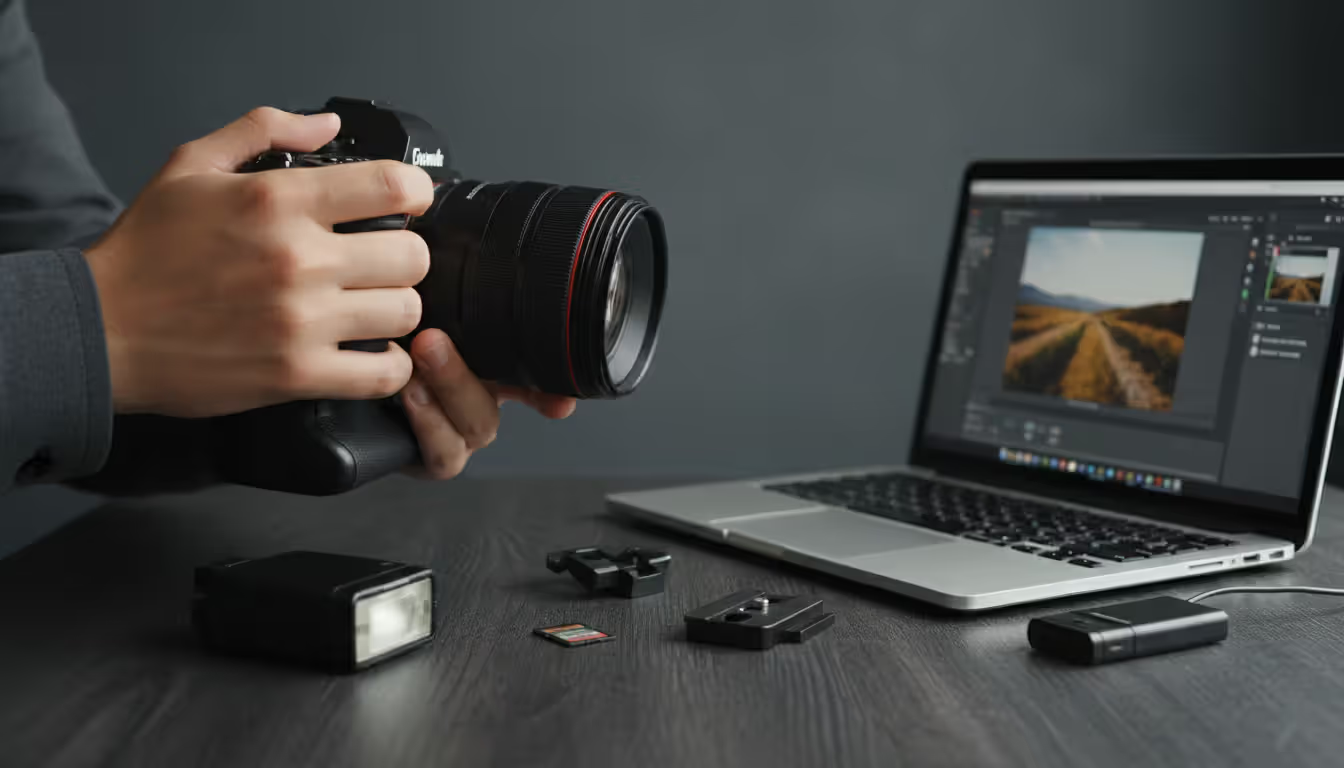
Most programs require a DSLR or mirrorless camera with manual controls, interchangeable lenses (typically a standard zoom and prime lens), basic lighting equipment (speedlight or continuous lights), tripod, memory cards, and card reader. Software requirements include Adobe Lightroom and Photoshop. Total equipment expenses range from $2,000–$5,000 for entry-level setups. Schools typically provide detailed equipment lists upon admission.
Can I specialize in a specific type of photography online?
Many online programs offer concentrations in commercial photography, photojournalism, fine art, portrait photography, or digital imaging. Specializations allow deeper focus on specific techniques, business models, and aesthetic approaches relevant to your career goals. Certificate programs often target narrow specializations like newborn photography or real estate imaging.
Do online photography degrees require internships or hands-on work?
Requirements vary by program. Some online degrees mandate internships with local photographers, studios, or media organizations to provide real-world experience. Others incorporate hands-on projects completed in your area and submitted digitally. Hybrid programs may include on-campus intensives for studio work and equipment access. Check specific program requirements before enrolling if hands-on components concern you.
Choosing a photography degree online means weighing cost against quality, career goals against learning format preferences, and time commitment against current life circumstances. The right program delivers structured skill development, critical feedback, industry connections, and credentials that open professional doors—advantages self-teaching alone struggles to replicate.
Start by clarifying what you actually want. Staff positions requiring bachelor's degrees? Or freelance businesses where portfolio matters most? Starting from scratch, or adding specialized skills to existing experience? Your answers determine whether associate's degrees, bachelor's programs, or certificates make sense.
Confirm accreditation status, investigate faculty credentials, and examine graduate outcomes before submitting applications. The cheapest option rarely delivers best value if curriculum feels outdated or career support doesn't exist. Conversely, the most expensive programs don't guarantee success—portfolio quality and business savvy matter more than institutional prestige in many photography markets.
Budget realistically for total expenses including equipment, software, and materials beyond tuition. Pursue financial aid aggressively; scholarships and grants substantially reduce debt burdens that can limit career choices after graduation.
Once enrolled, treat online coursework as seriously as in-person classes. Block dedicated study time, engage actively in critiques, build relationships with instructors and classmates, and approach every assignment as portfolio development. The flexibility of online learning becomes advantageous only when paired with self-discipline.
Photography education—whether online or on-campus—accelerates your development, but degrees alone don't guarantee careers. Combine formal learning with relentless practice, business education, networking, and the resilience to navigate a competitive, constantly evolving industry. The photographers who thrive treat education as foundation, not finish line.
Photography has never been more accessible, but finding quality instruction that matches your learning style, budget, and goals can feel overwhelming. This comprehensive guide breaks down every major learning path—from free YouTube tutorials to university programs—helping you make an informed decision about where to invest your time and money
Finding the right photography workshop can transform your skills faster than solo practice. Learn what makes quality hands-on training, compare workshop types, and discover how to find local programs that match your skill level and goals
Selecting the right online photography program means balancing career goals, budget, and learning style. With options from weekend workshops to four-year degrees, you need to evaluate accreditation, instructor expertise, technical requirements, and program structure before enrolling
Selecting the right photography education shapes your career trajectory. Learn how to evaluate programs based on curriculum, format, accreditation, cost, and equipment access. Compare traditional vs online photography schools, understand financial aid options, and avoid common mistakes when choosing your program
The content on this website is provided for general informational and educational purposes only. It is intended to explain concepts related to running a photography business, insurance coverage, marketing, websites, and professional development.
All information on this website, including articles, guides, and examples, is presented for general educational purposes. Outcomes may vary depending on business size, location, and individual choices.
This website does not provide professional legal, insurance, financial, or business advice, and the information presented should not be used as a substitute for consultation with qualified professionals.
The website and its authors are not responsible for any errors or omissions, or for any outcomes resulting from decisions made based on the information provided on this website.