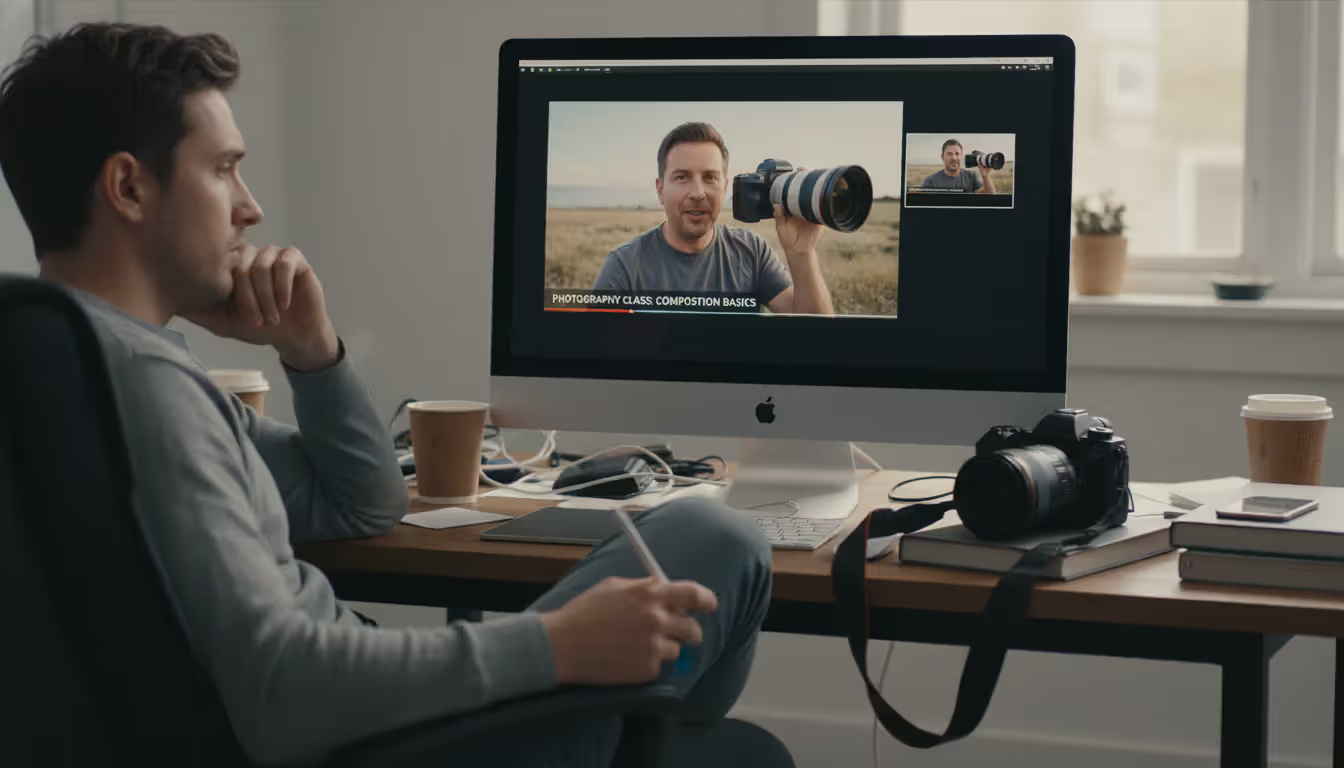
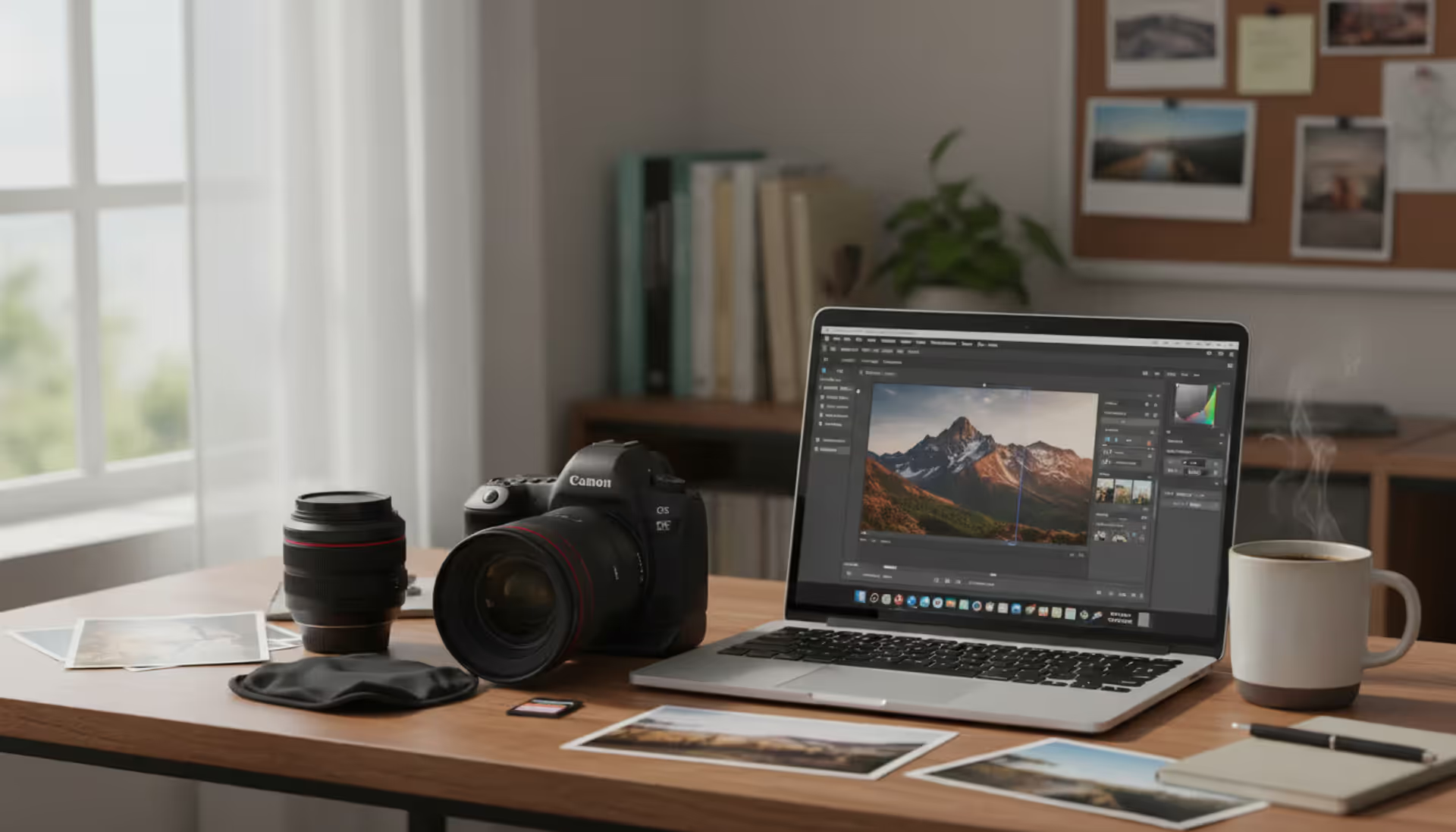
Hundreds of photography courses flood the internet, each promising you'll master manual mode or develop an artistic eye. Here's the truth: most students enroll in three courses before finding one they actually finish. The difference? Understanding whether a program actually teaches through practice or just talks about photography for twelve hours.
The online photography world has changed. Five years ago, you'd find mostly amateur YouTubers sharing basic tips. Now you'll discover university programs, working pros teaching their specific methods, and subscription platforms with thousands of hours of content. Your problem isn't scarcity—it's figuring out which course matches where you are right now and where you want to go.
What Makes a Quality Online Photography Course
Strong courses build skills in layers. Week one covers exposure basics. Week four has you manipulating those same concepts in complex lighting scenarios. Weak courses jump randomly between topics—Monday you're learning composition rules, Wednesday switches to Lightroom catalogs, Friday covers flash photography. This scattered approach leaves you with disconnected facts rather than integrated skills.
Check the actual curriculum outline. Does it spend three full lessons on aperture before moving forward? Or does it mention f-stops once in a twenty-minute video? Depth matters. You need time to practice each concept through multiple assignments before layering on new complexity. Look for programs dedicating at least 45-60 minutes to foundational topics like shutter speed control, ISO noise management, and reading light.
Who's teaching matters tremendously. Some instructors built their reputation through one viral blog post five years ago. Others shoot commercially every week. Dig into their background. Do they show recent client work? Have magazines or brands hired them? A lifestyle photographer might explain portraits adequately, but a portrait specialist who's shot 500 headshots will notice details—catchlight positioning, subtle pose adjustments, lens compression effects—that generalists miss.
Real courses require you to shoot constantly. After each lesson, you should have a specific assignment: photograph your dog at 1/30, 1/125, and 1/500 shutter speeds to see motion blur differences. Capture your kitchen in harsh overhead light, then again with that light diffused through a white sheet. Generic instructions like "practice what you learned" don't work. Precise parameters force skill development.
Author: Derek Halston;
Source: maryelizabethphoto.com
Support infrastructure makes or breaks your progress. Will someone review your submitted assignments within 48 hours? Can you ask questions in an active forum where responses arrive daily rather than weekly? Some platforms use AI to flag technical problems like blown highlights, which helps, but you'll need human feedback on creative choices—whether your composition feels balanced, if your subject stands out enough, when your editing looks overdone.
Test the platform before buying. Free previews reveal whether videos buffer constantly, if navigation confuses you, or whether mobile access actually works. You'll quit faster from frustration with a clunky interface than from difficult content.
Certificates mean less than you think. Your portfolio opens doors, not completion badges. Exceptions exist—New York Institute of Photography credentials carry weight because the industry recognizes their rigorous standards. A certificate from "Bob's Photography Academy" that nobody's heard of adds nothing to your resume.
Top Online Photography Courses by Skill Level
Courses for Complete Beginners
Photography Basics and Beyond through Udemy delivers eight hours focused entirely on getting off auto mode. The instructor, a wedding photographer with fifteen years of experience, walks through manual shooting across different scenarios. Regular price hits $85, though sales drop it to $15-20 monthly. Works perfectly if you bought a camera six months ago and only use auto mode.
Digital Photography Foundations from Michigan State University (via Coursera) takes an academic approach across four weeks. You'll submit assignments that three other students critique, forcing you to articulate what works and what doesn't. Expect to invest fifteen hours total. The $49 monthly subscription includes a shareable certificate, though the peer review system provides more value than the credential.
Shaw Academy Photography Essentials runs live classes every Tuesday evening, with recordings available if you miss sessions. The beginner track spans four months, includes one-on-one instructor feedback on assignments, and costs $79 monthly. You can pause enrollment without penalty, which helps if life gets chaotic mid-course.
Intermediate to Advanced Options
Adventure Photography with Jimmy Chin on MasterClass shows his documentary approach through eleven video lessons. You're learning from the photographer who shot Free Solo and hangs off cliffs regularly. The $120 annual subscription unlocks every MasterClass course, creating value if you'll watch content beyond photography. Just know the production focuses on inspiration over technical instruction.
Advanced Digital Photography through LinkedIn Learning targets shooters comfortable in manual mode who want to refine their artistic decisions. Six hours of content explores sophisticated composition approaches, managing difficult mixed lighting, and developing a consistent editing style. Costs $39.99 monthly, though many employers provide free LinkedIn Learning access.
Professional Certification Program from NYIP represents serious commitment—twelve months, $1,899, covers commercial photography business practices alongside advanced technical skills. You get a dedicated mentor reviewing every assignment. Makes sense if you're transitioning from hobbyist to professional and need both skill development and industry connections.
Specialized Photography Niches
Food Photography Complete Guide on Skillshare teaches styling and lighting specific to restaurant work in ninety focused minutes. Perfect for photographers wanting to shoot menus or food blog content. Included with Skillshare's $168 annual subscription, which also unlocks graphic design, video editing, and writing courses.
Wildlife Photography Field Techniques (Udemy, twelve hours, approximately $95) addresses unique animal photography challenges—anticipating behavior, working with long lenses, ethical field practices. Includes post-processing modules for wildlife images where you're often shooting in harsh light or extreme distance.
Architectural Photography Fundamentals through KelbyOne covers perspective correction, interior lighting problems, and real estate photography techniques over eight weeks. Requires the $199 annual KelbyOne membership, which provides their entire course library—around 900 classes on photography and post-processing.
Course Name
Skill Level
Price
Duration
Format
Key Focus Area
Certificate
Photography Basics and Beyond
Beginner
$85
8 hours
Self-paced
Manual mode mastery
Yes
Digital Photography Foundations
Beginner
$49/month
4 weeks
Weekly deadlines
Academic fundamentals
Yes
Shaw Academy Essentials
Beginner
$79/month
4 months
Live weekly + recordings
Interactive instruction
Yes
Adventure Photography (Chin)
Intermediate
$120/year
3 hours
Self-paced
Documentary storytelling
No
Advanced Digital Photography
Advanced
$39.99/month
6 hours
Self-paced
Artistic refinement
Yes
NYIP Professional Certification
Advanced
$1,899
12 months
Mentor-guided
Commercial practices
Yes
Food Photography Complete
Intermediate
$168/year
90 minutes
Self-paced
Culinary styling
No
Wildlife Field Techniques
Intermediate
$95
12 hours
Self-paced
Animal behavior
Yes
Self-Paced vs. Instructor-Led Photography Programs
Self-paced programs let you learn at 6 AM before work or midnight after kids sleep. Watch lessons twice if the histogram explanation confused you. Skip sections covering gear you already understand. This flexibility suits people with unpredictable schedules—freelancers, shift workers, parents managing chaos.
The downside? Zero accountability. You'll buy the course with genuine enthusiasm, watch two lessons, then life happens. Three months later you've forgotten you enrolled. Without deadlines, most people never finish. You also can't interrupt a pre-recorded video to ask "wait, why did the exposure change when you adjusted aperture?" You're stuck rewinding repeatedly or googling for answers.
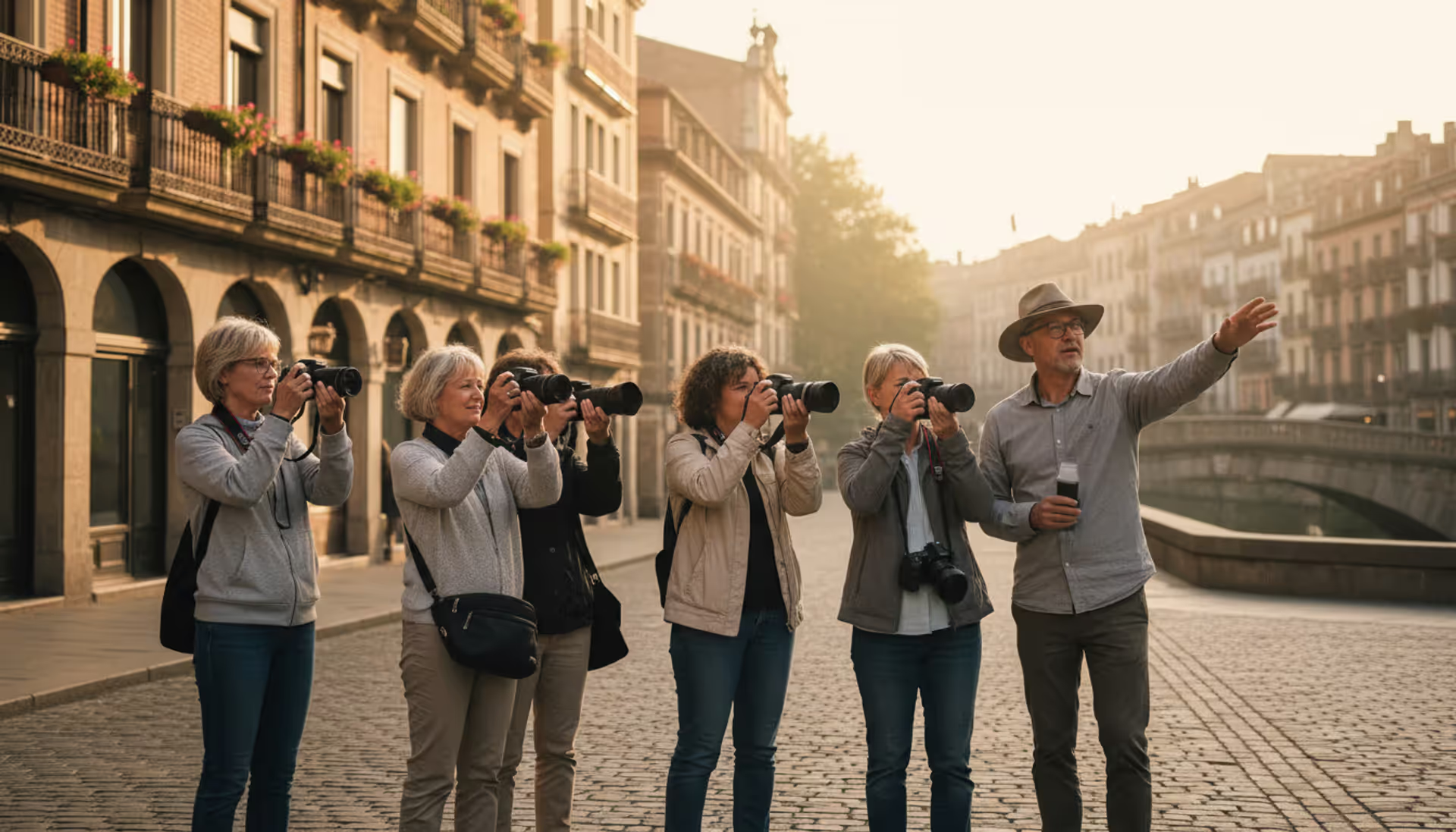
Instructor-led courses create structure. Live sessions happen Tuesdays at 7 PM whether you feel motivated or not. Assignments due Friday force you to shoot even when you'd rather watch Netflix. Learning alongside twenty other students generates friendly competition—when everyone's posting their golden hour shots, you want yours to impress too.
Constraints include rigid scheduling. Miss the live session, you're watching recordings without participation benefits. The instructor moves to lesson four next week regardless of whether you've mastered lesson three. These programs typically cost more because you're paying for active teaching, not just video access.
Hybrid approaches mix both: core content available anytime, with optional live Q&A sessions every other week. Discussion forums stay active. Assignments have suggested deadlines but flexible extensions. Works well if you're self-motivated enough to maintain progress but want occasional external accountability.
Pick based on honest self-assessment. Have you completed online courses before? Do you shoot regularly without external pressure? Self-paced works. If you've abandoned three Udemy courses halfway through or need deadlines to stay motivated, spend extra for instructor-led programs.
The biggest mistake I see beginners make is choosing courses based on equipment discussions rather than fundamental vision development. You don't need a $3,000 camera to learn composition, light quality, or storytelling—those skills translate across any gear. Prioritize courses that make you shoot regularly with whatever camera you own, even if it's just your smartphone
— Marcus Chen
Cost Breakdown and What You Actually Need to Spend
Free courses let you test whether you actually enjoy photography before spending money. YouTube channels (Peter McKinnon has excellent beginner content) or platform free trials show teaching styles. Limitations? No structured progression—you're jumping between random topics. No assignment feedback. Incomplete coverage of advanced concepts.
Budget courses ($50-$150) on Udemy, Skillshare, or Domestika provide organized curricula with lifetime access. Great for building foundational skills, though don't expect personalized feedback. Watch for Udemy's constant sales—courses "regularly $199" drop to $15-25 biweekly.
Monthly subscriptions ($20-$80) like LinkedIn Learning, Coursera Plus, or CreativeLive make sense if you'll take multiple courses over several months. Terrible value if you want one specific program then leave—you're paying rental fees for content you could own outright elsewhere.
Author: Derek Halston;
Source: maryelizabethphoto.com
Premium programs ($500-$3,000+) from NYIP, Rocky Mountain School of Photography, or specialized workshops include mentorship, detailed critiques, and networking. Worth considering if you're serious about professional work or need recognized credentials.
Hidden costs hurt budgets. Equipment requirements catch people off guard. You can start with a smartphone or point-and-shoot, but intermediate courses assume manual controls. Entry-level DSLR or mirrorless camera with kit lens runs $400-$800. Advanced courses may require specific lenses ($300-$1,200), lighting gear ($150-$600), or software subscriptions (Adobe Photography Plan costs $120 annually).
Calculate total investment honestly. That $99 course requiring a $600 camera, $120 software subscription, and $200 in lights actually costs $1,019 first year. Can you borrow equipment initially? Does the course work with gear you already own?
How to Practice Digital Photography Skills While Learning Online
Random shooting doesn't build skills efficiently. Structured practice does. Weekly assignment example: photograph your neighborhood coffee shop at sunrise, noon, sunset, and night. Four visits reveal how light transforms the same subject. Or shoot moving cars at 1/500, 1/125, 1/30, and 1/8 shutter speeds, learning exactly when motion blur appears.
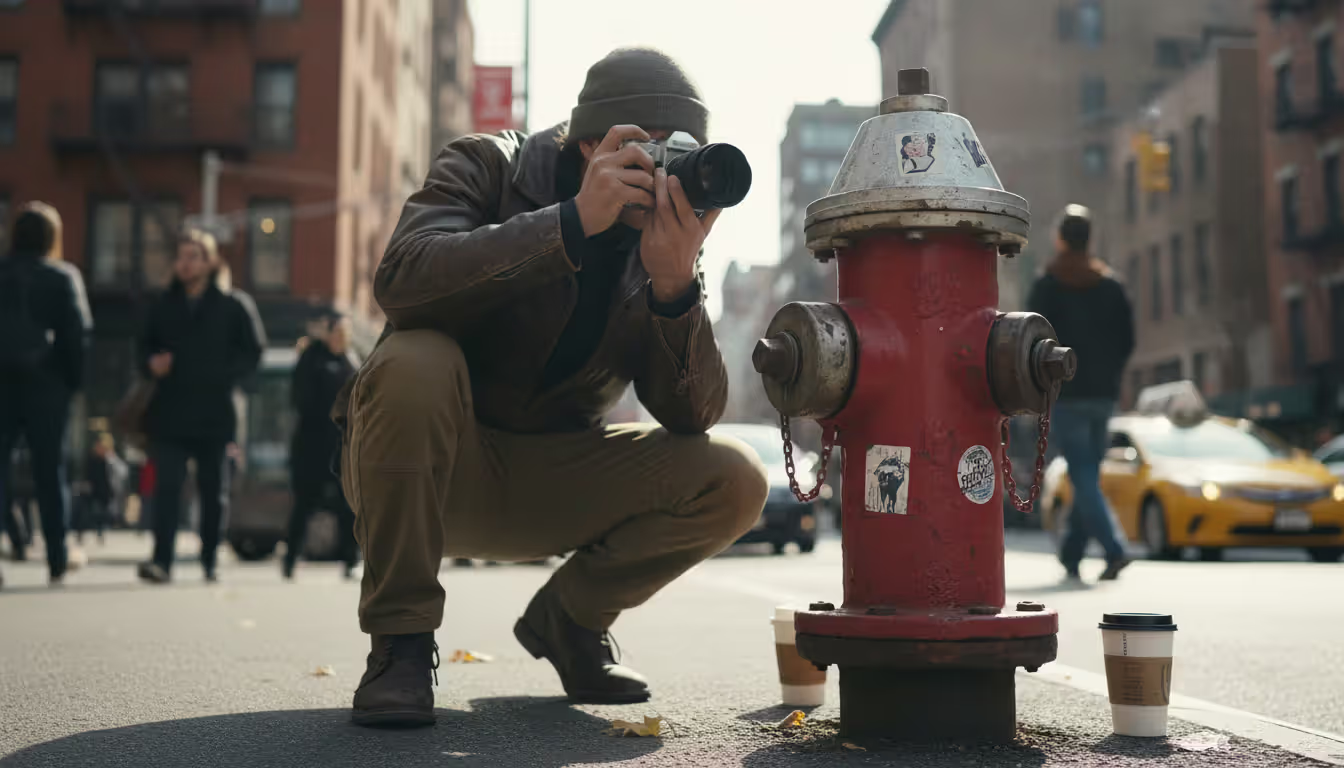
The 100-photo challenge forces creativity. Pick one mundane subject—fire hydrants, door handles, tree bark—and photograph it 100 different ways. Sounds repetitive. By photo 30 you'll desperately seek new angles, lighting, perspectives. This constraint reveals how tiny changes dramatically alter an image's impact.
Author: Derek Halston;
Source: maryelizabethphoto.com
Start your portfolio during learning, not after. Create a simple website through Adobe Portfolio (free with Photography Plan), Format's trial, or even Instagram. Curate your twelve strongest images showing consistent quality and cohesive style. Twelve excellent photos impress more than fifty mediocre ones.
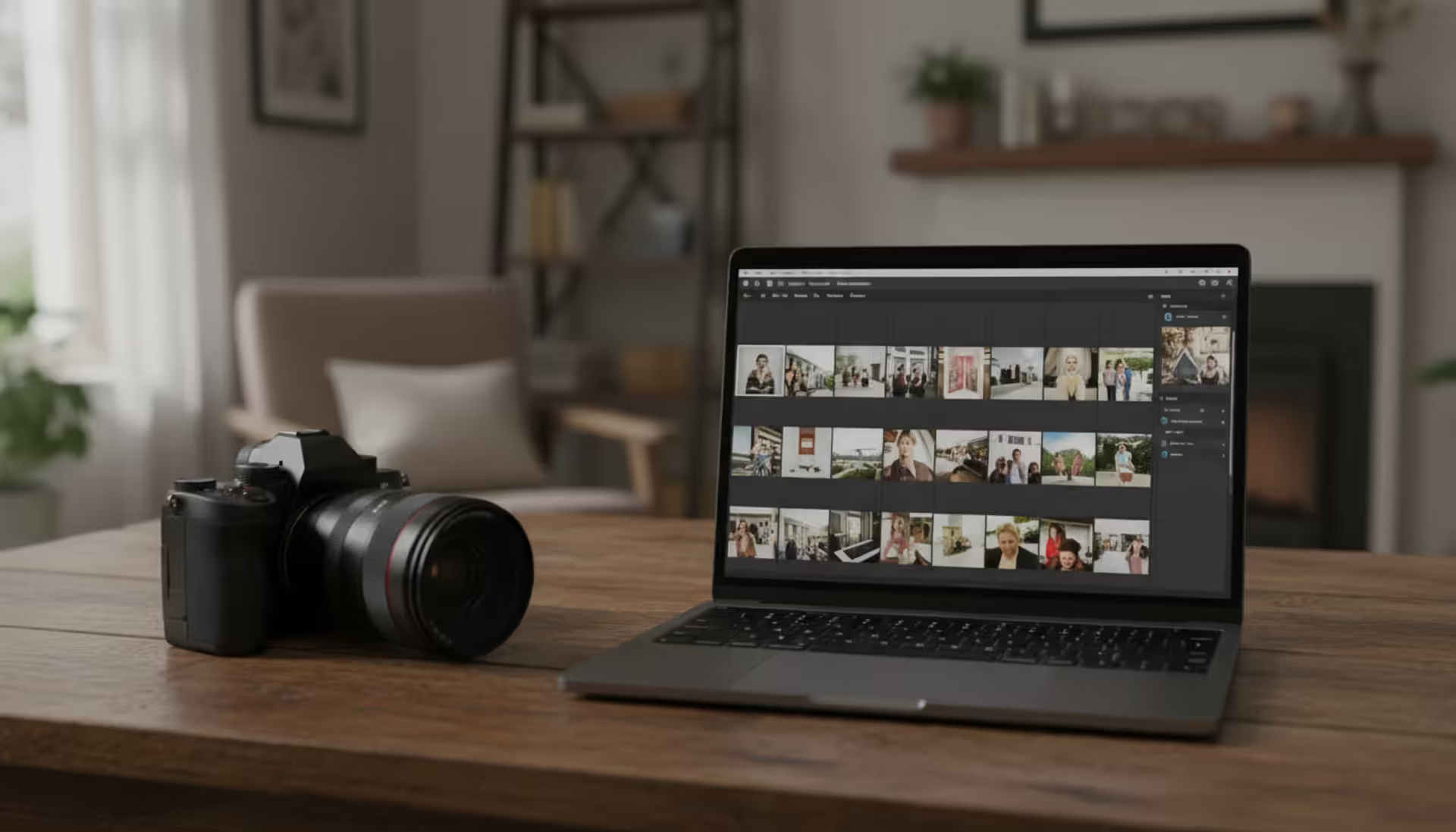
Find communities providing constructive criticism. Reddit's r/photocritique delivers honest feedback. Facebook groups for specific genres (landscape photographers, portrait shooters, street photography) connect you with specialists. Local camera clubs (many meet virtually now) offer mentorship from experienced photographers. When requesting feedback, ask specific questions: "Does the background distract from my subject?" beats "Thoughts?"
Complete course assignments within 48 hours of watching lessons. Waiting two weeks guarantees you'll forget key details. Watched a lesson about backlighting? Shoot backlit subjects tomorrow while concepts remain fresh.
Participate actively in online communities rather than lurking. Comment on others' work. Ask questions. Share your struggles. Weekly challenges keep you shooting consistently. Relationships formed through genuine engagement support long-term growth better than passive content consumption.
Common Mistakes When Choosing an Online Photography Class
Enrolling in courses beyond your current skill creates frustration. That advanced lighting workshop assumes you understand inverse square law, manual flash exposure, and modifier characteristics. If you're still figuring out basic exposure, you'll drown in unfamiliar concepts. Start with courses explicitly labeled for your level, even if content seems simple. Solid fundamentals prevent bad habits requiring correction later.
Choosing courses too basic wastes time. If you've shot manual mode for a year, why sit through six hours reviewing the exposure triangle? Read detailed syllabi. Preview sample lessons when available. Verify content matches your actual knowledge gaps, not where you were three months ago.
Lecture-only courses without shooting requirements won't develop practical skills. "Learn Photography Through Theory" might explain concepts beautifully, but photography requires muscle memory—camera operation becoming instinctive through repetition. Verify programs include regular assignments with specific parameters, not generic "practice this week's topic."
Author: Derek Halston;
Source: maryelizabethphoto.com
Unrealistic time estimates create problems. "Master Photography in One Weekend!" might contain twenty hours of video requiring forty additional practice hours. You're not mastering anything Saturday and Sunday. Calculate total commitment—watching lessons, completing assignments, practicing techniques—before enrolling.
Ignoring refund policies locks you into unsuitable courses. Platforms offer 7-30 day windows, but with conditions: complete under 30% of content, submit refund requests through specific processes, provide detailed reasoning. Know terms before purchasing, especially for expensive programs.
Certificate collecting without skill development creates impressive credentials masking incompetence. Completed ten courses, earned ten badges, can't shoot a properly exposed portrait. Employers and clients want portfolio quality, not completion certificates. Prioritize rigorous programs emphasizing practical assignments over easy certifications.
Compare platforms before buying. The same instructor might offer similar content multiple places with different pricing. Their standalone website course costs $299. Their Skillshare version comes with a $168 annual subscription including thousands of other courses. Spend ten minutes researching before spending unnecessarily.
Frequently Asked Questions
How much time should I expect to spend finishing a photography course?
Beginner programs typically include 8-20 hours of video lessons plus 20-40 additional hours completing practice assignments. Most students finish in 4-8 weeks with consistent effort—two lessons weekly, assignments on weekends. Self-paced courses let you compress this into two intensive weeks or stretch across several months. Skill development continues long after course completion. Genuine competence requires six to twelve months of regular shooting beyond any single course.
Should I buy camera gear before starting, or can I begin with what I have?
Start with whatever you own—smartphone, point-and-shoot, borrowed camera. Beginner courses teach fundamental concepts (composition, light observation, exposure relationships) that apply regardless of gear. Many smartphones now include manual controls through pro mode apps, letting you practice aperture and shutter speed concepts. If you don't own equipment with manual controls and decide you're serious about continuing, budget $400-$600 for a used entry-level camera body with kit lens. Avoid expensive purchases until you've identified your preferred photography style and understand which specific features you actually need versus want.
Will employers or clients care about my photography certificates?
Portfolio quality matters far more than certificates. Strong images demonstrating technical competence and creative vision open doors. Completion certificates don't compensate for weak work. However, credentials from established institutions—NYIP, Brooks Institute, university programs—carry more weight than unknown online platforms. Certificates prove you completed structured learning, which helps when you lack professional experience. Focus primarily on skill development and portfolio building, treating certification as a secondary benefit rather than the main goal.
Can I develop professional-level skills learning entirely online, or do I need in-person classes?
Many working photographers developed their skills entirely through online learning combined with deliberate practice. Online courses effectively teach technical concepts, composition principles, and post-processing workflows. The limitation involves real-time mentorship during shoots—an in-person instructor immediately corrects your lighting setup or camera settings, while online learning requires self-diagnosis and iteration. Compensate by joining local photography groups for occasional in-person feedback sessions or hiring a local professional for periodic portfolio reviews. The learning format matters less than consistent practice quality and willingness to seek critique.
If free photography courses exist, why pay for one?
Free content provides valuable introductory material and helps you explore interest before financial commitment. Works well for supplementing paid courses with additional perspectives or learning specific techniques. Limitations include lack of structured progression (jumping randomly between topics), absence of assignment feedback (you're guessing whether you applied concepts correctly), and incomplete coverage of advanced topics. Paid courses offer organized curricula building skills systematically, higher production quality, instructor support answering questions, and accountability through assignments with deadlines. Financial investment also creates psychological commitment—you're more likely completing a $99 course than free content you can abandon without loss.
Which platform should beginners start with for learning photography?
No universal "best" platform exists—different options suit different learning preferences. Coursera delivers academically rigorous university courses with structured schedules and peer feedback, working well for people who thrive on external deadlines. Udemy provides affordable lifetime-access courses (watch for biweekly sales), though quality varies significantly by instructor—read reviews carefully. Skillshare works if you want exploring multiple creative disciplines beyond photography, with annual subscription unlocking everything. LinkedIn Learning offers professionally produced instruction with high production values, sometimes available free through employers. Start with free trials from multiple platforms, testing which teaching style and interface you prefer before committing financially.
Choosing your right online photography course requires honest assessment of current skills, available time, budget constraints, and learning style. The best course isn't the most expensive or most popular—it matches your specific needs while providing structured practice opportunities and clear skill progression.
Start by identifying specific skills you want developing rather than vague goals like "get better at photography." Research thoroughly—read detailed syllabi and student reviews rather than trusting promotional materials. Prioritize programs emphasizing hands-on assignments over passive video consumption. Verify instructor credentials align with your learning goals.
Course completion marks the beginning of your photography journey, not the end. Consistent practice, active community participation, and ongoing experimentation develop lasting competence far more than any single educational program. Choose a course building solid fundamentals while inspiring you to keep shooting long after the final lesson.
Photography has never been more accessible, but finding quality instruction that matches your learning style, budget, and goals can feel overwhelming. This comprehensive guide breaks down every major learning path—from free YouTube tutorials to university programs—helping you make an informed decision about where to invest your time and money
Finding the right photography workshop can transform your skills faster than solo practice. Learn what makes quality hands-on training, compare workshop types, and discover how to find local programs that match your skill level and goals
Selecting the right online photography program means balancing career goals, budget, and learning style. With options from weekend workshops to four-year degrees, you need to evaluate accreditation, instructor expertise, technical requirements, and program structure before enrolling
Selecting the right photography education shapes your career trajectory. Learn how to evaluate programs based on curriculum, format, accreditation, cost, and equipment access. Compare traditional vs online photography schools, understand financial aid options, and avoid common mistakes when choosing your program
The content on this website is provided for general informational and educational purposes only. It is intended to explain concepts related to running a photography business, insurance coverage, marketing, websites, and professional development.
All information on this website, including articles, guides, and examples, is presented for general educational purposes. Outcomes may vary depending on business size, location, and individual choices.
This website does not provide professional legal, insurance, financial, or business advice, and the information presented should not be used as a substitute for consultation with qualified professionals.
The website and its authors are not responsible for any errors or omissions, or for any outcomes resulting from decisions made based on the information provided on this website.