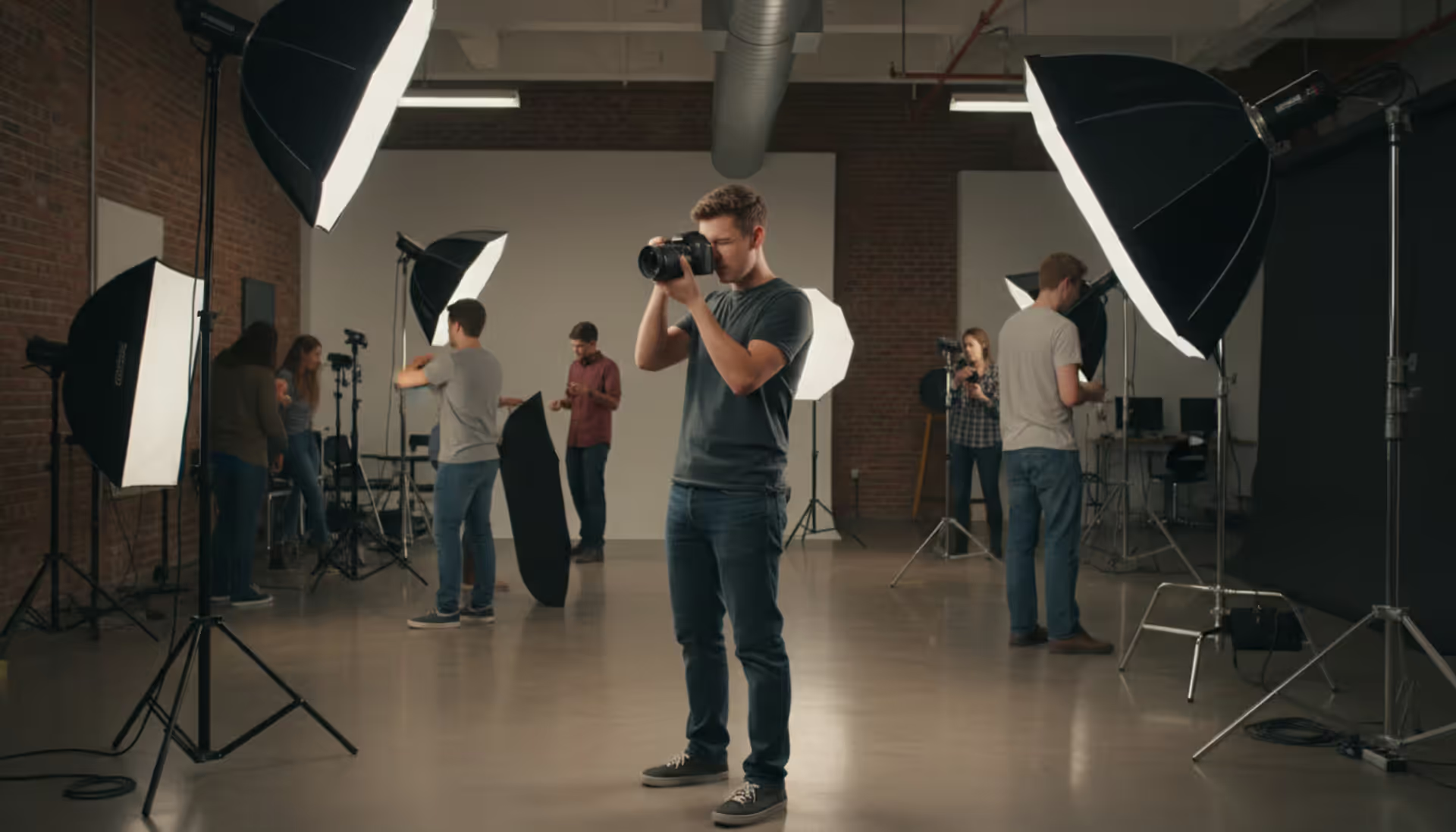
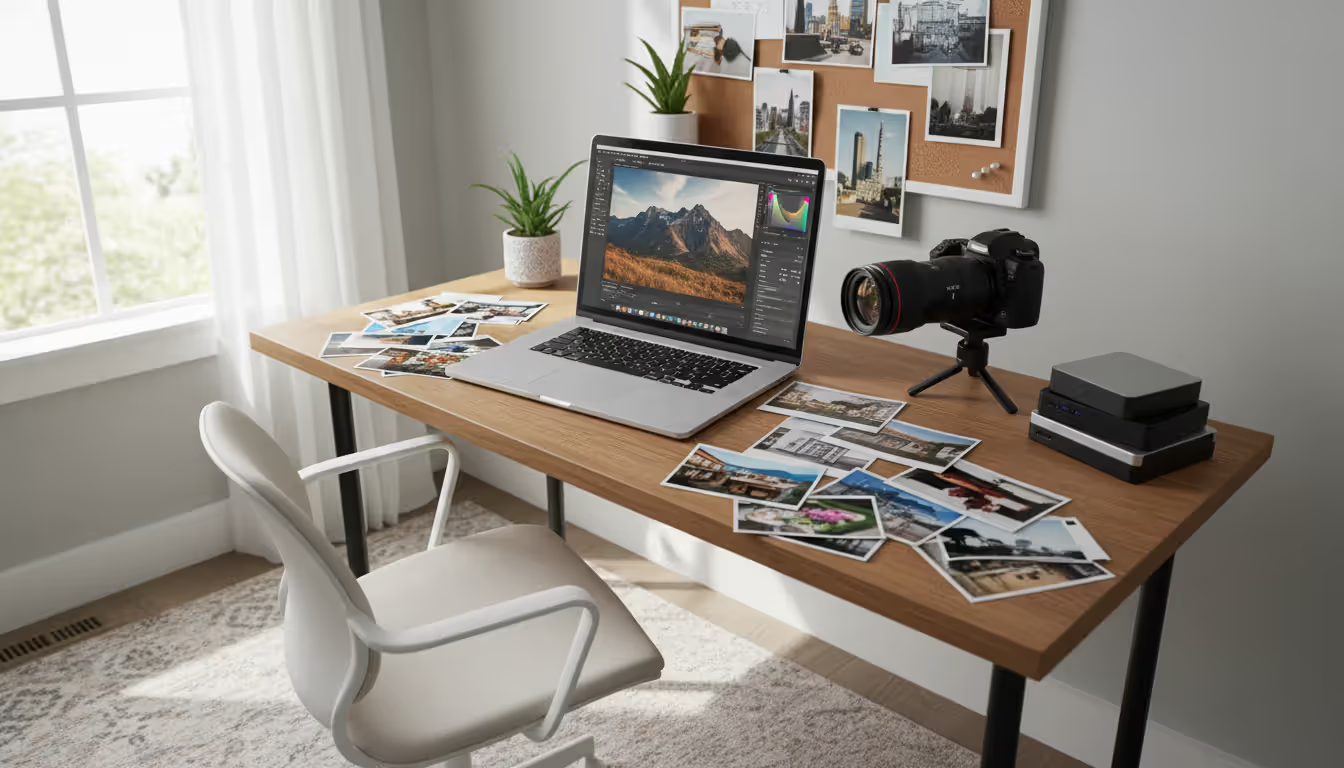
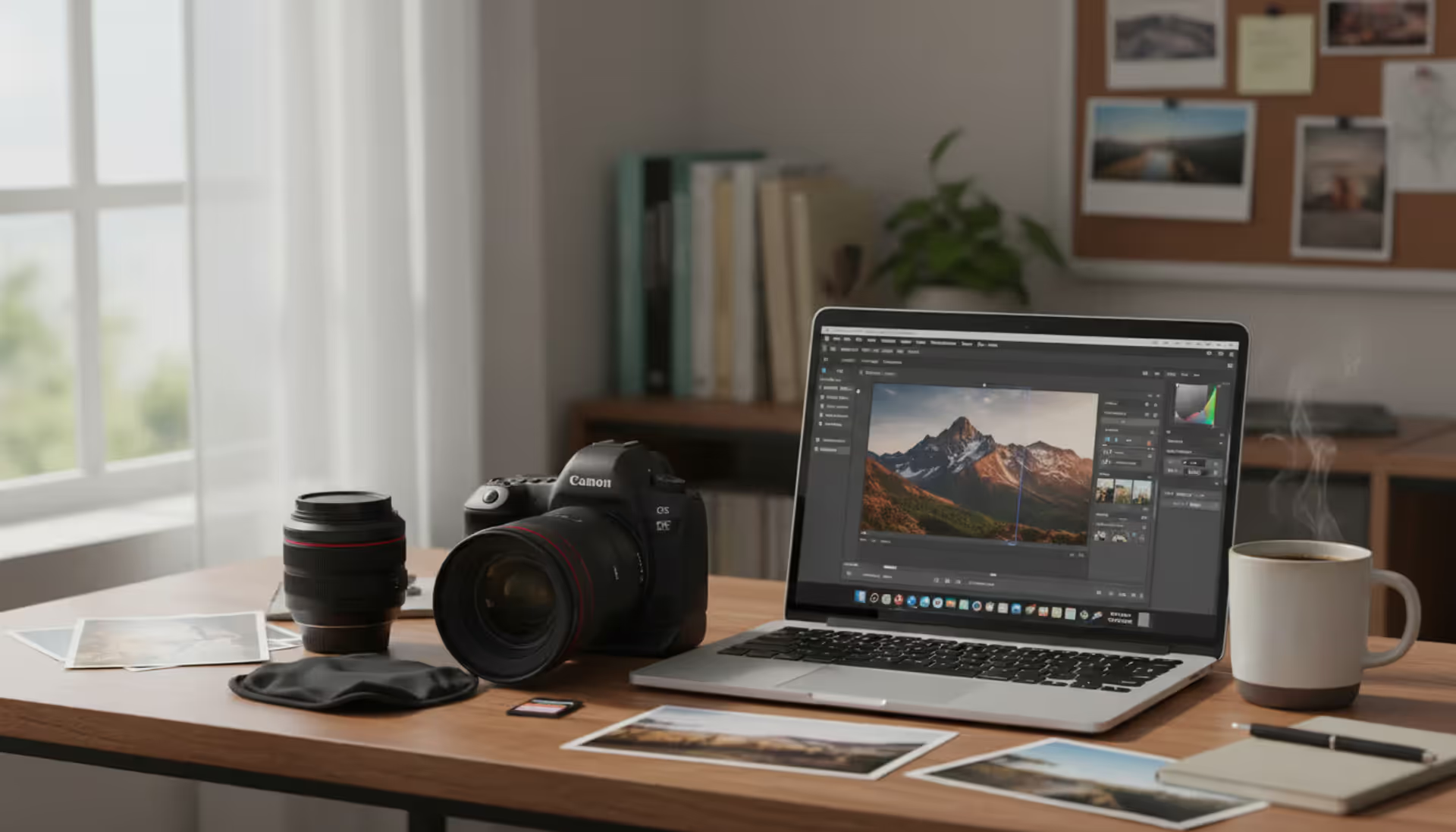
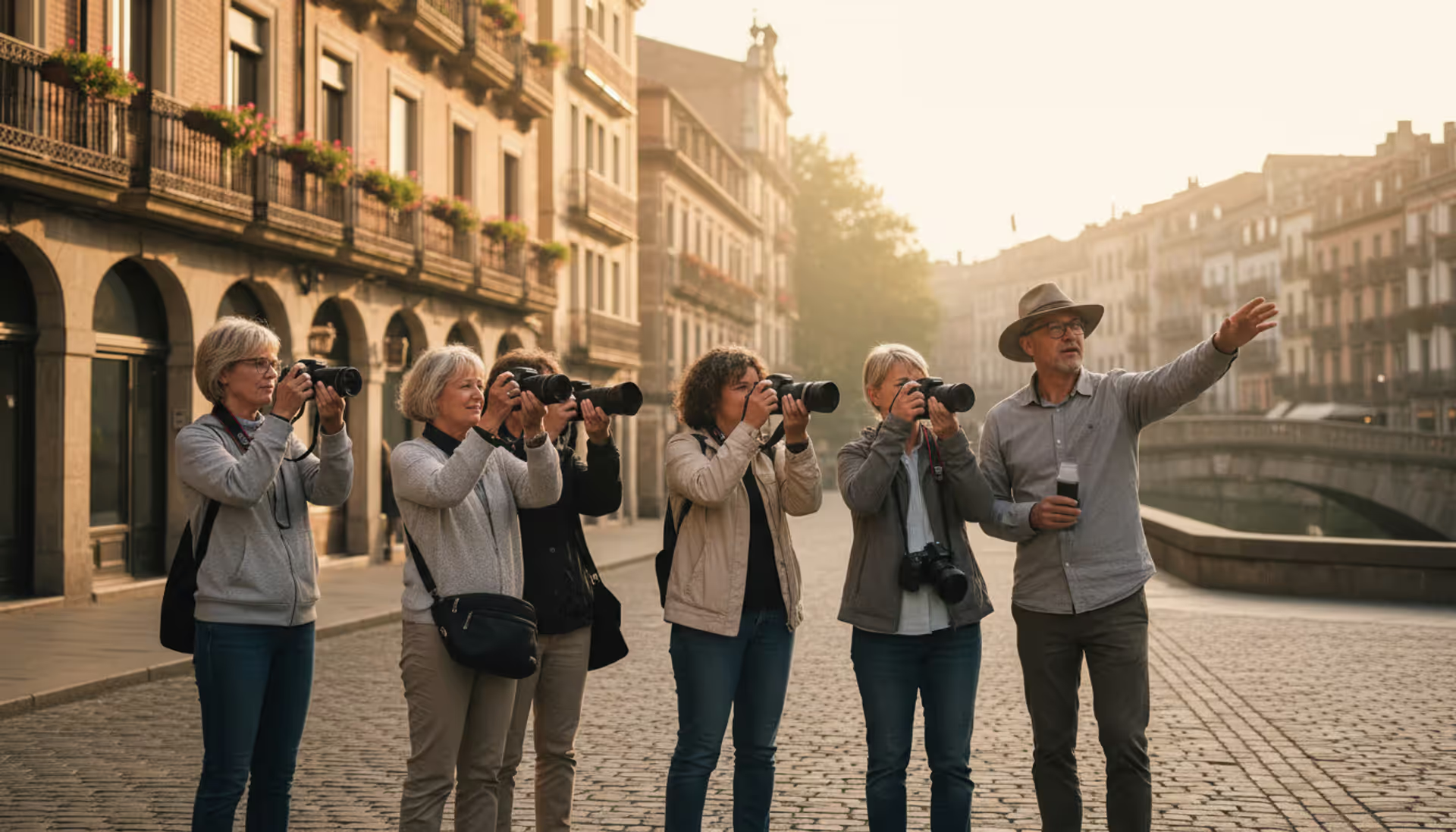
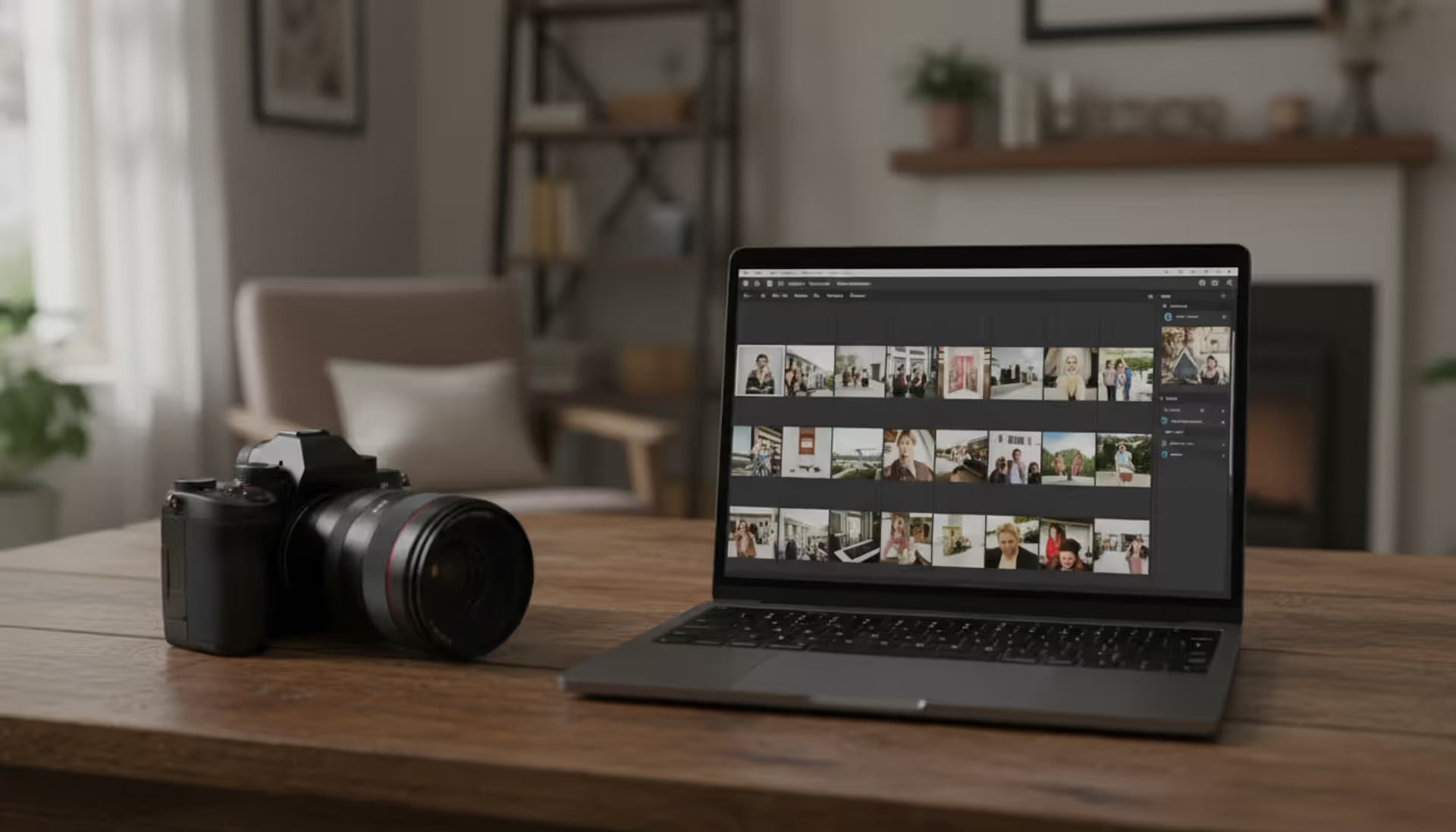
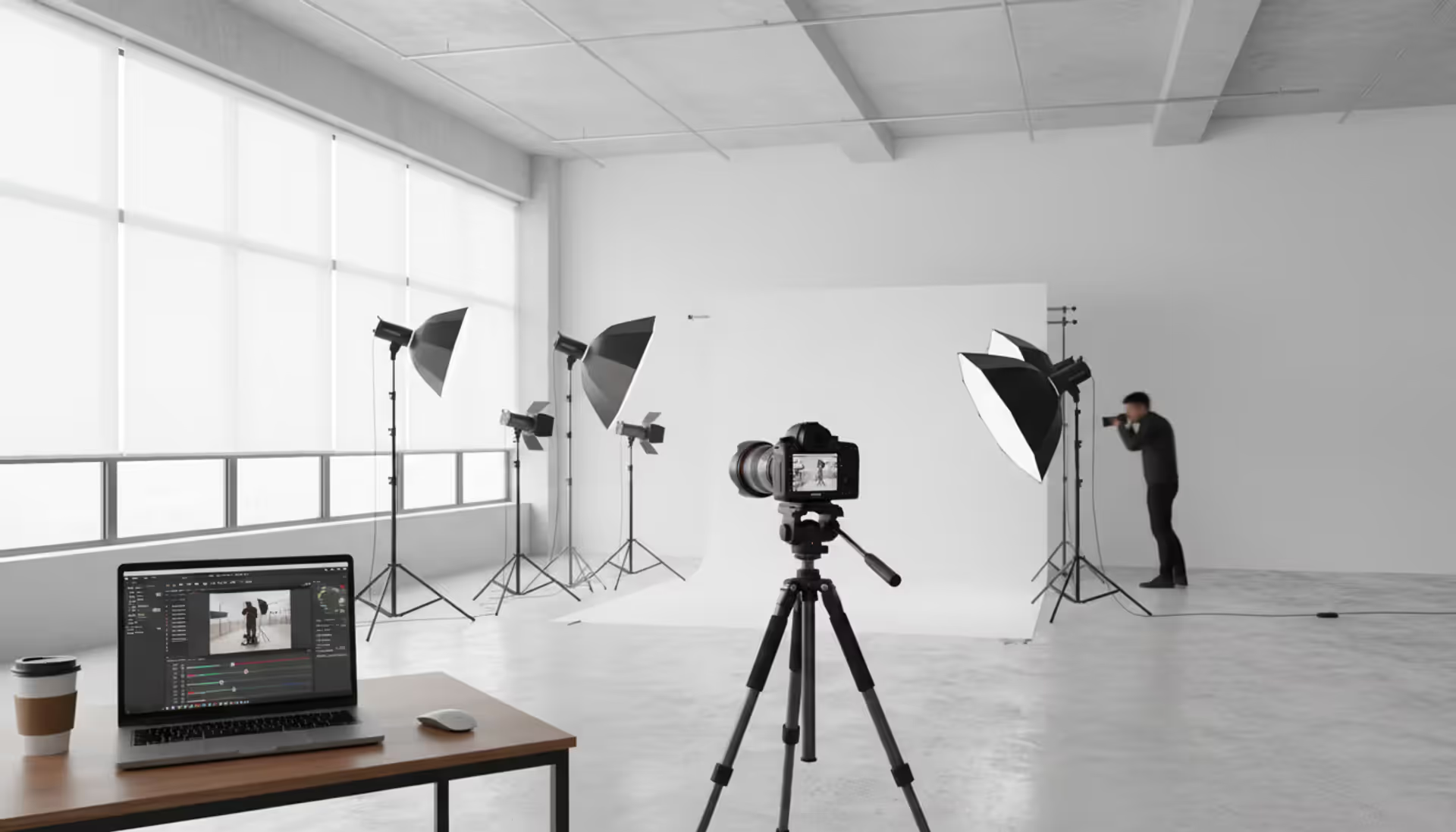
So you're thinking about studying photography in college? Smart move—but here's what most high school students don't realize. Loading up on YouTube tutorials and shooting with your iPhone won't teach you the stuff that actually separates hobbyists from pros. We're talking color theory that makes your images pop, lighting setups that cost $40,000 (which you'll get to use for free), and ruthless critique sessions that'll hurt your feelings but sharpen your eye.
The real question isn't whether you can learn photography on your own. You can. The question is whether four years of concentrated practice, mentorship from working photographers, and access to equipment you'd never afford yourself is worth the investment.
What Is a Photography Major?
Think of a photography degree as part technical bootcamp, part art school, part business training. You'll split your time between three main areas: mastering your camera and related equipment, developing your artistic voice through thousands of hours of practice, and learning how to actually make money with your skills (this part matters more than you think).
Here's what your four years actually look like. Most programs clock in around 120-130 total credits. If you're going the Bachelor of Arts route, expect photography and art classes to eat up maybe 35-40% of your schedule. The rest? You're covering general education—English comp, maybe some science, history, all that stuff your parents paid for that you're convinced you'll never use.
The BFA path is different. Way different. We're talking 60-70% of your time in studios, darkrooms, and critique sessions. Less time writing papers about the Industrial Revolution, more time printing fifty versions of the same image until you finally nail the tonal range you've been chasing. BFA programs typically wrap up with a senior thesis show where you'll exhibit a cohesive body of work—think 20-30 images that represent your artistic vision after four years of development.
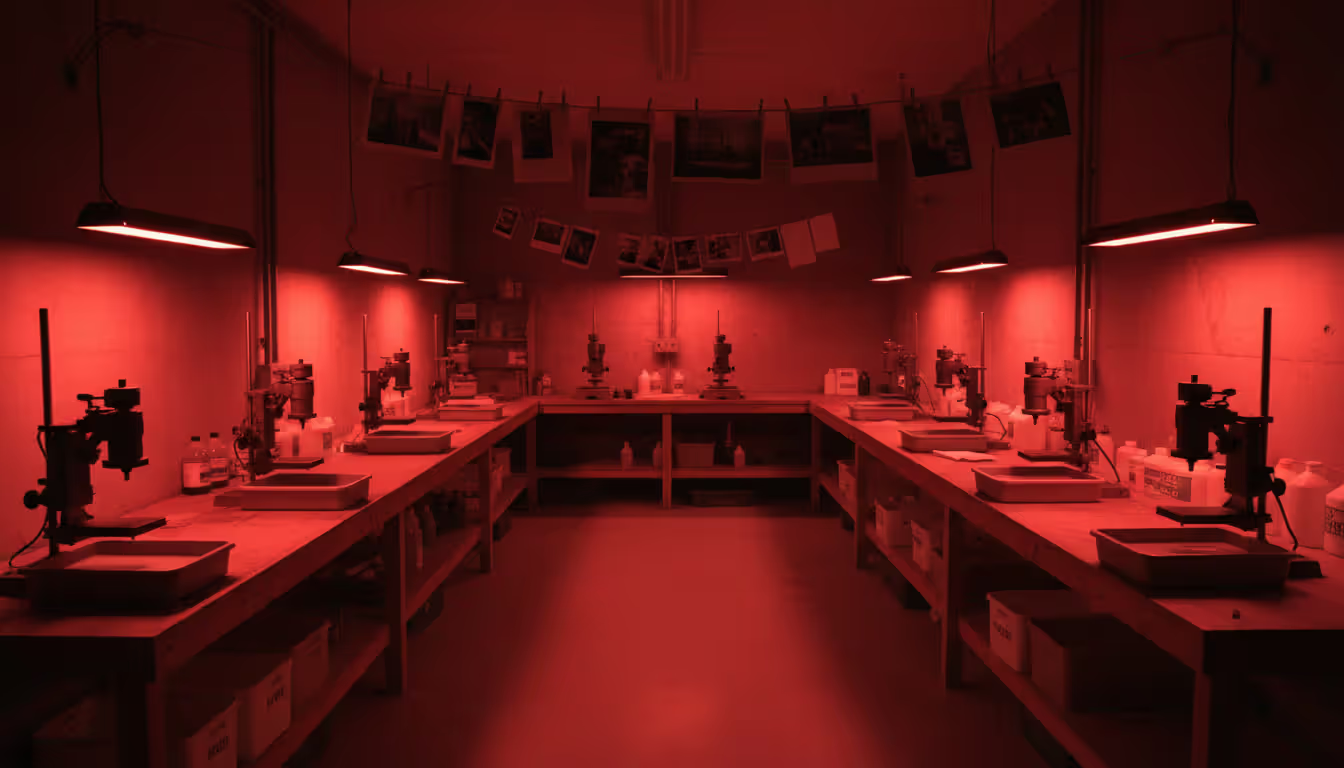
Your first-year courses cover the fundamentals everyone needs: exposure triangle (aperture, shutter speed, ISO), composition rules (and when to break them), how to not blow your highlights or crush your shadows. You'll probably spend a semester in a traditional darkroom even though it's 2026, because understanding chemical processes actually makes you better at digital editing. Weird but true.
Year two and beyond gets specialized. Studio lighting with modifiers you've never heard of. Large-format cameras that use 4x5 inch film sheets and cost more than your car. Advanced Photoshop and Lightroom techniques that go way beyond the Instagram presets you've been using. Color management so your prints actually match what you see on screen. Art history focusing on photography's evolution from Daguerre to Cindy Sherman to whatever weird AI-hybrid stuff is happening now.
Author: Olivia Wrenford;
Source: maryelizabethphoto.com
Recent programs have gotten smarter about real-world skills. You might take courses in video (since clients now expect photographers to shoot motion too), drone operation and FAA regulations, website design for your portfolio, social media strategy that doesn't make you look desperate, and—this is crucial—business fundamentals like contracts, copyright law, and how to price your work so you don't go bankrupt.
Specializations depend on your school. Commercial photography teaches you product shots, advertising campaigns, and corporate work. Fine art programs focus on gallery exhibitions and developing conceptual projects. Photojournalism emphasizes ethics, storytelling across multiple frames, and working under deadline pressure. Some schools offer fashion photography, architectural photography, or even emerging fields like computational photography that blends traditional shooting with AI tools.
Top Colleges with Photography Majors
You've got three basic options for studying photography: dedicated art schools, university programs, and community colleges. Each comes with serious trade-offs.
Art Schools vs University Programs
Art schools like RISD or School of Visual Arts throw you into the deep end of creative culture. Every single person you meet is making things—painters, sculptors, graphic designers, filmmakers. Your 2 AM conversations will be about whether Diane Arbus exploited her subjects, not about last night's football game. You'll get 24/7 access to studios packed with equipment that'd normally cost you $200,000+ to own: Phase One medium-format digital backs, Profoto lighting systems, cinema cameras, the works.
The faculty situation tends to be stronger too. Most professors are working photographers who teach on the side, not academics who occasionally pick up a camera. They've got current industry connections, they're showing work in galleries right now, and they can introduce you to photo editors and creative directors who actually hire people.
But here's what you give up: everything else. Want to minor in psychology? Take organic chemistry because you're weirdly interested in it? Join a Division I sports team? Art schools aren't set up for that. Everyone around you thinks about the same things, talks about the same stuff. For some students, that's heaven. For others, it feels limiting after a year or two.
University programs embed photography inside larger institutions. NYU, ASU, UCLA—these schools offer solid photography tracks while giving you access to, well, everything else. You might collaborate with film students on multimedia projects, take business courses that teach you how to read a P&L statement (useful when you're running your own studio), or combine photography with journalism, anthropology, or marketing.
The downsides? Intro classes can hit 40-50 students. Equipment checkout often closes at 5 PM sharp because the lab techs go home. You might get professors who are brilliant researchers but haven't shot a commercial job in 15 years. Less total immersion in photography culture, more bureaucracy, bigger campus to navigate.
Community colleges deserve more credit than they get. Programs like Santa Monica College or Austin Community College offer surprisingly robust training for around $3,800/year versus $15,000-$55,000 at four-year schools. You'll cover all the fundamentals—exposure, composition, lighting, basic Photoshop. Some community colleges have incredible facilities funded by local bond measures. The limitation is depth. Two-year programs get you started but rarely offer advanced specialized courses or the intense critique culture that actually transforms your vision.
Accreditation and Program Rankings
Regional accreditation (Middle States, WASC, etc.) matters primarily because it determines whether you can get federal financial aid and whether your credits transfer if you switch schools. For photography specifically, NASAD accreditation indicates a program meets professional standards, though plenty of excellent programs operate without it.
Rankings are... complicated. They measure factors like faculty credentials and facilities, but they can't really capture whether a program's culture will click with your personality. That said, programs that consistently appear in top-tier lists include RISD (Providence), Yale School of Art (New Haven), SVA (New York), CalArts (Valencia), Parsons (New York), RIT (Rochester), and SCAD (Savannah plus satellite campuses).
More useful than rankings? Stalk faculty portfolios online. Look at recent student thesis exhibitions (most schools post these). Check LinkedIn to see where graduates from 2-3 years ago are working now. A program is only as strong as what it's producing right now, not its reputation from 1995.
Photography Major Specializations
Most schools make you complete foundation courses for two years before declaring a concentration. They want you versatile before you narrow down.
Commercial photography trains you for client work: e-commerce product shots, advertising campaigns, corporate headshots, branded content for social media. The emphasis shifts from personal artistic expression to executing someone else's vision flawlessly and on schedule. You'll learn studio lighting setups that can be replicated exactly, color management for print reproduction, and how to communicate with clients who have zero photography knowledge but very specific expectations. Commercial photographers in major markets pull $50,000-$90,000 annually, with top professionals clearing $150,000+.
Fine art photography is the gallery and museum track. You'll dig deep into contemporary art theory, write artist statements that explain your conceptual framework (this is harder than it sounds), and develop cohesive bodies of work exploring specific themes over months or years. Critique sessions get intense—professors and peers will dissect every visual choice you made. Be ready to defend why you cropped there, why you chose that color palette, what you're actually trying to say. Most fine art photographers teach, apply for grants, or do commercial work on the side, since gallery sales alone rarely cover rent.
Photojournalism programs teach you to document news, social issues, and human stories for publications. You'll study ethics extensively (when is it okay to alter an image? How do you represent vulnerable subjects?), visual storytelling across photo essays, working under brutal deadline pressure, and media law. Fair warning: staff photographer positions at newspapers have dropped roughly 65% since 2010. Opportunities exist for freelancers who also shoot video and write, but the traditional photojournalist career path has largely evaporated.
Sports photography rarely exists as a standalone undergrad major, but schools near pro sports markets or with strong athletic programs let you build this specialization through electives and internships. You'll master anticipating action (shooting before the play happens, not after), working with 400mm and 600mm lenses that weigh 12 pounds, managing terrible lighting (indoor arenas with mixed color temperatures, Friday night football under sodium vapor lights), and delivering images within minutes for immediate publication. Breaking into professional sports photography takes years of credential-building—you'll likely start with high school games or minor league teams before accessing major leagues.
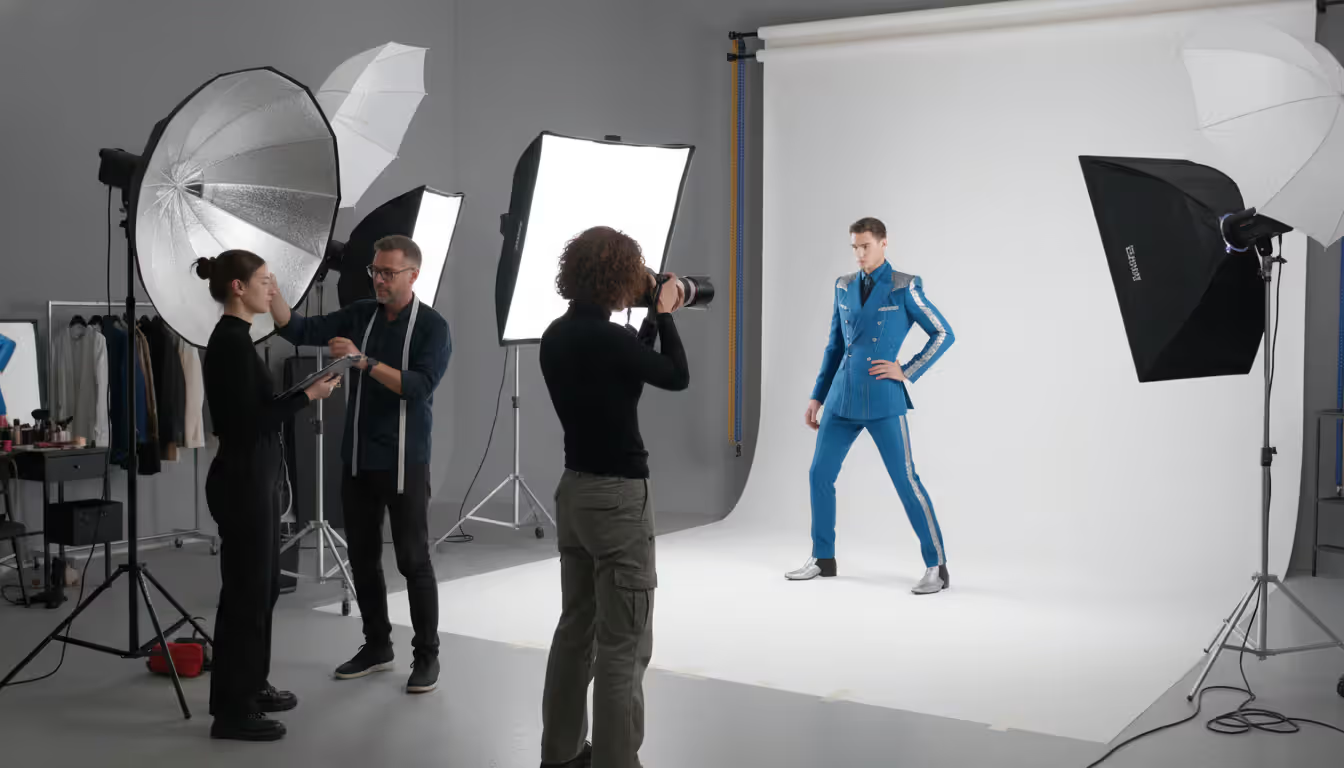
Fashion photography combines technical precision with trend awareness and collaborative creativity. Programs strong in this area (concentrated in New York, LA, and Miami) teach you to work with stylists, makeup artists, and models to create images for designers, retailers, or editorial publications. You'll study fashion history, brand aesthetics, and beauty retouching techniques that go way beyond "smooth skin and bigger eyes."
Author: Olivia Wrenford;
Source: maryelizabethphoto.com
Documentary photography involves long-term projects exploring social issues, subcultures, or historical moments. Programs emphasize research skills (you can't photograph what you don't understand), ethical representation (who has the right to tell whose story?), grant writing (someone's gotta pay for your year-long project), and multimedia presentation. Most documentary photographers fund passion projects through commercial assignments or teaching gigs.
How to Choose the Right Photography Major College
Portfolio requirements during admissions tell you a lot about what a program values. Schools asking for 10-12 images of any subject just want to see your current skill level and whether you have a decent eye. Programs demanding 20 images around a unified theme, plus written statements explaining your artistic intent? They're looking for students who already think conceptually and have developed a focused vision. If you're still experimenting broadly (which is totally fine), aim for schools with more flexible portfolio requirements.
Equipment access matters way more than what you personally own. A program with extensive checkout systems lets you shoot with $15,000 medium-format cameras, $8,000 lenses, and specialized lighting equipment you'd never buy yourself. During campus visits, ask specific questions: What's the checkout policy? Do 200 students compete for 5 cameras? Is there gear set aside specifically for weekend projects, or is everything locked up Friday afternoon? Schools that restrict equipment to class hours only will seriously limit your personal work.
Faculty credentials split between academic and professional, and you want both types. Professors with MFAs and recent gallery exhibitions bring artistic credibility and graduate school connections if you're heading toward an MFA yourself. Faculty actively shooting commercial work provide industry contacts and practical business knowledge ("here's how to price a corporate headshot session" versus "let's discuss the semiotics of portraiture"). Check faculty pages: When did they last exhibit? Do they maintain active professional practices or just teach?
Location shapes your internship opportunities and post-graduation job prospects more than you'd think. Photography programs in New York, LA, Chicago, and Miami put you near advertising agencies, fashion brands, major publications, and galleries where you can actually intern. You'll attend gallery openings, assist established photographers on real shoots, and build networks while you're still in school. Programs in smaller cities cost less and offer fewer distractions, but you'll work harder to access professional opportunities.
Internship support varies wildly between schools. Some programs require internships for credit and have dedicated coordinators maintaining relationships with studios and publications. Others expect you to independently hunt down summer positions with zero institutional support. Programs with formal internship infrastructure make this process infinitely easier.
Run the real numbers on cost beyond tuition. You'll need to budget $2,000-$5,000 for a basic camera system (body, couple of lenses), a computer that won't choke on 50-megapixel RAW files, external hard drives for backup (you will lose images if you don't back up, this isn't optional), and software subscriptions. Some schools roll equipment fees into tuition; others expect you to show up with everything. Also factor in printing costs—if the program doesn't include lab fees or printing credits, you could spend another $1,000 annually on inkjet prints and mounting materials.
Career Paths for Photography Majors
Author: Olivia Wrenford;
Source: maryelizabethphoto.com
Freelance work gives you maximum creative freedom and schedule control, but you're running a small business, not just taking pictures. You'll handle client acquisition (constantly), contracts, invoicing, quarterly tax payments, equipment maintenance, insurance, marketing, website updates, and social media while also actually shooting. Successful freelancers typically specialize hard—wedding photography, real estate photography, newborn portraits—rather than trying to serve every market. Income swings wildly. First-year freelancers often scrape by on $20,000-$35,000 while building their client base. Mid-career pros with established reputations can hit $50,000-$80,000 if they've built strong referral networks.
Studio photographer positions offer actual stability—regular paychecks, health insurance, normal hours. You might work for a portrait chain (think Lifetouch school photos), a product photography studio churning out e-commerce images for Amazon sellers, or a boutique studio doing high-end family portraits. Expect $35,000-$65,000 depending on the studio's reputation and your city. Trade-off: minimal creative control. You'll execute the studio's established style exactly the same way for every client rather than developing your own vision.
Photojournalism staff positions exist at remaining newspapers, wire services (AP, Reuters), and photo agencies, but they're scarce and brutally competitive. Most photojournalists work freelance now, pitching stories to multiple publications. Staff salaries range from $40,000 at small regional papers to maybe $75,000 at major metros. Many photojournalists I know supplement income with commercial work or teaching because editorial rates have dropped so much.
Sports photography follows a clear hierarchy: high school sports for local papers or websites ($25,000-$35,000), college athletics for university media departments ($40,000-$55,000), minor league professional sports ($45,000-$60,000), and major professional leagues ($65,000-$120,000 for staff positions). Freelancers license images through agencies like Getty or sell directly to publications. Building credentials takes years, often starting with unpaid access to minor events just to build your portfolio.
Wedding photography can be seriously lucrative if you can handle the pressure. Photographers in major markets charge $3,000-$8,000 per wedding, with top-tier professionals getting $15,000+. Shoot 25-35 weddings annually and you're looking at $75,000-$280,000 in gross revenue. Expenses eat 30-40% (second shooters, backup equipment, insurance, advertising), but the margins beat most photography niches. The work is physically brutal—10-12 hour days hauling 30 pounds of gear—and seasonally concentrated. Most U.S. weddings happen May through October, so you're either slammed or slow.
Commercial photography for brands, agencies, or corporations offers the highest earning ceiling. Established commercial photographers charge $2,000-$10,000 per shoot day, with complex campaigns running multiple days. Annual incomes of $100,000-$250,000 are achievable if you've built strong industry connections and a killer portfolio. Breaking in typically requires 3-5 years assisting established photographers, learning not just technical skills but client management and how to run productions.
Teaching photography at the high school level requires education credentials beyond your photography degree (teaching certification, which means extra coursework). Community colleges and universities hire adjunct instructors at roughly $3,000-$5,000 per course, which isn't sustainable unless you're teaching multiple courses per semester. Tenure-track faculty positions pay $50,000-$85,000 annually but usually require MFA degrees plus strong exhibition records.
You don't take a photograph, you make it. And making it well requires understanding not just your camera, but the entire history of image-making that precedes you. That's what formal education provides—context, critique, and community that transforms button-pushers into visual artists
— Annie Leibovitz
Admission Requirements for Schools with Photography Majors
Your portfolio consumes most of your application energy, as it should. Schools typically want 10-20 images demonstrating both technical competence and creative thinking. Quality destroys quantity here—submit your twelve strongest images rather than padding to twenty with mediocre ones.
Show range across your submissions: different subjects, lighting situations, compositional approaches. Don't submit five nearly-identical portraits or ten variations on the same sunset. Programs want evidence you can handle diverse challenges. Include a couple images proving technical control (tack-sharp focus, proper exposure, intentional depth of field choices), several showing compositional sophistication (thoughtful framing, visual balance, effective negative space), and at least one image that reveals conceptual depth or storytelling ability.
Presentation details matter more than you'd think. Submit images at exactly the required dimensions and file formats. Color-calibrate your monitor so you're not sending images that look completely different on admissions reviewers' screens. Title images descriptively ("Portrait with Window Light, 2025" beats "IMG_4782"). If schools request brief statements about individual images or your overall portfolio, use that space to explain your artistic interests and what you want to explore in college—not to apologize for technical limitations.
Portfolio mistakes I see constantly: over-editing with excessive HDR effects or heavy-handed filters, submitting only casual phone snapshots without intentional composition, including images you didn't create (screenshots of inspiration, collaborative projects where your role is unclear), and showing zero people (if your entire portfolio is landscapes and objects, programs question your versatility).
GPA expectations vary dramatically by program selectivity. Yale or RISD expect 3.7+ GPAs alongside exceptional portfolios. Mid-tier programs typically admit students with 3.0-3.5 GPAs if portfolios show real promise. Some schools admit almost entirely on portfolio strength with minimal GPA thresholds around 2.5.
Application essays for photography programs should address why photography specifically draws you, what you hope to accomplish through formal education versus self-teaching, and which aspects of this specific program attract you. Skip the clichés about "capturing moments" or "telling stories through images"—admissions readers have seen those phrases approximately 10,000 times. Instead, discuss specific photographers influencing your work, techniques you want to master, or subjects you feel compelled to document.
Several programs conduct interviews—these happen in-person during campus visits or via video calls for distant applicants. Prepare to discuss your portfolio deeply: why you made specific compositional choices, what you learned from particular projects, how your photographic vision has evolved. Bring examples of work created after you submitted your portfolio to demonstrate you're actively practicing.
Application deadlines typically fall November 1-15 for early decision/action tracks and January 1-15 for regular decision. Portfolio submissions are usually due simultaneously with applications, though some schools allow up to two weeks later. Missing deadlines often means waiting another full year since most photography programs only admit for fall semester.
Comparison of Notable Photography Programs
School Name
Location
Degree Type
Specializations Offered
Estimated Annual Tuition (2026)
Portfolio Required
Rhode Island School of Design
Providence, RI
BFA
Fine Art, Commercial, Documentary
$58,600
Yes
School of Visual Arts
New York, NY
BFA
Fashion, Advertising, Photojournalism, Fine Art
$48,900
Yes
Rochester Institute of Technology
Rochester, NY
BFA
Advertising, Fine Art, Photojournalism, Biomedical
$54,200
Yes
California Institute of the Arts
Valencia, CA
BFA
Fine Art, Experimental
$56,300
Yes
Savannah College of Art and Design
Savannah, GA
BFA
Fashion, Commercial, Fine Art
$39,800
Yes
Arizona State University
Tempe, AZ
BA/BFA
Documentary, Commercial, Fine Art
$12,700 (in-state) / $30,500 (out-of-state)
Yes
Parsons School of Design
New York, NY
BFA
Fashion, Documentary, Studio
$54,900
Yes
Columbia College Chicago
Chicago, IL
BA/BFA
Fashion, Portraiture, Commercial, Fine Art
$31,200
Yes
Massachusetts College of Art
Boston, MA
BFA
Fine Art, Documentary
$14,400 (in-state) / $39,200 (out-of-state)
Yes
Brooks Institute
Ventura, CA
BFA
Commercial, Portrait, Fashion
$36,800
Yes
Frequently Asked Questions About Photography Majors
Is a photography major worth it?
This depends entirely on your situation and goals, not on some universal answer. Photography degrees provide structured skill development, equipment access, faculty mentorship, and brutal peer critique that's nearly impossible to replicate through self-teaching. If you're aiming for commercial photography with major brands, fine art gallery representation, or photojournalism at established publications, formal education builds credibility and industry connections. If you want to shoot weddings or portraits, business skills and portfolio strength matter way more than degrees—plenty of successful wedding photographers never took a single college photography course. Calculate the opportunity cost honestly: four years plus $60,000-$240,000 in tuition and living expenses versus entering the workforce immediately and learning by assisting established photographers.
What can you do with a photography major?
Photography graduates work as freelancers across every specialization (weddings, portraits, commercial, editorial), staff photographers for publications or corporations, photo editors at magazines or digital media companies, gallery directors or curators, photography instructors, product photographers for e-commerce businesses, social media content creators, and equipment sales representatives for brands like Canon or Profoto. Many combine photography with complementary skills—photojournalists who write their own stories, commercial photographers who direct video content, fine art photographers who lead international workshops.
Do you need a degree to be a professional photographer?
Nope. Zero formal credentials are required to work professionally in photography. Clients hire based on portfolio strength, reliability, and whether they trust you to deliver results—not based on where you went to school or whether you graduated. However, certain career paths do favor formal education: photojournalism positions at major publications typically require journalism or photography degrees, teaching jobs demand specific credentials, and fine art gallery representation often involves MFA degrees (though not always). Commercial and wedding photography are purely portfolio-driven—if your work is strong and you manage client relationships well, nobody cares about your educational background.
How much do photography majors make after graduation?
Entry-level photographers earn $30,000-$45,000 annually, whether that's through studio positions, assisting established photographers, or freelancing part-time while supplementing income through other work. Mid-career professionals with 5-10 years of experience and established client bases earn $50,000-$80,000. Top commercial, fashion, and advertising photographers can pull $100,000-$300,000+, but that represents maybe 5% of working photographers. Geographic location dramatically affects earning potential—photographers in New York, Los Angeles, and San Francisco earn 40-60% more than those in smaller markets doing comparable work, but your living expenses also jump proportionally.
What should I look for in a photography program?
Prioritize these factors: faculty who actively work professionally and exhibit regularly (not just academics who shot commercially 20 years ago), extensive equipment checkout systems providing access to high-end gear you'd never own, dedicated studio and darkroom facilities with extended access hours (not just 9-5 weekdays), small class sizes in upper-level courses (under 15 students for meaningful critique), internship support through dedicated coordinator positions or direct faculty connections, and recent graduate success—stalk LinkedIn to see where alumni work 2-5 years post-graduation. Visit campuses whenever possible, tour facilities beyond the official tour route, sit in on a class, and talk with current students about honest experiences beyond what admissions materials promise.
Can I specialize in sports photography as an undergraduate?
Very few schools offer dedicated sports photography majors, but many let you develop this specialization through elective courses, independent studies, and internships with athletic departments. Programs near professional sports markets (New York, LA, Boston, Chicago) or with Division I athletic programs provide better access to credential practice opportunities. Build your sports portfolio by shooting high school games (easy credential access through local papers), college intramurals, or amateur leagues while completing general photography coursework. Most successful sports photographers actually developed this specialization after graduation rather than through focused undergraduate study—the fundamentals transfer across all photography, and you can self-teach sports-specific techniques while building credentials.
Choosing photography as your college major requires balancing artistic passion with cold practical realities. Strong programs deliver more than camera instruction—they provide critique culture that sharpens how you see, equipment access that'd cost you six figures to replicate independently, and professional networks that open doors throughout your entire career.
Photographers who actually make it after graduation typically combine technical excellence with business savvy, deep specialization with versatile skills, and strong artistic vision with client service abilities. Whether you pursue a BFA at a dedicated art school or a BA at a comprehensive university, maximize your investment by shooting constantly beyond class assignments, assisting working photographers in your target niche, building a tightly focused portfolio, and developing the thick skin this brutally competitive field demands.
Your degree opens doors. Your work ethic and creative voice determine how far you walk through them.
Photography has never been more accessible, but finding quality instruction that matches your learning style, budget, and goals can feel overwhelming. This comprehensive guide breaks down every major learning path—from free YouTube tutorials to university programs—helping you make an informed decision about where to invest your time and money
Finding the right photography workshop can transform your skills faster than solo practice. Learn what makes quality hands-on training, compare workshop types, and discover how to find local programs that match your skill level and goals
Selecting the right online photography program means balancing career goals, budget, and learning style. With options from weekend workshops to four-year degrees, you need to evaluate accreditation, instructor expertise, technical requirements, and program structure before enrolling
Selecting the right photography education shapes your career trajectory. Learn how to evaluate programs based on curriculum, format, accreditation, cost, and equipment access. Compare traditional vs online photography schools, understand financial aid options, and avoid common mistakes when choosing your program
The content on this website is provided for general informational and educational purposes only. It is intended to explain concepts related to running a photography business, insurance coverage, marketing, websites, and professional development.
All information on this website, including articles, guides, and examples, is presented for general educational purposes. Outcomes may vary depending on business size, location, and individual choices.
This website does not provide professional legal, insurance, financial, or business advice, and the information presented should not be used as a substitute for consultation with qualified professionals.
The website and its authors are not responsible for any errors or omissions, or for any outcomes resulting from decisions made based on the information provided on this website.