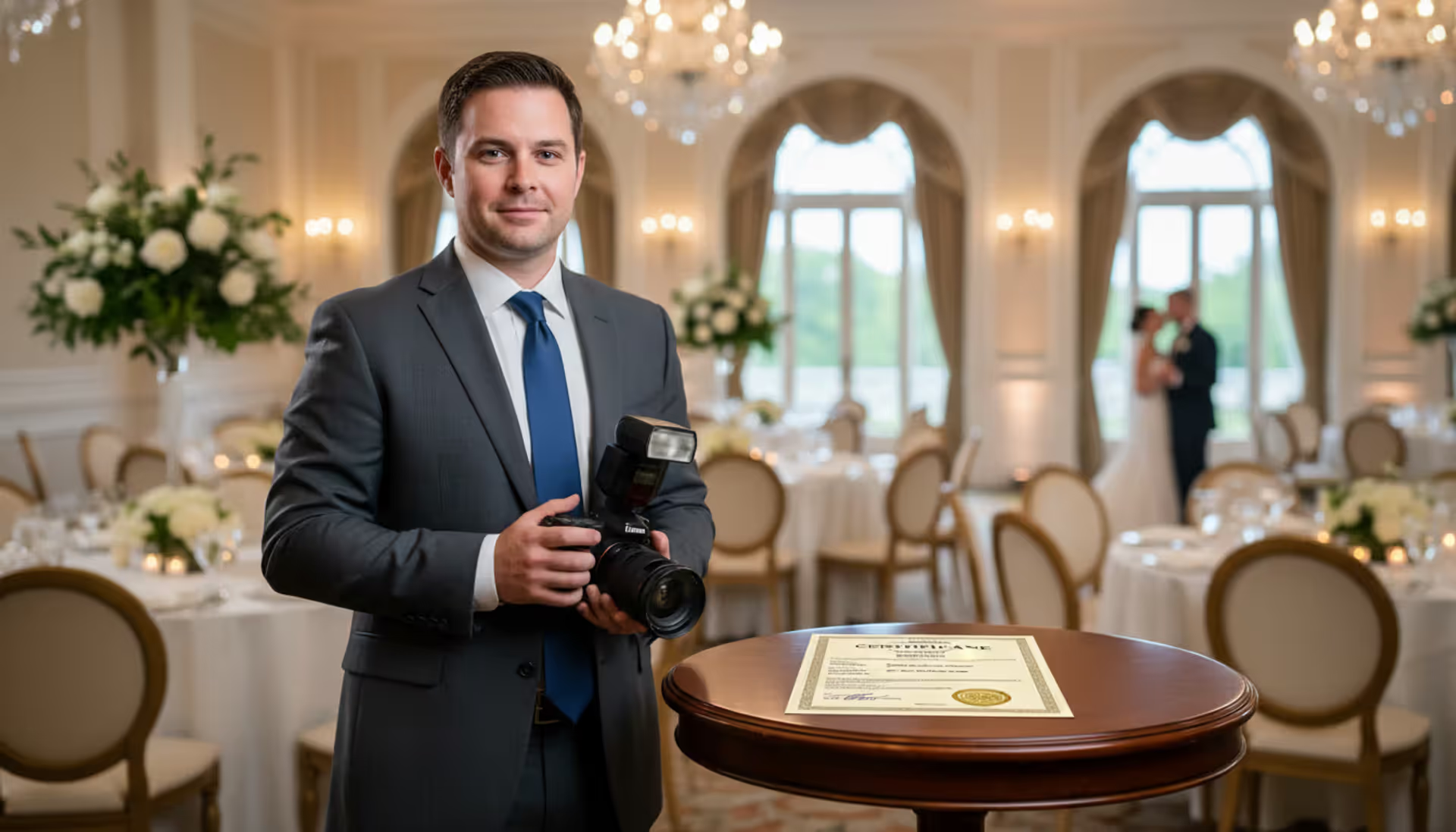
Booking a corporate event shoot or wedding venue often comes with a non-negotiable requirement: proof of insurance. That proof arrives in the form of a Certificate of Insurance (COI), a document that protects both you and your clients while opening doors to higher-paying gigs. Without one, you'll find yourself turned away from premium venues, excluded from vendor lists, and missing opportunities that require professional credentials.
Understanding how COIs work, what they must include, and how to obtain them quickly separates photographers who land consistent bookings from those who scramble at the last minute—or worse, lose jobs entirely.
What Is a Certificate of Insurance for Photography Work?
A certificate of insurance photography professionals use is a one-page document that summarizes your active insurance coverage. Think of it as a snapshot of your policy, not the policy itself. The COI lists your insurer, policy numbers, coverage types, limits, and effective dates. Most importantly, it can name specific third parties—like venues or clients—as "additional insureds" or "certificate holders."
Your insurance carrier issues the COI upon request, typically within 24 to 48 hours. The document serves as verification that you maintain adequate coverage without requiring clients to review your entire policy (which contains proprietary pricing and detailed exclusions they don't need to see).
A common misconception: the COI does not activate coverage or extend your policy. It merely confirms existing protection. If your policy lapses or gets canceled, the COI becomes invalid immediately, even if the expiration date hasn't arrived yet. Venues and clients rely on this document to confirm you won't become a liability risk during their event.
The photographer COI requirements overview typically includes several standard fields: the producer (insurance agent), insurer names and NAIC codes, policy effective dates, coverage types (general liability, professional liability, equipment), policy limits, and any special endorsements like additional insured status or waiver of subrogation.
Why Photographers Need a Certificate of Insurance
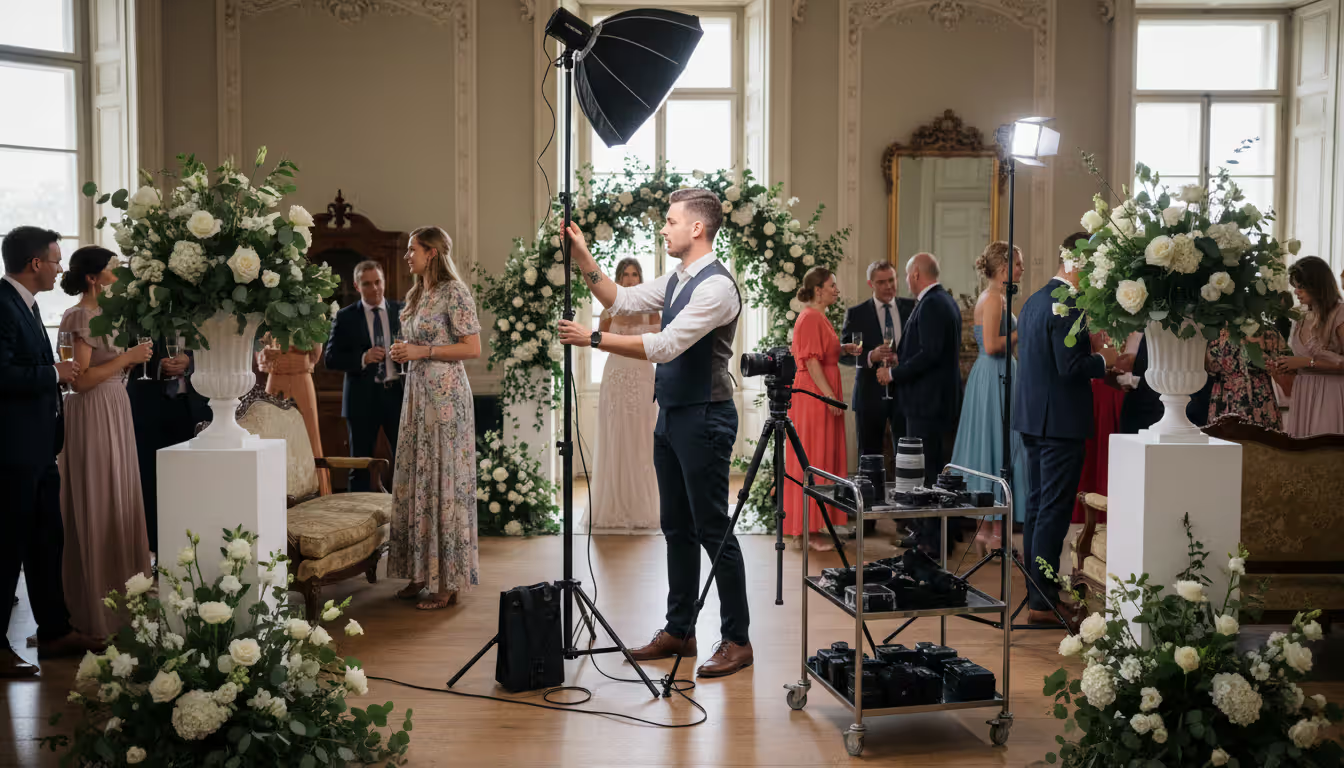
Venues protect themselves from lawsuits. When you photograph a wedding at a historic mansion or a corporate event at a convention center, the property owner faces potential liability if someone gets injured during your shoot. If a guest trips over your lighting stand and breaks an arm, that person might sue both you and the venue. Without proof that you carry insurance, the venue absorbs all the risk.
Most commercial venues—hotels, museums, event spaces, parks—require vendors to carry $1 million to $2 million in general liability coverage and name them as additional insureds. This requirement appears in venue contracts, often buried in vendor clauses. Miss it, and you'll receive a last-minute email demanding proof of insurance 48 hours before the shoot.
Corporate clients operate under similar logic. Marketing agencies, Fortune 500 companies, and government entities maintain vendor insurance requirements as standard procurement policy. Their legal departments won't approve contracts without verified coverage. Freelance photographers insurance becomes the entry ticket to these lucrative markets.
Beyond contractual obligations, a COI demonstrates professionalism. When you respond to an RFP with your portfolio and immediately provide a current COI, you signal that you run a legitimate business. You've anticipated the client's needs before they asked. This separates hobbyists from professionals in competitive markets.
Legal protection extends beyond covering damages. If a client claims you failed to deliver promised photos or missed critical moments, professional liability coverage (errors and omissions) protects you from lawsuit costs. The COI proves this coverage exists, giving clients confidence that disputes won't leave them empty-handed.
Author: Olivia Wrenford;
Source: maryelizabethphoto.com
What Coverage Should Your Photographer COI Include?
A complete certificate of insurance for photographers typically lists three core coverage types: general liability, professional liability, and equipment coverage. Each addresses different risk categories that clients and venues care about.
General liability covers bodily injury and property damage you cause during shoots. If you knock over a $5,000 vase while setting up a portrait session, this coverage handles the replacement cost. If a bridesmaid slips on your camera bag and sprains her ankle, general liability covers her medical bills and potential lawsuit. Most policies offer $1 million per occurrence and $2 million aggregate limits—the industry baseline for professional work.
Professional liability (errors and omissions) protects against claims of negligence or failure to perform services as promised. A couple might sue if you accidentally formatted a memory card and lost all their wedding photos. A corporate client might claim breach of contract if you delivered images too late for their product launch. This coverage pays legal defense costs and settlements, typically with limits matching your general liability.
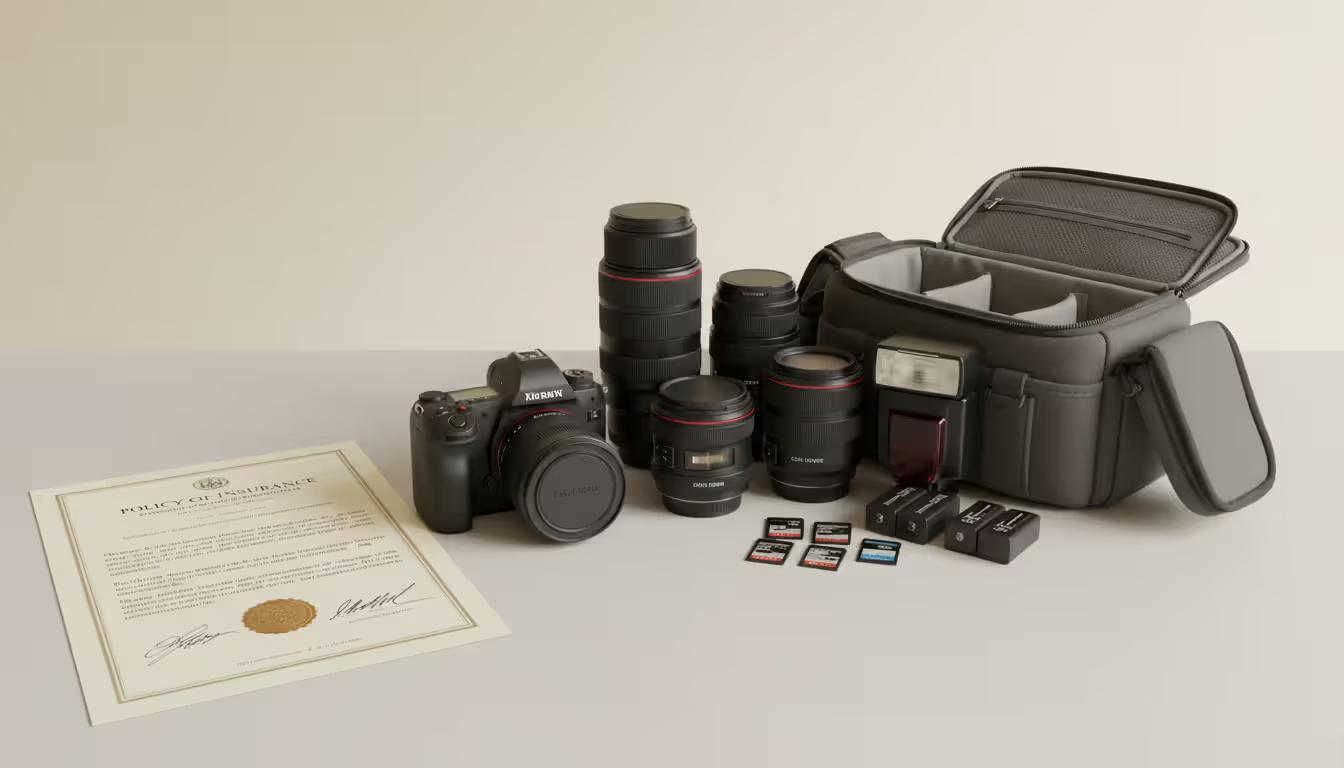
Equipment coverage (inland marine or business personal property) protects your cameras, lenses, lighting, and computers against theft, damage, or loss. While clients rarely require this on COIs, it safeguards your ability to complete jobs. A stolen camera bag the night before a shoot could cost you the gig and your reputation without coverage to replace gear immediately.
Public Liability Insurance Requirements for Photographers
Photographers public liability insurance appears on nearly every venue COI requirement list. The term "public liability" is sometimes used interchangeably with "general liability" in the US market, though technically general liability is the broader category.
Venues focus on per-occurrence limits—the maximum the insurer pays for a single incident. A wedding venue might require $1 million per occurrence because a single accident could involve multiple injured guests. Higher-risk locations like construction sites or sporting events often demand $2 million or more.
The aggregate limit matters equally. This represents the total amount your policy pays for all claims during the policy period (usually one year). If you carry $1 million per occurrence but only $1 million aggregate, a single major claim exhausts your entire policy. Standard policies offer $2 million aggregate to cover multiple smaller incidents throughout the year.
Some venues require hired and non-owned auto liability if you're transporting clients or equipment. This covers accidents in rental cars or personal vehicles used for business. While not universal, destination wedding photographers and those shooting at multiple locations should verify this coverage appears on their COI.
Additional Insured and Waiver of Subrogation Explained
"Additional insured" status gives a third party (the venue or client) protection under your policy for liability arising from your work. When the historic mansion appears as an additional insured on your COI, your insurance defends them if a guest sues both of you over an accident you caused. Without this endorsement, the venue's insurance handles the claim—and they'll likely refuse to book you.
Adding an additional insured costs nothing to minimal fees ($25-50 per certificate in some cases, free with others), but you must request it specifically when ordering your COI. The endorsement typically limits coverage to liability caused by your operations, not the venue's own negligence.
Waiver of subrogation prevents your insurer from suing the venue to recover claim costs. Here's the scenario: you cause $50,000 in fire damage to a venue because faulty equipment sparked a blaze. Your insurer pays the claim, then normally could sue the venue if their negligence (say, broken sprinklers) contributed to the damage. A waiver of subrogation blocks this, protecting the venue from being dragged into disputes between you and your carrier.
Many venue contracts require both endorsements. Request them when purchasing your policy or ordering a COI—adding them later may require policy amendments and delays.
Author: Olivia Wrenford;
Source: maryelizabethphoto.com
How to Get a Certificate of Insurance as a Photographer
The process starts with purchasing an appropriate business insurance policy. Research carriers specializing in photographer coverage: some focus on creative professionals and offer streamlined applications that understand your specific risks. Expect to provide business details (revenue, years in operation, types of photography), coverage needs, and desired limits.
Policies typically activate within 24 hours of approval and payment. Once active, contact your agent or log into your carrier's online portal to request a COI. You'll need specific information: the certificate holder's exact legal name and address (verify spelling—"Smith & Associates LLC" differs from "Smith and Associates"), required coverage types, requested limits, and any endorsements like additional insured status.
Most carriers issue COIs digitally within one business day, often within hours. Some provide instant downloads through customer portals. Rush requests (same-day) may incur small fees ($25-50) but prove worthwhile when a client demands proof before signing a contract.
Request digital PDFs rather than paper copies. Email delivery speeds up the process, and venues increasingly prefer electronic submission. Keep a library of blank COIs (without specific certificate holders named) to show prospective clients your general coverage, then request customized versions when booking confirmed jobs.
Author: Olivia Wrenford;
Source: maryelizabethphoto.com
Timing matters: request COIs as soon as contracts are signed, not the week before the shoot. Delays happen—agents go on vacation, systems glitch, venue names get misspelled. Building in a buffer prevents last-minute panic when a venue threatens to cancel your booking for missing documentation.
Common COI Requirements for Freelance Photographers
Photography niches carry distinct insurance expectations. Wedding photographers face different demands than corporate event shooters, and real estate photographers encounter unique venue requirements.
Photography Type
Minimum Liability Coverage
Additional Insured Required?
Equipment Coverage Needed?
Common Venue Examples
Wedding Photography
$1M per occurrence / $2M aggregate
Yes (venue, sometimes couple)
Highly recommended
Hotels, estates, vineyards, churches
Corporate Events
$2M per occurrence / $2M aggregate
Yes (venue and client company)
Highly recommended
Convention centers, corporate offices, arenas
Real Estate Photography
$1M per occurrence / $2M aggregate
Sometimes (luxury properties)
Recommended
Residential homes, commercial properties
Sports Photography
$2M per occurrence / $3M aggregate
Yes (venue, league, team)
Essential
Stadiums, arenas, outdoor fields
Studio Portraits
$1M per occurrence / $1M aggregate
Rarely
Recommended
Private studios, retail spaces
Wedding venues almost universally require COIs, particularly upscale locations. Country clubs, historic properties, and destination venues maintain strict vendor insurance policies. Backyard weddings or public park ceremonies rarely demand proof, though carrying coverage remains wise given the lawsuit-happy nature of wedding disputes.
Corporate photography gigs—headshots, conferences, product launches—typically require higher limits because corporate legal departments assume greater liability exposure. A Fortune 500 company won't risk a vendor without robust coverage. Expect $2 million minimum and prepare to name both the venue and the client company as additional insureds.
Real estate photographers working with high-end brokerages or luxury properties may face COI requirements, especially for commercial real estate or properties valued above $2 million. Residential work for individual homeowners rarely requires proof, though damage to a client's home (broken window, scratched floors) makes coverage essential.
Freelance photographers insurance needs scale with job complexity and client sophistication. A photographer shooting local small business headshots faces different requirements than one covering a national trade show for a pharmaceutical company.
How Much Does Insurance Cost for Photographers?
Annual premiums for photographer insurance typically range from $400 to $1,200 for general liability coverage with $1 million per occurrence limits. Factors affecting cost include annual revenue, years in business, coverage limits, deductibles, location (urban areas cost more), and claims history.
Author: Olivia Wrenford;
Source: maryelizabethphoto.com
A part-time photographer earning $25,000 annually might pay $400-600 for a basic general liability policy. A full-time professional grossing $100,000 could pay $800-1,200 for the same limits. Adding professional liability (errors and omissions) increases premiums by $200-400 annually. Equipment coverage costs roughly $150-300 per year for $10,000-15,000 in gear, depending on deductibles.
Bundled policies (Business Owner's Policy or BOP) combine general liability, professional liability, and equipment coverage at discounted rates compared to purchasing each separately. BOPs designed for photographers run $900-1,500 annually for comprehensive protection with standard limits.
Standalone general liability costs less upfront but leaves gaps. If you only carry GL and a client sues for missed photos, you're unprotected. Equipment-only policies won't help if you damage venue property. Most professionals opt for bundled coverage to avoid gaps that could bankrupt a small business.
Deductibles affect premiums: choosing a $1,000 deductible instead of $500 might save $100-150 annually. Higher per-occurrence limits ($2M instead of $1M) add $150-300 to annual costs. Pay-as-you-go policies charge monthly based on revenue, helping seasonal photographers avoid paying for coverage during slow months.
I've seen photographers lose $15,000 wedding bookings because they couldn't produce a COI within 48 hours of signing the venue contract. The venue had a strict policy—no exceptions. The photographer had insurance but hadn't requested a certificate naming the venue as additional insured. By the time they sorted it out, the venue gave the date to another photographer who had their paperwork ready. A $50 COI request cost them a five-figure gig
— Jennifer Martinez
Frequently Asked Questions About Photographer Certificates of Insurance
Can I get a certificate of insurance without buying a full policy?
No. A COI is proof of existing coverage, not a standalone product. You must purchase and maintain an active insurance policy to receive a valid certificate. Some photographers attempt to obtain fake or expired COIs—this constitutes fraud and can result in lawsuits, contract breaches, and criminal charges if discovered. Venues and clients increasingly verify COI authenticity directly with insurers.
How long does it take to receive a COI after purchasing insurance?
Most insurers issue certificates within 24-48 hours of request. Many carriers offer online portals with instant downloads once your policy activates. Rush processing (same-day) is available from some providers for nominal fees. Factor in weekends and holidays—requesting a COI Friday afternoon might mean waiting until Monday. Purchase insurance well before you need proof to avoid delays that could cost you bookings.
Do I need a new COI for every client or venue?
Technically, you can use a single COI for multiple jobs if it lists your general coverage without naming a specific certificate holder. However, most venues and corporate clients require customized COIs naming them specifically as the certificate holder and additional insured. Request a new COI for each client or venue requiring one—most insurers provide unlimited certificates at no additional cost. Keep generic COIs on hand for portfolio presentations and initial client meetings.
What does "additional insured" mean on a photographer's COI?
Additional insured status extends your liability coverage to a third party (venue, client, event planner) for claims arising from your work. If a guest sues both you and the venue over an accident you caused, your insurance defends the venue under this endorsement. It doesn't cover the venue's own negligence, only liability connected to your operations. Most venue contracts require this endorsement—verify it appears on your COI before submission.
Does a certificate of insurance cover my camera equipment?
The COI documents what coverage exists, but general liability typically excludes your own property. Equipment coverage (inland marine or business personal property) protects cameras, lenses, and gear against theft, damage, or loss. If you carry equipment coverage, it will appear as a separate line item on your COI. However, clients rarely require equipment coverage—they care about liability protection. Equipment insurance protects your business continuity, not client liability.
How much liability coverage do most venues require from photographers?
Standard requirements range from $1 million to $2 million per occurrence, with $2 million aggregate. Budget venues and private residences might accept $500,000, though this is becoming rare. High-profile venues (luxury hotels, museums, stadiums) often demand $2 million minimum, sometimes $5 million for large-scale events. Review venue contracts carefully—some specify exact limits, while others state "adequate coverage" without defining amounts. When in doubt, $1 million per occurrence and $2 million aggregate satisfies most professional scenarios.
A certificate of insurance for photographers functions as your professional passport to premium venues, corporate clients, and higher-paying opportunities. The document itself costs nothing beyond your annual insurance premium, yet its absence can instantly disqualify you from lucrative bookings. Understanding what coverage to carry, how to request properly formatted COIs, and which endorsements different clients require transforms insurance from a confusing obligation into a competitive advantage.
Start by purchasing appropriate coverage for your photography niche—general liability as the foundation, professional liability for client disputes, and equipment coverage to protect your gear investment. Build relationships with insurance agents who understand creative business needs and can issue COIs quickly when opportunities arise. Keep digital copies organized by client and date, and request new certificates proactively when signing contracts rather than waiting for last-minute demands.
The photographers who treat COIs as routine business documentation rather than emergency scrambles book more jobs, command higher rates, and sleep better knowing they're protected when accidents happen. Your insurance investment pays for itself the first time a venue approves your booking based on proof of coverage—or when a claim that could have bankrupted your business gets handled by your carrier instead.
Wedding photographers face unique risks requiring specialized insurance coverage. Learn about liability protection, equipment coverage, one-day vs. annual policies, venue requirements, and how to choose insurance that protects your business from lawsuits, equipment loss, and professional errors
Running a photography business means investing thousands in gear and facing liability risks at venues and events. The right insurance protects your equipment and livelihood when accidents happen. Learn what coverage you need, costs by business type, and mistakes to avoid
Photography insurance costs range from $200 to $2,000+ annually depending on your business size and coverage needs. This comprehensive guide breaks down average costs by photographer type, explains factors affecting quotes, and shows you how to compare policies effectively while avoiding common mistakes
Photography insurance protects your business from lawsuits, equipment loss, and professional liability claims. Learn what coverage photographers need, how much policies cost, and how to choose the right protection for your specialty—from wedding photography to commercial work
The content on this website is provided for general informational and educational purposes only. It is intended to explain concepts related to running a photography business, insurance coverage, marketing, websites, and professional development.
All information on this website, including articles, guides, and examples, is presented for general educational purposes. Outcomes may vary depending on business size, location, and individual choices.
This website does not provide professional legal, insurance, financial, or business advice, and the information presented should not be used as a substitute for consultation with qualified professionals.
The website and its authors are not responsible for any errors or omissions, or for any outcomes resulting from decisions made based on the information provided on this website.