Understanding what you'll pay to protect your photography business starts with knowing where to look and what influences the numbers on your quote. Whether you're shooting weddings every weekend or just photographing friends' events occasionally, insurance costs vary widely based on your specific situation.
What Photography Insurance Covers and Why It Matters
Photography insurance typically includes several coverage types that work together to protect your business and personal assets. General liability insurance covers third-party bodily injury and property damage—like if a guest trips over your light stand at a wedding or you accidentally damage a venue's property during a shoot. This coverage usually handles legal fees and settlements if someone sues your business.
Equipment insurance protects your cameras, lenses, lighting, computers, and other gear against theft, damage, or loss. Unlike a standard homeowners policy, professional equipment coverage works anywhere you take your gear, whether you're shooting locally or traveling internationally.
Professional liability insurance (also called errors and omissions) covers claims related to your work product. If a client claims you failed to deliver promised photos or made errors that caused financial harm, this coverage handles legal defense and potential settlements.
Business personal property insurance extends beyond just camera equipment to cover props, backdrops, office furniture, and inventory. Some photographers also carry business interruption insurance, which replaces lost income if covered events prevent you from working.
The pricing structure for these coverages depends on how much protection you need and what risks your photography business faces. A wedding photographer working in venues with expensive decor faces different liability exposures than a studio portrait photographer, which directly affects quote amounts.
Average Cost of Photography Insurance
Photography insurance costs range from roughly $200 to $2,000 annually depending on your business size, revenue, and coverage needs. Here's what photographers typically pay:
Photographer Type
Annual Revenue
General Liability (Annual)
Equipment Coverage (Annual)
Total Estimated Cost
Hobbyist/Part-time
Under $10,000
$150–$300
$100–$250
$250–$550
Part-time Professional
$10,000–$50,000
$300–$600
$250–$500
$550–$1,100
Full-time Professional
$50,000–$150,000
$500–$1,200
$400–$1,000
$900–$2,200
Established Studio
Over $150,000
$1,000–$2,500
$800–$2,000
$1,800–$4,500
Monthly payment plans typically add 5–10% to the total annual cost due to administrative fees and interest. A policy that costs $600 annually might run $55–60 per month if you choose monthly billing.
General liability policies for photographers usually start around $12–25 per month for basic coverage with $1 million per occurrence limits. Equipment-only policies begin around $8–20 monthly for $5,000–$10,000 in gear coverage with a $500 deductible.
How much does photography insurance cost for someone just starting out? New photographers with minimal revenue and basic equipment often find policies in the $300–500 annual range that combine liability and equipment protection. Established professionals carrying $30,000+ in equipment and shooting high-revenue weddings might pay $1,500–2,500 annually for comprehensive coverage.
Photographers insurance cost varies significantly by location too. Operating in major metropolitan areas like New York or Los Angeles typically means higher premiums than rural or suburban markets due to increased liability risks and higher equipment replacement costs.
Factors That Affect Your Photography Insurance Cost
Insurance carriers use specific criteria to calculate your premium. Understanding these factors helps you anticipate quote variations and identify opportunities to reduce costs.
Coverage Limits and Deductibles
Higher coverage limits increase premiums proportionally. Raising general liability from $1 million to $2 million per occurrence typically adds 30–50% to that portion of your premium. Equipment coverage follows similar patterns—insuring $20,000 in gear costs roughly twice what you'd pay for $10,000 coverage.
Deductibles work inversely: higher deductibles lower premiums. Choosing a $1,000 deductible instead of $250 might reduce your equipment coverage premium by 20–30%. The trade-off means paying more out-of-pocket if you file a claim, so balance premium savings against your ability to cover unexpected expenses.
Some carriers offer aggregate limits (total they'll pay across all claims in a policy period) separate from per-occurrence limits. A policy with $1 million per occurrence and $2 million aggregate costs less than one with $2 million per occurrence, but provides less total protection if you face multiple claims.
Author: Samantha Corbett;
Source: maryelizabethphoto.com
Type of Photography Work
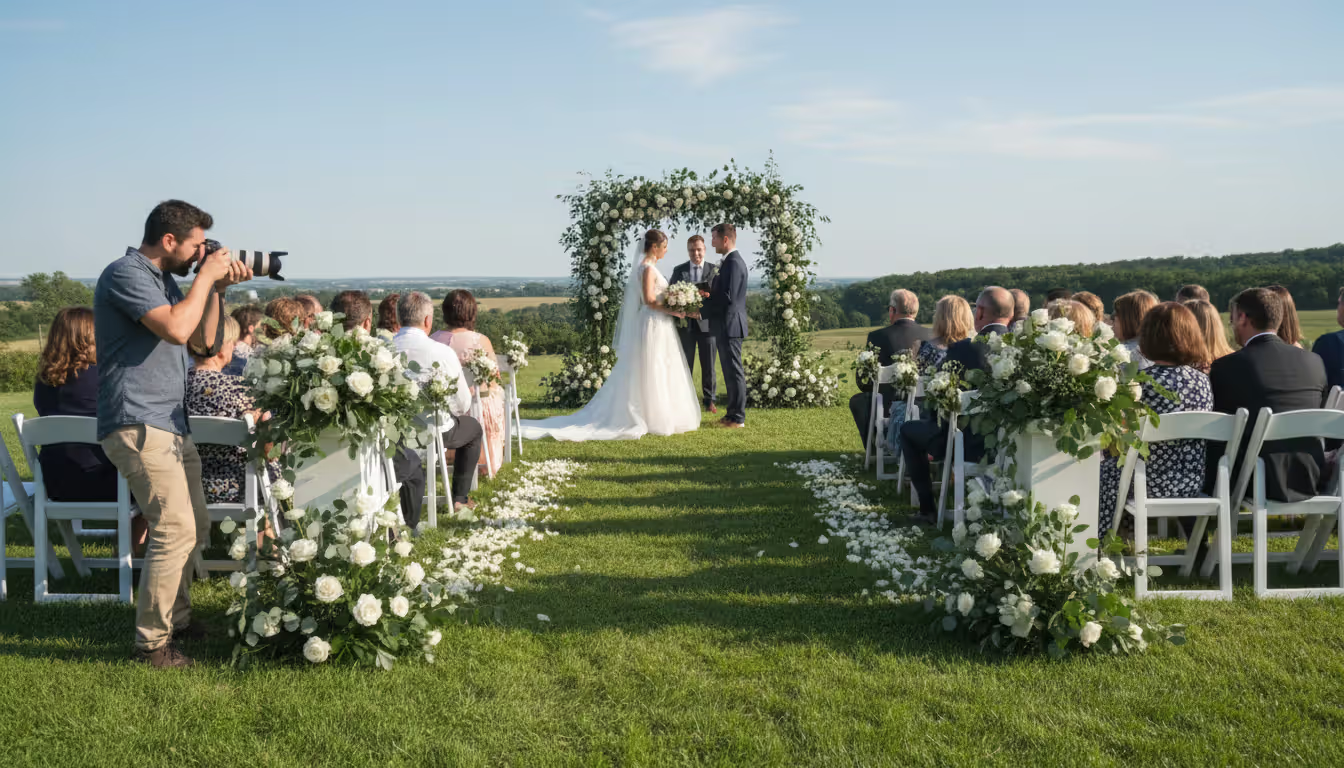
Wedding photographers typically pay more than portrait photographers because weddings are one-time events with high financial stakes. If you miss critical shots or fail to deliver, clients might sue for the cost of recreating the event—which is impossible—or emotional damages.
Drone photography adds significant cost due to aviation-related risks. Expect premiums to increase 50–200% if you regularly use drones commercially. Sports and action photography often costs more than studio work because of increased injury risks to subjects and bystanders.
Commercial work for corporate clients generally requires higher liability limits than consumer photography, increasing costs. Shooting in high-risk venues (construction sites, industrial facilities) or working with valuable products raises premiums compared to standard portrait sessions.
Business Revenue and Claims History
Insurers view higher revenue as increased exposure. A photographer earning $100,000 annually typically pays more than someone earning $25,000, even with identical coverage limits, because more revenue suggests more client interactions and greater potential claim severity.
Claims history significantly impacts pricing. One liability claim in the past three years might increase premiums 15–40%. Multiple claims or high-value claims can make coverage difficult to obtain at any price. Some photographers with problematic claims history end up in specialty high-risk markets with premiums 2–3 times standard rates.
Years in business also matter. Photographers with 5+ years of claims-free operation often qualify for experience discounts of 10–20%, while brand-new businesses might face higher rates or coverage restrictions until they establish a track record.
Author: Samantha Corbett;
Source: maryelizabethphoto.com
How to Compare Photography Insurance Quotes
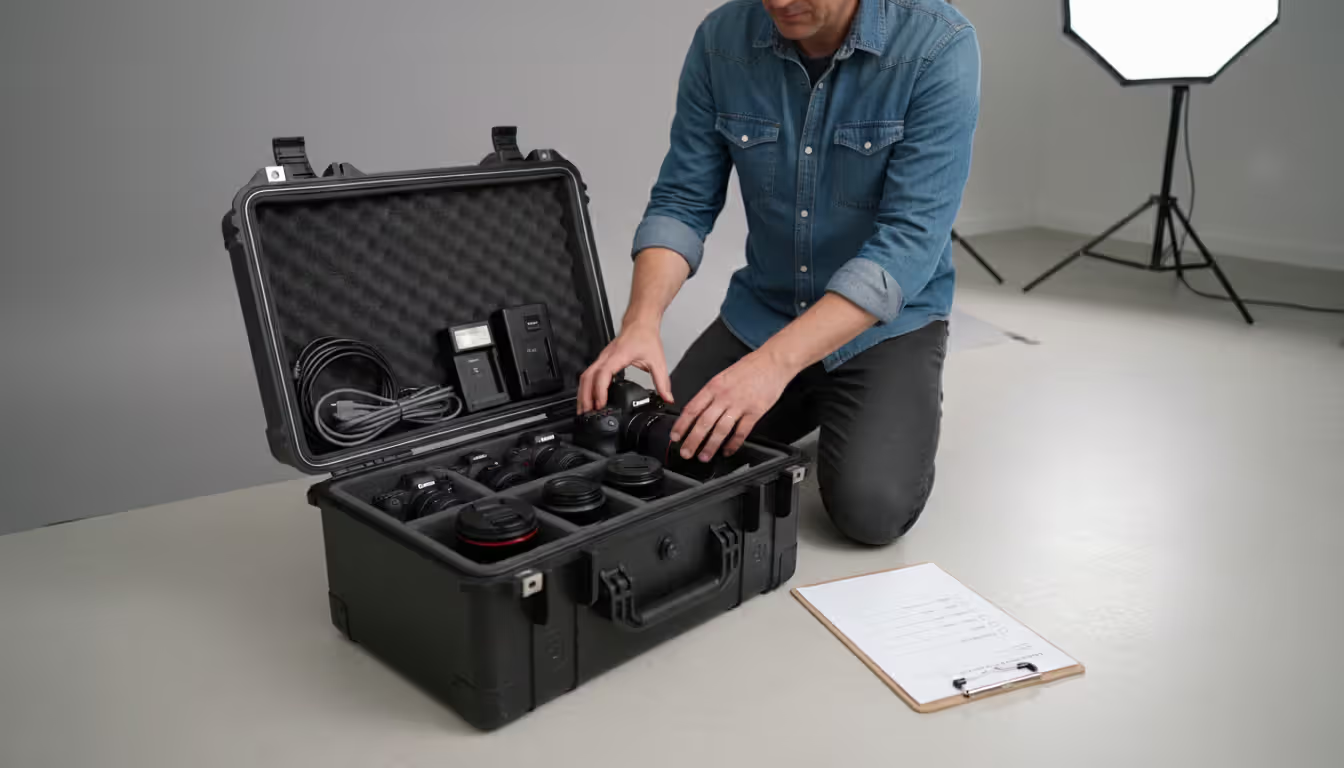
Getting accurate quotes requires providing consistent information to each carrier. Start by documenting your specific needs: annual revenue, equipment value (with serial numbers and purchase receipts), coverage limits desired, and preferred deductibles.
Request quotes from at least three different sources: direct insurance carriers, independent agents who represent multiple companies, and photography-specific insurers or professional association programs. Each source offers different advantages—direct carriers sometimes offer lower prices, while agents provide personalized service and claims assistance.
When reviewing quotes, look beyond the premium amount. Compare coverage limits, exclusions, deductibles, and policy terms. A $400 policy with a $500 deductible and worldwide coverage might provide better value than a $350 policy with a $1,000 deductible that excludes international travel.
Ask specific questions about scenarios relevant to your work. If you shoot weddings, ask: "Does this policy cover me if a venue requires $2 million in liability coverage?" For equipment coverage: "Am I covered if gear is stolen from my locked vehicle overnight?" Get answers in writing before purchasing.
Red flags include vague policy language, unwillingness to provide sample policy documents before purchase, pressure to buy immediately without time to compare, and prices significantly below market rates. Legitimate insurers provide clear documentation and reasonable time to make informed decisions.
Check the carrier's financial strength rating through A.M. Best or similar rating agencies. Stick with companies rated A- or higher to ensure they can pay claims when needed. A cheap policy from a financially unstable carrier provides false security.
Photographers often focus exclusively on premium cost and miss critical coverage gaps. I've seen photographers lose thousands because they bought the cheapest policy without understanding what it excluded. Spend time comparing actual coverage, not just price tags. The best quote balances adequate protection with affordable premiums
— Jennifer Martinez
Ways to Lower Your Photography Insurance Premium
Bundling multiple coverage types with one carrier typically saves 10–25% compared to buying separate policies. Combining general liability, equipment, and professional liability from the same insurer often triggers multi-policy discounts.
Increasing deductibles reduces premiums immediately. Moving from a $250 to $500 deductible might save 15–20% annually. Just ensure you maintain an emergency fund to cover the higher out-of-pocket expense if you need to file a claim.
Professional association memberships often provide access to group insurance programs with discounted rates. Organizations like Professional Photographers of America (PPA) offer members insurance options that can cost 15–30% less than individual policies. Annual membership fees typically pay for themselves through insurance savings alone.
Installing security measures reduces equipment theft risk and premiums. Insurers may offer discounts for GPS tracking on gear bags, alarm systems in studios, or secure storage solutions. Document these measures when requesting quotes.
Paying annually instead of monthly eliminates financing fees and can save 5–10% on total premium costs. If cash flow allows, annual payment provides better value than monthly installments.
Maintaining a claims-free history earns renewal discounts over time. Many carriers reduce premiums 5–10% after three years without claims, with additional discounts for longer claims-free periods. Avoid filing small claims that barely exceed your deductible—paying minor losses out-of-pocket preserves your claims history.
Taking business safety courses or risk management training sometimes qualifies you for discounts. Some insurers reduce premiums 5–10% for photographers who complete approved safety programs or business management courses.
Author: Samantha Corbett;
Source: maryelizabethphoto.com
Common Mistakes When Shopping for Photography Insurance
Underinsuring equipment is the most frequent error. Photographers often insure their cameras and primary lenses but forget to include flashes, light stands, computers, software, backup drives, and accessories. Total everything you'd need to replace after a complete loss, including sales tax and current replacement costs, not what you originally paid years ago.
Assuming homeowners or renters insurance covers business equipment leads to nasty surprises after losses. Personal property policies typically exclude or severely limit coverage for business property and provide no liability protection for business activities. That $15,000 camera setup stolen from your car might receive only $2,500 coverage under a standard homeowners policy—if it's covered at all.
Focusing exclusively on price without reading policy exclusions creates coverage gaps. A policy might exclude certain photography types, international travel, drone use, or coverage at specific venue types. That cheap wedding photography policy might not cover destination weddings, leaving you exposed during your most profitable jobs.
Forgetting to update coverage as your business grows means being underinsured when you need protection most. Review and adjust coverage annually or whenever you acquire significant new equipment or increase revenue substantially. The policy that fit your part-time business won't adequately protect your full-time operation.
Author: Samantha Corbett;
Source: maryelizabethphoto.com
Not understanding the difference between replacement cost and actual cash value coverage costs photographers thousands after claims. Replacement cost pays to replace equipment with new items of similar quality. Actual cash value deducts depreciation, paying only current used-market value. A three-year-old camera body with $2,000 replacement cost might receive only $800 under actual cash value coverage.
Skipping professional liability coverage because "I'm careful" ignores reality. Even perfect photographers face claims from unreasonable clients. Professional liability covers defense costs even when claims are groundless, protecting your business assets from legal expenses that can exceed $10,000 before reaching trial.
Frequently Asked Questions About Photography Insurance Costs
Do I need insurance if I only do photography part-time?
Yes, if you charge for services or have clients sign contracts. Part-time work creates the same liability exposure as full-time photography. A client can sue you whether photography is your primary income or side business. Even free work for nonprofits or friends exposes you to liability if something goes wrong. Basic coverage for part-time photographers costs $250–550 annually—far less than defending a single lawsuit.
What's the difference between general liability and equipment insurance for photographers?
General liability covers injury to others and damage to their property caused by your business operations. Equipment insurance covers your own cameras, lenses, and gear against theft, damage, or loss. Liability protects others from harm you cause; equipment insurance protects your business assets. Most photographers need both—liability is legally required by many venues and clients, while equipment insurance protects your ability to work after gear loss.
Can I get photography insurance for a single event or shoot?
Yes, short-term or event-specific policies are available, typically costing $50–200 depending on coverage limits and event type. These work well for photographers who shoot only occasionally or need coverage for one high-risk event. However, if you shoot more than 3–4 events yearly, annual coverage usually costs less than buying multiple single-event policies.
Does homeowners insurance cover my photography equipment?
Homeowners policies provide limited coverage for business property, often capping business equipment at $2,500–5,000 regardless of actual value. They typically don't cover equipment outside your home and exclude business liability entirely. Professional photography insurance covers equipment anywhere in the world (or within specified territories) and includes business liability protection homeowners policies don't provide.
How quickly can I get a photography insurance quote?
Most insurers provide quotes within 24 hours, and many online platforms generate instant quotes if you have necessary information ready. Simple policies for part-time photographers can often be purchased and activated same-day. More complex coverage for established businesses might require 2–3 days for underwriting review, especially if you need high equipment limits or have previous claims history.
Are there discounts available for photography insurance?
Yes, common discounts include multi-policy bundling (10–25% savings), professional association memberships (15–30% savings), claims-free history (5–10% after 3+ years), annual payment rather than monthly (5–10% savings), and security measures like equipment tracking or studio alarms (5–10% savings). Stack multiple discounts to significantly reduce premiums—a photographer combining association membership, annual payment, and multi-policy bundling might save 30–40% off standard rates.
Photography insurance costs vary based on your specific business circumstances, but most photographers find comprehensive coverage surprisingly affordable compared to the risks of operating uninsured. Whether you're paying $300 annually as a part-time photographer or $2,000 as an established professional, insurance protects both your business assets and personal finances from claims that could otherwise end your photography career.
Start by accurately assessing your coverage needs—total equipment value, appropriate liability limits for your work type, and any specialized coverage for drones or international travel. Request quotes from multiple sources, comparing actual coverage details rather than just premium amounts. Look for opportunities to reduce costs through professional associations, bundling, and higher deductibles that match your financial situation.
Avoid common mistakes like underinsuring equipment, assuming homeowners coverage applies to business property, or selecting policies based solely on price without understanding exclusions. Review and update coverage annually as your business grows and your equipment inventory changes.
The right photography insurance provides peace of mind that equipment losses or liability claims won't derail your business. Invest time comparing quotes and understanding coverage options—the few hours spent researching can save thousands in premiums over your career while ensuring you have adequate protection when you need it most.
Wedding photographers face unique risks requiring specialized insurance coverage. Learn about liability protection, equipment coverage, one-day vs. annual policies, venue requirements, and how to choose insurance that protects your business from lawsuits, equipment loss, and professional errors
Running a photography business means investing thousands in gear and facing liability risks at venues and events. The right insurance protects your equipment and livelihood when accidents happen. Learn what coverage you need, costs by business type, and mistakes to avoid
Photography insurance protects your business from lawsuits, equipment loss, and professional liability claims. Learn what coverage photographers need, how much policies cost, and how to choose the right protection for your specialty—from wedding photography to commercial work
Professional photographers invest thousands in gear that can disappear in seconds through theft, accidents, or disasters. Photography equipment insurance typically costs $150-$900 annually, with rates varying based on gear value, coverage limits, and location. Understanding pricing factors helps you budget appropriately
The content on this website is provided for general informational and educational purposes only. It is intended to explain concepts related to running a photography business, insurance coverage, marketing, websites, and professional development.
All information on this website, including articles, guides, and examples, is presented for general educational purposes. Outcomes may vary depending on business size, location, and individual choices.
This website does not provide professional legal, insurance, financial, or business advice, and the information presented should not be used as a substitute for consultation with qualified professionals.
The website and its authors are not responsible for any errors or omissions, or for any outcomes resulting from decisions made based on the information provided on this website.