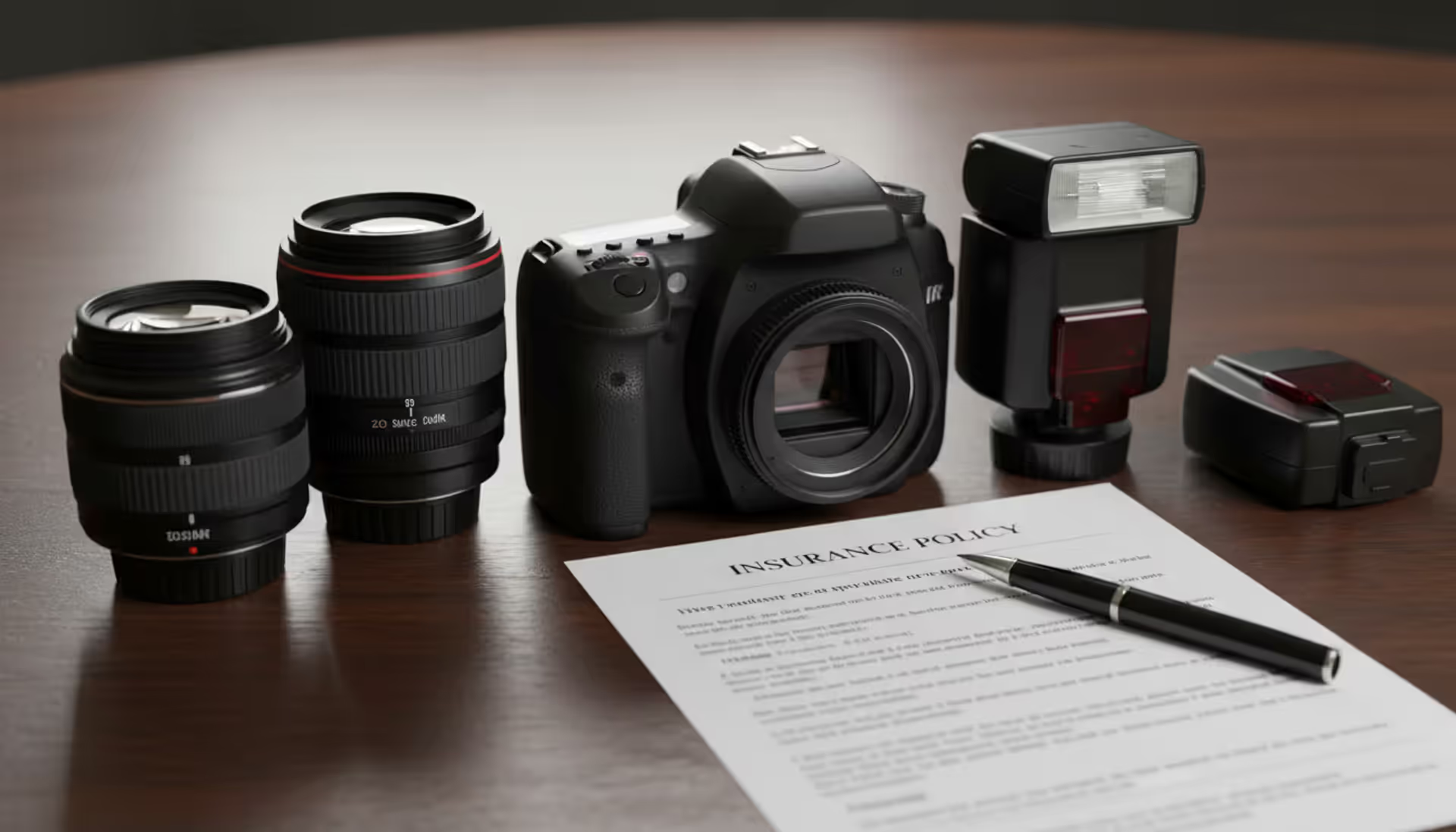
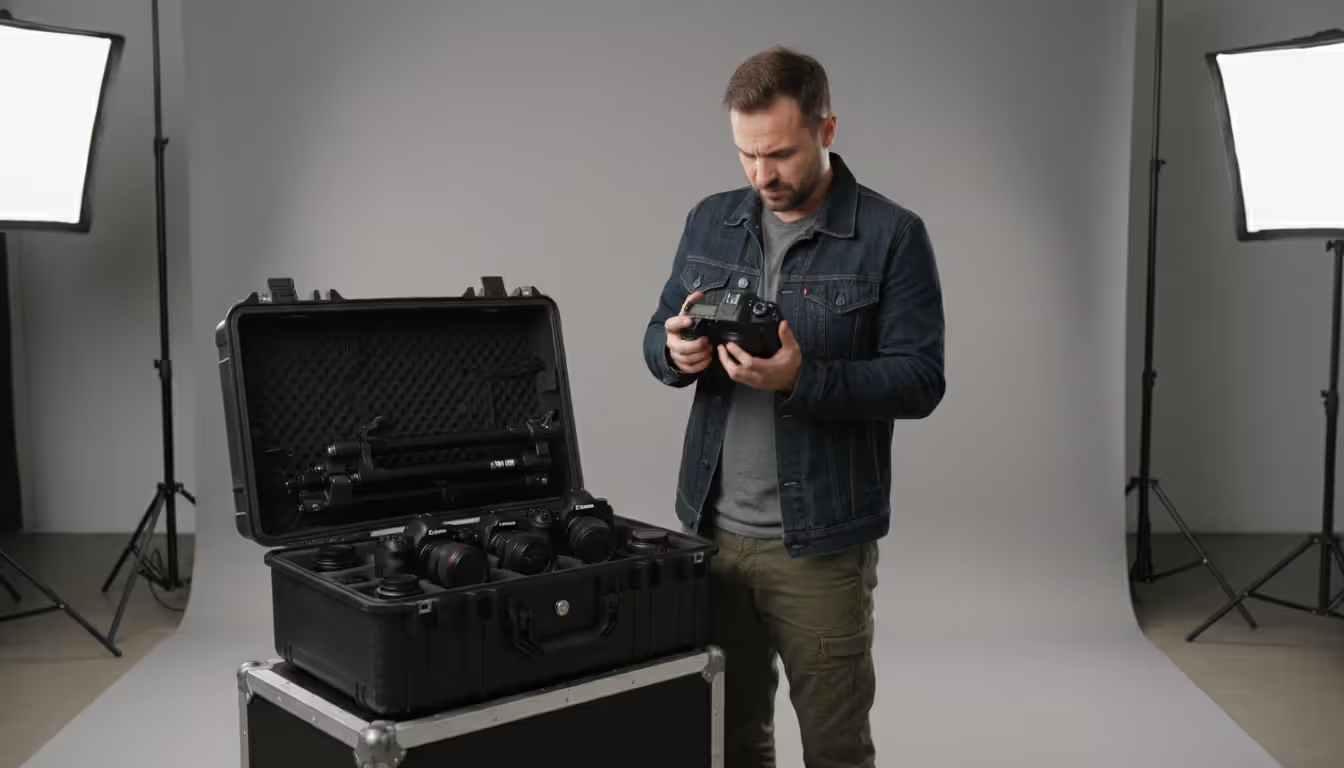
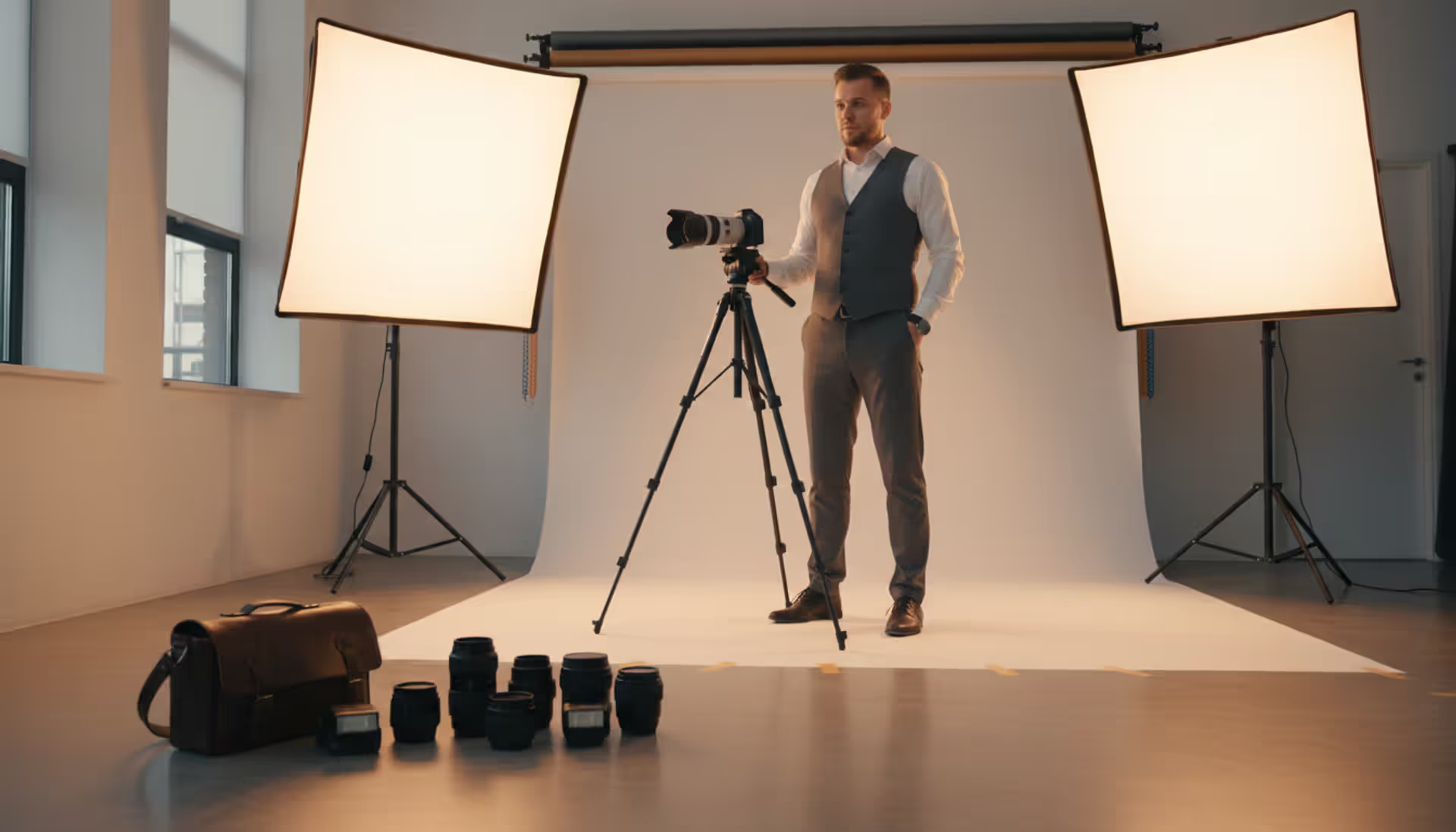
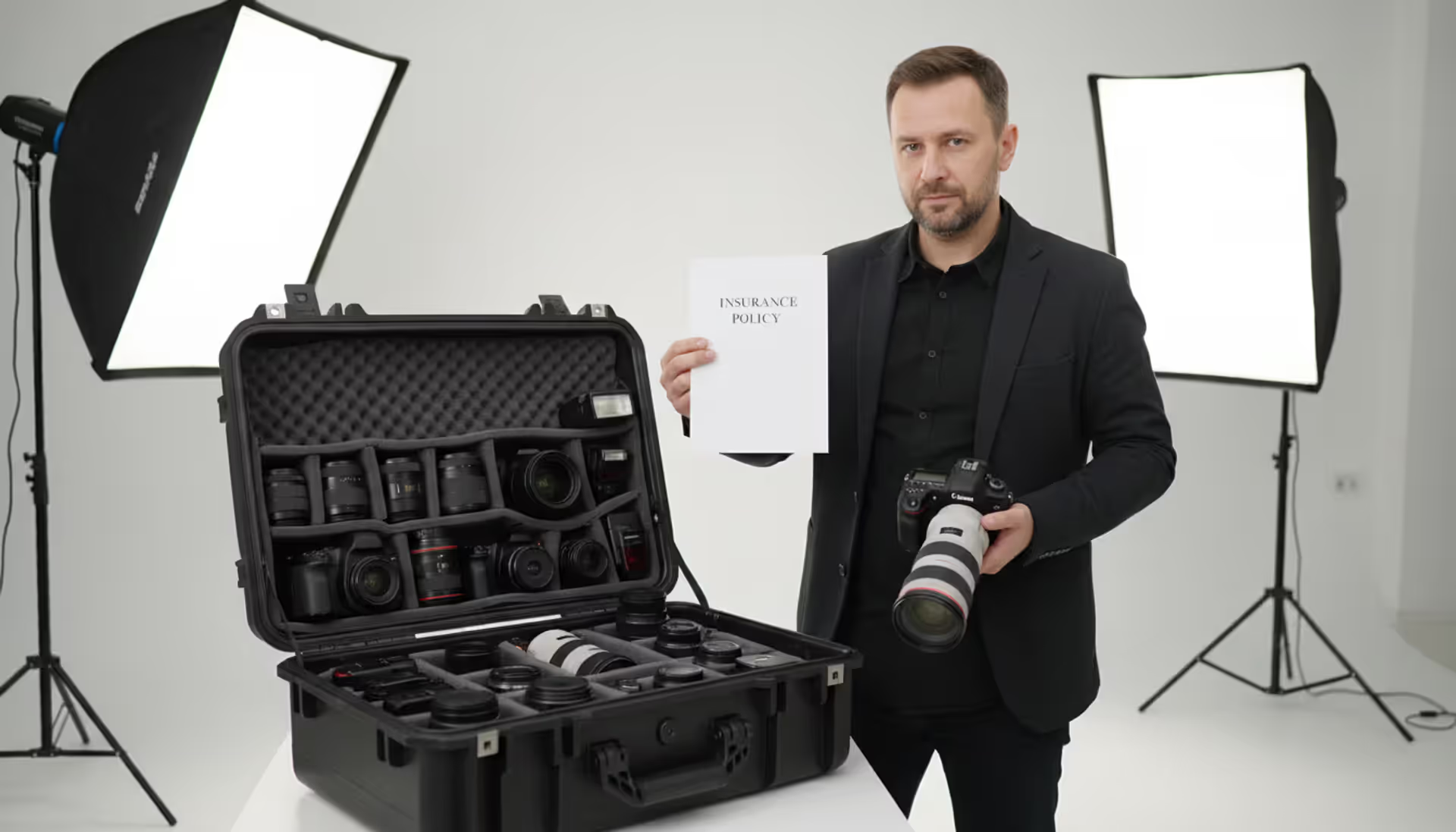
Professional photographers sink serious money into their gear—sometimes $30,000, $50,000, or more in cameras, lenses, lighting rigs, and accessories. One break-in at your car. One stumble with your camera bag. One flood in your storage unit. Any of these wipes out your business overnight if you're not protected. Figuring out what you'll actually pay for insurance helps you plan your budget and pick coverage that makes sense for how you work.
How Much Does Photography Equipment Insurance Cost
You're looking at somewhere between $150 and $900 per year for equipment insurance if you're a working photographer. Why such a huge range? It depends on how much gear you own and what kind of protection you want.
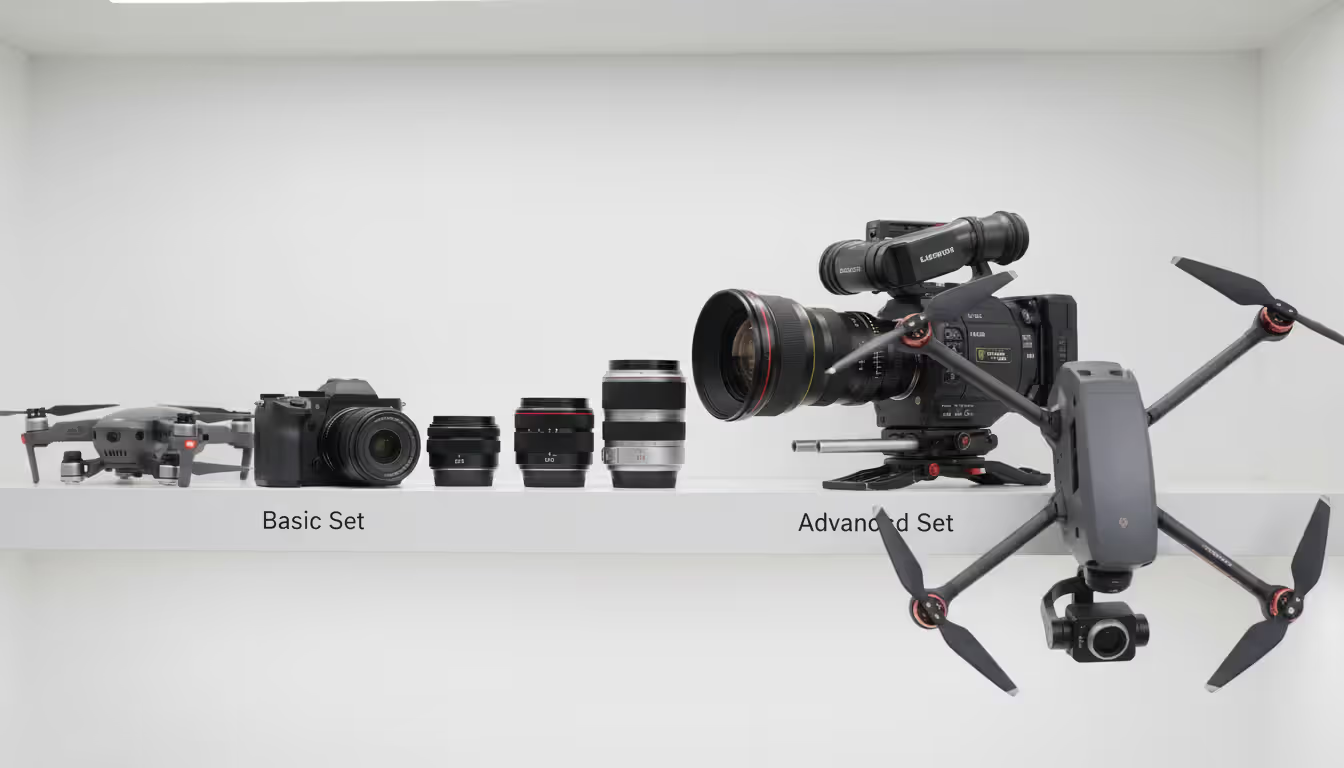
Got a starter kit worth $5,000 to $10,000? Budget around $200 to $350 yearly. If your collection sits in the $15,000 to $30,000 range, you'll probably pay $400 to $650. Photographers hauling around $50,000-plus in equipment often see bills from $800 to $1,200 annually, though certain specialty insurers handle expensive collections more efficiently than others.
Paying monthly instead of all at once? You'll spend 10-15% more over the year. That $360 annual policy becomes $35/month, which adds up to $420 when December rolls around.
Your deductible choice makes a massive difference in what you pay. Drop from a $250 deductible to $500 and you'll cut your annual bill by 15-25%. Jump to $1,000 and you'll save even more—but you're on the hook for bigger out-of-pocket costs when something goes wrong. Most photographers land on $500 deductibles. It's low enough that filing smaller claims still makes sense, but high enough to keep premiums manageable.
Some companies calculate your premium as 2-4% of whatever you're insuring. Others use pricing tiers that get more efficient as your gear value climbs. A $20,000 collection might cost you 3% ($600), while someone with $50,000 in equipment only pays 2.2% ($1,100) since the insurance company spreads their overhead across a bigger policy.
Author: Olivia Wrenford;
Source: maryelizabethphoto.com
What Affects Your Photography Insurance Premium
When insurance companies price your policy, they're weighing several risk factors. Understanding what drives these numbers helps you predict costs and spot ways to spend less.
How much your gear is worth matters more than anything else. Insurers pay more to replace expensive equipment, so they charge more to cover it. Someone with two camera bodies, three lenses, and basic lights pays way less than a photographer carrying cinema cameras, drones, and a complete studio setup.
Where you live can swing your rate by 20-40%. High-crime cities cost more to insure than quiet rural areas. Places that get hammered by hurricanes, earthquakes, or floods also see premium bumps. A photographer working in Miami might fork over $150 more annually than someone in Boise shooting with identical gear.
Your claims track record follows you around. File two claims in three years? Expect your renewal to jump 25-50%. That's why some photographers eat losses under $1,000 instead of filing—they're essentially paying small losses themselves to avoid long-term rate hikes.
What limits and deductibles you pick create obvious tradeoffs. Want higher coverage limits? You'll pay more. Choose a lower deductible? Also more expensive, since the insurer covers more of your small losses. Someone picking $100,000 in coverage with a $250 deductible pays dramatically more than another photographer who goes with $50,000 coverage and a $1,000 deductible.
How big your business is affects comprehensive policy pricing. A part-timer pulling in $15,000 yearly gets different rates than an established studio doing $150,000 in revenue. Higher revenue signals more shoots, more gear in motion, and more chances for something to go wrong.
How you secure your equipment can drop your premiums 5-15%. Store everything in an alarmed facility? Use GPS trackers on your gear bags? Keep detailed inventories with serial numbers for everything? You're showing the insurance company you're lower risk. Some offer specific discounts for security cameras, safes, or vehicle alarms.
Author: Olivia Wrenford;
Source: maryelizabethphoto.com
Photography Liability Insurance Cost Breakdown
Equipment coverage protects your cameras and lenses. Liability insurance handles a completely different problem: lawsuits from clients, property owners, or people who get hurt around you.
General liability for photographers usually runs $350 to $800 yearly for $1 million in coverage (with $2 million aggregate limits). This covers bodily injury and property damage involving third parties. A wedding guest trips over your light stand and breaks their wrist? General liability handles their medical bills and any lawsuit they file. You knock over an expensive vase at a portrait location? The policy covers the replacement.
Professional liability (also called errors and omissions) costs $500 to $1,500 per year for comparable limits. This one addresses accusations that your work wasn't up to professional standards or caused financial damage. Say your memory card corrupts and you lose every photo from a wedding ceremony. The couple might sue, claiming you were negligent. Professional liability pays for your legal defense and any settlement.
Here's the thing: lots of photographers need both types. A couple might sue you for emotional distress (professional liability territory) because you missed key moments, while simultaneously claiming the bride's grandmother got injured tripping over your bag (that's general liability). Combined coverage typically costs $800 to $1,800 annually.
Venues and corporate clients often won't let you through the door without proof of insurance—usually they want to see at least $1 million in general liability. No certificate of insurance? You don't get the booking. Wedding venues and corporate offices almost universally require this before granting access.
Industry expert perspective:
I see this pattern constantly—photographers insure $75,000 worth of cameras while working completely naked on liability. They've got the risk calculation backwards. A lawsuit from a client who says you destroyed their wedding memories can run way higher than replacing every camera you own. I always tell photographers to build their insurance from liability coverage first, then add equipment protection. Not the other way around
— Jennifer Hartmann
Short-Term and One-Day Photography Insurance Options
Annual coverage doesn't work for everyone. Event-specific policies make sense for hobbyists doing occasional paid work, photographers handling rare high-value projects, or anyone who only shoots a few times yearly.
One-day event policies typically run $50 to $200, depending on what you're covering and what kind of event you're shooting. A basic policy protecting $10,000 in gear with $1 million liability for a single wedding day might cost $75. Corporate event coverage with beefier liability limits could hit $150 for the same timeframe.
Policies covering several weeks or a specific month cost more per day than annual coverage but less than buying multiple one-day policies back-to-back. A photographer booking three June weddings might grab month-long coverage for $100-$150 instead of shelling out $225 for three separate daily policies.
The economics shift based on how often you shoot:
Coverage Length
What You'll Pay
Gear Covered
Liability
When It Makes Sense
Single event
$75
$10,000
$1M
One-off high-value shoot
One month
$100-$150
$10,000
$1M
2-3 events in that month
Full year
$400-$600
$10,000
$1M
6 or more events yearly
Shooting fewer than six paid gigs per year? Event coverage usually saves you money. Working monthly or more? Annual policies bring your per-day cost way down.
One-day policies shine in specific situations: destination weddings where you're bringing rented equipment, corporate events at venues demanding proof of insurance, or risky shoots like aerial photography where you want extra protection beyond your regular policy.
Getting temporary coverage is fast—most insurers give you instant online quotes and same-day certificates. You can literally buy coverage the morning of a shoot if you have to, though rushing means you might miss important policy details buried in the fine print.
Types of Coverage for Photography Businesses
Complete protection for photography operations usually combines several insurance types. Each addresses different risks and adds its own cost to your total bill.
Equipment and Gear Protection
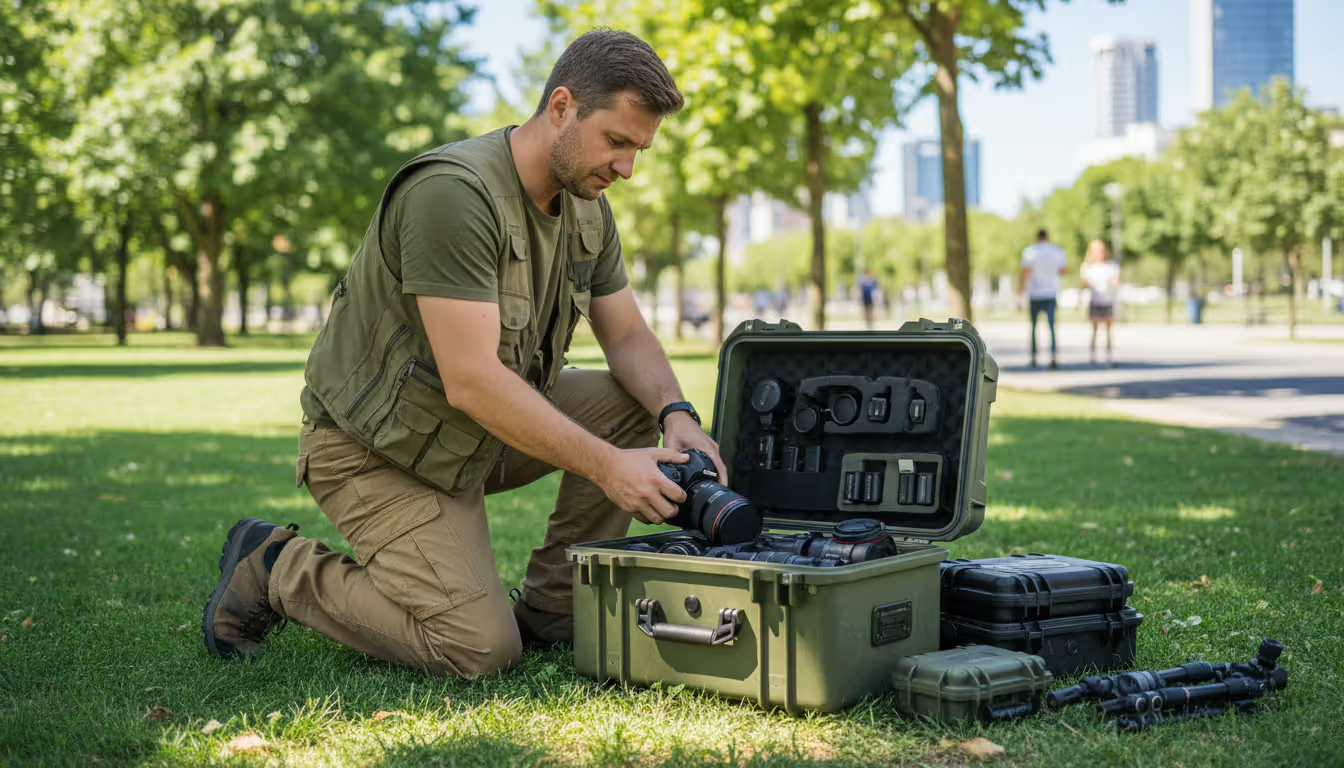
Inland marine policies (the insurance industry's technical term for this) cover cameras, lenses, lights, computers, and accessories when they're stolen, damaged accidentally, or lost. Your gear is protected whether it's sitting in your studio, locked in your trunk, at a shoot, or being shipped somewhere.
Most equipment policies work on an "all-risk" basis—they cover basically anything that's not specifically excluded. Drop your camera swapping lenses? You're covered. Someone steals your bag from your locked car? Covered. Lightning fries your equipment during a studio electrical surge? Also covered.
How claims get paid depends on which valuation method you choose:
Actual cash value policies cost 15-25% less but depreciate your gear when paying claims. That camera you bought for $3,000 three years ago? After depreciation, you might only get $1,800.
Replacement cost coverage costs more upfront but pays whatever you'd spend today to replace stolen or destroyed items with equivalent new equipment. Same $3,000 camera gets you a full $3,000 payout (minus your deductible), even if the current model now costs $3,200.
Most working pros pick replacement cost despite the higher premium because it actually lets them replace gear and keep working after a loss.
Author: Olivia Wrenford;
Source: maryelizabethphoto.com
Business Liability Coverage
Beyond general and professional liability, several specialized coverages address photography-specific risks:
Hired and non-owned auto liability kicks in when you're using rental vehicles or your personal car for business. Cause an accident driving to a wedding? This fills gaps your personal auto insurance might not cover for commercial use. Expect to pay $150-$300 yearly.
Cyber liability deals with data breaches and digital problems. Hackers access your client database? You accidentally expose private photos from a boudoir session? Cyber liability covers notification costs, credit monitoring for affected clients, and potential lawsuits. This is becoming critical as photographers store more client data digitally. Small operations usually pay $400-$800 annually.
Liquor liability matters if you serve alcohol at studio events or client meetings. Standard general liability excludes alcohol-related claims. This runs $200-$500 yearly depending on how often you serve and how much.
Author: Olivia Wrenford;
Source: maryelizabethphoto.com
Additional Coverage Options
Business interruption replaces lost income when covered events stop you from working. Fire damages your studio and you can't shoot for three months? Business interruption pays your ongoing expenses and lost revenue during repairs. Costs vary based on how much revenue you're protecting, but typically run $300-$700 per year.
Workers compensation becomes legally required in most states once you hire employees or use regular contractors. Rates depend on your state and payroll size—usually $0.75 to $2.50 per $100 of payroll for photography operations.
Commercial property protects studio spaces you own or lease. Covers building damage, built-in equipment, furniture, and business property. Pricing depends heavily on location, building age, and limits—figure $500-$2,000 yearly for typical small studios.
How to Lower Your Photography Insurance Costs
Smart photographers cut their premiums without sacrificing critical protection. Here's how they do it.
Package everything with one carrier. Buying equipment, liability, and business property insurance from the same company usually triggers 10-20% multi-policy discounts. A photographer paying $450 for equipment and $600 for liability separately might only pay $900 total when bundled.
Beef up your security to qualify for discounts. Install a monitored alarm in your studio (5-10% off), use tracking devices on equipment (5% discount), or store gear in commercial safes overnight (5-15% discount). Document everything with photos and receipts when applying for coverage.
Author: Olivia Wrenford;
Source: maryelizabethphoto.com
Raise your equipment deductible strategically. Moving from $250 to $500 saves 15-20% annually. Jumping to $1,000 saves 25-30%. Run the numbers—do your annual savings justify the higher out-of-pocket cost if you actually file a claim? Photographers with healthy emergency funds benefit most from higher deductibles.
Tap into professional association group programs. Organizations like Professional Photographers of America (PPA) and American Society of Media Photographers (ASMP) negotiate member rates that run 10-25% below retail. Annual dues of $200-$400 often pay for themselves through insurance savings alone.
Think twice before filing small claims. Filing a $600 claim might trigger premium increases totaling $800-$1,200 over the next three years. Many photographers build emergency funds to self-insure losses below $1,000-$1,500 rather than filing claims that damage their record.
Get fresh quotes every few years even if you love your current insurer. Insurance markets shift constantly. Companies adjust their pricing strategies regularly. Grab quotes from at least three photography-focused insurers—identical coverage can vary by 30% or more between carriers.
Review your inventory annually instead of over-insuring. Some photographers keep insuring gear at original prices despite depreciation, or worse, keep paying premiums on equipment they sold years ago. Annual reviews ensure you're not wasting money on coverage you don't need. Just don't undervalue everything to save a few bucks—you'll regret it when claims get paid out at those artificially low amounts.
Pay annually when you can swing it instead of monthly installments. That 10-15% payment plan surcharge costs $50-$150 yearly that you could save by paying upfront.
Frequently Asked Questions About Photography Insurance Costs
Can I write off photography insurance on my taxes?
Absolutely. Every penny you spend on legitimate business insurance comes off your taxable income as an ordinary business expense. Equipment coverage, liability policies, business interruption—all of it. Save your receipts and give them to your tax preparer. The deduction effectively drops your real cost by whatever tax bracket you're in (usually 20-35% for most photography businesses). A $600 premium only costs you $390-$480 after tax savings.
I only shoot weekends and evenings. Do I really need insurance?
Part-time work doesn't mean part-time risk. Your equipment can still get stolen. Clients can still sue you. Venue property can still get damaged. The only difference is how much you're shooting, not whether bad things can happen. Many part-timers choose lower coverage limits or per-event policies to control costs while staying protected. The real question: are you accepting money for photography? Once you cross that line—even as a side business—you need appropriate coverage.
Won't my homeowners policy cover my cameras?
Standard homeowners policies typically cap business equipment coverage around $2,500, often with major restrictions. Many exclude gear used for business entirely or only cover equipment inside your home. That $15,000 camera kit stolen from your car at a wedding reception? Your homeowners insurer will probably deny the claim. Even when they do cover losses, filing business-related claims on homeowners insurance can jack up those premiums or get your policy cancelled. Dedicated photography insurance costs less than you think and provides vastly superior protection.
How does actual cash value differ from replacement cost coverage?
Actual cash value means they depreciate your equipment before paying claims. A camera you bought for $2,500 three years ago might only get you $1,400 after depreciation. Replacement cost pays whatever you'd spend today for equivalent new equipment—usually the full original value or current replacement price. Replacement cost policies run 15-25% more, but they ensure you can actually afford new gear and keep working after a loss. That's why most professional photographers choose replacement cost.
What about equipment I'm renting for a shoot?
You can insure rentals, and you definitely should. Rental agreements stick you with the bill for any damage or loss. Your regular equipment policy might automatically cover rentals—but check your specific policy language carefully. Many insurers include rented equipment up to certain limits (commonly $5,000-$10,000) in standard coverage. For expensive rentals or frequent use, you can buy additional coverage or temporarily increase your limits. Rental companies offer their own insurance, but it usually costs way more than adding rental coverage to your existing policy.
How fast can I actually get coverage?
Most photography-focused insurers provide instant online quotes and issue policies the same day. You can buy coverage and download certificates of insurance within hours for standard situations. I've heard of photographers getting one-day event coverage the morning of a shoot when a venue surprised them with an insurance requirement. That said, rushing this process means you might pick inadequate coverage or miss crucial policy details. Start at least a week before you need coverage when possible, so you can review options properly and ask questions.
What you'll pay for photography equipment insurance varies wildly—from gear value to coverage types to your individual risk profile—but most working photographers land somewhere between $400 and $900 yearly for solid protection combining equipment and liability coverage. Understanding what drives these costs (deductible choices, security measures, bundling opportunities) helps you optimize your coverage while controlling what you spend.
This investment protects more than just your cameras. It protects your ability to earn income and keep building your photography business when unexpected losses hit. Whether you need year-round coverage for regular professional work or event-specific policies for occasional shoots, proper insurance stops being an optional expense and becomes a fundamental business tool providing financial security and peace of mind.
Start by inventorying exactly what equipment you own, determining what coverage you actually need, and getting quotes from multiple insurers who understand photography. Time spent comparing options and reading policy details pays off through better protection and lower costs long-term.
Wedding photographers face unique risks requiring specialized insurance coverage. Learn about liability protection, equipment coverage, one-day vs. annual policies, venue requirements, and how to choose insurance that protects your business from lawsuits, equipment loss, and professional errors
Running a photography business means investing thousands in gear and facing liability risks at venues and events. The right insurance protects your equipment and livelihood when accidents happen. Learn what coverage you need, costs by business type, and mistakes to avoid
Photography insurance costs range from $200 to $2,000+ annually depending on your business size and coverage needs. This comprehensive guide breaks down average costs by photographer type, explains factors affecting quotes, and shows you how to compare policies effectively while avoiding common mistakes
Photography insurance protects your business from lawsuits, equipment loss, and professional liability claims. Learn what coverage photographers need, how much policies cost, and how to choose the right protection for your specialty—from wedding photography to commercial work
The content on this website is provided for general informational and educational purposes only. It is intended to explain concepts related to running a photography business, insurance coverage, marketing, websites, and professional development.
All information on this website, including articles, guides, and examples, is presented for general educational purposes. Outcomes may vary depending on business size, location, and individual choices.
This website does not provide professional legal, insurance, financial, or business advice, and the information presented should not be used as a substitute for consultation with qualified professionals.
The website and its authors are not responsible for any errors or omissions, or for any outcomes resulting from decisions made based on the information provided on this website.