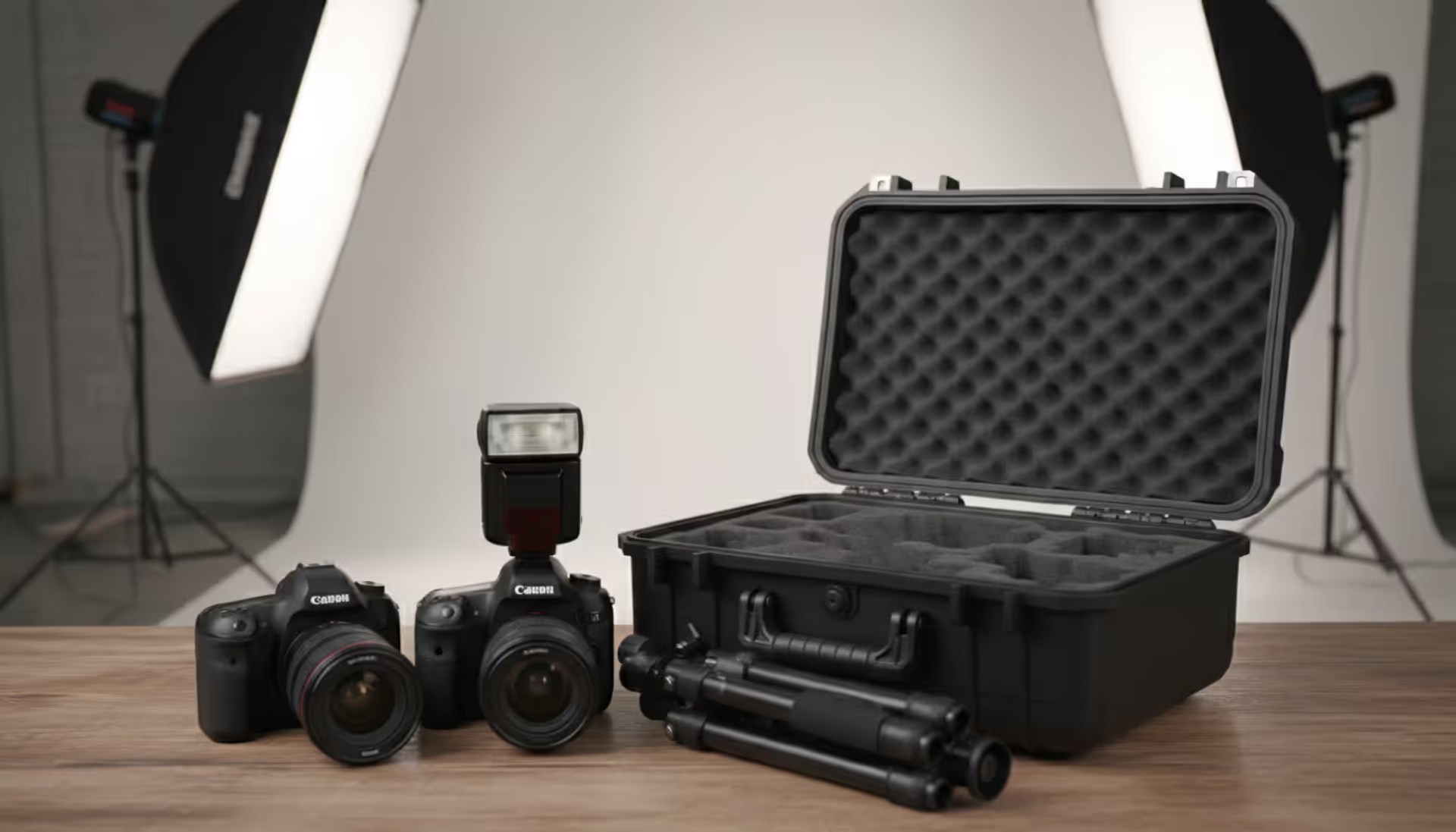
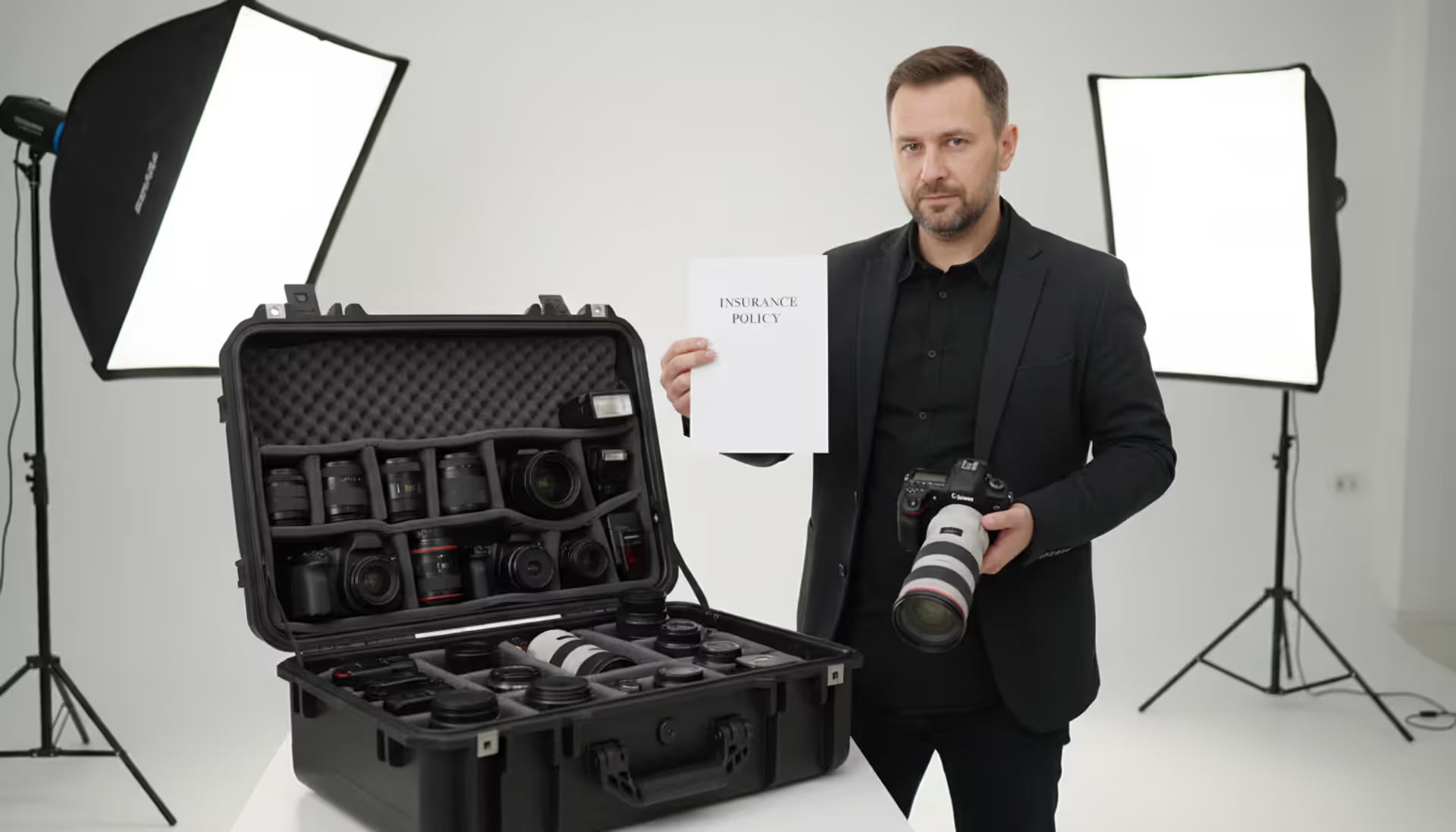
Professional camera body with attached lens, external flash unit, and tripod placed on a table next to an open protective hard case in a photography studio
Professional cameras, lenses, and lighting gear represent significant investments—often tens of thousands of dollars for working photographers. A single dropped lens, stolen camera bag, or water-damaged flash can derail both your workflow and finances. Standard homeowners policies rarely provide adequate protection for professional-grade equipment, leaving a coverage gap that specialized insurance fills.
Understanding your options helps you protect your gear without overpaying for unnecessary coverage or discovering gaps when you file a claim.
What Is Photography Equipment Insurance?
Photography equipment insurance is specialized coverage designed to protect cameras, lenses, lighting systems, tripods, drones, computers, and other gear photographers use. Unlike homeowners or renters insurance—which typically caps coverage for business equipment at $2,500 or excludes professional use entirely—these policies cover your gear's full value whether you're shooting commercially or recreationally.
The coverage follows your equipment anywhere: in your studio, at client locations, during destination weddings, or while traveling internationally. Most policies protect against theft, accidental damage, fire, water damage, and loss. If your camera falls from a tripod during a shoot, gets stolen from your vehicle, or suffers water damage during a beach session, you're covered up to your policy limits.
These policies differ fundamentally from homeowners insurance in several ways. First, they cover professional use—shooting paid events, commercial work, or selling prints. Second, they typically offer "replacement cost" coverage rather than depreciated value, meaning you receive enough to buy new equivalent gear. Third, deductibles are usually lower ($0-$1,000 versus $1,000-$2,500 for homeowners claims), and fourth, they cover equipment worldwide without geographic restrictions.
Some policies extend beyond physical gear to cover memory cards with undelivered images, rented equipment while in your possession, and even business interruption if damaged gear prevents you from fulfilling contracts.
Author: Derek Halston;
Source: maryelizabethphoto.com
Who Needs Insurance for Photography Equipment?
Professional photographers who earn income from their craft need insurance for photography equipment—full stop. If you shoot weddings, events, portraits, commercial work, or real estate, your gear is both your income source and a business asset. Losing a camera body the week before a booked wedding creates both financial loss and potential liability if you can't fulfill the contract.
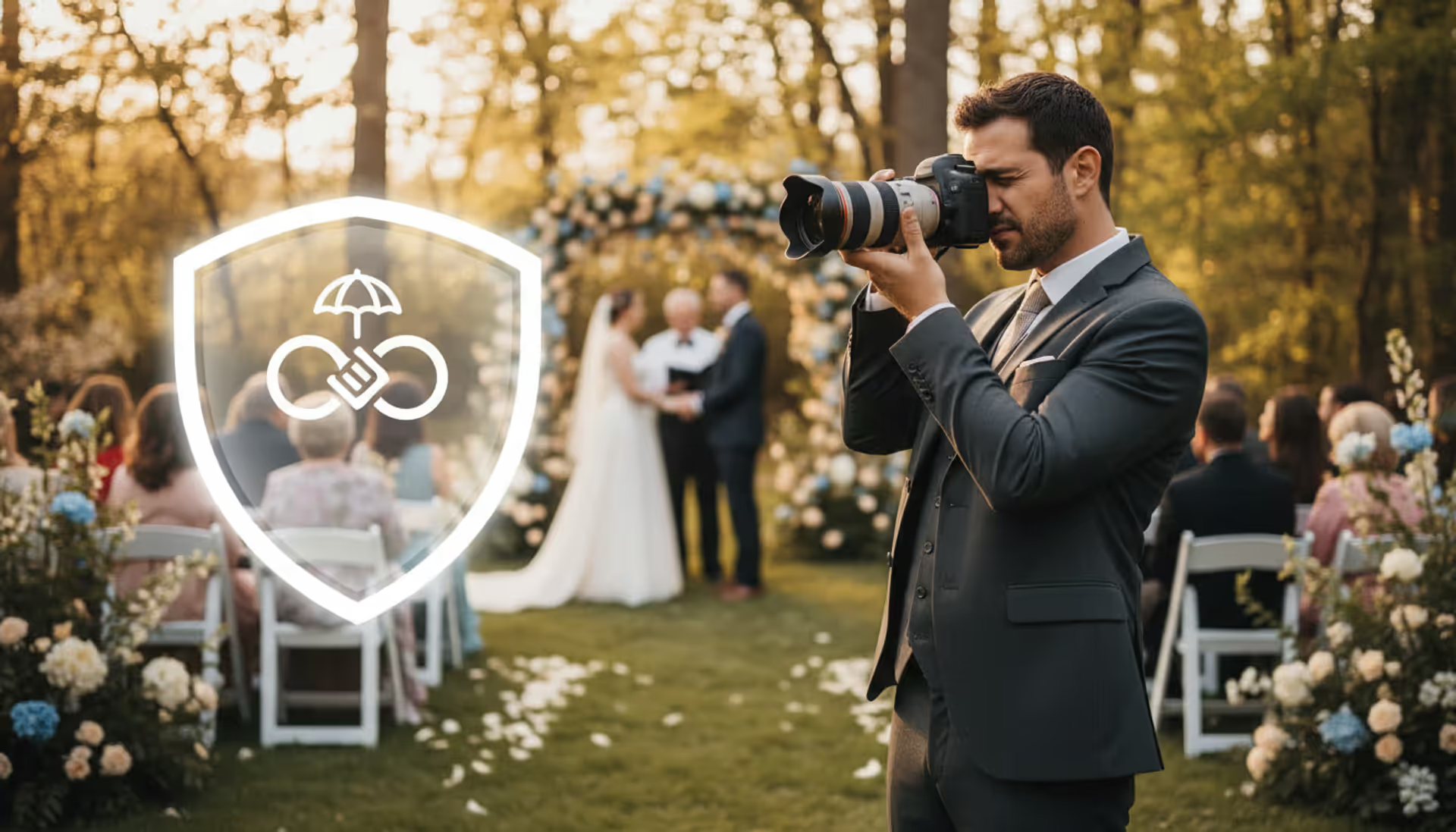
Wedding and event photographers face particularly high risk. You're transporting expensive gear to unfamiliar venues, working in crowded environments where theft occurs, and often shooting in challenging conditions (rain, heat, cold) that stress equipment. One photographer lost $8,000 in gear when her car was broken into between ceremony and reception venues—a 20-minute window that ended her weekend and required renting backup equipment at significant cost.
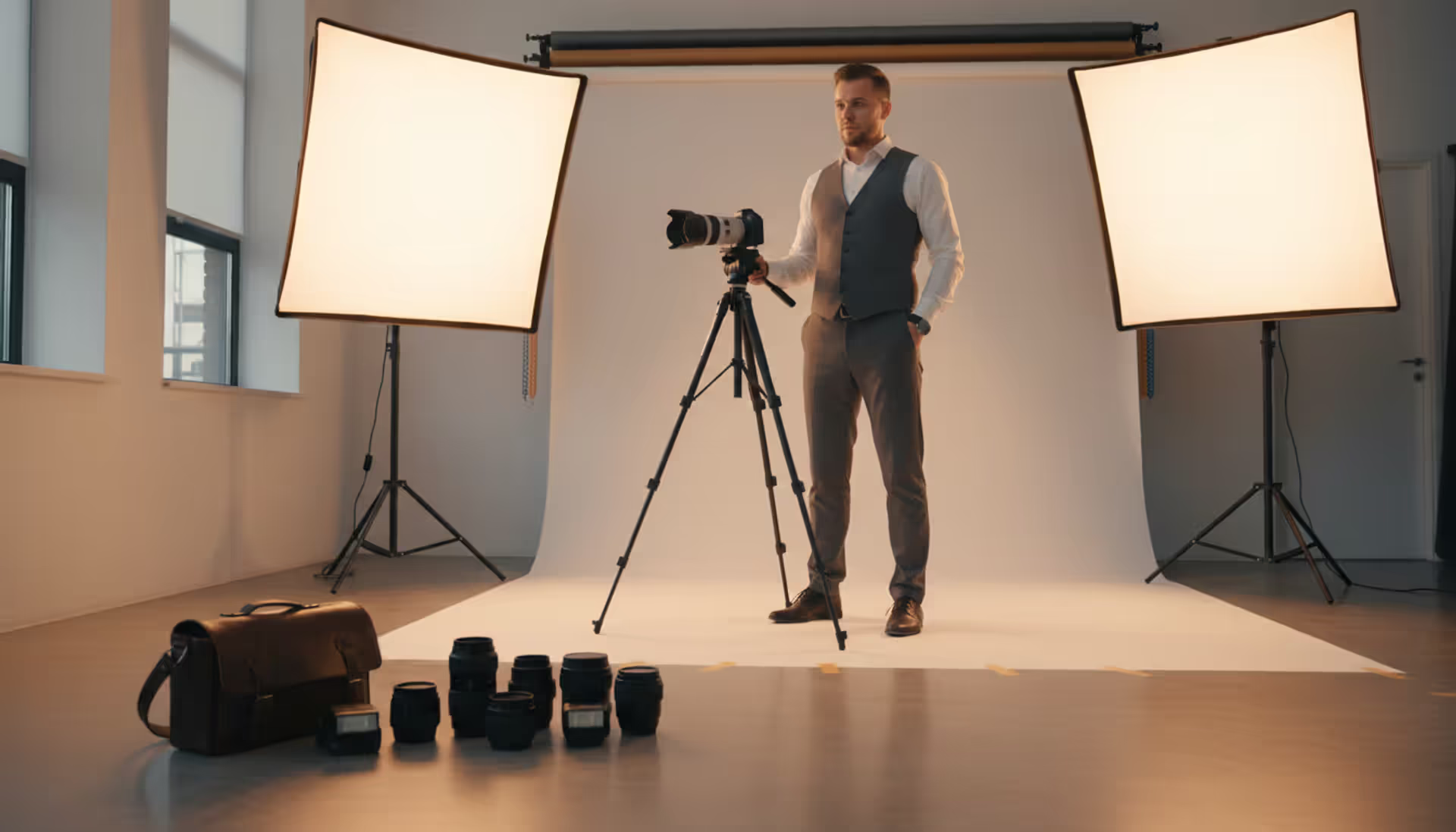
Studio owners with permanent lighting setups, backdrops, props, and multiple camera systems also need coverage. Fire, flooding, or break-ins can destroy entire studios. Without insurance, rebuilding means either substantial out-of-pocket costs or closing your business.
Serious hobbyists with gear collections exceeding $10,000-$15,000 should consider coverage too. Homeowners policies won't cover this value, and replacing several camera bodies, premium lenses, and accessories after theft or damage creates financial strain. If you travel frequently with gear for landscape or wildlife photography, the theft and damage risk increases substantially.
Part-time photographers building their businesses occupy a gray area. Once you accept payment for services—even occasionally—homeowners insurance typically excludes coverage. A single paid portrait session can void protection for all your equipment under a standard policy.
What Does Photo Gear Insurance Cover?
Photo gear insurance covers most scenarios where equipment is damaged, stolen, or lost. Theft coverage applies whether gear is stolen from your home, vehicle, studio, or while you're shooting on location. Policies don't require forced entry—if someone walks off with your unattended camera bag at a wedding reception, you're covered.
Accidental damage protection covers drops, falls, impacts, and mishandling. If you knock your camera off a table, drop a lens while changing it, or trip and fall on your equipment, the policy pays for repairs or replacement. This extends to damage caused by others—if a client's child knocks over your light stand, breaking a flash and modifier, you can file a claim.
Author: Derek Halston;
Source: maryelizabethphoto.com
Water and fire damage fall under most policies. Cameras damaged in rain, dropped in water, or caught in building fires qualify for claims. Some photographers have successfully claimed gear damaged when sprinkler systems activated during false alarms or when unexpected weather soaked equipment during outdoor shoots.
Loss during travel—whether equipment disappears during airline baggage handling, gets left behind in taxis, or vanishes from hotel rooms—typically qualifies for coverage. Worldwide coverage means claims are valid whether you're shooting locally or internationally.
Many policies include liability coverage, protecting you if your equipment causes injury or property damage. If your light stand falls and injures a wedding guest, or your drone crashes into someone's window, liability coverage handles legal costs and settlements.
Common Exclusions to Know
Policies exclude certain scenarios that photographers should understand before assuming coverage. Wear and tear, gradual deterioration, and mechanical breakdown from normal use aren't covered. If your camera shutter fails after 200,000 actuations, that's a maintenance issue, not a claimable event.
Mysterious disappearance—when you can't explain how or where equipment vanished—is excluded by most policies. "I had my lens yesterday, but now I can't find it" won't generate a payout. Theft requires evidence (police report, break-in signs, witness statements), and loss requires a specific incident you can describe.
Gear left unattended in vehicles overnight is often excluded or requires additional coverage. Insurers view this as negligent behavior. Some policies allow brief vehicle storage during active shooting days but exclude overnight parking.
War, terrorism, nuclear events, and intentional damage are standard exclusions. If you deliberately destroy equipment or someone you hired damages it intentionally, claims will be denied.
Confiscation by authorities, customs seizures, and government actions aren't covered. If border agents confiscate your gear or local police seize equipment during a protest you're documenting, you won't receive compensation.
Types of Camera Insurance for Photographers
Several policy structures provide camera insurance for photographers, each suited to different situations and business models.
Standalone photography equipment insurance offers dedicated coverage exclusively for your gear. Companies like TCP (The Coverage Pro), Hill & Usher, and Athos Insurance specialize in these policies. You select your coverage limit based on your total gear value, choose a deductible, and pay an annual or monthly premium. These policies are straightforward—they cover listed equipment and nothing else. Premiums typically run 1.5-3% of insured value annually, so $10,000 in gear costs roughly $150-$300 per year.
Business owner policies (BOPs) bundle equipment coverage with general liability, business interruption, and sometimes professional liability insurance. These comprehensive packages suit established photography businesses with studios, employees, or significant liability exposure. BOPs cost more than standalone equipment policies but provide broader protection. If a client sues you over missed wedding photos or someone injures themselves in your studio, the liability portions respond.
Inland marine coverage is a traditional insurance category that protects movable business property. Despite the name, it has nothing to do with water—it originated from cargo insurance and evolved to cover equipment that travels. Many business insurance providers offer inland marine policies for photographers. These policies function similarly to standalone equipment coverage but may integrate with other business insurance you carry.
Scheduled personal property endorsements attach to homeowners or renters insurance, listing specific high-value items for additional coverage. You "schedule" each camera, lens, and accessory with its value, and the insurer covers those items beyond standard policy limits. This approach works for hobbyists or part-time photographers who don't need commercial coverage. However, endorsements often exclude professional use, so read the fine print carefully.
Some photographers opt for hybrid approaches: scheduling personal gear under homeowners insurance while carrying separate commercial policies for professional equipment. This strategy can reduce overall costs but requires careful documentation of which items fall under which policy.
How to Choose the Best Photography Equipment Insurance
Selecting the best photography equipment insurance requires evaluating several factors beyond just premium cost.
Replacement cost versus actual cash value determines how much you receive after a claim. Replacement cost pays what you'd spend today to buy equivalent new gear. Actual cash value pays the depreciated value—what your used equipment was worth. A three-year-old camera body that cost $3,000 new might have an actual cash value of $1,500 but a replacement cost of $3,200 if the newer model costs more. Always choose replacement cost coverage unless premium savings are substantial and you're comfortable with depreciation risk.
Author: Derek Halston;
Source: maryelizabethphoto.com
Deductible choices directly impact premiums. A $0 deductible costs significantly more than $500 or $1,000 deductibles but means you pay nothing out-of-pocket when filing claims. Consider your financial cushion and claim likelihood. If you shoot in controlled studio environments, higher deductibles make sense. If you're constantly on location in unpredictable situations, lower deductibles provide peace of mind.
Coverage limits should match your total gear value plus a buffer for new purchases. Calculate your equipment's replacement cost, then add 10-20% for growth. Underinsuring saves premium dollars but leaves you exposed if you lose everything in a fire or theft. Most insurers let you adjust limits as you buy or sell gear.
Worldwide coverage matters for destination photographers. Some policies restrict coverage to the United States or require notification for international travel. If you shoot weddings abroad, document travel photography, or work with international clients, confirm your policy covers equipment anywhere without geographic restrictions or additional fees.
Claims process reputation separates good insurers from frustrating ones. Research how quickly companies process claims, whether they require extensive documentation, and how they handle disputes. Online reviews from other photographers provide insight—look for patterns of denied claims, slow processing, or poor customer service. A slightly higher premium with a responsive, photographer-friendly insurer often proves worthwhile when you actually need to file.
Customer reviews specific to photography insurance help identify issues. General insurance review sites may not capture photography-specific concerns like coverage for drone equipment, memory card data, or rented gear. Photography forums and Facebook groups often contain detailed claim experiences and insurer comparisons.
What Photography Equipment Insurance Costs
Premium costs vary based on several factors, but photographers typically pay between 1.5% and 4% of insured value annually. For $10,000 in gear, expect premiums between $150 and $400 per year. For $50,000 in equipment, annual costs run $750-$2,000.
Gear value is the primary cost driver. Higher coverage limits mean higher premiums, though rates don't scale linearly—insuring $50,000 doesn't cost exactly five times more than insuring $10,000 because administrative costs are fixed.
Claim history affects rates significantly. Photographers who file frequent claims—especially for preventable issues like leaving gear in vehicles—face premium increases or policy non-renewal. Insurers track loss ratios and adjust pricing accordingly. One claim won't necessarily spike rates, but three claims in two years signals high risk.
Location impacts pricing. Urban areas with higher theft rates cost more to insure than rural locations. Photographers in New York City, Los Angeles, or Chicago pay premiums 20-40% higher than those in smaller cities or rural areas for identical coverage.
Deductible selection creates immediate cost differences. Choosing a $1,000 deductible versus $0 might reduce annual premiums by 30-50%. A $500 deductible typically falls in the middle. Run the math: if a $0 deductible costs $400 annually and a $500 deductible costs $250, you save $150 per year. You'd need to file a claim every 3.3 years for the $0 deductible to break even.
Business type influences rates. Wedding photographers who transport gear weekly face higher premiums than studio portrait photographers who rarely move equipment. Underwater photographers, drone operators, and extreme sports photographers may pay surcharges for higher-risk activities.
Some insurers offer discounts for security measures—storing gear in safes, using GPS trackers, maintaining detailed equipment inventories, or completing photography business courses. These discounts rarely exceed 10% but reduce costs without sacrificing coverage.
How to File a Claim for Damaged or Stolen Gear
I learned the value of equipment insurance the hard way. Three years ago, my car was broken into after a corporate event, and I lost $12,000 in cameras and lenses. I thought my auto insurance would cover it—wrong. I thought my homeowners policy would step in—also wrong, because I was using the gear professionally. I spent six months rebuilding my kit with credit cards and side jobs. Now I pay $340 annually for full replacement coverage with a $250 deductible, and I sleep better knowing one bad day won't end my business
— Marcus Chen
Filing claims efficiently requires preparation before incidents occur and prompt action afterward.
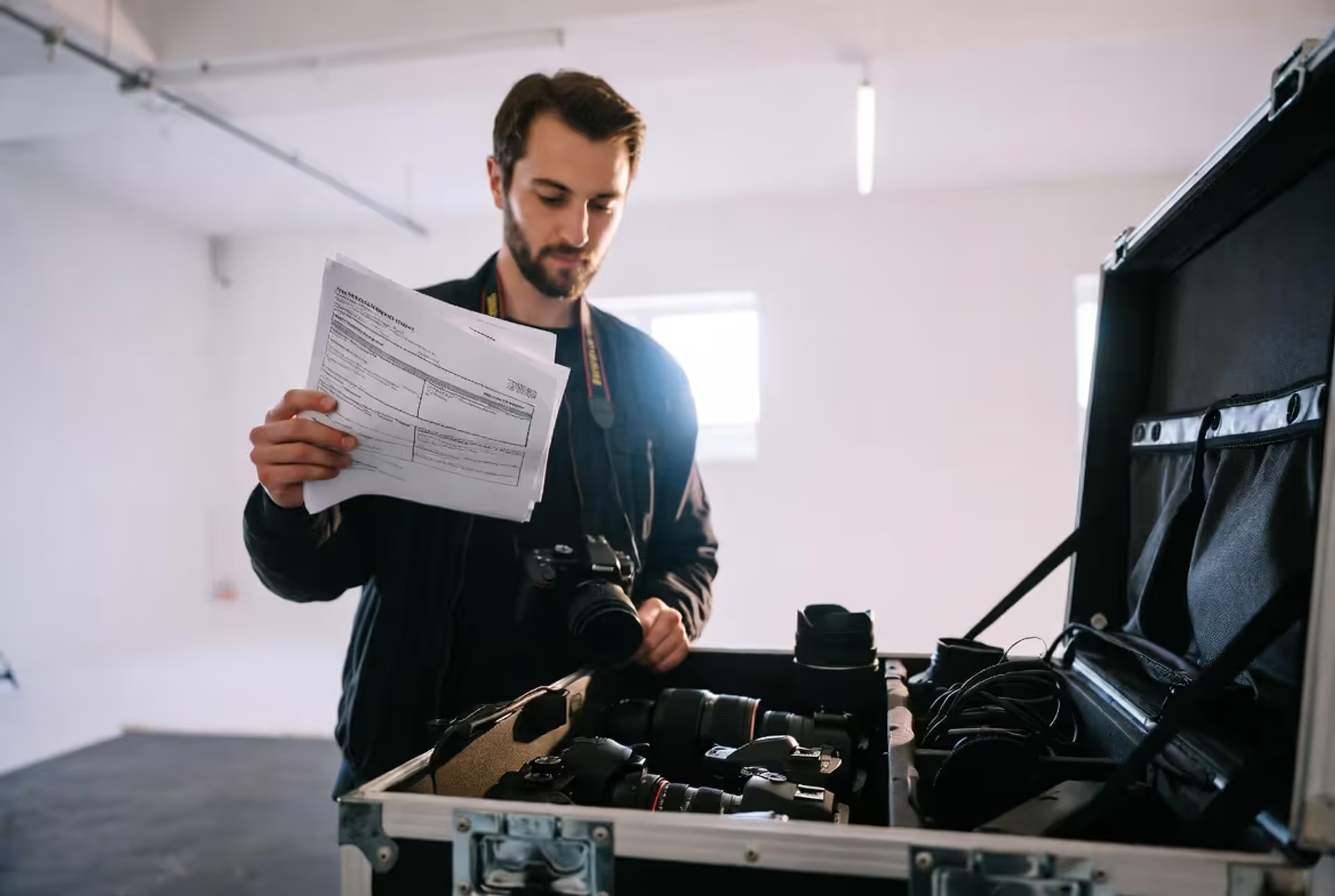
Before anything happens, create a detailed equipment inventory with serial numbers, purchase dates, receipts, and photos of each item. Store this documentation separately from your gear—cloud storage, a safe deposit box, or with your accountant. Update the inventory whenever you buy or sell equipment. This preparation makes claims processing dramatically faster and reduces disputes over equipment value.
Immediately after theft or damage, secure the scene and document everything. For theft, file a police report within 24 hours—most insurers require this for theft claims. Get the report number and officer's name. Take photos of any damage, break-in evidence, or the incident location. If witnesses exist, collect their contact information.
Within 24-48 hours, contact your insurance provider. Most companies offer 24/7 claims hotlines or online filing. Provide basic incident details: what happened, when, where, and what equipment was affected. The insurer will assign a claims adjuster and provide a claim number for tracking.
Gather supporting documentation as the adjuster requests it. This typically includes: - Police reports for theft - Original purchase receipts or credit card statements - Photos of damaged equipment - Repair estimates from authorized service centers - Proof of ownership (serial numbers, product registration) - Detailed descriptions of how damage occurred
Work with the adjuster to assess damage and determine payout. For repairable items, get estimates from authorized repair centers—insurers often require specific vendors. For total losses or theft, the adjuster will reference your inventory and market values to calculate replacement cost. Expect back-and-forth communication; respond promptly to avoid delays.
Timeline expectations vary by insurer and claim complexity. Simple damage claims (cracked lens, broken flash) often resolve within 1-2 weeks. Theft claims requiring police reports and investigation may take 3-4 weeks. Total loss claims involving multiple items or disputes over values can extend to 6-8 weeks. Ask your adjuster for timeline estimates and follow up if deadlines pass.
Receive payment either as direct deposit, check, or payment to repair vendors. Some insurers pay you directly and let you choose repair shops; others pay repair centers directly. For replacement cost claims, you may receive actual cash value initially, then the depreciation difference after proving you purchased replacement equipment.
Common mistakes to avoid: Don't repair or replace equipment before the adjuster approves it—you may not receive full reimbursement. Don't discard damaged equipment until the claim closes—adjusters often need to inspect it. Don't exaggerate losses or provide false information—insurance fraud carries serious legal consequences and guarantees claim denial.
Comparison of Top Photography Equipment Insurance Providers
Provider Name
Coverage Type
Deductible Options
Worldwide Coverage
Average Cost Range
Best For
TCP (The Coverage Pro)
Standalone equipment + liability options
$0, $250, $500, $1,000
Yes, no restrictions
2-3% of gear value
Professional photographers needing flexible coverage
Hill & Usher
Standalone equipment
$0, $100, $250, $500
Yes, included
2.5-3.5% of gear value
High-value gear collections ($50k+)
Athos Insurance
Equipment + BOP bundles
$250, $500, $1,000
Yes, with notification
1.8-2.8% of gear value
Budget-conscious professionals
State Farm (scheduled property)
Homeowners endorsement
Varies by policy
Limited, US only
1-2% of gear value
Hobbyists and part-time photographers
Philadelphia Insurance
Commercial BOP with equipment
$500, $1,000, $2,500
Yes, included
2-4% of gear value
Established studios with employees
Insureon
Marketplace (multiple carriers)
Varies by carrier
Varies by carrier
1.5-3.5% of gear value
Comparison shopping across providers
Frequently Asked Questions
Does homeowners insurance cover photography equipment?
Homeowners insurance provides limited coverage for camera equipment—typically $2,500-$5,000 for all electronics and personal property combined. More importantly, most homeowners policies exclude equipment used for business purposes. If you accept payment for photography services, even occasionally, your homeowners policy likely won't cover gear used professionally. You can add scheduled personal property endorsements to increase limits for specific items, but professional use exclusions often remain. Always read your policy's business use clause and discuss photography activities with your agent before assuming coverage exists.
Is photography equipment insurance tax deductible?
For professional photographers operating as businesses, photography equipment insurance premiums are typically tax deductible as ordinary and necessary business expenses. You can deduct premiums on Schedule C (sole proprietors), corporate returns (LLCs, S-corps, C-corps), or partnership returns depending on your business structure. Hobbyists who don't earn photography income cannot deduct these premiums. The IRS distinguishes between businesses (profit motive, regular activity, professional operation) and hobbies (occasional, recreational). Consult a tax professional familiar with photography businesses to ensure proper deduction treatment and documentation.
Can I insure rented or borrowed camera gear?
Many photography equipment insurance policies cover rented gear while in your possession, but coverage terms vary. Some policies automatically include rented equipment up to your policy limits without additional premium. Others require notification before renting expensive items or charge additional fees for rental coverage. Borrowed equipment from friends or colleagues typically isn't covered unless you've specifically added it to your policy. Rental houses usually offer their own insurance (often $20-$50 per rental), which covers their equipment regardless of your policy. Check whether your policy covers rentals and compare costs—sometimes accepting the rental company's insurance proves cheaper for occasional rentals.
What proof do I need to insure my photography equipment?
To obtain photography equipment insurance, you'll need to provide an equipment inventory listing each item's description, brand, model, serial number, and purchase price or current replacement value. Most insurers don't require receipts during the application process but strongly recommend keeping them for potential claims. Digital copies of receipts, credit card statements, or bank records serve as proof of purchase. For older equipment without receipts, current market values from retailers or used equipment sites (MPB, KEH, B&H Photo) establish insurable values. Some insurers accept self-reported inventories for policies under $25,000 but require appraisals or detailed documentation for higher values.
How quickly can I get covered after purchasing new gear?
Most photography equipment insurance activates immediately or within 24 hours of policy purchase. You can often buy coverage online, receive policy documents via email, and have active coverage the same day. When adding newly purchased gear to existing policies, coverage typically extends automatically as long as the new items don't exceed your total policy limit. Some insurers offer 30-day automatic coverage for new acquisitions, requiring you to report and add them to your policy within that window. If you're buying expensive gear ($5,000+), contact your insurer before purchase to confirm coverage details and adjust limits if necessary.
Do I need separate liability insurance as a photographer?
Photography equipment insurance protects your gear, but liability insurance protects you from lawsuits and injury claims—a separate coverage category. If you operate professionally, general liability insurance is essential. It covers bodily injury (a guest trips over your light stand), property damage (your equipment damages a venue), and personal injury (accusations of copyright infringement or invasion of privacy). Equipment policies sometimes include small liability limits ($100,000-$500,000), but serious photographers should carry $1-2 million in general liability coverage. Business owner policies (BOPs) bundle equipment and liability coverage together. Professional liability (errors and omissions) insurance covers claims that you failed to deliver promised services—missing wedding photos, for example—and represents a third insurance layer many professionals carry.
Photography equipment represents both significant financial investment and your ability to earn income or pursue your passion. Standard insurance policies leave dangerous gaps that specialized coverage fills. Whether you're protecting a $5,000 starter kit or a $75,000 professional arsenal, the right insurance policy prevents equipment losses from becoming financial disasters.
The best approach combines adequate coverage limits, appropriate deductibles for your risk tolerance, and a reputable insurer with photographer-friendly claims processes. Don't wait until after a theft or accident to discover your coverage falls short. Review your gear value, research providers, compare quotes, and implement coverage that matches your actual risk exposure.
Beyond buying insurance, maintain detailed equipment inventories, store gear securely, never leave equipment in vehicles overnight, and use bags that don't advertise expensive contents. Insurance handles the financial recovery after incidents, but prevention reduces the likelihood of filing claims in the first place.
Your camera equipment enables your creative vision and business success. Protecting it properly ensures one bad day doesn't derail months or years of investment and growth.
Wedding photographers face unique risks requiring specialized insurance coverage. Learn about liability protection, equipment coverage, one-day vs. annual policies, venue requirements, and how to choose insurance that protects your business from lawsuits, equipment loss, and professional errors
Running a photography business means investing thousands in gear and facing liability risks at venues and events. The right insurance protects your equipment and livelihood when accidents happen. Learn what coverage you need, costs by business type, and mistakes to avoid
Photography insurance costs range from $200 to $2,000+ annually depending on your business size and coverage needs. This comprehensive guide breaks down average costs by photographer type, explains factors affecting quotes, and shows you how to compare policies effectively while avoiding common mistakes
Photography insurance protects your business from lawsuits, equipment loss, and professional liability claims. Learn what coverage photographers need, how much policies cost, and how to choose the right protection for your specialty—from wedding photography to commercial work
The content on this website is provided for general informational and educational purposes only. It is intended to explain concepts related to running a photography business, insurance coverage, marketing, websites, and professional development.
All information on this website, including articles, guides, and examples, is presented for general educational purposes. Outcomes may vary depending on business size, location, and individual choices.
This website does not provide professional legal, insurance, financial, or business advice, and the information presented should not be used as a substitute for consultation with qualified professionals.
The website and its authors are not responsible for any errors or omissions, or for any outcomes resulting from decisions made based on the information provided on this website.