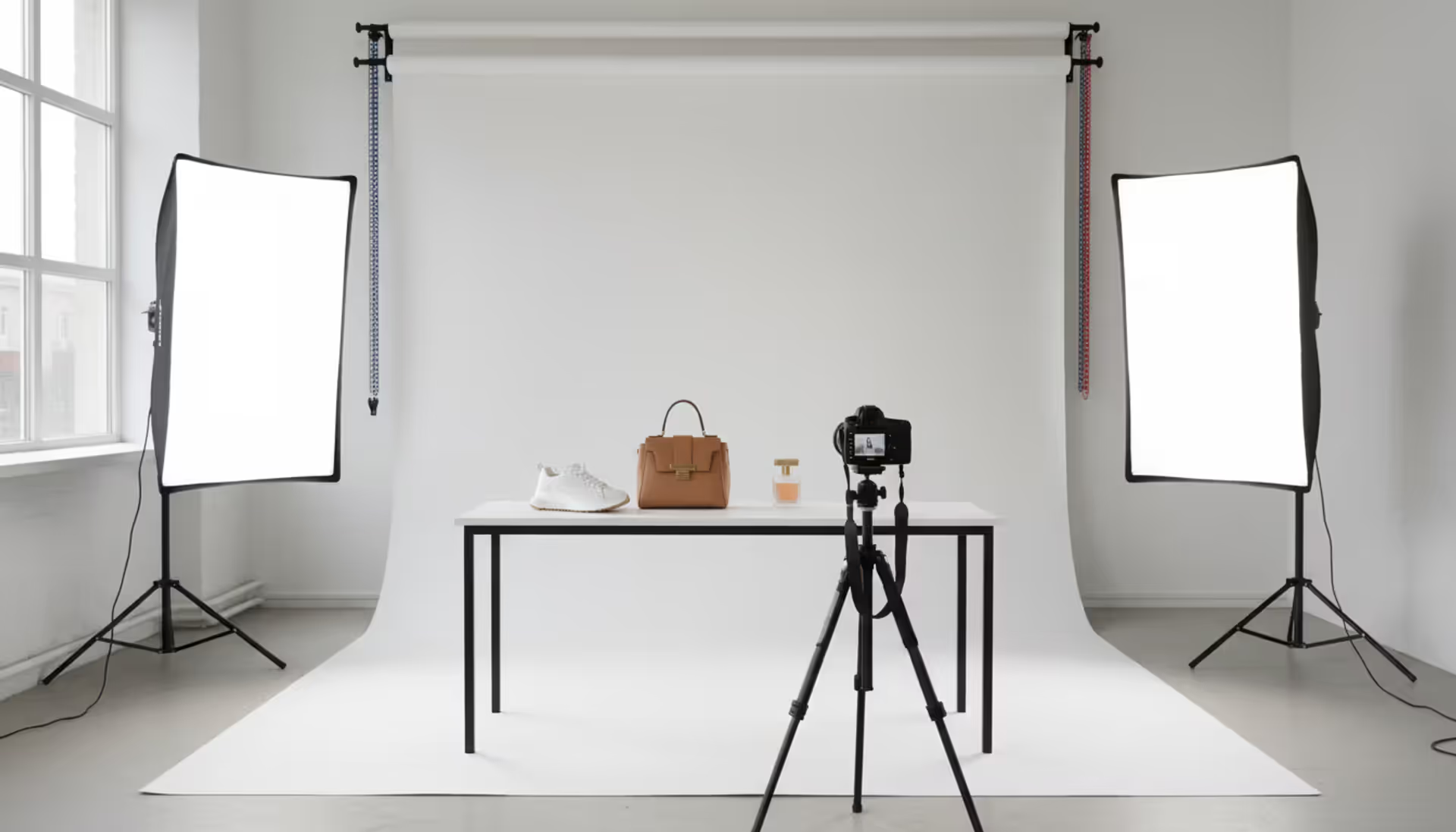
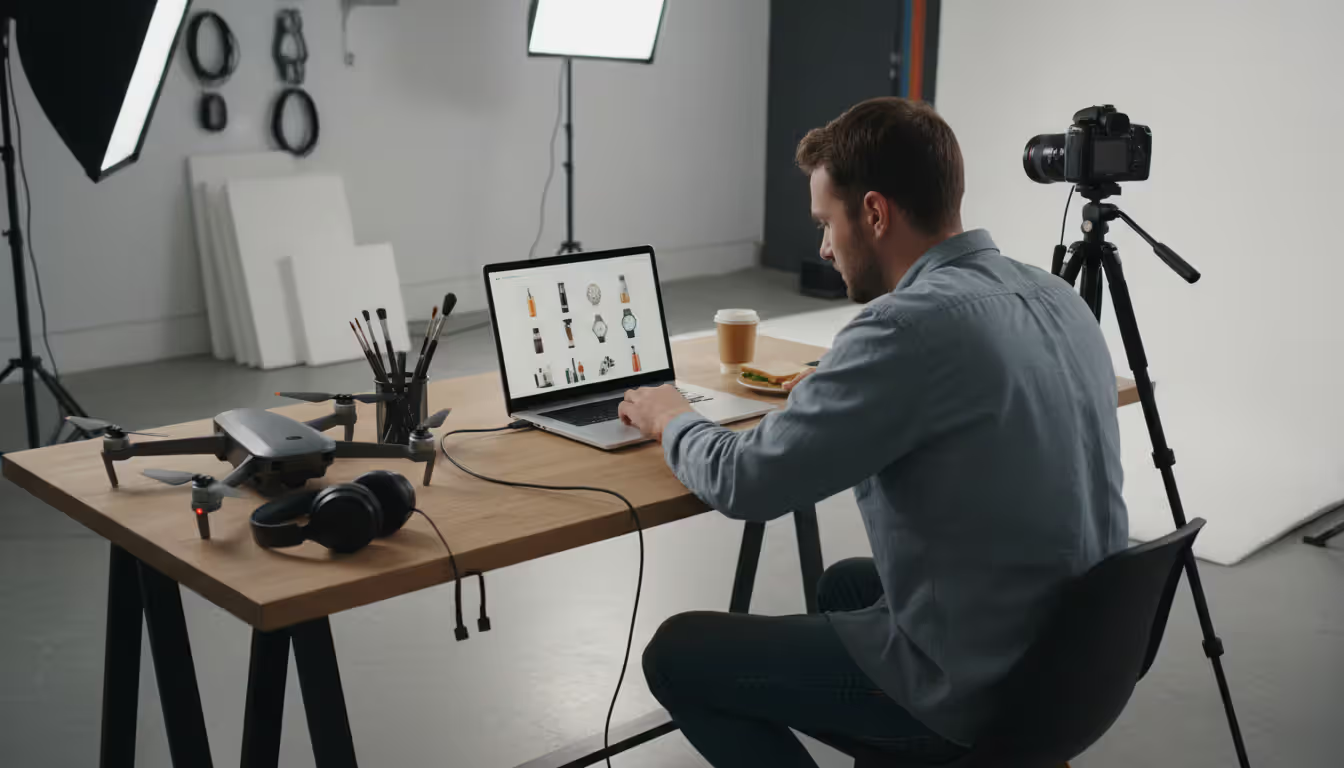
Professional ecommerce product photography studio with softbox lights, white backdrop, camera on tripod, and various products arranged on shooting table
High-quality imagery remains the single most influential factor in online purchase decisions. When shoppers can't touch or examine products in person, photographs bridge the sensory gap between browsing and buying. Poor images cost conversions; exceptional ones build trust and drive revenue.
What Is Ecommerce Product Photography
Ecommerce product photography is the specialized practice of capturing images specifically optimized for online retail environments. Unlike editorial or lifestyle commercial photography, this discipline prioritizes technical precision, visual consistency, and platform-specific requirements over artistic interpretation.
The fundamental difference lies in purpose. A fashion magazine shoot might emphasize mood and storytelling through dramatic angles and creative lighting. Ecommerce photography, by contrast, focuses on accurate color representation, sharp detail capture, and standardized presentation that allows customers to evaluate products objectively.
These images serve as virtual sales representatives. They must answer unspoken questions: What does the texture look like? How large is it relative to familiar objects? What color will actually arrive at my door? According to research from the Baymard Institute, 63% of shoppers consider product images more important than descriptions or reviews when making purchase decisions.
The technical demands are rigorous. Color accuracy must match physical inventory within tight tolerances—typically Delta E values below 2.0 for professional work. Resolution requirements have increased steadily; many platforms now recommend minimum dimensions of 2000×2000 pixels to support zoom functionality that lets customers inspect stitching, materials, and fine details.
Author: Caleb Renshaw;
Source: maryelizabethphoto.com
Lighting consistency across product catalogs matters more in ecommerce than almost any other photographic discipline. When a customer views multiple items in the same category, variations in shadow depth, highlight intensity, or background tone create subconscious friction. The brain interprets inconsistency as unprofessionalism, which translates directly to abandoned carts.
Why White Background Product Photography Matters for Online Stores
Pure white backgrounds (RGB 255, 255, 255) have become the de facto standard across major marketplaces, and this isn't arbitrary aesthetic preference—it's rooted in cognitive psychology and technical requirements.
Amazon mandates pure white backgrounds for main product images across most categories. eBay, Walmart, and Google Shopping all strongly recommend or require similar standards. This uniformity serves multiple purposes. White backgrounds eliminate visual distractions, directing 100% of attention to the product itself. They create seamless integration with platform interfaces, preventing jarring color clashes that disrupt the browsing experience.
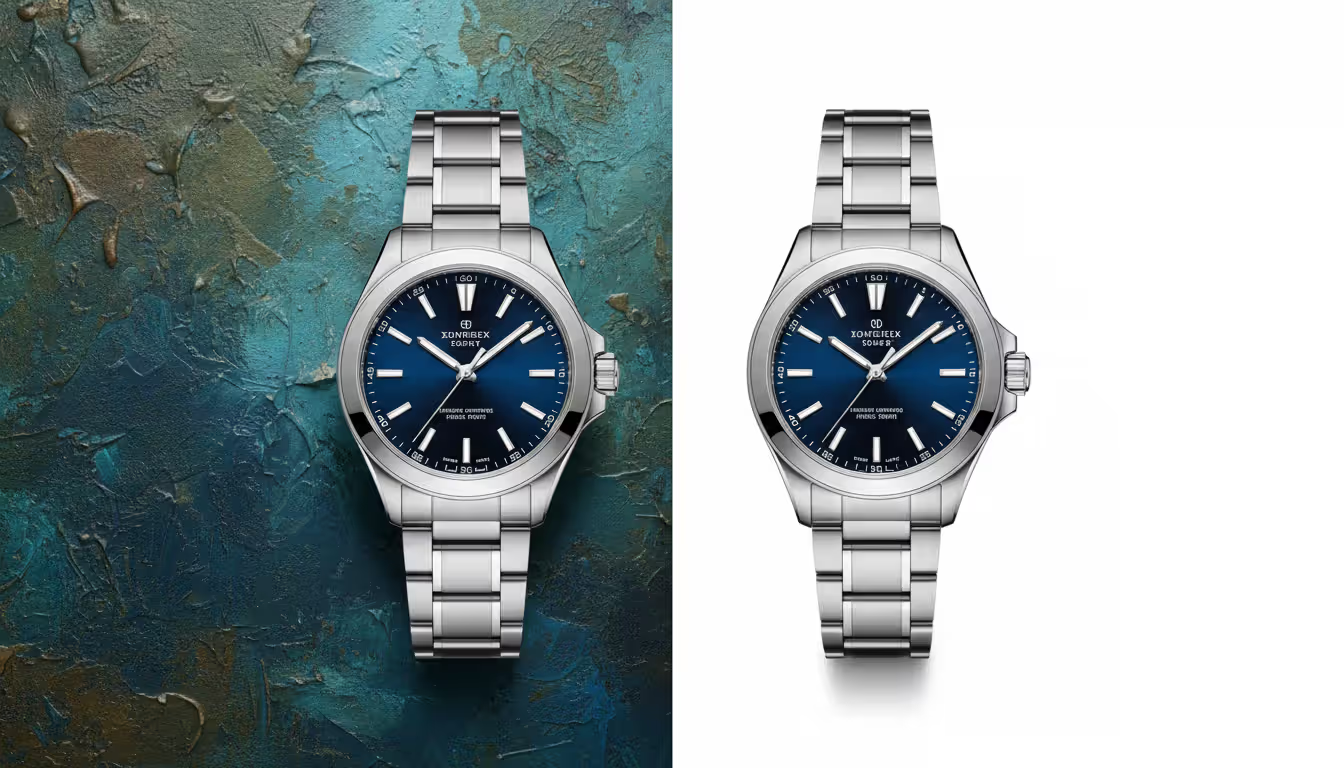
From a technical standpoint, white backgrounds simplify image processing and clipping paths. Many platforms automatically remove backgrounds for features like 360-degree views or augmented reality try-on tools. Starting with a pure white backdrop makes this automation reliable and reduces file processing errors.
Author: Caleb Renshaw;
Source: maryelizabethphoto.com
Customer trust increases measurably with white background imagery. A 2025 study by the E-commerce Visual Standards Council found that conversion rates improved by an average of 17% when retailers switched from colored or gradient backgrounds to pure white for primary product images. The psychological mechanism appears linked to perceived professionalism and the "clean slate" effect—white backgrounds signal that the retailer has nothing to hide.
Achieving true white requires more than pointing a camera at a white sweep. Proper execution demands:
Overexposing the background by 1.5 to 2 stops relative to the product
Using large diffused light sources to minimize shadows on the backdrop
Post-production adjustments to ensure RGB values hit exactly 255 across all channels
Careful separation between product and background to prevent color spill
Many retailers discover their "white" backgrounds actually measure RGB 240–250, creating a subtle gray cast that fails marketplace automated checks. Professional services use calibrated monitors and color-managed workflows to guarantee compliance.
How to Choose a Product Photography Company
Selecting the right photography partner affects everything from time-to-market for new products to long-term brand perception. The decision requires evaluating multiple dimensions beyond simple per-image pricing.
Portfolio and Industry Experience
Examine portfolios with a critical eye toward your specific product category. A company that excels at jewelry photography may struggle with large furniture pieces or reflective electronics. Material challenges differ dramatically—photographing transparent glass demands entirely different lighting techniques than matte textiles.
Request examples that match your product's physical characteristics: size, material, reflectivity, and complexity. A photographer experienced in your vertical understands unstated requirements. Someone who regularly shoots cosmetics knows FDA labeling must remain legible; electronics photographers anticipate the need to show port configurations and button details.
Ask about their client roster. Companies serving direct competitors possess valuable category knowledge but may present conflicts of interest. Those working with complementary brands in your industry offer a sweet spot—relevant experience without competitive concerns.
Turnaround Time and Pricing Models
Pricing structures vary widely across the industry. Common models include:
Per-image flat rate: Simple, predictable, typically $15–75 per image depending on complexity
Day rate: $800–2,500 for exclusive access to photographer and studio, suitable for large batches
Product-based pricing: Tiered rates where simple products cost less than complex multi-component items
Subscription models: Monthly fees for ongoing access, common with high-volume sellers
Turnaround time directly impacts inventory velocity. If you're launching seasonal products, a two-week turnaround might miss critical selling windows. Standard turnaround ranges from 3–10 business days after the shoot, but rush services exist at premium rates.
Clarify what "turnaround" means. Does it include shipping time for physical products? Does the clock start when they receive your items or when the shoot occurs? Are revisions included in the quoted timeframe or do they restart the counter?
Retailers consistently underestimate the conversion impact of professional product photography. We've measured A/B tests where identical products with professional images outsell amateur photography by 40–95%. The investment pays for itself within weeks for most categories
— Marcus Chen
Post-Production and Editing Capabilities
The magic happens after the shutter clicks. Post-production separates adequate images from exceptional ones. Standard editing should include:
Background removal and replacement
Color correction and white balance adjustment
Shadow and highlight recovery
Dust and imperfection removal
Perspective correction
Sharpening and noise reduction
Advanced services offer ghost mannequin effects for apparel, where clothing appears worn but the mannequin becomes invisible. Clipping path services create precise selections for design flexibility. Some companies provide lifestyle composite creation, placing products into contextual environments digitally.
Inquire about revision policies. How many rounds of edits are included? What constitutes a revision versus a reshoot? Can you request specific adjustments to individual images or only batch-level changes?
File delivery formats matter for workflow integration. Request layered PSD files if you'll need design flexibility, or optimized JPEGs if you're uploading directly to platforms. Many services now provide platform-specific exports—automatically sized and formatted for Amazon, Shopify, and other channels.
In-House vs. Hiring an Ecommerce Product Photography Service
This decision hinges on volume, budget, quality requirements, and opportunity cost. Neither approach is universally superior; the right choice depends on your specific circumstances.
Factor
In-House
Professional Service
Upfront cost
$3,000–15,000 for equipment, software, and training
$0–500 for sample preparation and shipping
Per-image cost
$2–8 after equipment amortization
$15–75 depending on complexity and volume
Quality consistency
Variable; depends on operator skill and learning curve
High; established workflows and experienced teams
Turnaround speed
Immediate for urgent needs; slower for large batches
In-house photography makes sense when you have continuous high volume—think 50+ products weekly—and someone with photography aptitude available to dedicate significant time. The breakeven point typically occurs around 200–400 images for simple products, accounting for equipment costs and labor.
Hidden costs of in-house work include:
Learning curve inefficiency (first 100 images usually require reshoots)
Inconsistency during operator vacations or turnover
Professional services excel when quality consistency matters for brand positioning, when product variety demands different setups (jewelry one week, furniture the next), or when your team's time creates higher value elsewhere. A marketing manager earning $75,000 annually costs roughly $38/hour; spending 10 hours shooting and editing images that a service could deliver for $300 represents poor resource allocation.
Hybrid approaches work well for many mid-size retailers. Outsource hero images and complex products to professionals while handling simple update shots in-house. This balances quality where it matters most with cost control for routine work.
Common Mistakes in Product Photography for Ecommerce
Even experienced retailers stumble into predictable traps that undermine otherwise strong product presentations.
Author: Caleb Renshaw;
Source: maryelizabethphoto.com
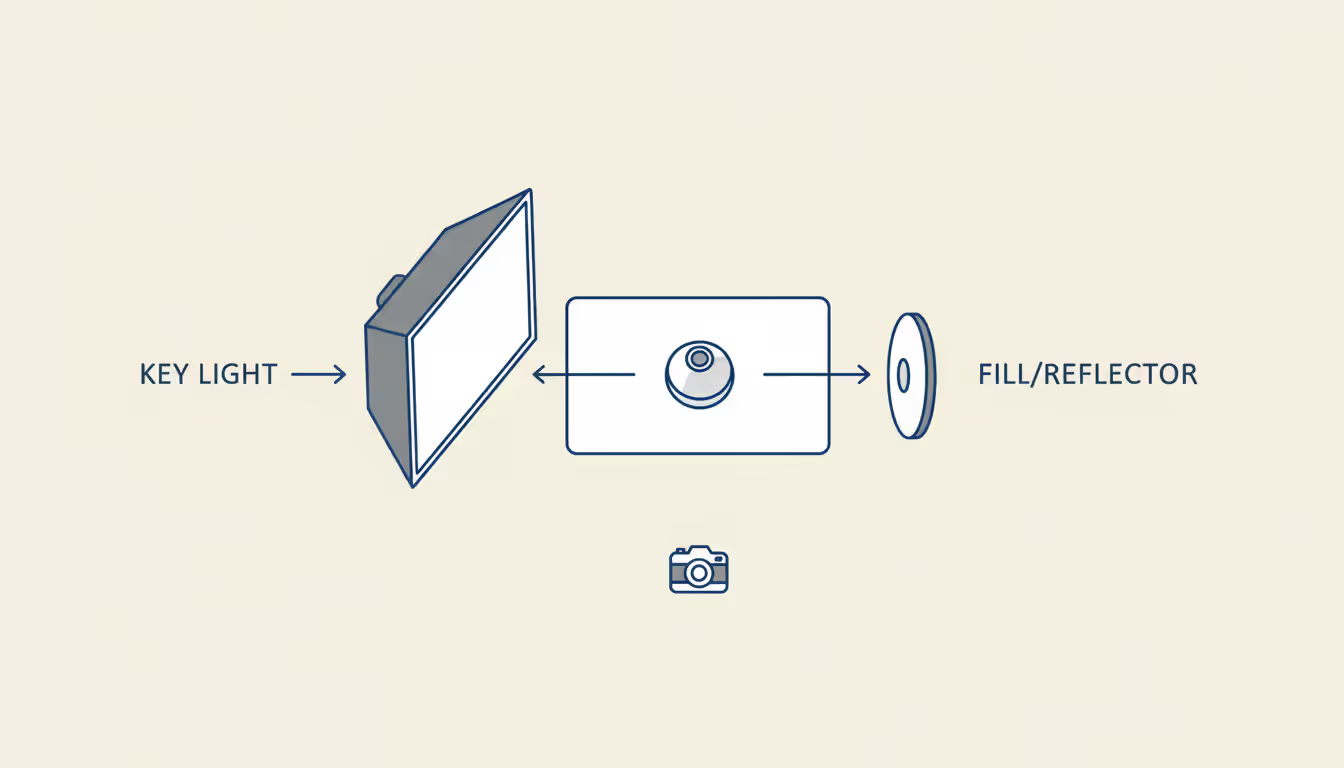
Inadequate lighting tops the list. Harsh shadows, uneven illumination, or insufficient light creates amateur-looking images that erode trust. The solution isn't necessarily expensive equipment—proper positioning of even basic lights matters more than wattage. A common beginner setup uses one key light at 45 degrees and a fill light or reflector opposite to soften shadows.
Inconsistent styling across product lines confuses customers and weakens brand identity. If some products appear on white backgrounds while others use lifestyle settings, or if prop choices vary wildly, the catalog feels disjointed. Establish style guidelines and stick to them religiously.
Wrong image dimensions create problems downstream. Uploading images smaller than platform requirements forces upscaling, which introduces blur and artifacts. Conversely, uploading massive 8000-pixel files slows page load times. The sweet spot for most platforms sits around 2000–2500 pixels on the longest side—large enough for zoom features, small enough for reasonable file sizes.
Insufficient angles leave questions unanswered. Customers can't flip products over or examine them from all sides, so your images must do that work. Minimum recommendations vary by category: simple items might need 3–4 angles, while complex products benefit from 8–12 views plus detail shots. Electronics should show all ports and controls; apparel needs front, back, and side views at minimum.
Ignoring mobile display proves costly when 70%+ of ecommerce traffic comes from smartphones. Images that look crisp on desktop monitors may lose critical detail on 6-inch screens. Test your product images on actual mobile devices. Can you read important text? Are small details visible? Does the overall composition work in a square crop?
Color inaccuracy generates returns and negative reviews. If your "navy blue" shirt photographs as purple, or your "rose gold" jewelry appears copper, customers receive products that don't match expectations. Color-managed workflows using calibrated monitors and proper lighting prevent this expensive mistake.
What to Expect When Working with a Product Photography Service
Understanding typical workflows helps set realistic expectations and ensures smooth collaboration.
Author: Caleb Renshaw;
Source: maryelizabethphoto.com
Initial consultation establishes requirements. Expect to discuss your brand aesthetic, platform requirements, shot list needs, and delivery timeline. Better services ask probing questions: Who's your target customer? What's your price positioning? Which product features drive purchase decisions?
Shot list creation translates requirements into specific deliverables. A detailed shot list might specify: "Front view, product centered, white background, slight downward angle showing top surface, all labels legible." Ambiguity here causes revision rounds later.
Product shipping or drop-off follows. Pack items carefully—damaged products photograph poorly. Include any props, packaging, or accessories that should appear in images. Clear labeling prevents mix-ups with multi-SKU batches.
Photography session typically happens without client presence unless you've arranged a directed shoot. Professional services work systematically through shot lists, capturing multiple angles and variations. Sessions for simple products might take 10–15 minutes per item; complex products can require hours.
Post-production consumes more time than shooting. Editing, retouching, color correction, and background work happen here. Timelines vary but typically require 1–3 days per image depending on complexity.
File delivery arrives via download link, cloud storage, or FTP. Expect organized folders with clear naming conventions. Professional services provide both web-optimized files for immediate use and high-resolution masters for future needs.
Usage rights should be explicit in your contract. Most product photography contracts grant you unlimited usage rights for the images, but verify this. Some photographers retain rights for portfolio use; others may charge additional fees for transferable rights if you plan to resell images to distributors.
Revision rounds address issues. One or two rounds typically come included; additional revisions may incur fees. Be specific: "Product appears too warm, needs cooler white balance" gets better results than "colors seem off."
FAQ
How much does ecommerce product photography cost?
Pricing varies widely based on product complexity, volume, and service level. Simple products on white backgrounds typically cost $15–35 per image. Complex items requiring multiple setups, ghost mannequin work, or extensive retouching range from $40–75 per image. Volume discounts often apply for batches exceeding 50 images. Day rates for dedicated studio time run $800–2,500. DIY approaches reduce per-image costs to $2–8 after equipment amortization, but require significant upfront investment of $3,000–15,000 for quality results.
What file format is best for ecommerce product images?
JPEG remains the standard format for ecommerce platforms due to broad compatibility and reasonable file sizes. Save files at 85–95% quality to balance visual fidelity with load speed. Request RGB color space (not CMYK) since screens display in RGB. For images requiring transparency—products without backgrounds—PNG format works better despite larger file sizes. Many professionals provide both layered PSD master files for future editing flexibility and optimized JPEGs for immediate platform upload. Amazon specifically requires JPEG or PNG formats; most platforms share similar requirements.
Do I need a white background for all marketplaces?
Amazon mandates pure white backgrounds (RGB 255, 255, 255) for main product images in most categories, though secondary images can show lifestyle context. eBay and Walmart strongly recommend white backgrounds but don't strictly enforce it. Google Shopping favors white backgrounds in search results. Shopify and other self-hosted platforms give you complete freedom, but white backgrounds still perform best for primary images. The practical approach: use white backgrounds for your hero/main image to ensure marketplace compliance, then add lifestyle or contextual images as secondary shots to tell your brand story.
How many images should I have per product?
Minimum recommendations depend on product complexity. Simple items need at least 3–4 images: front view, back view, side view, and one detail or scale shot. Apparel benefits from 6–8 images including worn views, fabric details, and fit demonstrations. Electronics should show 8–12 images covering all angles, ports, controls, and packaging. Furniture requires similar comprehensive coverage. Amazon allows up to 9 images per listing; use that full allocation. More images correlate with higher conversion rates up to about 8–10 images; beyond that, returns diminish. Prioritize quality over quantity—five excellent images outperform ten mediocre ones.
Can I do product photography myself?
Yes, particularly for simple products if you're willing to invest time learning proper techniques. Basic requirements include a decent camera (even modern smartphones work for simple items), adequate lighting, a white backdrop, and editing software. Expect a steep learning curve—your first 50–100 images will likely require multiple attempts to achieve professional results. DIY makes financial sense when you have high ongoing volume (50+ products monthly) and someone with photography aptitude available. For low volume, occasional needs, or complex products, professional services deliver better ROI. Many successful retailers start DIY, then transition to professionals as they scale and opportunity cost of internal time increases.
What is the typical turnaround time for a product photography service?
Standard turnaround ranges from 3–10 business days after the photography session, depending on service level and editing complexity. Simple white background images might return in 3–5 days. Complex retouching, ghost mannequin work, or lifestyle composites extend timelines to 7–10 days. Rush services can deliver in 24–48 hours for premium fees, typically 50–100% surcharges. Volume affects timelines—batches under 20 images process faster than 200-image projects. Account for shipping time if sending physical products; add 2–4 days each direction. When planning product launches, build in buffer time for potential revision rounds. Clarify whether quoted turnaround includes shipping, starts from product receipt or shoot date, and covers revisions.
Product photography represents far more than a line item in your marketing budget—it's the primary interface between your products and potential customers. Quality images build trust, answer unspoken questions, and remove purchase friction. Poor photography, conversely, undermines even exceptional products and competitive pricing.
The choice between in-house and professional services depends on your specific volume, budget, and quality requirements. Neither approach dominates universally; successful retailers often employ hybrid strategies that balance cost control with quality where it matters most.
White backgrounds have evolved from aesthetic preference to functional requirement across major marketplaces. Meeting these technical standards ensures platform compliance while delivering the clean, professional presentation that converts browsers into buyers.
When selecting a photography partner, prioritize portfolio relevance to your product category, clear communication about turnaround and pricing, and robust post-production capabilities. The lowest per-image cost rarely delivers the best value when factoring in revision rounds, quality consistency, and opportunity cost.
Avoid common pitfalls: inadequate lighting, inconsistent styling, wrong dimensions, insufficient angles, and color inaccuracy. Each mistake costs conversions and generates returns that erode profitability.
As ecommerce continues dominating retail growth, visual presentation standards will only increase. Investing in professional product photography isn't optional for serious sellers—it's fundamental infrastructure that enables everything else in your marketing and sales efforts to succeed.
ports photography captures athletes in motion, freezing split-second moments that tell stories of competition and achievement. This specialized field demands technical precision, anticipation skills, and athletic understanding that separates it from other photography genres
Wedding photography styles define how your celebration gets captured and remembered. From traditional posed portraits to candid documentary coverage, fine art aesthetics to editorial drama, understanding these approaches helps you find a photographer whose vision matches yours and ensures your images reflect your authentic story
Traditional portrait photography creates polished, timeless images through controlled lighting, deliberate posing, and classic composition. Learn what defines this formal approach, how it differs from modern styles, what to expect during sessions, and how to prepare for studio, senior, children's, and couple portraits
Professional real estate photography increases property views by 118% and reduces time on market by 32%. Choosing the right photographer requires understanding service types, evaluating portfolios, verifying credentials, and recognizing common hiring mistakes that cost sellers thousands
The content on this website is provided for general informational and educational purposes only. It is intended to explain concepts related to running a photography business, insurance coverage, marketing, websites, and professional development.
All information on this website, including articles, guides, and examples, is presented for general educational purposes. Outcomes may vary depending on business size, location, and individual choices.
This website does not provide professional legal, insurance, financial, or business advice, and the information presented should not be used as a substitute for consultation with qualified professionals.
The website and its authors are not responsible for any errors or omissions, or for any outcomes resulting from decisions made based on the information provided on this website.