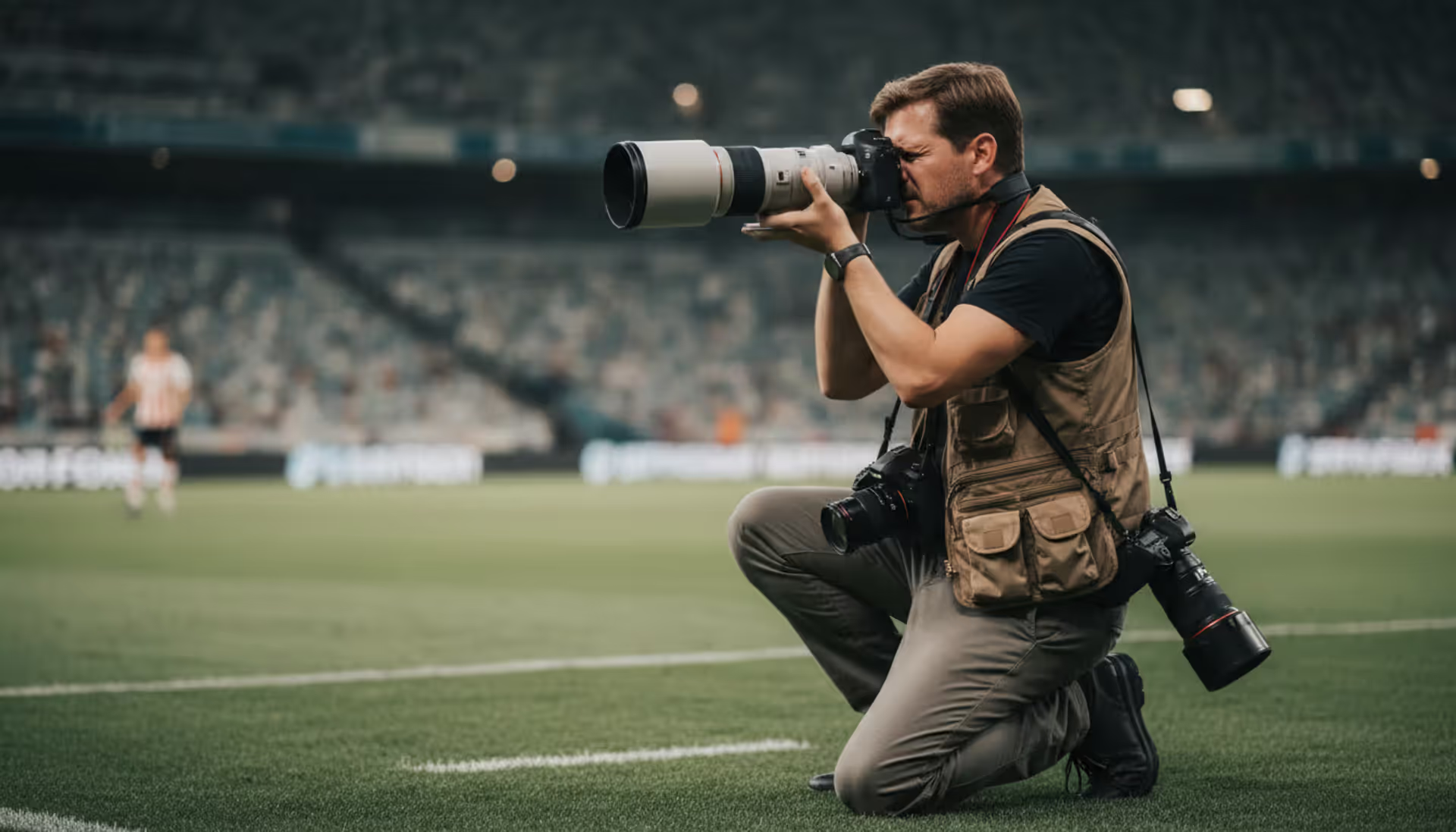
You know that split-second when a quarterback releases a perfect spiral, or when a gymnast's feet leave the vault? Sports photographers live for those moments. They're the ones crouched on sidelines, hauling massive telephoto lenses, trying to freeze action that happens faster than you can blink.
Here's the thing—sports photography isn't just pointing a camera at athletes and hoping for the best. It's part anticipation, part technical know-how, and part pure instinct developed from shooting thousands of games. Some photographers chase professional leagues, others build thriving businesses photographing 8-year-olds playing rec league soccer. The opportunities exist at every level, from Friday night high school football to the Olympics.
If you've ever wondered how those incredible action shots end up in your news feed, or if you're thinking about trying sports photography yourself, you're in the right place.
Understanding Sports Photography as a Career and Art Form
Sports photography documents athletes and competitions through still images. Simple enough, right? But here's where it gets interesting: you're working in environments where absolutely nothing stays controlled.
Think about portrait photography for a second. The photographer arranges lighting, poses subjects, adjusts backgrounds. Or landscape photography—you can wait hours for clouds to move into perfect position. Sports photography? The action happens whether you're ready or not. That basketball player isn't going to pause mid-dunk so you can adjust your settings.
This unpredictability defines the entire field. Lighting shifts from bright afternoon sun to shadowy stadium corners. Athletes move at speeds that would blur in most people's vacation photos. And those decisive moments—the ones that end up framed on office walls—they're over in milliseconds.
So why does this matter? Media companies depend on compelling sports images to drive clicks and engagement. ESPN's homepage without dramatic action shots would be pretty boring. Professional teams need content for social media—a great game-day photo can rack up millions of impressions before the final buzzer sounds.
But the market extends way beyond professional sports. Youth sports photography has become a legitimate business sector. Parents want professional documentation of their kids' athletic experiences, creating demand that didn't exist twenty years ago. A photographer covering a weekend soccer tournament might sell several thousand dollars in prints and digital downloads.
Career paths vary significantly. Some photographers work staff positions for newspapers or sports teams—steady paychecks, benefits, but less flexibility. Others freelance, juggling assignments across multiple sports and clients. The digital age created new revenue streams too. Stock photography agencies license sports images. Parents buy prints directly through online galleries. Some photographers even run subscription services for entire leagues.
One truth cuts across all levels: technical skill matters, but knowing the sport matters more. You can own a $10,000 camera and still miss every important moment if you don't understand when to press the shutter.
Author: Olivia Wrenford;
Source: maryelizabethphoto.com
Essential Equipment and Camera Settings for Sports Photography
Let's talk gear, because you can't fake your way through sports photography with budget equipment—at least not completely.
Camera bodies need three things: fast autofocus, high burst rates, and strong performance when light gets scarce. Full-frame sensors typically outperform crop sensors in dim gyms and night games, though newer crop-sensor cameras have narrowed this gap. You're looking for bodies that shoot 10+ frames per second minimum. Professional models hit 20+ fps, which sounds excessive until you're trying to catch a pitcher's release point.
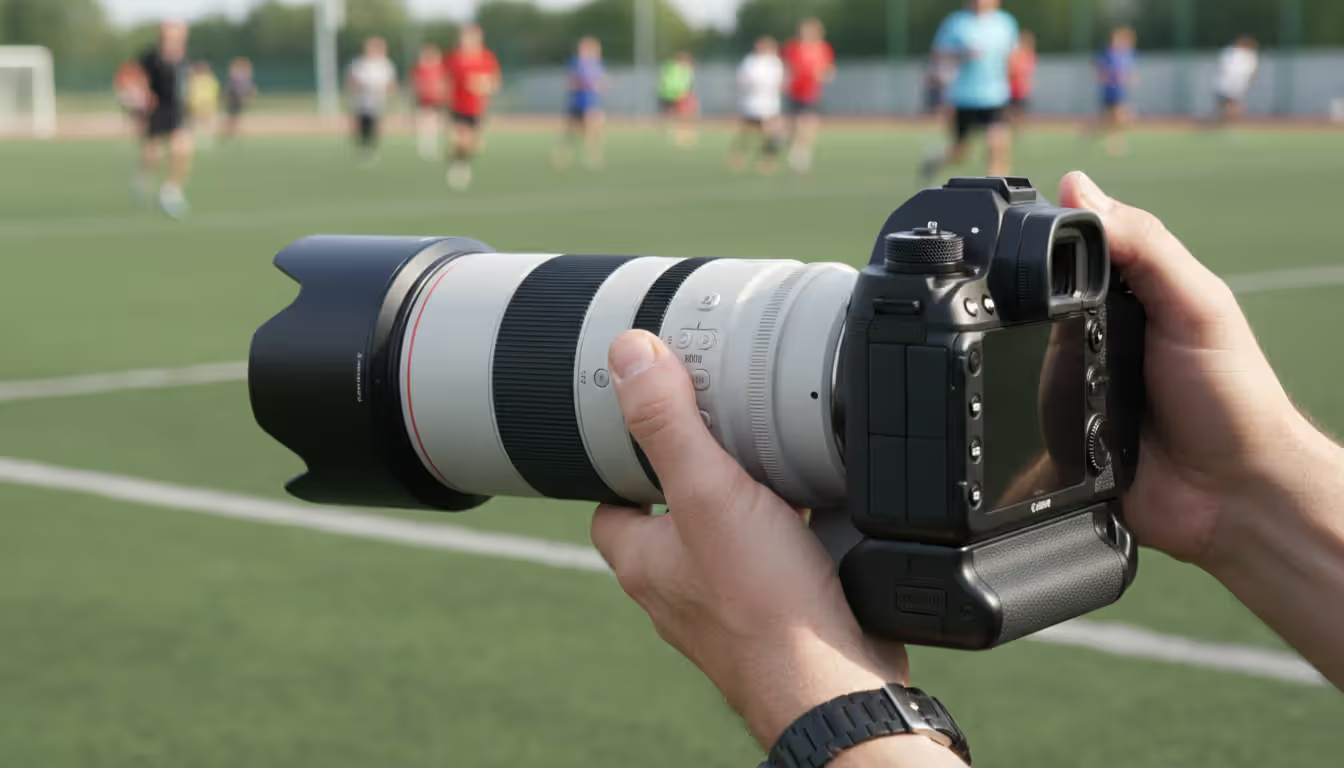
Lenses, though? That's where budgets explode. A 70-200mm f/2.8 serves as the workhorse for most sports—versatile focal length, wide aperture for fast shutter speeds. But field sports like football often need 300mm, 400mm, or 600mm reach to capture action from permitted shooting positions. That 600mm f/4 lens costs more than many used cars.
Here's what beginners don't realize: longer lenses get heavy fast. Try handholding a 400mm f/2.8 for three hours during a football game. Your arms will scream. Most photographers use monopods—lighter than tripods, stable enough to reduce camera shake, mobile enough to follow action.
Settings follow predictable patterns once you understand the physics. Shutter speed starts at 1/500th of a second absolute minimum. For basketball or hockey where athletes move unpredictably? Push it to 1/1000th or faster. Aperture usually stays wide open (f/2.8 to f/4) because you need every bit of light you can gather. ISO becomes your adjustment variable—crank it up until image noise becomes unacceptable, then back off slightly.
Autofocus modes cause more confusion than they should. Continuous autofocus (Canon calls it AI Servo, Nikon and Sony use AF-C) tracks moving subjects. But you've got choices about focus point patterns. Single-point works great when you're following one player through a sequence. Zone or wide-area modes help when action moves erratically across the frame.
Beginner vs. Professional Sports Photography Gear
Category
Beginner Setup
Professional Setup
Price Gap
Camera Body
Entry mirrorless, 8-10 fps
Pro body, 20+ fps, dual cards
$900-1,600 vs. $4,500-6,500
Main Lens
Third-party 70-200mm f/4
First-party 70-200mm f/2.8 + 400mm f/2.8
$700-1,800 vs. $6,500-12,500
Support Gear
Basic aluminum monopod
Carbon fiber monopod + gimbal head
$60-120 vs. $450-850
Memory Cards
Standard UHS-I
High-speed CFexpress/UHS-II
$35-60 vs. $180-350
Backup Body
None—pray nothing breaks
Second identical body
N/A vs. $4,500+ extra
Total Cost
$1,700-3,600
$16,000-28,000+
Roughly 10x more
The gap between beginner and pro gear reflects reliability under pressure. Beginners can nail amazing shots with modest equipment. Professionals need gear that won't fail during once-in-a-lifetime moments—plus redundancy when (not if) something goes wrong.
Common Types and Specializations in Sports Photography
Sports photography splits into distinct specializations, each with its own quirks and challenges.
Team and league photography offers predictability—scheduled games, familiar venues, consistent lighting (especially indoors). Photographers covering the NFL or NBA work under intense deadlines, sometimes transmitting images to editors within five minutes of capture. The pressure's real, but working conditions beat shooting in monsoons or desert heat.
Outdoor sports introduce weather variables that'll test your patience. Baseball games starting at 1 PM offer harsh overhead sun creating raccoon-eye shadows on players' faces. Evening football transitions from daylight to stadium lights mid-game, forcing constant setting adjustments. You adapt or you miss shots.
Indoor sports flip the problem—never enough light. High school gyms rarely match professional arena lighting. You're pushing ISO to 6400 or 8000, hoping your camera's noise reduction can salvage image quality. Basketball and volleyball demand anticipating action in confined spaces where one step backward puts you against a wall.
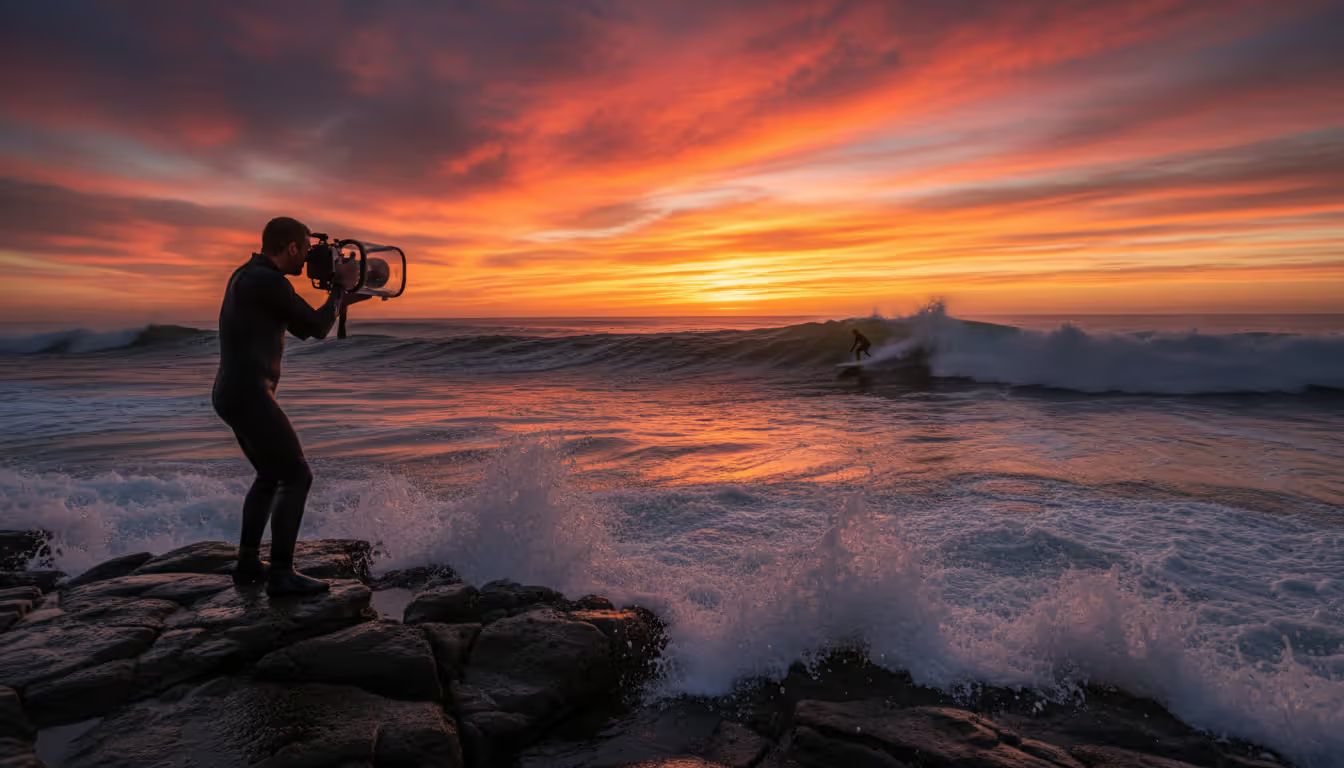
Extreme sports photography requires completely different thinking. Surfing, skateboarding, mountain biking—these happen in locations without controlled access or cushy media areas. You might hike three miles with 30 pounds of gear to reach a mountain biking trail. Or wade into ocean surf to capture wave riders. Physical demands match technical challenges.
Youth Sports Photography Opportunities
Youth sports photography grew into a substantial business over the past fifteen years. Parents shell out real money for professional documentation of their kids' athletic journeys, creating opportunities that don't require competing against veteran pros for NFL credentials.
Two business models dominate: event-based shooting (photograph entire tournaments, sell images afterward) or contracted league relationships. Some photographers combine traditional posed team photos with action shots from actual games. Parents eat it up.
Challenges? Managing parent expectations tops the list. Mrs. Johnson wants fifteen sharp photos of little Timmy even though he played three minutes and spent the rest picking dandelions. You're also dealing with terrible lighting at community fields—those portable lights from 1987 create color casts that make editing a nightmare. And volume gets crazy. A single weekend tournament might generate 3,000 images requiring culling and basic editing.
But build relationships with league organizers, deliver quality work consistently, and you'll land contracts spanning entire seasons. The work won't make Sports Illustrated, but it provides steadier income than chasing unpredictable freelance gigs. One photographer I know clears $60,000 annually shooting youth sports exclusively in a mid-sized market. Not glamorous, but not bad either.
Action Sports and Extreme Environment Photography
Action sports photographers work in conditions that'd make wedding photographers quit on the spot. Shooting surfers means protecting equipment from salt water while timing waves. Skateboard photography requires understanding trick progression—when will the rider reach peak height? Mountain sports involve altitude, temperature extremes, and locations requiring serious hiking.
The aesthetic differs completely from traditional sports coverage. Action sports culture values creativity and unique perspectives over straightforward documentation. Photographers use wide-angle lenses emphasizing environment. They experiment with motion blur conveying speed. They position themselves in spots that'd get you kicked out of conventional sporting events.
Equipment takes brutal punishment. Cameras get dusty, wet, knocked around. Many action sports photographers carry less expensive backup bodies, accepting that gear damage comes with the territory. Weather sealing isn't optional—it's survival.
Community matters significantly here. Most action sports photographers participate in the sports they document. That credibility and insider knowledge separates compelling work from tourist snapshots. A photographer who surfs understands wave dynamics and rider positioning. They know when to expect peak action because they've been there themselves.
Author: Olivia Wrenford;
Source: maryelizabethphoto.com
How to Learn Sports Photography Through Education and Training
Formal education helps some people, but it's hardly mandatory for sports photography success. Several universities offer specialized programs—Syracuse, University of Missouri, Rochester Institute of Technology all have strong photojournalism tracks where students can focus on sports coverage.
Sports photography colleges typically embed students with local teams, providing hands-on deadline experience. The networking opportunities often matter more than classroom instruction. Your classmates and professors become industry connections leading to future assignments.
The downside? A four-year degree might cost $120,000 or more. Meanwhile, self-taught photographers can start booking paid gigs within months if they hustle and develop skills quickly. Your circumstances and goals determine whether formal education makes sense.
Online courses split the difference. CreativeLive, KelbyOne, and specialized workshops provide instruction from working professionals at a fraction of university costs. These range from broad overviews to hyper-specific technical training—like entire courses on autofocus techniques for tracking erratic movement.
Workshops deliver concentrated learning. Weekend or week-long programs often include access to actual sporting events, immediate instructor feedback, and peer learning. The condensed format forces rapid skill development, though you'll forget half of it without continued practice.
Self-teaching works fine if you're disciplined. Study equipment manuals (boring but essential). Analyze professional sports images—not just admiring them, but figuring out focal length, approximate settings, positioning. Then shoot constantly with specific goals. Don't just accumulate 10,000 mediocre images. Spend an entire game practicing panning technique. Or tracking focus on a single player.
Mentorship accelerates everything. Finding an experienced sports photographer willing to answer questions and review your work provides personalized instruction that generic courses can't match. Some mentorships involve paid arrangements. Others develop organically through networking and genuine interest in learning.
Portfolio building happens through relentless shooting. Photograph any accessible sporting events—youth leagues, high school games, amateur competitions, even your nephew's tee-ball. You need diverse images demonstrating technical competence and artistic vision. A strong portfolio opens doors to paid work more effectively than any degree.
Credentials matter less than demonstrated ability. Editors and clients care whether you consistently deliver sharp, well-composed images under pressure. Where you studied? Mostly irrelevant. That said, formal education provides structure that helps some people learn more efficiently than independent study.
Best Software and Tools for Editing Sports Photos
Post-processing workflow dramatically impacts productivity when you're handling 800 images from a single game. Professional sports photographers develop ruthlessly efficient systems maintaining quality while meeting deadlines.
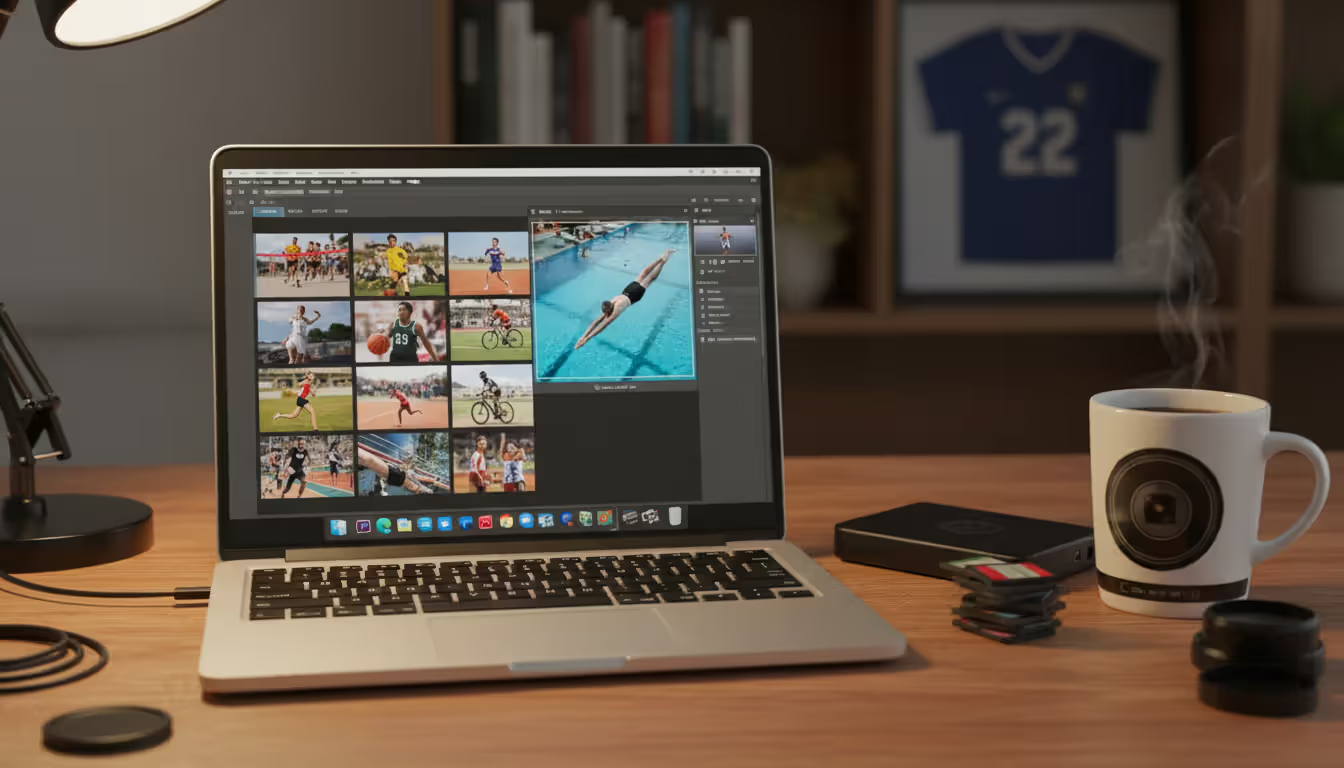
Adobe Lightroom dominates for good reasons. Its catalog system manages massive image volumes without choking. Batch editing lets you apply settings across multiple similar images simultaneously. Shot an indoor basketball game? Edit one image correcting the orange-tinted gym lighting, then sync those adjustments across 300 photos taken under identical conditions. Boom—you just saved three hours.
Typical workflow: import, cull ruthlessly (delete out-of-focus or poorly composed shots), batch adjust exposure and white balance, individually edit hero shots, export. Keyboard shortcuts become essential. Photographers mastering rapid culling and editing finish work in hours instead of days.
Capture One offers an alternative some professionals swear by. Its tethering capabilities work brilliantly for controlled situations like team photo days. Many photographers prefer its color handling, particularly for difficult skin tones. Steeper learning curve than Lightroom, and the catalog system works differently, but converts become loyal users.
Adobe Photoshop handles detailed retouching Lightroom can't touch. Removing distracting background elements, fixing uniform wrinkles, compositing multiple images—that's Photoshop territory. Most workflows use Lightroom for bulk processing and Photoshop selectively for images needing extra attention.
AI-powered tools entered sports photography recently. Topaz Sharpen AI can rescue slightly soft images. Noise reduction tools like DxO PureRAW help salvage high-ISO shots taken in terrible lighting. These work best supplementing proper technique, not replacing it. No software fixes severely out-of-focus images or recovers completely blown highlights.
Photo Mechanic excels at rapid culling and metadata entry. Many professionals use it for initial sorting before importing selected images into Lightroom for actual editing. It's faster than Lightroom for quickly identifying keepers and adding captions.
Color correction presents unique challenges. Mixed lighting—daylight streaming through windows combined with artificial arena lights—creates color casts varying across single frames. Understanding white balance and selective color adjustment separates adequate editing from professional results.
Presets accelerate editing but need customization. Download generic sports photography presets as starting points, sure. But lighting varies so dramatically between venues that blindly applying presets often creates more work than editing from scratch. Successful photographers develop personal preset collections tailored to specific venues they shoot regularly.
Backup systems aren't negotiable. Professional workflows include redundant storage—images copied to multiple drives immediately after shooting, with additional cloud backup for critical work. One hard drive failure losing a season's worth of client images destroys photography businesses overnight. Don't learn this lesson the expensive way.
Author: Olivia Wrenford;
Source: maryelizabethphoto.com
How Sports Photographers Capture the Perfect Action Shot
Technique separates lucky snapshots from consistently excellent sports photography. Positioning, anticipation, and executing specific camera techniques determine your success rate.
Panning creates motion blur in backgrounds while keeping subjects sharp—it conveys speed and movement. The technique requires smooth camera movement matching subject speed while using slower shutter speeds (1/125th to 1/250th). Race car photographers pan horizontally as cars pass, creating streaked backgrounds emphasizing velocity. The difficulty? Maintaining perfectly smooth motion. Jerky panning blurs your subject instead of creating dramatic backgrounds.
Burst mode increases odds of nailing peak action, but timing matters more than simply mashing the shutter button. Shooting a high jumper? Fire a burst as the athlete approaches the bar, capturing the sequence from takeoff through clearance. But blindly shooting bursts generates thousands of nearly identical images requiring excessive editing time. Burst mode isn't a substitute for timing.
Anticipation might be the most valuable skill you can develop. Experienced photographers predict when peak action will occur—the moment a basketball leaves a shooter's fingertips, the instant a soccer player's foot contacts the ball, the split second a gymnast reaches maximum height. This knowledge comes from understanding sports themselves. Never watched baseball? You'll struggle anticipating when a pitcher's delivery reaches its most dynamic position.
Positioning determines perspective and background quality. Shooting tennis from behind the baseline captures players' faces and court dynamics differently than shooting from the side. The best positions often have limited access—photographers arrive early claiming prime spots or obtain credentials granting restricted area access.
Lighting challenges vary wildly. Outdoor daytime events might offer too much light, creating harsh shadows under athletes' eyes and noses. Some photographers use fill flash softening these shadows, though this technique requires practice avoiding unnatural results. Indoor events typically present opposite problems—insufficient light forcing high ISO settings and wide apertures reducing depth-of-field margins for error.
Freezing motion versus showing motion blur represents an artistic choice. A basketball player mid-dunk frozen at 1/2000th emphasizes athleticism and explosive power. The same player shot at 1/60th with intentional blur might convey movement and energy differently. Neither approach is universally correct—your choice depends on the story you're telling.
Background awareness separates good sports photography from great work. A perfectly sharp, well-exposed athlete photographed against cluttered backgrounds of spectators, signage, and equipment creates visual chaos. Photographers use wide apertures blurring backgrounds, choose angles placing athletes against clean backgrounds, and position themselves avoiding distracting elements appearing to emerge from athletes' heads.
The difference between a good sports photographer and a great one is that the great one knows the sport. You have to understand what's going to happen before it happens
— Bill Frakes
Weather adaptability matters for outdoor sports. Rain, snow, extreme heat, wind—all affect equipment and technique. Photographers protect gear with rain covers, adjust settings compensating for reduced light during storms, and sometimes embrace weather as dramatic elements adding mood to images.
Ethics and safety considerations exist. You can't interfere with play, must respect athlete privacy in certain situations, and follow venue rules regarding flash use and positioning. Photographers causing players to trip or distracting athletes at critical moments won't receive future access. Simple as that.
Frequently Asked Questions About Sports Photography
What qualifications do you need to become a sports photographer?
No specific qualifications are legally required for sports photography work. However, professional opportunities typically demand a strong portfolio showing you can consistently capture sharp, well-composed action shots. Many successful sports photographers have journalism or photography degrees, but plenty of self-taught photographers with compelling portfolios compete equally for assignments. Press credentials for major sporting events require working for recognized media outlets—meaning you'll build a client base before accessing top-tier events. Technical knowledge of camera settings, sports rules, and image editing are practical qualifications you'll need regardless of formal education background.
How much does sports photography equipment cost for beginners?
Beginners can start with $1,500-2,000 for used or entry-level equipment. A basic setup might include a crop-sensor camera body ($600-900), third-party 70-200mm f/4 lens ($600-900), memory cards ($50-100), and a monopod ($60-120). This budget allows decent image quality at local sporting events. However, serious beginners should budget $3,000-4,500 to include a faster lens (f/2.8), better camera body, and essential accessories. Professional-level equipment costs $15,000-30,000 or more, but beginners don't need this investment until generating income justifying the expense. Rent equipment initially—it's cheaper than buying gear you'll outgrow.
Can you make a living from youth sports photography?
Yes, youth sports photography can provide full-time income, though you'll need business skills beyond photography ability. Successful youth sports photographers typically build relationships with multiple leagues, photograph tournaments on weekends, and develop efficient workflows for editing and delivering images quickly. Income varies widely based on market size and business model—some photographers earn $50,000-90,000 annually focusing exclusively on youth sports, while others supplement income with additional photography work. The business tends toward seasonal patterns in many regions, with peak demand during spring and fall sports seasons. Success requires marketing savvy, strong customer service, and ability to manage high image volumes efficiently.
What is the best camera setting for freezing sports action?
Start with shutter priority mode set to 1/1000th or faster for most sports, letting your camera adjust aperture and ISO automatically. For really fast action like hockey or motorsports, increase to 1/2000th. Use continuous autofocus mode (AI Servo on Canon, AF-C on Nikon and Sony) with an appropriate focus area—zone focusing works well for unpredictable action, while single-point tracking suits situations where you're following one athlete. Set your camera to continuous shooting (burst mode) for capturing sequences. ISO should be auto with a maximum limit based on your camera's noise performance (often 6400-12800 for modern cameras). Aperture will typically default to your lens's widest opening (f/2.8 or f/4), which usually works perfectly for sports.
Do sports photographers need special credentials or press passes?
Professional and major college sporting events require press credentials issued to working media members. These credentials typically require proving you're on assignment for a recognized media outlet—newspaper, magazine, website with substantial readership, or team organization. Freelance photographers can obtain credentials by securing assignments before events and having editors request credentials on their behalf. Youth sports, high school events, and many amateur competitions don't require special credentials—you can often photograph from public areas or with permission from event organizers. Building relationships with local media outlets or teams helps establish professional standing necessary for credential applications at higher-level events.
What software do professional sports photographers use most?
Adobe Lightroom is the industry standard for sports photography editing, used by roughly 70-80% of professionals for its efficient catalog system and batch editing capabilities. Many professionals combine Lightroom for initial culling and basic adjustments with Adobe Photoshop for detailed retouching of select images. Photo Mechanic is widely used for rapid initial sorting and metadata entry before importing to Lightroom. Some photographers prefer Capture One for its color handling and tethering capabilities. Newer AI-powered tools like Topaz Sharpen AI and DxO PureRAW supplement primary editing software for specific enhancement tasks. The most efficient workflows involve mastering keyboard shortcuts and developing consistent processes minimizing time spent on repetitive tasks.
Sports photography combines technical expertise, athletic knowledge, and split-second decision-making to create images capturing the essence of competition. Whether you're interested in photographing youth leagues, pursuing credentials for professional events, or specializing in action sports, success requires understanding both your equipment and the sports you photograph.
Financial investment varies dramatically based on goals—beginners can start modestly and upgrade as skills and income develop, while professionals need reliable, fast equipment justifying premium costs. Education paths range from formal degrees to self-teaching, with portfolio quality mattering more than credentials for most opportunities.
The field continues evolving with technology improvements, new distribution channels through digital platforms, and growing demand for sports content across media types. Photographers developing strong technical foundations, understanding their chosen sports deeply, and building efficient editing workflows position themselves for success whether pursuing sports photography as a career or passionate hobby.
Start by photographing accessible local events. Study images from photographers whose work you admire—not just looking, but analyzing focal lengths, positioning, timing. Practice consistently with specific technical goals rather than just accumulating volume. The path from beginner to professional sports photographer requires patience and dedication, but capturing moments that athletes, fans, and families treasure makes the journey worthwhile.
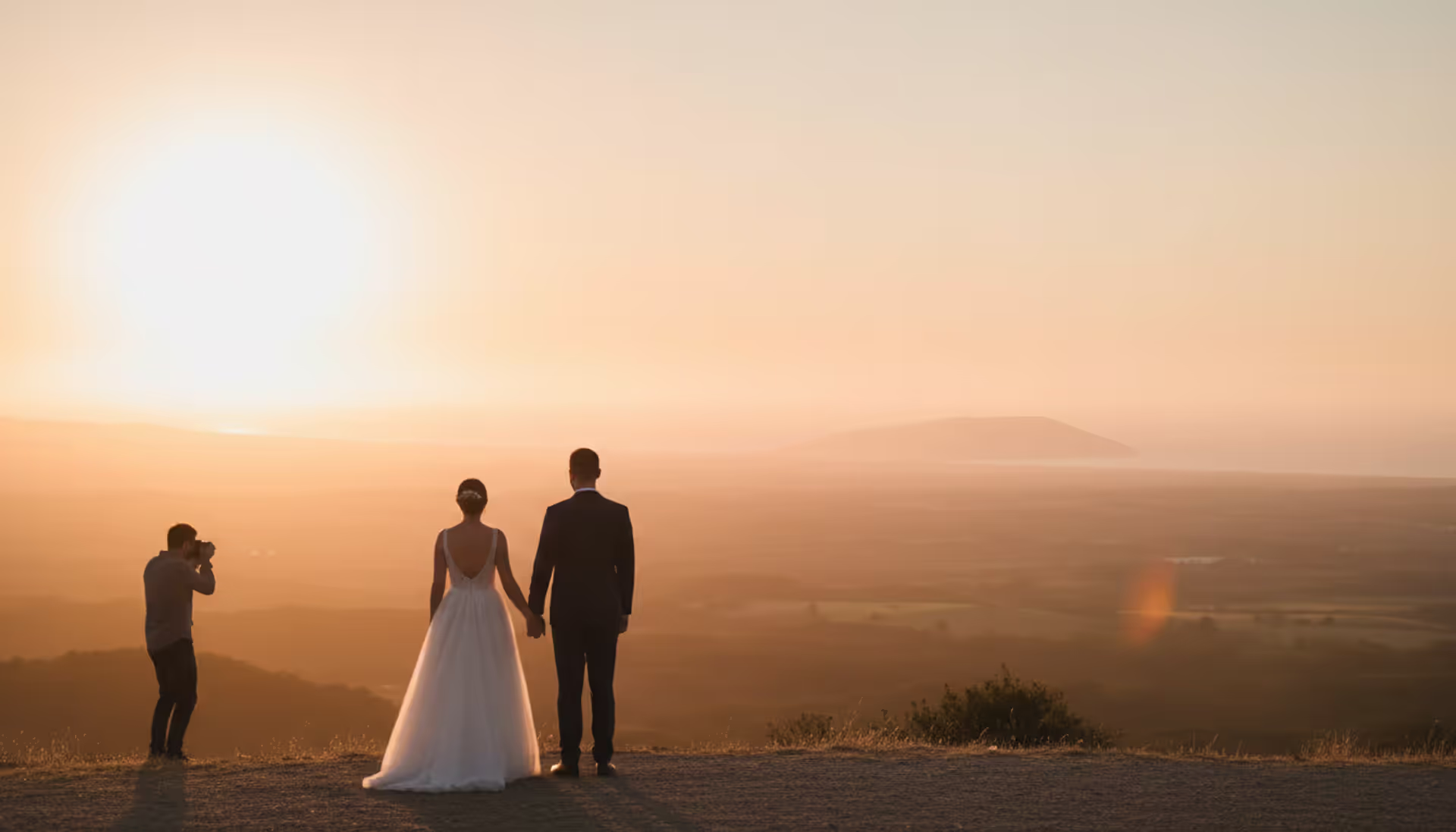
Wedding photography styles define how your celebration gets captured and remembered. From traditional posed portraits to candid documentary coverage, fine art aesthetics to editorial drama, understanding these approaches helps you find a photographer whose vision matches yours and ensures your images reflect your authentic story
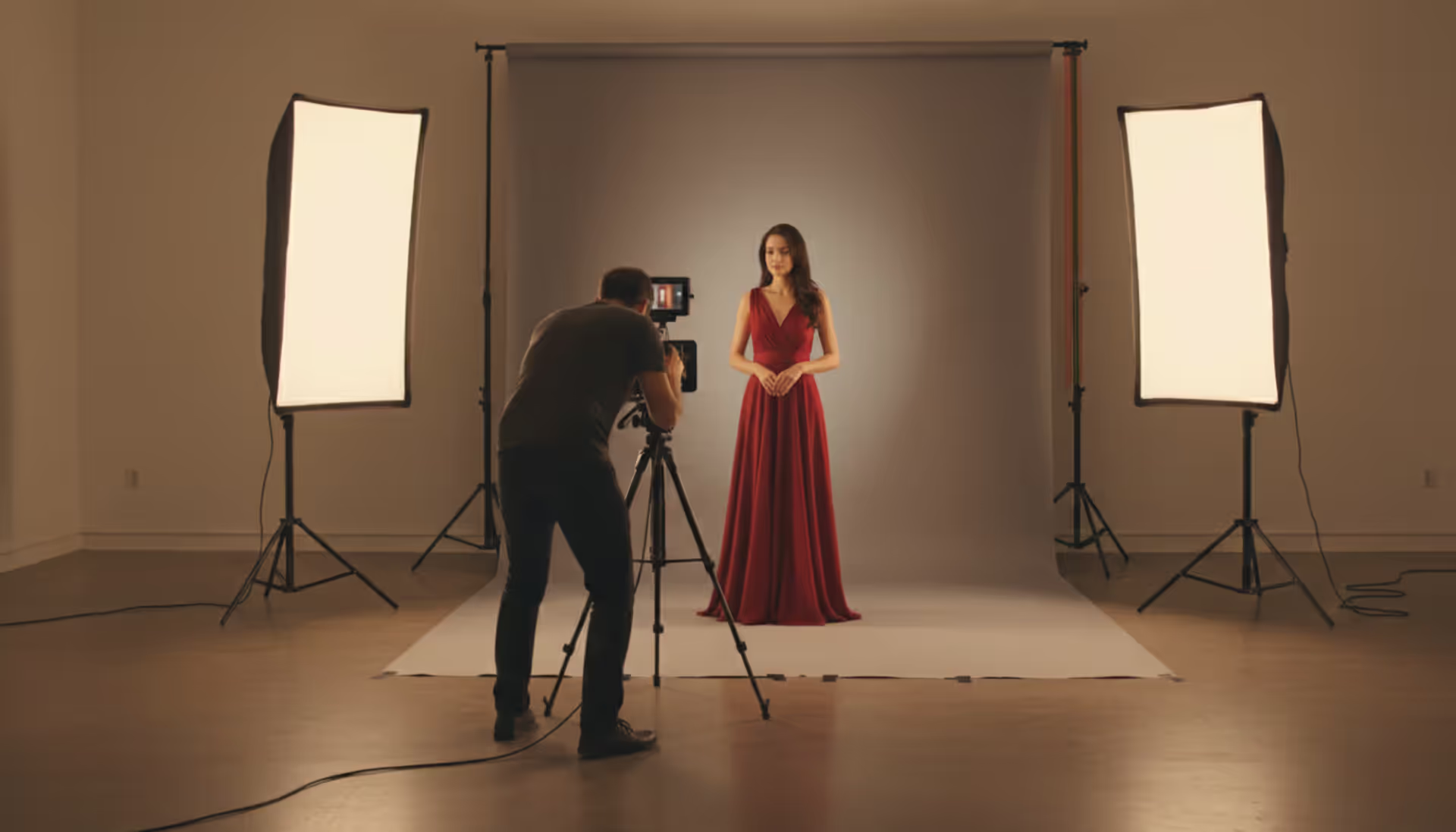
Traditional portrait photography creates polished, timeless images through controlled lighting, deliberate posing, and classic composition. Learn what defines this formal approach, how it differs from modern styles, what to expect during sessions, and how to prepare for studio, senior, children's, and couple portraits
Professional real estate photography increases property views by 118% and reduces time on market by 32%. Choosing the right photographer requires understanding service types, evaluating portfolios, verifying credentials, and recognizing common hiring mistakes that cost sellers thousands
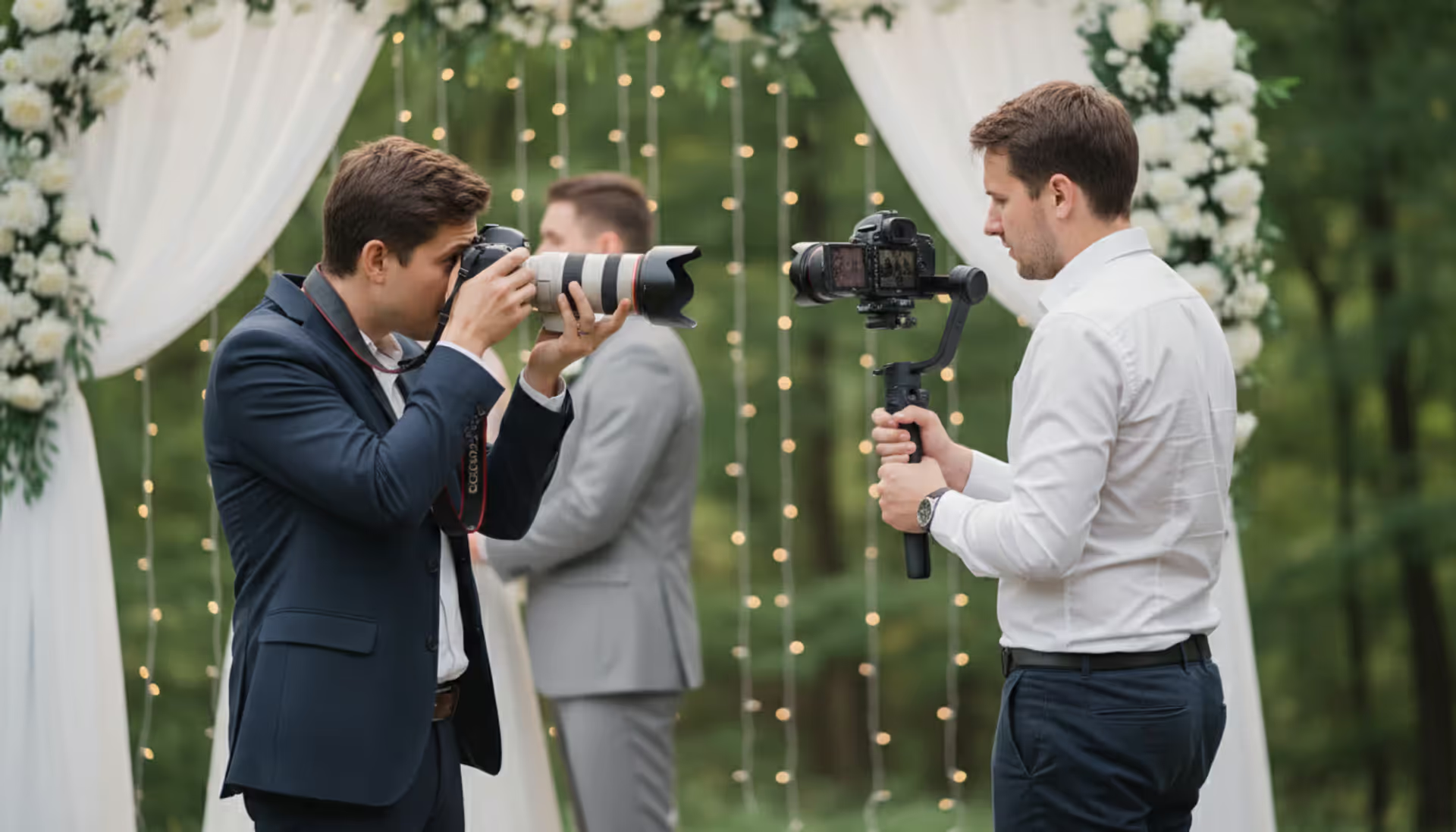
Hiring professionals to capture your most important moments requires understanding what you're actually paying for and how to identify providers who match your vision and budget. Learn about service packages, pricing structures, and common mistakes to avoid when booking photographers and videographers
The content on this website is provided for general informational and educational purposes only. It is intended to explain concepts related to running a photography business, insurance coverage, marketing, websites, and professional development.
All information on this website, including articles, guides, and examples, is presented for general educational purposes. Outcomes may vary depending on business size, location, and individual choices.
This website does not provide professional legal, insurance, financial, or business advice, and the information presented should not be used as a substitute for consultation with qualified professionals.
The website and its authors are not responsible for any errors or omissions, or for any outcomes resulting from decisions made based on the information provided on this website.