Your choice of photography program will follow you throughout your career. Right now, you're looking at everything from prestigious art schools in major cities to online courses you can take in your pajamas—and honestly, the sheer number of options makes this decision harder than it needs to be.
Photography training has changed completely over the past decade. You could spend two years getting an associate degree, or knock out a focused certificate program in three months. Each path leads somewhere different, which is why jumping into the wrong program costs you more than money—it costs time you can't get back.
What Photography Schools Teach
Most photography programs break learning into three main categories: mastering your camera, developing your creative eye, and figuring out how to actually make money.
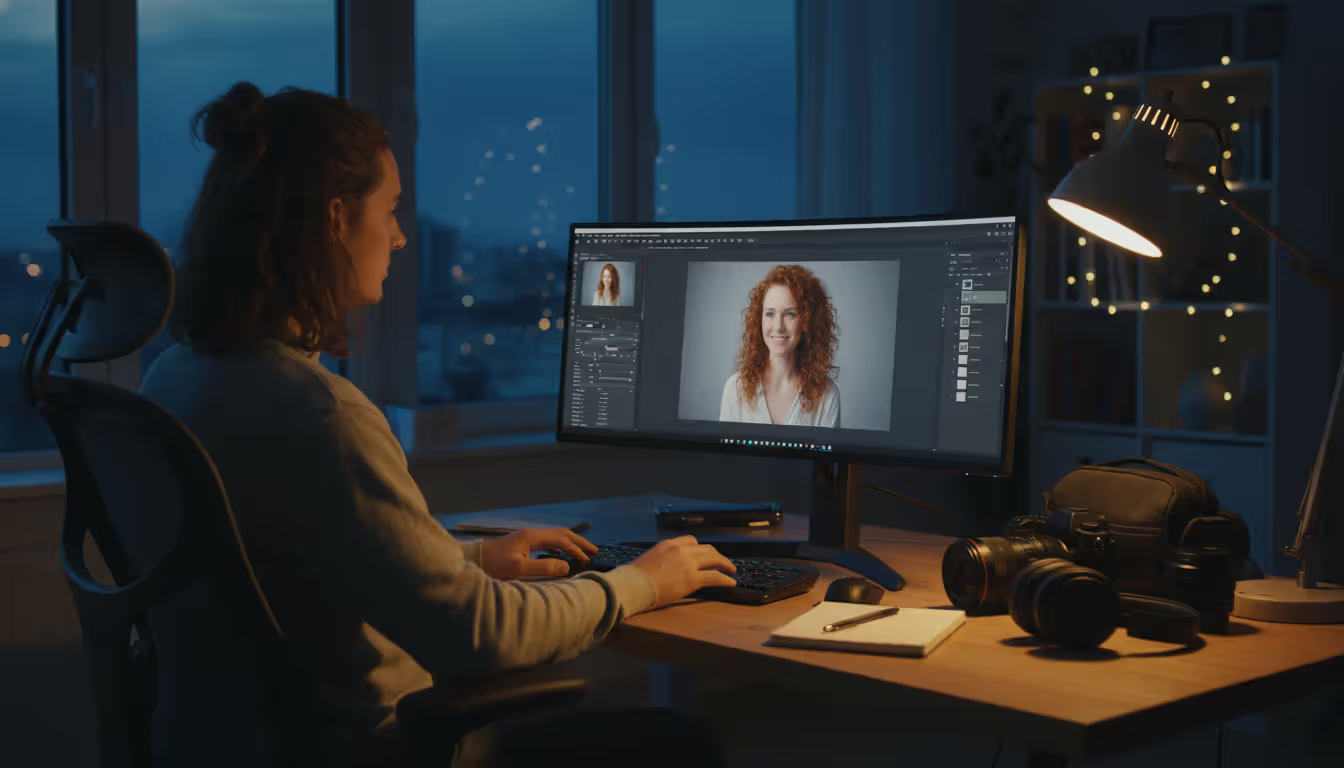
The technical side covers everything from aperture settings to why your photos look washed out in bright sunlight. You'll work with Lightroom and Photoshop until keyboard shortcuts become muscle memory. Instructors drill you on manual mode, teach you to read light meters without thinking, and explain why a 50mm lens creates different results than an 85mm for portraits.
Creative training pushes harder than you'd expect. Critique sessions force you to articulate why you composed a shot a certain way, not just say "it looked cool." Schools walk students through photography's evolution—you'll study everything from Dorothea Lange's Depression-era documentation to how Instagram changed photojournalism. This context matters because clients hire photographers who understand visual storytelling, not just camera operators.
The business curriculum addresses reality: most photographers work for themselves. You'll learn client contracts, how to price a wedding package without underselling yourself, copyright basics that prevent clients from stealing your images, and marketing strategies beyond "post on Instagram and pray." Modern programs add website building and SEO because potential clients won't find you otherwise.
Skill building follows a predictable arc. First semester? Camera basics and composition fundamentals. By midpoint, you're setting up three-point lighting and handling complex edits. Advanced students tackle projects matching professional work—shooting a fashion campaign, building a documentary photo essay, or creating commercial product images for actual businesses.
Author: Caleb Renshaw;
Source: maryelizabethphoto.com
Specializations keep expanding. Traditional categories like portrait and landscape work still exist, but schools now offer tracks in drone photography, 360-degree real estate tours, e-commerce product shots, and hybrid video-photo content. Some programs partner with local companies, giving students real assignments with actual clients (supervised by instructors who jump in when you're about to blow it).
Program depth varies wildly. An eight-week certificate teaches camera fundamentals. A four-year BFA degree includes technical mastery, conceptual development, art history, and professional practice. Neither choice is "wrong"—it depends where you're starting and where you want to end up.
Traditional vs Online Photography Programs
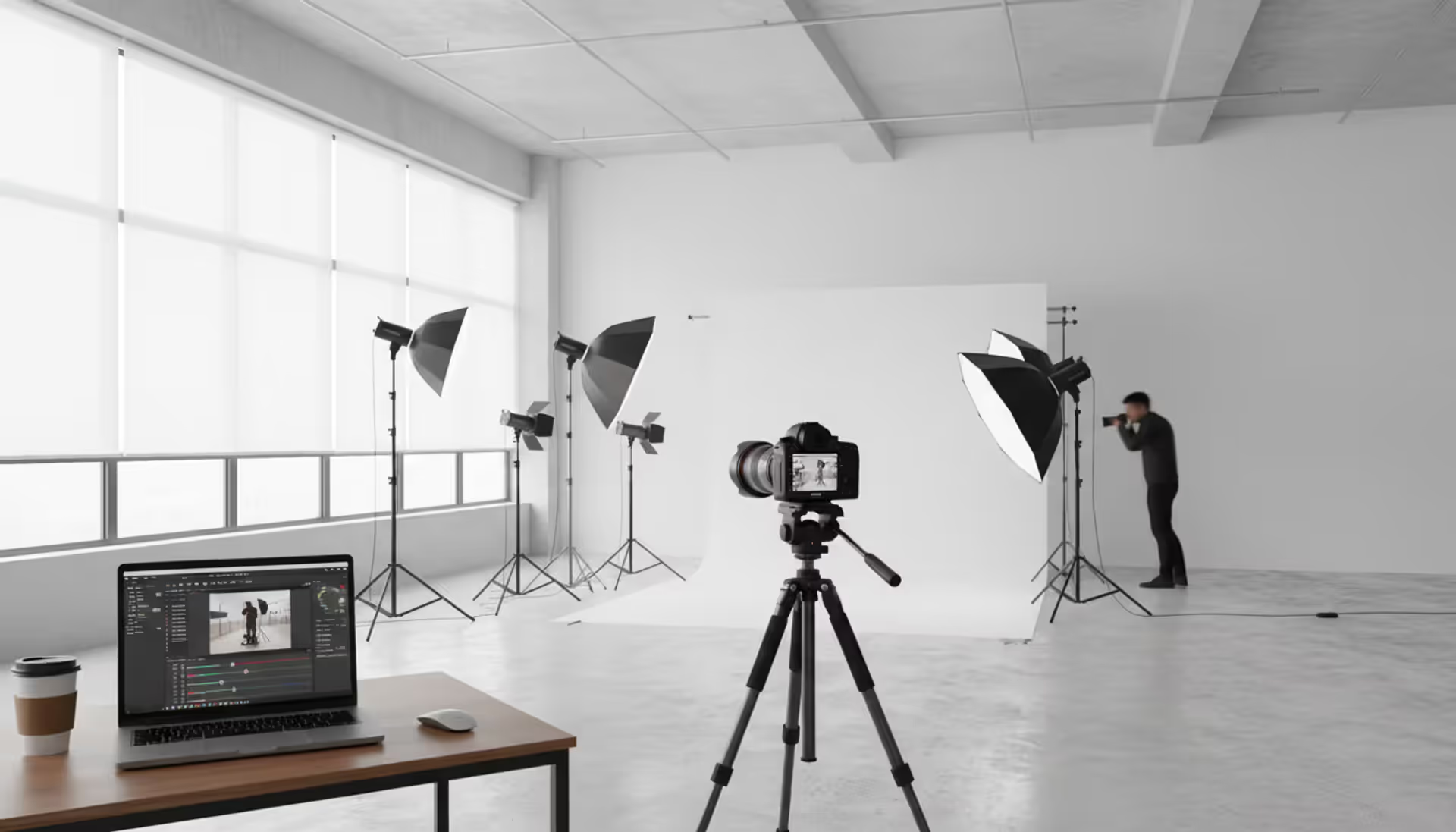
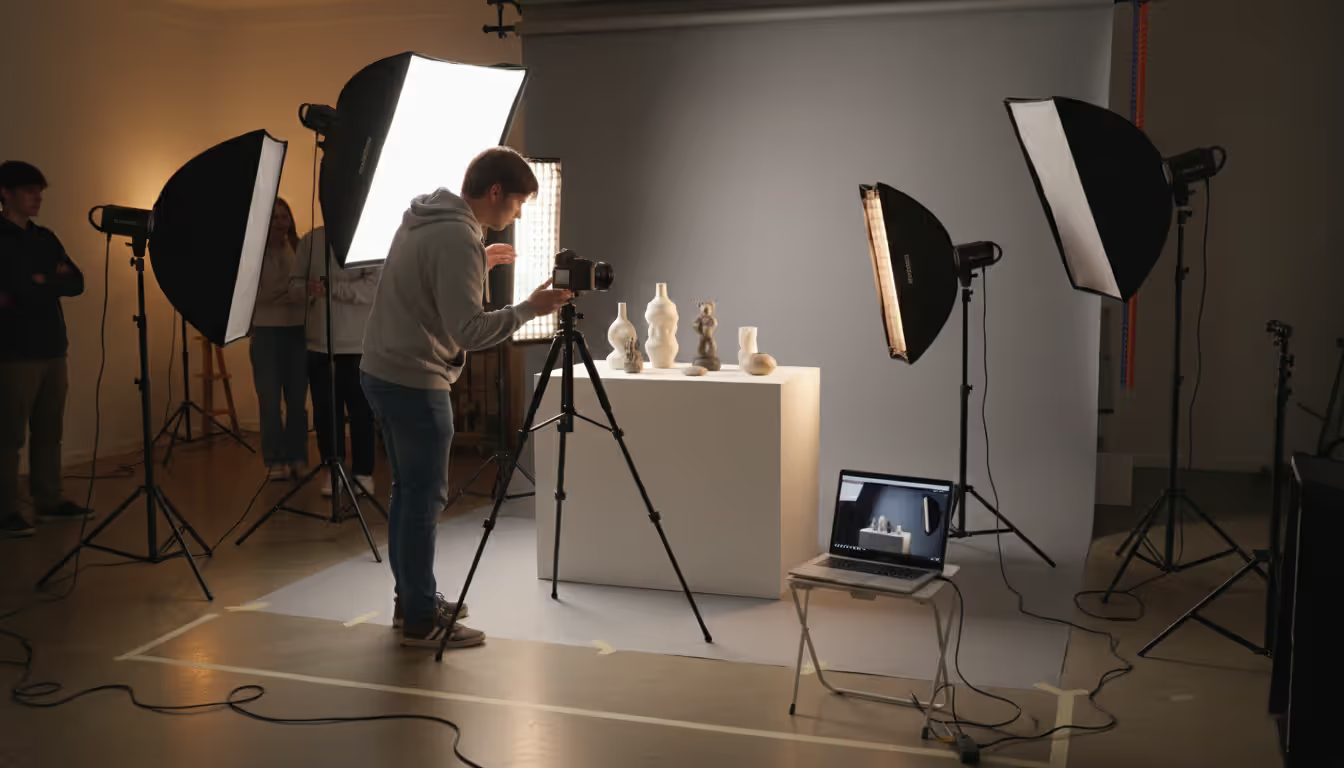
Campus-based programs give you immediate access to professional studios, darkrooms (yes, some still teach film), lighting setups worth $50,000, and instructors who can fix your mistakes in real-time. You're surrounded by other students, which means group critiques, collaborative projects, and friendships that turn into job referrals five years later. Schools typically maintain relationships with local studios and agencies, making internships easier to land.
Fixed schedules keep you accountable. Class meets Tuesday and Thursday at 10am whether you feel motivated or not. Assignments are due Friday, no extensions for "I didn't feel inspired." For students who struggle with self-motivation, this structure prevents the endless "I'll do it tomorrow" cycle.
The downside? You're stuck geographically. Either you move to wherever the school is located, or you spend two hours daily commuting. Classes happen when they happen—no flexibility for work schedules or family obligations. Annual tuition typically hits $15,000 to $50,000, not counting rent, gas, parking, and the $8 coffee you buy between classes.
Photography schools online eliminate location problems. Students in small Wyoming towns get the same instruction as someone in Brooklyn. Watch lecture videos at 2am if that's when you're alert. Submit assignments between work shifts. Join discussion forums while your kids nap. This flexibility appeals to career changers who can't quit their jobs and parents who can't relocate.
Author: Caleb Renshaw;
Source: maryelizabethphoto.com
Online programs have improved dramatically since the early clunky attempts. High-quality videos show lighting setups from multiple angles with slow-motion replays. You upload images and get detailed written critiques. Virtual galleries let classmates review your work. Some schools ship complete camera kits; others provide detailed equipment lists for purchase.
The tradeoff comes down to self-discipline and gear access. Without scheduled classes, it's easy to let assignments slide. You need to create your own shooting space, buy or rent equipment, and solve technical problems through Google instead of asking an instructor standing next to you. Networking happens in Slack channels rather than over post-class coffee.
Learning outcomes between formats have become surprisingly similar. A motivated online student with decent equipment can match the technical skills of campus graduates. The real difference shows up in networking and hands-on mentorship. Photography schools online work best if you're already self-directed and won't procrastinate yourself into failing.
Hybrid models split the difference. Complete theory modules online, then show up for weekend workshops where you get hands-on time with professional equipment and direct instructor feedback. These programs balance flexibility with the experiential learning you can't replicate at home.
Accreditation and Certification Requirements
Accreditation tells you whether an institution meets basic educational standards. Regional accreditation—from organizations like the Middle States Commission on Higher Education or Western Association of Schools and Colleges—carries the most weight. These accreditors review faculty qualifications, curriculum quality, and whether graduates actually learn anything.
National accreditation, common among vocational schools, gets less respect from employers and other colleges. If you think you might pursue additional degrees later, regional accreditation ensures your credits transfer instead of evaporating.
For photography specifically, NASAD (National Association of Schools of Art and Design) accreditation indicates specialized quality. NASAD-accredited programs maintain specific faculty-to-student ratios, require minimum studio hours, and prove graduates reach professional competency.
But here's the catch: accreditation doesn't automatically identify the best photography schools for your situation. Some excellent specialized programs skip formal accreditation, particularly shorter certificate courses taught by working professionals. These programs emphasize portfolio development over bureaucratic compliance.
Industry certifications like Professional Photographic Certification from PPA (Professional Photographers of America) sometimes matter more than academic degrees. Wedding and portrait photographers build reputations through portfolios and client referrals, not diplomas on walls.
The portfolio-versus-degree question depends on your career target. Museums, commercial studios, and teaching jobs typically require bachelor's degrees. Freelance photographers and studio owners succeed based on portfolio strength and business skills. A weak portfolio won't be saved by a fancy degree, but strong credentials open doors that amazing photos alone cannot.
Check accreditation before signing anything. Visit the U.S. Department of Education's database of accredited institutions. Unaccredited programs might deliver great training—just understand credits won't transfer and federal financial aid won't apply.
Cost Factors and Financial Aid Options
Tuition jumps around dramatically. Community college photography certificates run $3,000 to $8,000 total. Private art schools charge $25,000 to $50,000 per year for bachelor's programs. Online certificates range from $500 for basic courses to $12,000 for comprehensive year-long programs.
Equipment costs stack up fast. Entry-level cameras (DSLR or mirrorless) cost $600 to $1,200. Professional lenses run $800 to $2,500 each. Add lighting kits, tripods, memory cards, and external hard drives—you're looking at another $1,000 to $3,000 minimum.
Campus students face housing, transportation, and food costs. Commuting might cost $200 monthly in gas and parking. Living near campus in major cities costs $10,000 to $18,000 annually just for housing.
Online students save on housing but need home studio setups. Backdrops, reflectors, and basic lighting run $500 to $1,500. Without school darkrooms or studios available, you need dedicated workspace at home.
Federal financial aid works for accredited institutions offering degrees or certificates. Fill out FAFSA to see what you qualify for—grants, work-study, and subsidized loans become available based on your financial situation. Pell Grants provide up to $7,395 yearly for eligible students without requiring repayment.
Many schools offer their own scholarships based on portfolio quality, grades, or financial need. These scholarships vary from $1,000 to covering full tuition. Submit your strongest portfolio work during application—scholarship committees evaluate creative potential alongside technical ability.
Payment plans let you split tuition into monthly installments, often interest-free. This helps students avoid private loans while staying enrolled.
Veterans can apply GI Bill benefits at approved schools, covering tuition plus housing allowances. The Yellow Ribbon Program supplements GI Bill benefits at participating private institutions.
Some employers offer tuition assistance if you prove photography training relates to your career. Marketing professionals, graphic designers, and communications specialists might justify photography education as skill development.
Calculate everything before committing: tuition, fees, equipment, software subscriptions, and living expenses. A $30,000 program providing all equipment might actually cost less than a $15,000 program requiring $8,000 in separate gear purchases.
Schools That Provide Camera Equipment
Several programs recognize equipment costs block aspiring photographers from starting. These schools either include cameras, lenses, and lighting in tuition or run loan programs where students borrow equipment during enrollment.
New York Institute of Photography's online program ships complete camera kits—DSLR body, multiple lenses, memory cards, camera bag. Students keep everything after finishing the course, eliminating separate purchases.
Rocky Mountain School of Photography in Montana provides cameras and lenses during intensive summer workshops. Students use professional equipment in the field, then return it when the program ends. This lets you experiment with high-end gear before deciding what to buy.
Author: Caleb Renshaw;
Source: maryelizabethphoto.com
Some online photography schools that provide cameras use deposit systems. Students pay a refundable equipment deposit, receive shipped gear, and get full reimbursement when returning everything in good condition. This works well for certificate programs lasting several months.
Community colleges often run equipment checkout systems. Enrolled students can reserve cameras, lenses, lighting kits, and accessories for 24 to 72 hours. Not permanent access, but it supports students who can't afford immediate purchases.
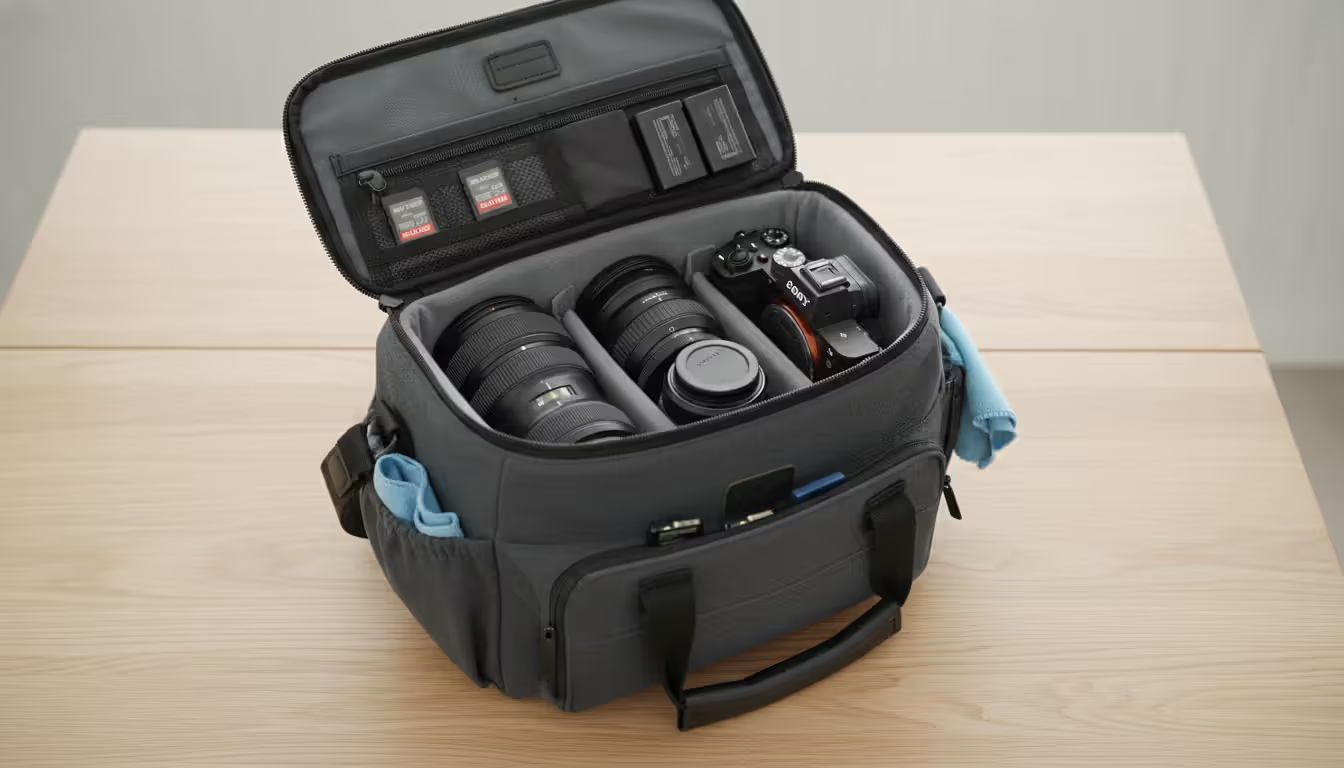
Equipment provision typically covers:
Camera body (DSLR or mirrorless)
Standard zoom lens (24-70mm equivalent)
Prime lens (50mm f/1.8)
Memory cards (64GB or larger)
Camera bag
Basic lighting kit (for studio-focused programs)
Most programs don't provide computers, software, or consumables like batteries and cleaning supplies. External hard drives, tripods, and specialized lenses remain your responsibility.
What Equipment You'll Need to Buy Yourself
Even schools with equipment programs require you to purchase certain items. Computers capable of running Adobe Creative Cloud represent the biggest expense—budget $800 to $1,500 for machines with adequate processing power and color-accurate displays.
Adobe Photography Plan (Lightroom and Photoshop) costs roughly $55 monthly or $600 yearly. Student discounts drop this to about $20 monthly while enrolled.
External storage isn't optional. Professional photographers generate hundreds of gigabytes each month. Buy at least one 2TB external hard drive ($60 to $100) for primary storage and a second for backup.
Tripods sometimes available for checkout, but owning one makes sense. A quality tripod handling various conditions costs $150 to $300. Cheap models break quickly and limit what you can shoot.
Specialty gear depends on your focus. Portrait photographers need reflectors ($30 to $80) and possibly studio strobes ($300 to $800 each). Landscape photographers buy filters ($50 to $200 per filter) and weather-resistant covers ($40 to $100).
Memory cards degrade over time. Keep at least two high-speed cards (64GB minimum) as backups. Professional-grade cards with faster write speeds cost $80 to $120 each but prevent missing shots during burst shooting.
Cleaning supplies—microfiber cloths, sensor cleaning kits, lens solution—cost $50 to $100 initially with periodic replacements needed.
Expect to spend $2,000 to $4,000 on personal equipment even when schools provide cameras. This investment lets you practice outside assignments and keep working after graduation.
How to Evaluate Photography School Quality
Faculty backgrounds tell you more than glossy brochures. Research instructors' actual careers. Do they still shoot professionally? Has their work been exhibited in galleries or published in magazines? Do they hold advanced degrees from respected schools?
Working professionals bring current industry knowledge. Instructors actively shooting commercial work understand client expectations today, emerging technology, and current market rates. Academic instructors contribute theoretical depth and historical context.
Author: Caleb Renshaw;
Source: maryelizabethphoto.com
The strongest programs balance both types. All academics might lack practical business insight. All practitioners without teaching training might overlook conceptual development.
Student portfolios demonstrate what programs actually produce. Request access to recent graduate portfolios or senior exhibitions. Judge technical competency, creative range, and professional polish yourself. Weak student work reveals inadequate instruction or low standards, regardless of school reputation.
Job placement rates indicate career preparation effectiveness. What percentage of graduates find photography-related work within six months? Do alumni work as staff photographers, run successful studios, or maintain steady freelance income? Schools should provide specific data, not vague success stories.
Contact alumni directly through LinkedIn. Ask about curriculum relevance, faculty accessibility, equipment condition, and whether the program justified its cost. Alumni usually give candid assessments you won't find in marketing materials.
Reviews need careful interpretation. One angry review might reflect a personality conflict rather than systemic issues. Patterns across many reviews—complaints about broken equipment, unresponsive administrators, or inexperienced instructors—signal real problems.
Industry partnerships reveal professional connections. Does the school work with local studios, advertising agencies, or publications? Can students access internships, mentorships, or actual client projects? Programs embedded in professional communities provide networking beyond classroom instruction.
Visit campus when possible, even for online programs with physical headquarters. Tour facilities, watch classes, check equipment condition, and talk with current students. Direct observation reveals details promotional materials hide.
Accreditation status remains fundamental. Unaccredited programs might deliver excellent training but limit future educational options.
Common Mistakes When Choosing a Program
Overlooking accreditation creates headaches later. Students discover credits won't transfer when pursuing additional education. Others learn employers dismiss unaccredited credentials. Verify accreditation before applying, not after enrolling.
Ignoring specialization options produces mismatched training. A fine art photography program won't prepare you for shooting commercial products. Photojournalism-focused programs won't develop wedding photography skills. Identify your career target, then find aligned programs.
Skipping career goal consideration wastes money. Students pursuing freelance portrait work don't need four-year degrees—intensive certificates and business training work better. Museum curator or college teaching positions require advanced degrees. Match educational investment to actual career requirements.
Choosing purely by price backfires regularly. The cheapest program might use outdated equipment, employ inexperienced instructors, or lack accreditation. The most expensive doesn't guarantee quality. Evaluate total value—curriculum depth, faculty expertise, equipment access, networking opportunities—against cost.
Underestimating time commitment causes dropout. Online programs demand 15 to 20 hours weekly for full course loads. Students juggling full-time jobs and families often overcommit, then abandon programs halfway through, forfeiting paid tuition.
Neglecting equipment requirements creates immediate frustration. Students enroll assuming cameras are provided, then discover they must buy $3,000 in gear immediately. Read equipment policies thoroughly before committing.
Skipping portfolio preparation for applications weakens scholarship opportunities. Many schools award substantial financial aid based on submitted portfolios. Students rushing applications with mediocre work leave thousands of dollars unclaimed.
Failing to research instructor backgrounds means learning from inexperienced teachers. Review faculty pages closely. Google instructors' names to verify professional accomplishments. Unimpressive credentials suggest limited learning potential.
Ignoring format fit—online versus campus—leads to poor outcomes. Students needing structure and accountability struggle in self-paced online programs. Those requiring flexibility resent rigid traditional schedules. Honest self-assessment about learning style prevents expensive mistakes.
Strong photography education builds technical mastery and creative vision equally. Find programs challenging both skills simultaneously, not just camera operation training
— Freeman Patterson
Frequently Asked Questions
Do I need a degree to become a professional photographer?
No degree is legally required to work professionally as a photographer. Plenty of successful photographers built careers through self-teaching, apprenticeships, and strong portfolios. Degrees provide structured learning, industry connections, and credibility for specific markets, though. Commercial studios, publications, and teaching positions often prefer or require bachelor's degrees. Wedding and portrait photographers typically succeed based on portfolio quality and client reputation rather than educational credentials.
How long does photography school take to complete?
Duration depends on program type. Certificate programs last 3 to 12 months, focusing on technical fundamentals. Associate degrees need two full-time years, combining photography courses with general education requirements. Bachelor's degrees take four years and include extensive liberal arts alongside photography specialization. MFA programs demand 2 to 3 years beyond the bachelor's level. Intensive workshops run 1 to 6 weeks but provide concentrated skill development rather than comprehensive education.
Can I get financial aid for online photography programs?
Yes, when the online program comes from an accredited institution offering recognized degrees or certificates. Federal financial aid—Pell Grants, subsidized loans, work-study—applies to accredited online programs identically to campus-based education. Fill out FAFSA to determine what you qualify for. Many schools also provide institutional scholarships for online students. Unaccredited programs don't qualify for federal aid regardless of quality, though private payment plans might be available.
What's the difference between a certificate and a degree in photography?
Certificates focus exclusively on photography skills, typically requiring 6 to 18 months completion. They emphasize technical ability and portfolio development without general education courses. Degrees (associate or bachelor's) include photography coursework plus humanities, sciences, and electives, needing 2 to 4 years. Degrees provide broader education and stronger credibility for certain careers but cost more and take longer. Certificates suit students wanting specific skills quickly; degrees benefit those wanting comprehensive education and maximum career flexibility.
Are photography schools worth the investment?
Value depends on your goals, learning style, and chosen program. Formal education accelerates learning through structured curriculum, expert feedback, and equipment access that would cost substantially more purchased independently. Programs also provide networking opportunities and professional credibility. However, self-directed learners with talent can develop professional skills through books, online tutorials, and practice at lower cost. Calculate expected career earnings against total program cost. If you'll recover tuition within 2 to 3 years of graduation through increased income, the investment probably makes financial sense.
Do online photography schools provide the same credentials as traditional schools?
When offered by identical accredited institutions, online and campus programs typically grant the same credentials. Diplomas don't indicate delivery format. Learning experiences differ though—online students miss hands-on studio access and face-to-face networking. Employers care more about portfolio quality than whether you learned online or in-person. Some specialized programs exist only online or only traditionally, so compare specific programs rather than generalizing about formats. Verify online programs carry identical accreditation as traditional counterparts.
Choosing photography education requires balancing multiple factors: learning format, total cost, accreditation status, equipment access, and career alignment. The right decision comes from honest assessment of your goals, learning style, and available resources.
Start by clarifying your career target. Research what credentials and skills that path actually requires. Evaluate programs based on accreditation, faculty background, student outcomes, and total cost including hidden expenses. Consider whether online flexibility or traditional structure matches your learning style better.
Don't rush this decision. Contact alumni, review student portfolios carefully, and verify accreditation status independently. Calculate total costs including equipment and living expenses, not just advertised tuition. Explore all financial aid options before assuming programs exceed your budget.
Remember education represents your career beginning, not the destination. The strongest photographers combine formal training with continuous self-education, experimentation, and professional practice. Choose a program building solid fundamentals while fostering creative growth, then commit to lifelong learning beyond graduation.
Your photography education shapes technical skills, professional networks, creative vision, and business understanding. Invest adequate time selecting the right program now, and you'll build a foundation supporting decades of creative work.
Photography has never been more accessible, but finding quality instruction that matches your learning style, budget, and goals can feel overwhelming. This comprehensive guide breaks down every major learning path—from free YouTube tutorials to university programs—helping you make an informed decision about where to invest your time and money
Finding the right photography workshop can transform your skills faster than solo practice. Learn what makes quality hands-on training, compare workshop types, and discover how to find local programs that match your skill level and goals
Selecting the right online photography program means balancing career goals, budget, and learning style. With options from weekend workshops to four-year degrees, you need to evaluate accreditation, instructor expertise, technical requirements, and program structure before enrolling
Choosing a photography major shapes your career trajectory and creative identity. This comprehensive guide covers degree types, program comparisons, specializations from sports to fine art photography, career paths with salary expectations, and admission requirements to help you select the right school
The content on this website is provided for general informational and educational purposes only. It is intended to explain concepts related to running a photography business, insurance coverage, marketing, websites, and professional development.
All information on this website, including articles, guides, and examples, is presented for general educational purposes. Outcomes may vary depending on business size, location, and individual choices.
This website does not provide professional legal, insurance, financial, or business advice, and the information presented should not be used as a substitute for consultation with qualified professionals.
The website and its authors are not responsible for any errors or omissions, or for any outcomes resulting from decisions made based on the information provided on this website.