You're staring at your computer screen, comparing photography programs, and they all start to blur together. One school promises "industry-leading instruction." Another touts "cutting-edge curriculum." A third offers "flexible learning options." None of this tells you what you actually need to know.
Here's what matters: Can you afford it? Will the format work with your job schedule? Does the school have actual accreditation, or just impressive-sounding claims? And honestly, will this education help you book clients or land a job?
I've seen too many students drop $15,000 on programs that looked perfect in the brochure but fell apart in practice. Maybe the "expert instructors" never responded to emails. Perhaps the "comprehensive curriculum" was just recycled YouTube content. Or the school's accreditation turned out to be meaningless for transferring credits.
Let's cut through the marketing language and figure out what you're actually buying.
What Online Photography Programs Are Available
Photography education comes in wildly different packages. Confusing them costs people thousands of dollars and months of wasted time.
Certificate programs run anywhere from six months to a year and a half, depending on whether you're studying full-time or squeezing classes around a day job. You'll focus exclusively on photography—no English composition requirements, no algebra, no art history unless it directly applies to your work.
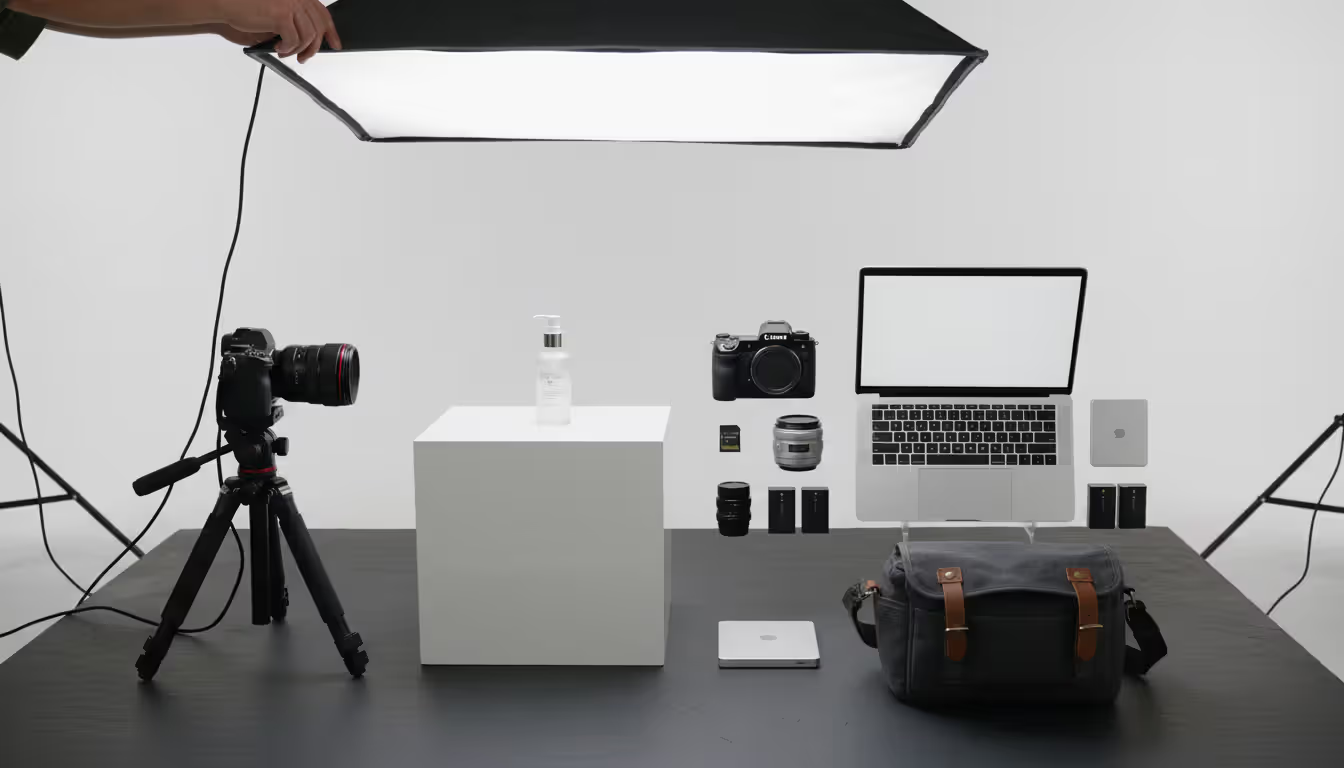
A product photography certificate might cover studio lighting setups, color management for e-commerce, retouching techniques for white backgrounds, and working with props. That's it. You're not writing papers about the socioeconomic impact of visual media. You're learning to make soap bottles look good on Amazon.
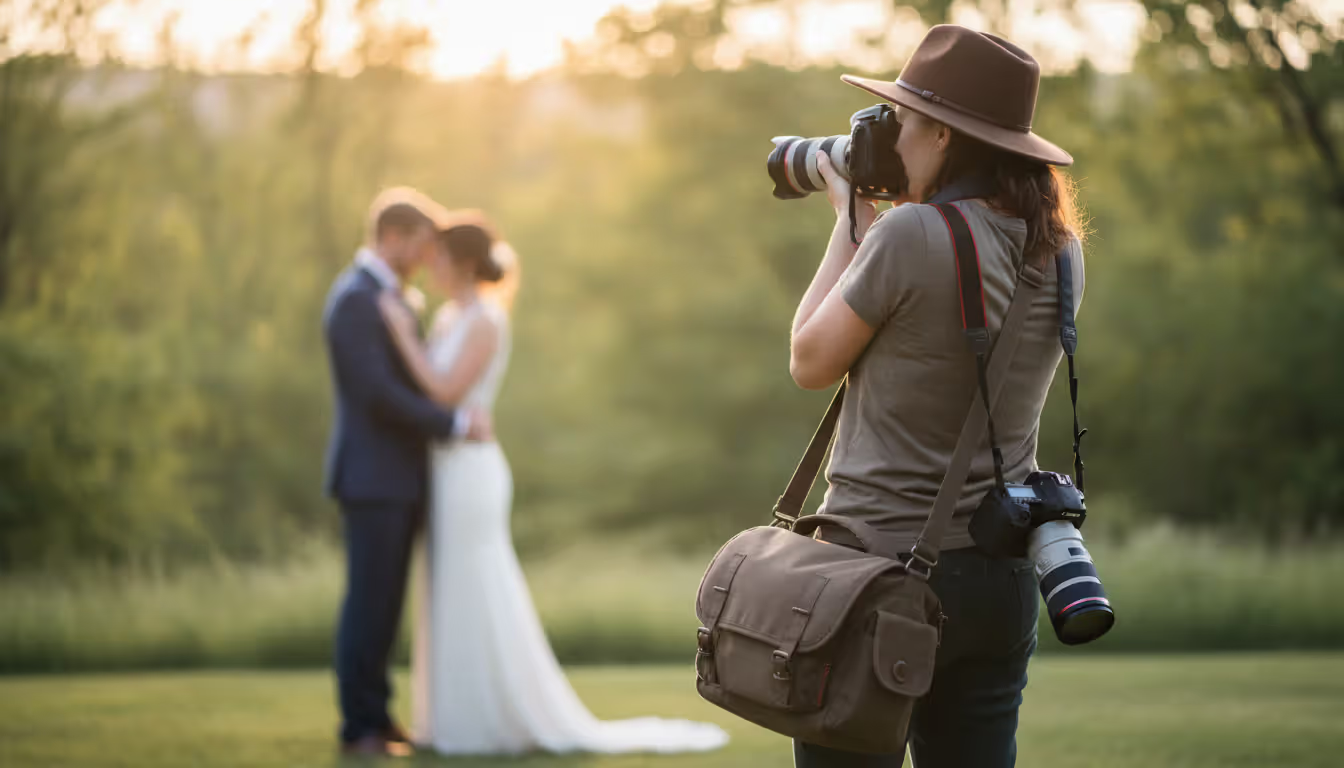
This concentration appeals to working photographers who need specific skills. Wedding photographers adding newborn sessions to their business. Graphic designers who want to shoot their own product photos instead of buying stock images. Marketing professionals tired of paying freelancers for corporate headshots.
The time commitment varies dramatically. Plan on 120 hours minimum for basic certificates, up to 300+ hours for advanced specializations. Most programs expect 10-15 hours weekly, though intensive formats cram everything into full-time study over a few months.
Author: Samantha Corbett;
Source: maryelizabethphoto.com
Associate degrees stretch across two years and dump general education requirements into your schedule whether you want them or not. You'll take English composition, college algebra, maybe an intro psychology course. Photography classes fill only half your time.
This frustrates students who just want to shoot photos. "Why am I writing essays about symbolism in literature when I signed up for a photography program?" Because that's how associate degrees work. The upside? Those general ed credits transfer if you later want a bachelor's degree. The downside? You're paying for and spending time on coursework unrelated to photography.
Associate programs work for beginners who need structure and aren't entirely sure photography is their final destination. The degree opens doors to other majors if you change your mind halfway through. You're also building a broader educational foundation, which sounds vague but matters when you're trying to understand client briefs that reference cultural movements or communicate with art directors who expect college-level critical thinking.
Bachelor's degrees consume four years and dive deep into visual theory, art criticism, photographic history, and professional practices. You might spend an entire semester studying the Zone System and large format photography even if you'll never touch film in your career. You'll write research papers analyzing the work of Diane Arbus or Ansel Adams. You'll complete internships at studios, galleries, or publications.
This level suits people aiming for museum positions, gallery representation, or university teaching jobs. These careers explicitly require bachelor's degrees, often master's degrees. Your portfolio matters, but you won't even get past HR without the right credentials.
The cost and time investment are substantial. You're looking at four years before earning photography income, plus student loans that might hit six figures at private schools. Make sure your career goals justify that investment.
Individual courses run the gamut from $150 weekend workshops to $800 twelve-week intensives. Platforms like Udemy, Skillshare, LinkedIn Learning, and CreativeLive host thousands of these. Quality ranges from exceptional to worthless.
The best ones provide actual assignments with instructor feedback. You submit photos, get detailed critiques, revise your work based on feedback, and resubmit. That feedback loop drives improvement.
The worst ones are just video lectures with no interaction. You watch someone explain aperture settings, then you're on your own. No assignments. No feedback. No way to know if you're applying concepts correctly.
These work brilliantly for specific skill gaps. You shoot real estate and want to add drone photography—take a course on FAA regulations and aerial composition. You're comfortable with natural light but clueless about studio strobes—find a lighting workshop. You know your camera inside out but your editing workflow is inefficient—grab a Lightroom course.
They fail when people try assembling comprehensive education from random courses. You end up with knowledge gaps, contradictory techniques from different instructors, and no coherent progression from beginner to advanced skills.
Accreditation and What It Means for Photography Colleges Online
Accreditation sounds bureaucratic and boring until you realize it determines whether you can get federal financial aid, transfer credits to other schools, or avoid wasting money on diploma mills.
Regional accreditation comes from seven organizations covering different parts of the United States. The Higher Learning Commission accredits schools in the Midwest. The Middle States Commission handles Mid-Atlantic states. The New England Commission covers the Northeast. And so on.
Schools with regional accreditation meet rigorous standards for faculty qualifications, student services, learning outcomes, and financial stability. Their credits transfer smoothly to other regionally accredited schools. If you complete an associate degree at one regionally accredited school, another will accept most of those credits toward a bachelor's degree.
Most established universities and community colleges hold regional accreditation. This is the gold standard.
National accreditation typically applies to career-focused or vocational schools. Organizations like the Distance Education Accrediting Commission or the Accrediting Council for Continuing Education and Training grant national accreditation.
Here's the problem: regionally accredited schools often refuse to accept credits from nationally accredited schools. You might finish an associate degree at a nationally accredited photography school, then discover the state university where you wanted to complete your bachelor's degree will only accept six of your sixty credits.
That's two years and $20,000 down the drain.
National accreditation isn't fake or worthless—the schools provide real education. But the credit transfer issues create expensive complications.
Programmatic accreditation comes from field-specific organizations. The National Association of Schools of Art and Design (NASAD) accredits art and design programs, including photography. This adds credibility and ensures programs meet professional standards.
Unlike regional or national accreditation, programmatic accreditation doesn't affect financial aid eligibility or credit transfer. It's more of a quality seal than a fundamental requirement.
Verify any school's accreditation through the Department of Education's database at ope.ed.gov/dapip. Don't trust the school's website alone. Some institutions use deliberately confusing language about being "certified," "licensed," or "approved" that sounds official but doesn't represent actual accreditation.
Real example: A student I know spent $18,000 on a nationally accredited photography program, fully intending to transfer to a state university afterward. When she applied, the university accepted only twelve of her sixty credits. She had to essentially start over, taking another three years to finish her bachelor's degree. Had she started at the state university's own online associate program, every credit would have transferred seamlessly.
Federal financial aid—Pell Grants, subsidized loans, unsubsidized loans—only applies to accredited institutions offering eligible programs. If you're counting on financial aid to afford your education, verify accreditation first. Private student loans may cover non-accredited programs, but you'll pay higher interest rates and lose federal loan protections like income-driven repayment plans.
Cost Breakdown for Virtual Photography School Programs
Tuition numbers on websites tell maybe half the story. Equipment, software, fees, and opportunity costs add up fast.
Program Type
Tuition Range
Timeline
Gear & Software
Actual Total Cost
Single Courses
$150–$800 each
4–12 weeks
$0–$500
$150–$1,300
Certificates
$3,000–$12,000
6–18 months
$1,500–$3,500
$4,500–$15,500
Associate Degrees
$8,000–$35,000
2 years
$2,000–$5,000
$10,000–$40,000
Bachelor's Degrees
$40,000–$120,000
4 years
$2,500–$6,000
$42,500–$126,000
These numbers assume online delivery, which typically costs 10–30% less than on-campus programs. Public universities offer in-state students the best value for degrees. Private specialized schools charge premium prices—sometimes justified by exceptional instruction and industry connections, sometimes just because they can.
Hidden costs ambush students who only look at tuition. Technology fees run $200–$600 annually at many schools. Portfolio review fees add another $100–$300. Some programs require attending one or two in-person intensives, turning a "fully online" program into a surprise $1,500 travel expense.
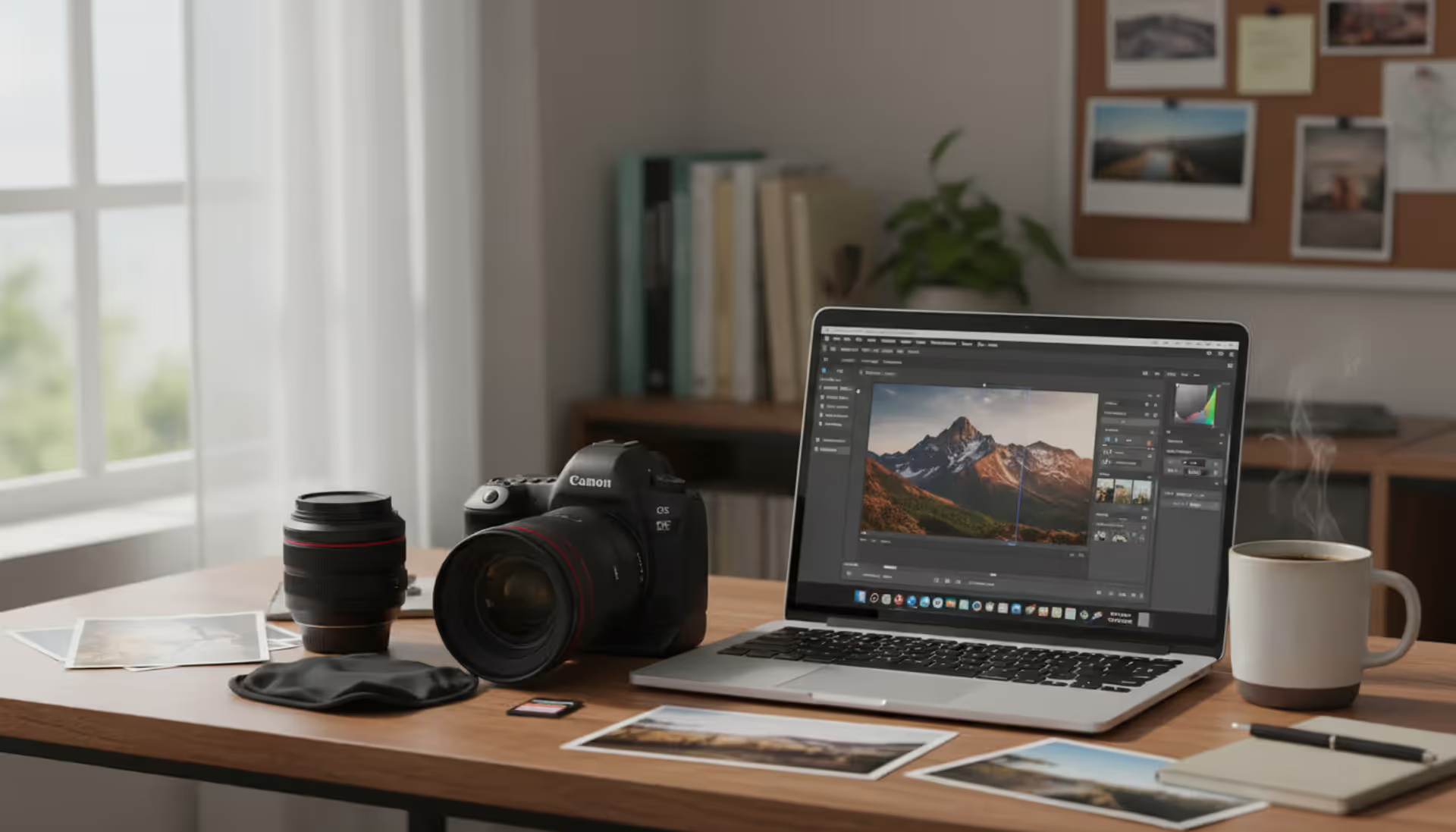
Adobe Creative Cloud Photography plan costs roughly $600 yearly. That's $2,400 over four years—not included in any tuition estimate. Some students try using free alternatives like GIMP or Darktable, but professional workflows run on Adobe products. You'll eventually need to learn Lightroom and Photoshop if you want to work professionally.
Author: Samantha Corbett;
Source: maryelizabethphoto.com
Equipment requirements shift based on program focus and level. A photojournalism certificate might accept any camera with manual controls—even a ten-year-old DSLR works fine for learning exposure and composition fundamentals. A commercial photography degree expects you to own or access studio lighting, backdrops, light modifiers, and possibly medium-format cameras.
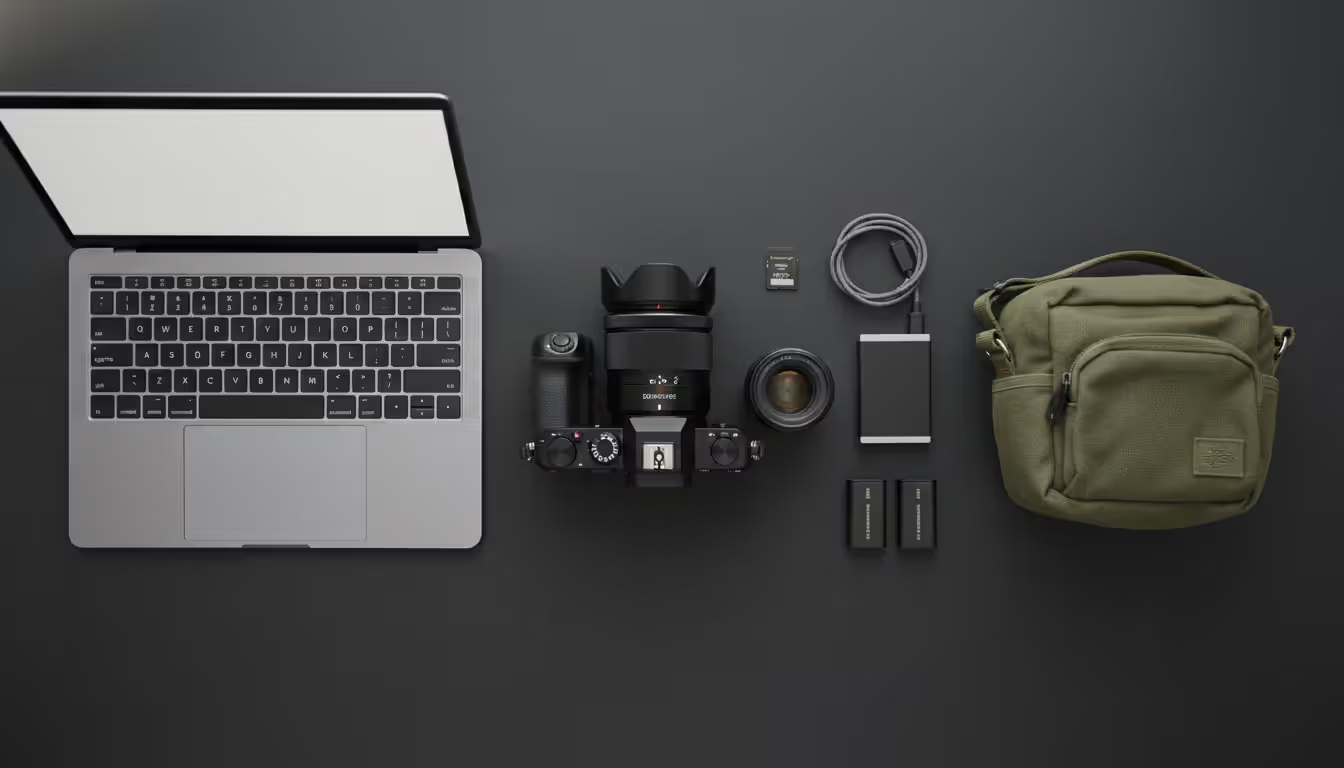
Starting from scratch, budget $800–$1,500 for a decent camera body. Entry-level full-frame mirrorless cameras like the Sony a7 III or Canon EOS RP fall in this range (used or refurbished). Add $800–$1,200 for a 24–70mm f/2.8 zoom lens, plus $200–$400 for a 50mm f/1.8 prime lens. That's $1,800–$3,100 before lighting equipment, memory cards, camera bags, extra batteries, or lens filters.
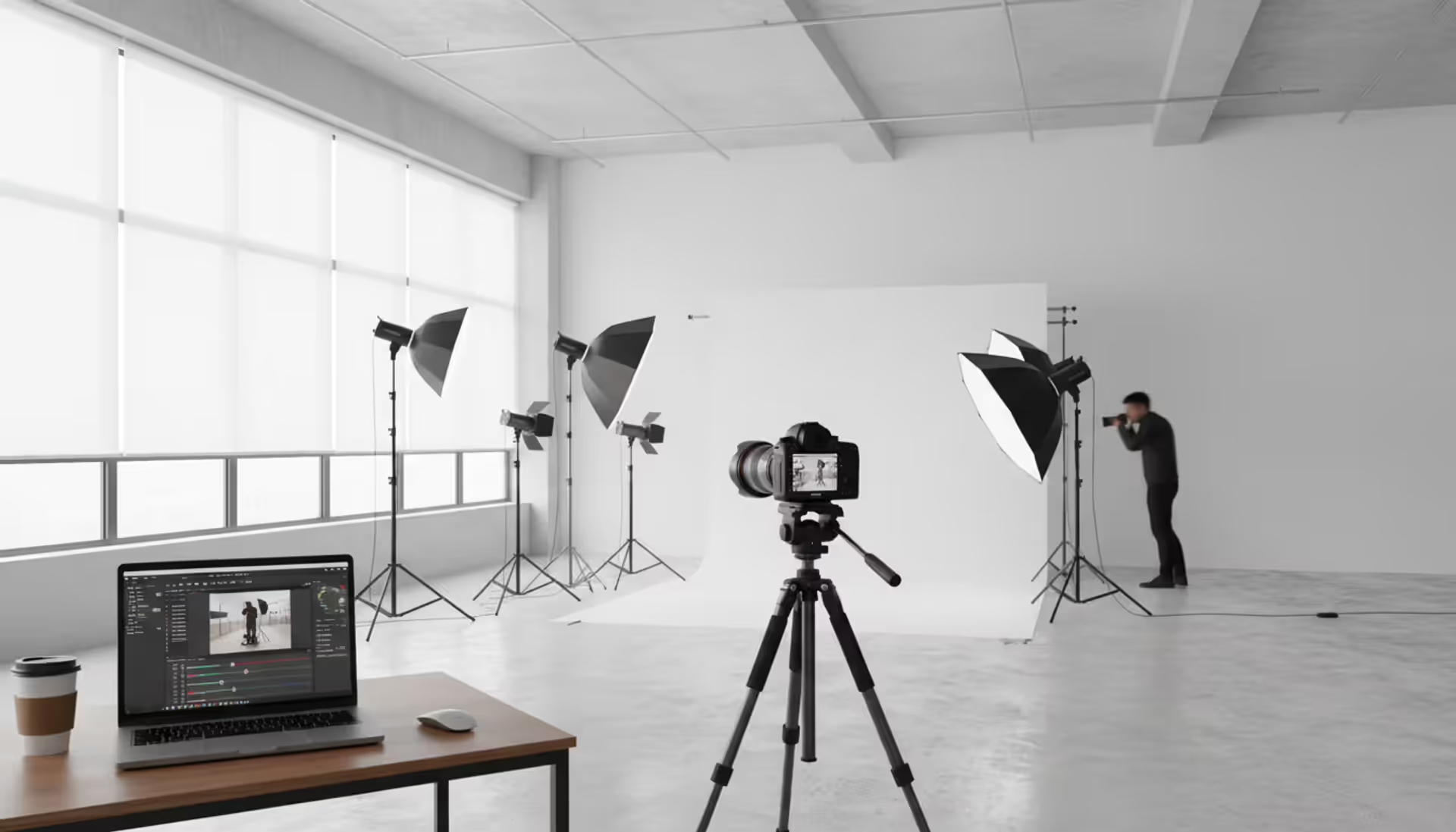
Studio lighting for commercial programs adds significantly to costs. A basic two-light strobe kit runs $400–$800. Add light stands ($100–$200), softboxes or umbrellas ($100–$300), and wireless triggers ($100–$200). You're now at $700–$1,500 for lighting alone.
One expense students consistently forget: color-calibrated monitors. Editing on an uncalibrated laptop screen means your images look completely different when clients view them on calibrated displays or when printed. Basic calibration devices start around $150. Professional ones cost $300–$500.
Financial aid options include federal Pell Grants (up to $7,395 for 2024-2025, adjusted annually). Subsidized and unsubsidized federal student loans cover remaining costs. Many schools offer scholarships ranging from $500 to $5,000 yearly, sometimes based on portfolio submissions or academic merit.
Professional organizations like the Professional Photographers of America, Women in Photography International, and the National Press Photographers Association offer scholarships, though competition is intense. You're competing against hundreds of applicants for awards that might cover only part of one semester's tuition.
Return on investment calculations get messy in photography. Bureau of Labor Statistics median earnings hover around $42,000 annually for photographers, but that includes everyone from part-time weekend portrait photographers earning $15,000 to established commercial shooters making $150,000+.
Your earnings depend more on business skills, specialization, location, and networking than educational credentials. A wedding photographer in rural Montana faces different market conditions than a commercial photographer in New York City.
Rule of thumb: if your total program cost exceeds your realistic first-year photography earnings, think hard about whether that investment makes sense. Borrowing $100,000 for a bachelor's degree when you'll likely earn $35,000 your first year creates a financial burden that takes decades to overcome.
How Online Photography Courses Work
Online photography education delivery varies more than most students expect. Understanding these differences helps you avoid enrolling in programs that clash with your learning style or schedule.
Live synchronous classes meet at scheduled times via Zoom, Microsoft Teams, or similar platforms. Everyone logs in simultaneously. You watch demonstrations in real-time, participate in group critiques, ask questions immediately, and interact with classmates during discussions.
Benefits: Structure keeps you accountable. You can't easily skip class when you know the instructor and classmates expect you. Real-time feedback accelerates learning. Relationships develop with other students, creating networking opportunities and collaborative projects.
Drawbacks: Schedule flexibility disappears. Classes might meet Tuesday and Thursday evenings from 7-9pm Eastern. If you work evening shifts or live in Hawaii, that's a problem. Time zones create headaches. A 7pm Eastern class starts at 1pm Pacific—possibly during your work hours.
Asynchronous self-paced learning provides recorded lectures, readings, and assignments you access whenever convenient. Most programs set weekly or biweekly deadlines for submitting work, but you choose when to watch videos or complete exercises.
Benefits: Total schedule flexibility. Watch lectures during your lunch break, at midnight, or Sunday morning. Complete assignments around work, family obligations, or other commitments.
Drawbacks: Requires intense self-discipline. Without scheduled meetings, procrastination becomes dangerously easy. You'll tell yourself you'll watch that lecture "later," then suddenly three weeks have passed and you're hopelessly behind. Limited interaction with instructors and classmates can feel isolating. You're essentially teaching yourself with video guidance.
Hybrid models combine both approaches, trying to capture benefits of each. You might watch pre-recorded technique demonstrations on your schedule, then join live critique sessions every other week. Or complete reading and shooting assignments asynchronously, but attend monthly virtual workshops for demonstrations and Q&A.
This balances flexibility with community connection. You get schedule control for routine coursework while maintaining relationships and real-time feedback through periodic live sessions.
Technical requirements typically include a computer capable of running photo editing software. Minimum 8GB RAM, though 16GB makes editing significantly smoother. Reliable high-speed internet matters—at least 25 Mbps download speed for streaming video lectures without constant buffering. Upload speed matters too if you're submitting high-resolution images; 10 Mbps minimum helps avoid hour-long upload times.
Author: Samantha Corbett;
Source: maryelizabethphoto.com
A camera meeting program specifications is obviously essential. Introductory courses sometimes accept smartphone cameras for learning composition and storytelling fundamentals. Advanced programs require interchangeable-lens cameras with full manual controls—aperture priority mode, shutter priority mode, and full manual mode.
Hands-on assignments drive learning in quality programs. You'll receive prompts like "photograph five examples of complementary colors in your neighborhood" or "create three portraits using only window light, showing dramatic, moderate, and soft lighting ratios."
You submit images through learning management systems like Canvas, Blackboard, or Moodle. Better programs require technical metadata (ISO, aperture, shutter speed, lens focal length) along with artist statements explaining your creative decisions and challenges you faced.
Instructor feedback methods separate excellent programs from mediocre ones. Premium programs provide detailed written critiques of every assignment—sometimes 200-300 words per image, highlighting both strengths and specific improvements. Some instructors annotate images directly, drawing arrows to show better cropping or circling distracting elements.
Budget programs offer only rubric-based grading with minimal personalized feedback. You might receive a score and generic comment like "Good use of light, work on composition" that applies to dozens of students.
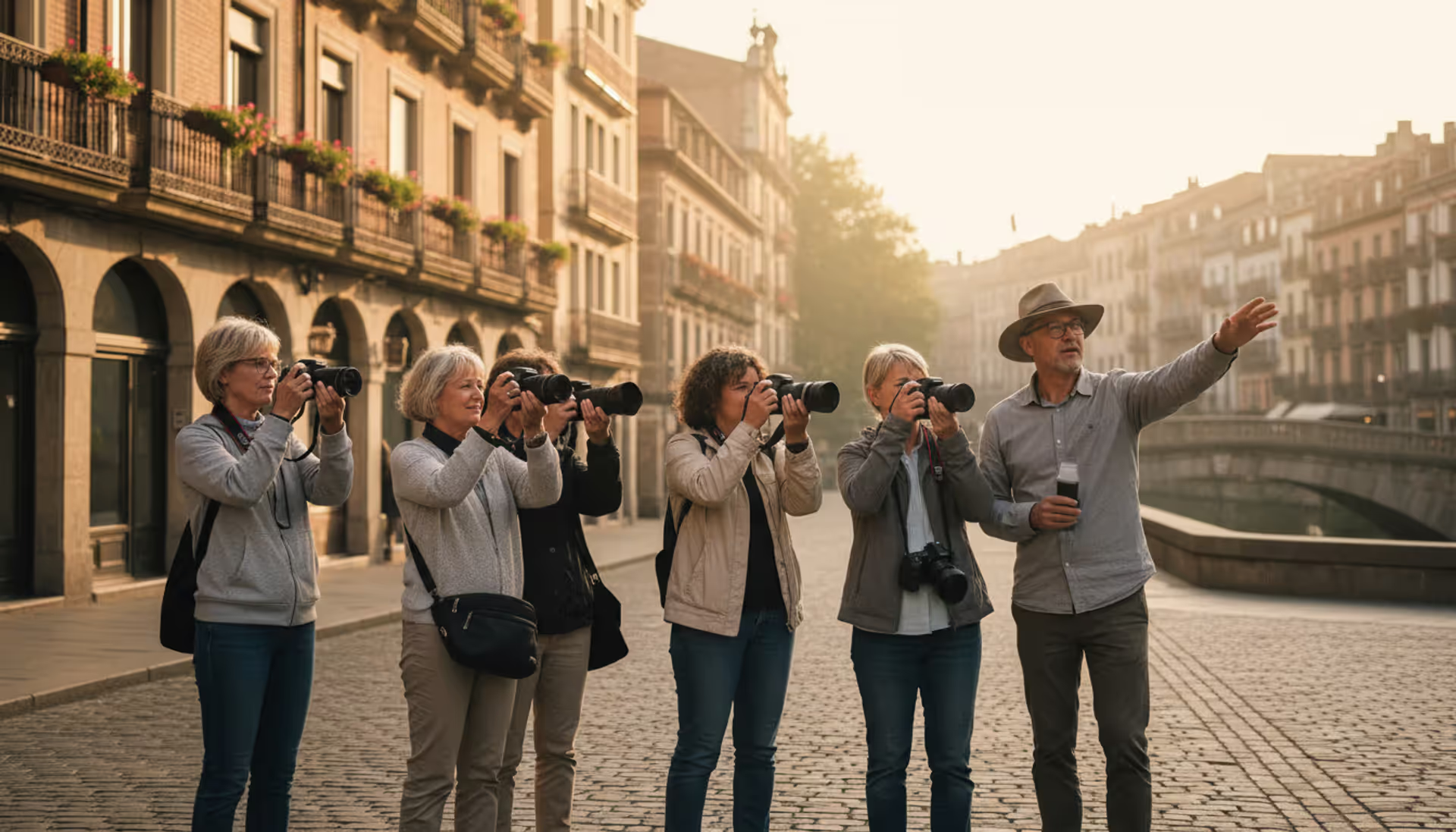
Live critique sessions, where instructors and classmates discuss your work in real-time video calls, provide the most valuable learning. You hear diverse perspectives, defend creative choices, and learn by critiquing others' work. These sessions require significant instructor time, making them rare in lower-priced programs.
Portfolio development happens progressively throughout your studies rather than being crammed into the final semester. Starting in early courses, instructors help you identify your strongest work and understand sequencing images for maximum impact.
By program completion, you should have 15–25 polished portfolio pieces across different subjects or styles. Not just a collection of class assignments, but a curated selection demonstrating your capabilities to potential clients or employers.
Equipment You'll Need
Camera gear requirements shift dramatically based on program level and specialization. Entry-level certificates often accept any camera with manual exposure controls. That Canon Rebel from 2015 collecting dust in your closet? Probably works fine for learning exposure triangle relationships and composition principles.
Advanced commercial photography programs expect current full-frame sensors, professional-grade lenses with fast apertures, and sometimes medium-format camera access for studio work.
A versatile starting kit for most programs includes a mirrorless or DSLR camera body ($800–$1,500 used or refurbished), a standard zoom lens like a 24–70mm f/2.8 ($800–$1,200), and a nifty-fifty 50mm f/1.8 prime lens ($200–$400). This combination handles portraits, landscapes, street photography, and most general assignments.
Specialized programs may require specific lenses. Macro photography courses need macro lenses for close-up work. Architectural photography requires tilt-shift lenses to correct perspective distortion. Wildlife photography demands long telephoto zooms.
Check program equipment lists carefully before enrolling. Discovering you need a $2,000 tilt-shift lens after you've already paid tuition creates unpleasant financial surprises.
Software needs center on Adobe Lightroom for organizing and editing images, plus Photoshop for advanced retouching and compositing. Some programs teach Capture One instead of Lightroom—it's preferred by many commercial photographers for color accuracy and tethered shooting capabilities.
Budget-conscious students sometimes attempt using free alternatives like GIMP, Darktable, or RawTherapee. These programs work, but professional workflows overwhelmingly use Adobe Creative Cloud. Learning GIMP means relearning everything in Lightroom and Photoshop when you enter the professional market.
Lighting basics for online programs usually start with natural light modification techniques—reflectors, diffusers, scrims—before introducing artificial lighting. If your program covers studio photography, expect to purchase a two-light strobe kit ($400–$800), light stands ($100–$200 for basic models, more for C-stands), and modifiers like softboxes or umbrellas ($100–$300).
Some programs provide detailed equipment lists from specific vendors, occasionally with student discount codes. Others offer general guidelines, letting you source gear wherever you find deals.
Don't overlook storage solutions. High-resolution RAW files consume massive space. A single day of shooting might generate 50GB of images. You'll need external hard drives for backup (plan $100–$200 for a multi-terabyte drive) and cloud storage subscriptions for offsite backup protection.
Key Factors When Comparing Photography Programs Online
Curriculum quality matters infinitely more than promotional promises about "award-winning faculty" or "state-of-the-art virtual classrooms."
Request detailed syllabi showing week-by-week topics, specific assignments, and reading lists. Don't accept vague course descriptions like "students will explore advanced portrait techniques through hands-on projects." That tells you nothing.
Strong curricula show clear progression. Week one covers camera operation basics. Week two introduces exposure triangle relationships. Week three applies those concepts to specific lighting conditions. Each assignment builds on previous skills.
You should see assignments that challenge conceptual development, not just technical replication. "Recreate this lighting setup" teaches technique. "Create a five-image series exploring isolation in urban environments" develops personal vision. You need both, but programs focusing exclusively on technical replication produce technicians, not photographers.
Look for warning signs of weak curricula. All assignments seem equally difficult with no progression from simple to complex. Readings consist entirely of equipment reviews rather than including photographic theory or artist interviews. No mention of portfolio development or critique sessions.
Instructor credentials require deeper investigation than impressive biographies claiming "award-winning professional photographer." Yes, you want instructors with professional experience. But teaching ability matters equally.
A photographer who's won international awards might be terrible at explaining concepts clearly or providing useful feedback. Meanwhile, someone with a modest professional career but fifteen years of teaching experience might be exceptional at helping students improve.
Look for evidence of teaching experience specifically. How many years have they taught? Do student testimonials mention their feedback quality? Are they actively shooting professionally, or did they retire from active work years ago?
Instructors who stopped working professionally in 2010 may teach outdated techniques. Digital photography technology, editing software, and professional practices evolve rapidly. Someone teaching workflows from 2010 isn't preparing you for current industry standards.
Student work examples reveal actual program outcomes better than any marketing material. Most schools showcase student galleries or portfolio sites.
Examine these critically. Do you see consistent quality across multiple students, or just a few exceptional pieces surrounded by mediocre work? Does student work show diverse styles and personal vision, or do all images look identical—suggesting the program teaches formulas rather than creative development?
Pay attention to whether student work matches your goals. If you want to shoot editorial fashion but all the student work is landscape photography, that's a mismatch.
Career services separate serious educational programs from content mills that just want tuition payments. Comprehensive services include portfolio reviews by working industry professionals, resume and website development assistance, client communication training, pricing strategy workshops, and sometimes job placement connections.
Photography careers skew heavily toward freelance and small business work. Business skills training—pricing strategies, contract negotiation, client management, handling difficult situations—proves essential. Programs that ignore business fundamentals leave you technically skilled but financially unprepared.
Ask specific questions: Do students receive individual career counseling or just generic group workshops? Does the program connect students with potential clients or employers? What percentage of graduates find photography-related work within a year? (Though take these statistics with skepticism—schools report favorable numbers.)
Networking opportunities matter tremendously in a field where personal connections often determine success. Does the program facilitate student collaboration on projects? Host virtual visiting artist lectures where you can ask professional photographers questions? Maintain active alumni networks that help recent graduates find opportunities?
Online education can isolate students, making intentional community-building efforts valuable. Programs that create student critique groups, organize virtual meetups, or host annual in-person conferences provide networking benefits beyond just course content.
Specialization options let you focus on specific photography niches matching your career goals. Portrait, commercial product, wedding, photojournalism, fine art, fashion, food, architectural, and sports photography each require different technical skills and business approaches.
Programs offering specialization tracks or elective concentrations provide more targeted preparation than general photography programs trying to cover everything superficially.
Author: Samantha Corbett;
Source: maryelizabethphoto.com
Comparison mistake to avoid: choosing based solely on tuition cost. A $5,000 program with poor instruction, no feedback, and zero career support delivers less value than a $12,000 program with expert instructors, comprehensive critiques, and strong industry connections.
Calculate value based on instructor contact hours, quality of feedback on assignments, career support services, and alumni outcomes. A program costing twice as much but providing four times the actual education represents better value.
Career Outcomes and Job Prospects
Photography education prepares you for diverse career paths, but understanding industry realities prevents disappointment when romantic notions crash into practical economics.
The fantasy of becoming a famous fine art photographer selling prints for thousands of dollars represents maybe 1% of actual photography careers. Most photographers earn income through far less glamorous work.
Commercial photography—shooting products for catalogs, food for restaurants, architecture for real estate developers, or corporate events for businesses—provides steadier income than wedding or portrait work. These photographers work with advertising agencies, design firms, or directly with corporate clients.
Successful commercial photographers need lighting expertise, understanding of commercial usage rights and licensing, ability to interpret art director briefs, and often specialized knowledge. Food photographers understand how to make dishes look appetizing under lights. Architectural photographers know how to correct perspective distortion and scout optimal times for natural light.
Online programs with commercial specializations teach these niche skills. Generic programs that touch briefly on every photography type prepare you for nothing specific.
Portrait and wedding photography offers entrepreneurial opportunities but demands strong business and people skills alongside technical ability. You're running a small business, handling marketing, bookkeeping, client management, contracts, and equipment maintenance.
Shooting is maybe 20% of the job. The other 80% involves answering emails, editing images, updating your website, managing social media marketing, meeting potential clients, handling payments, organizing files, and maintaining gear.
Programs that include business training—pricing strategies, client contracts, handling difficult clients, wedding day timelines, backup equipment systems—prepare you for this reality. Those focusing exclusively on shooting technique leave massive knowledge gaps.
Photojournalism and editorial photography face challenging market conditions. Staff photographer positions at newspapers and magazines have declined dramatically over the past fifteen years. Freelance opportunities exist, but rates have dropped while competition has intensified.
Success requires strong storytelling ability, ethical judgment under pressure, willingness to work in difficult or dangerous conditions, and often the ability to shoot video alongside stills. If you're pursuing photojournalism, understand you're entering a shrinking field where success requires exceptional skill and dedication.
Fine art photography rarely provides full-time income. Gallery representation is intensely competitive. Print sales seldom generate livable income. Most fine art photographers supplement gallery work with teaching, commercial assignments, grant funding, or unrelated employment.
If fine art photography drives your passion, pursue it—but plan for multiple income streams. Very few fine art photographers support themselves exclusively through print sales.
Industry expectations regarding credentials vary dramatically by sector. Commercial clients reviewing your portfolio care whether you can deliver professional results on deadline and within budget. They don't care whether you have a degree, certificate, or learned everything from YouTube.
Museum positions, gallery director roles, or jobs at cultural institutions often require bachelor's or master's degrees regardless of portfolio quality. Institutional hiring processes include degree requirements that eliminate candidates without credentials.
Teaching photography at community colleges typically requires a master's degree minimum. University teaching positions usually demand an MFA (Master of Fine Arts). No amount of professional success bypasses these credentialing requirements.
Portfolio quality outweighs educational credentials for most photography careers. A self-taught photographer with a stunning portfolio books more clients than someone with a fancy degree but mediocre work.
However, structured education accelerates skill development and helps you avoid common mistakes that self-taught photographers spend years correcting. You're also building a network of classmates, instructors, and guest speakers who become professional connections.
The photographers I see succeeding from online programs share one trait—they treated education as seriously as on-campus students treat it. They never missed deadlines. They participated actively in every critique session. They shot constantly beyond required assignments. Online education works beautifully for self-motivated learners who take initiative. But it brutally exposes students who need external structure and hand-holding. The delivery format doesn't determine success. The student's work ethic does
— Elena Martínez
Freelance career paths dominate photography. Bureau of Labor Statistics data shows roughly 63% of photographers work for themselves rather than employers. This means you'll handle your own taxes as a small business owner, purchase health insurance independently, plan for retirement without employer contributions, and manage irregular income.
Some months you'll earn $8,000. Other months you'll earn $800. Budgeting becomes challenging. Online programs addressing these realities—teaching estimated tax payments, client invoicing systems, contract essentials, and managing cash flow—provide complete career preparation.
Employment paths include staff positions at photography studios, in-house corporate photographer roles for large companies, or positions with stock photography agencies. These offer income stability and benefits but typically pay less than successful freelance work and provide less creative control.
Many photographers work for others early in their careers to build skills and income stability while developing freelance businesses on the side.
Realistic timeline expectations: most photographers need two to three years after completing education to establish sustainable photography income. You'll likely maintain another job while building your photography business, gradually transitioning as photography income grows.
Overnight success stories are outliers, not typical outcomes. Most successful photographers spent years gradually building client bases, improving skills, and developing reputations.
Frequently Asked Questions
Are online photography schools legitimate?
Accredited online photography schools provide legitimate education comparable to on-campus programs. The key word is "accredited." Verify accreditation through the Department of Education's database before enrolling. Plenty of unaccredited programs exist—some offer valuable training, while others provide little more than repackaged YouTube content sold as courses. Legitimacy depends on accreditation status, instructor qualifications, and curriculum rigor, not whether delivery happens online or in classrooms. Online delivery itself doesn't make education less legitimate.
Can I get financial aid for on line photography courses?
Federal financial aid—including Pell Grants and student loans—only applies to accredited institutions offering eligible programs. Individual courses or certificate programs at unaccredited schools won't qualify for federal aid. Many accredited photography colleges online accept federal aid for degree programs. Check each school's financial aid office for specifics about your program. Private scholarships from photography organizations sometimes cover non-accredited programs, and payment plans may be available directly through schools for programs that don't qualify for federal aid.
What's the typical timeline for finishing a photography program online?
Timeline varies by program type and your study pace. Individual courses run four to twelve weeks. Certificate programs require six to eighteen months depending on whether you study full-time or part-time. Associate degrees take two years if you attend full-time, though part-time students often need three to four years. Bachelor's degrees require four years full-time or five to seven years part-time. Self-paced programs let you accelerate or extend timelines based on your schedule and learning speed, while cohort-based programs follow fixed schedules with specific start and end dates.
Do employers recognize degrees from virtual photography schools?
Employers in photography focus primarily on portfolio quality rather than educational credentials. However, when degrees matter—for teaching positions, museum work, or corporate photography jobs—employers recognize degrees from regionally accredited online programs equally with campus-based degrees. What matters is accreditation status and school reputation, not delivery method. Some employers maintain bias against online education, but this attitude has diminished significantly as online learning has become mainstream across all fields.
What separates a photography certificate from a degree?
Certificates focus exclusively on photography skills and typically require six to eighteen months to complete. Degrees include general education requirements—English composition, college algebra, history, science—alongside photography courses and take two to four years. Certificates suit working professionals updating skills or changing careers who want focused training. Degrees provide broader education and are required for some positions like teaching or museum work. Certificates cost less and get you working sooner. Degrees offer more comprehensive training and carry more weight in academic or institutional employment settings.
Can beginners succeed in online photography programs?
Beginners absolutely succeed in online photography programs designed for entry-level students. Look for programs explicitly welcoming beginners, with foundational courses covering camera operation basics, exposure fundamentals, and composition principles. Beginners need more instructor feedback and structured assignments than experienced photographers, so avoid programs designed for advanced students refining specialized skills. Success requires self-discipline since online learning demands consistent practice without in-person accountability. Programs with active student communities and regular instructor interaction help beginners stay motivated through challenging early stages.
Choosing your photography school online starts with honest assessment of career goals, available budget, and learning style preferences. The right program depends on whether you need comprehensive foundational education or targeted skill development, how much you can invest financially, and whether you learn better with scheduled structure or flexible self-paced study.
Start by clarifying specific goals. Are you launching a photography business? Advancing an existing creative career? Pursuing artistic fulfillment? This determines whether you need a degree program or shorter certificate. Verify accreditation if financial aid matters or you might pursue additional education later. Calculate total costs including equipment and software, not just tuition numbers advertised prominently. Request detailed curriculum information and examine student work portfolios critically. Prioritize programs offering strong instructor feedback and comprehensive career services.
Online photography education works effectively for motivated learners who practice consistently and engage fully with coursework. The format offers flexibility and often costs less than campus alternatives, but demands self-discipline and initiative. Your success depends less on delivery method than on choosing a quality program aligned with your goals and committing fully to the learning process. The photographers who succeed online are those who treat their education seriously—meeting every deadline, participating actively in critiques, and shooting constantly beyond required assignments.
Education provides tools and knowledge. What you build with them depends entirely on your dedication.
Photography has never been more accessible, but finding quality instruction that matches your learning style, budget, and goals can feel overwhelming. This comprehensive guide breaks down every major learning path—from free YouTube tutorials to university programs—helping you make an informed decision about where to invest your time and money
Finding the right photography workshop can transform your skills faster than solo practice. Learn what makes quality hands-on training, compare workshop types, and discover how to find local programs that match your skill level and goals
Selecting the right photography education shapes your career trajectory. Learn how to evaluate programs based on curriculum, format, accreditation, cost, and equipment access. Compare traditional vs online photography schools, understand financial aid options, and avoid common mistakes when choosing your program
Choosing a photography major shapes your career trajectory and creative identity. This comprehensive guide covers degree types, program comparisons, specializations from sports to fine art photography, career paths with salary expectations, and admission requirements to help you select the right school
The content on this website is provided for general informational and educational purposes only. It is intended to explain concepts related to running a photography business, insurance coverage, marketing, websites, and professional development.
All information on this website, including articles, guides, and examples, is presented for general educational purposes. Outcomes may vary depending on business size, location, and individual choices.
This website does not provide professional legal, insurance, financial, or business advice, and the information presented should not be used as a substitute for consultation with qualified professionals.
The website and its authors are not responsible for any errors or omissions, or for any outcomes resulting from decisions made based on the information provided on this website.