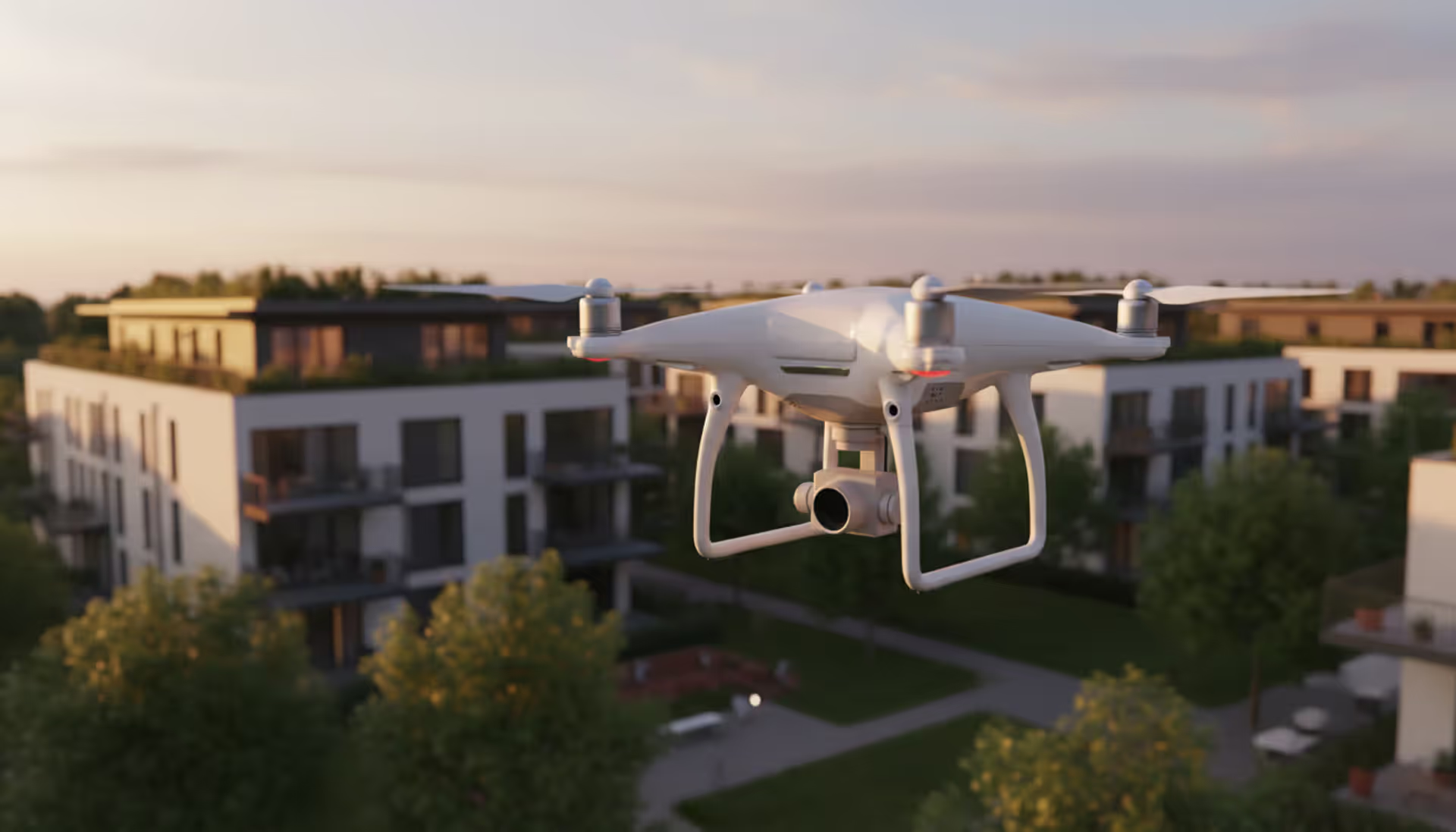
Around 2019, something shifted in the real estate market. A listing agent in Phoenix told me she lost a $680,000 property to a competitor who'd brought in aerial shots. The seller wanted those overhead images everyone else was getting. That conversation repeats itself across industries now.
Construction site managers text their drone operators asking for Thursday flyovers. Wedding couples scroll past photographers without aerial portfolios. Commercial property managers won't approve marketing materials lacking those sweeping overhead angles.
Want to start a drone photography business? The market rewards operators who understand more than just flying. You'll need pricing structures that actually cover your costs, insurance policies written for what you're really doing, FAA credentials you can show clients, and marketing that reaches people with actual budgets.
This guide covers what actually matters when building a drone photography business that pays bills instead of just filling Instagram feeds.
Legal Requirements and Licensing for Drone Photographers
Flying commercially without FAA certification? That's a $1,100 fine per violation. The FAA doesn't send warning letters first. Your competition—especially the operator you undercut on that real estate job—knows exactly how to report you.
FAA Part 107 Certification Process
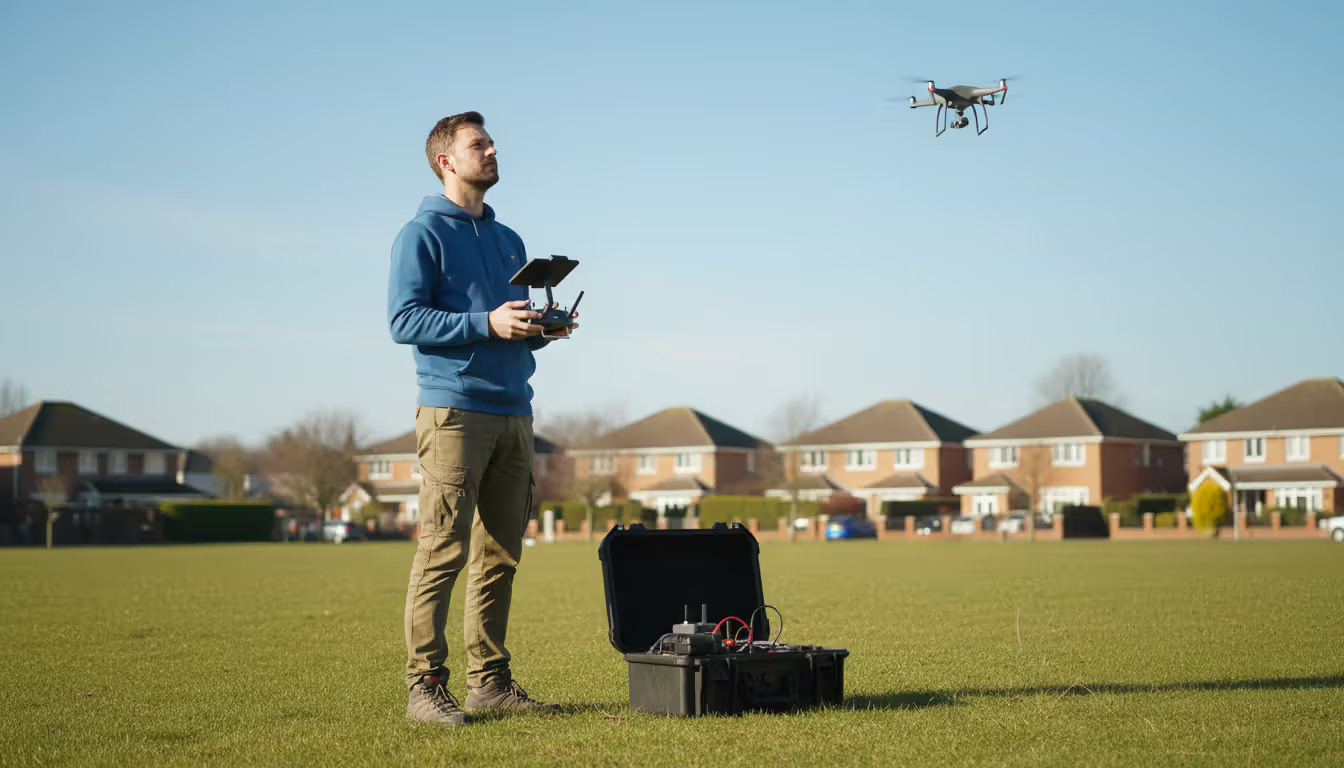
Commercial flying means getting your Remote Pilot Certificate. You need to be 16, pass an aeronautical knowledge test at an FAA testing center, and clear TSA's background screening.
The knowledge test throws 60 questions at you covering airspace classifications, weather interpretation, weight and balance calculations, emergency protocols, and crew coordination. Seventy percent passes—that's 42 correct answers. Most people study three to four weeks. I've seen motivated operators cram it into ten days of intensive studying.
Testing costs roughly $175. Your results show up on screen immediately after you finish—no waiting around for scores in the mail.
TSA completes your background check, then your certificate arrives by mail. Carry it every time you fly commercially. Renewal hits every 24 months with another knowledge exam.
State and Local Regulations
Federal rules represent only your baseline. Your city might require business permits specific to drone operations. Some counties ban residential area flights despite FAA airspace approval. Florida requires property owner notification before you photograph their land from above. California built privacy protections around proximity to homes.
Research local ordinances before every new job location. Twenty minutes of research beats a $500 city fine on a $300 real estate shoot because you didn't verify whether commercial drone flights are permitted in that residential zone.
Author: Olivia Wrenford;
Source: maryelizabethphoto.com
Business Registration and Tax Obligations
You're building a business, so you need a legal structure. Sole proprietorships keep paperwork simple but provide zero liability protection—when your drone damages someone's car, they can chase your personal bank account. An LLC costs a few hundred to establish and creates separation between business liabilities and your personal assets.
Request an Employer Identification Number from the IRS even working solo. This separation streamlines tax filing and maintains clear boundaries between business and personal finances. Most banks won't open business accounts without one anyway.
Sales tax registration matters depending on your state's treatment of photography services. The rules scatter across the map—some states tax final images, others don't touch photography at all. Check your state revenue department's requirements or consult an accountant familiar with photography businesses.
Essential Equipment and Startup Costs
Your gear determines which jobs you can accept and how clients judge your professionalism. You don't need $20,000 in equipment to launch, but you can't show up with a $400 consumer drone expecting commercial clients to take you seriously.
Primary Drone Selection
Professional platforms in 2026 run from fifteen hundred to six thousand dollars for just the aircraft. The DJI Mavic 3 Pro and Autel EVO II Pro both deliver 4K video at 60fps, incorporate large imaging sensors, and include obstacle avoidance that prevents expensive crashes.
Your specialty drives equipment choices. Real estate needs mechanical shutters eliminating rolling shutter distortion in photos. Construction documentation benefits from industrial models offering 30+ minute flight times and weather resistance. Agricultural surveys demand multispectral imaging that consumer drones can't capture.
Camera and Sensor Considerations
Integrated cameras handle most applications adequately, though image quality jumps dramatically from half-inch to one-inch sensors. Larger sensors produce cleaner low-light footage and deliver superior dynamic range—essential when shooting through windows or working during golden hour.
Thermal imaging unlocks specialized revenue streams. Building inspectors pay premium rates for thermal surveys revealing insulation gaps and moisture problems. Solar companies need thermal panel array analysis. Agricultural clients want crop stress mapping. Entry-level thermal-capable drones start around five thousand dollars.
Backup Equipment and Accessories
Every operator learns this lesson exactly once: arriving at a paid shoot with only one drone. Murphy's Law guarantees your gimbal fails or battery won't charge the morning of your biggest assignment.
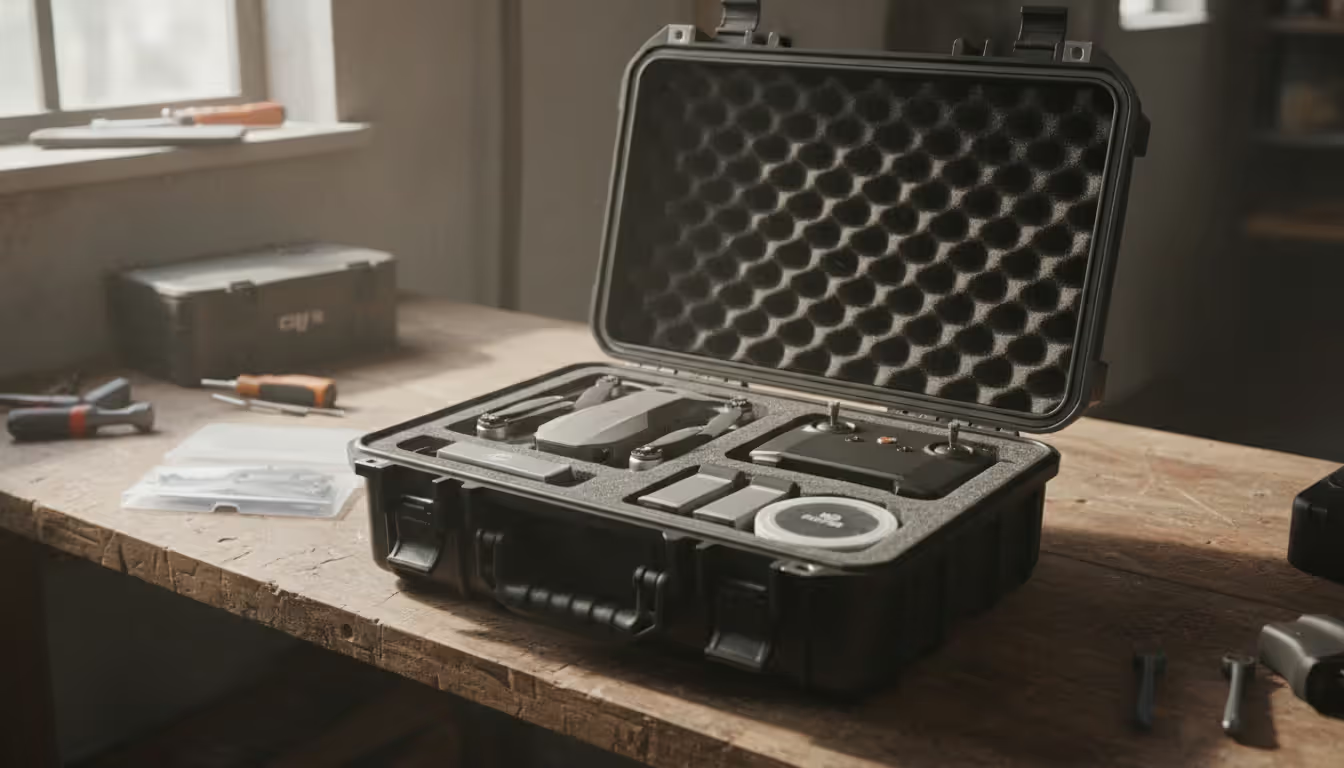
Keep a backup aircraft flight-ready. Budget for six to eight battery packs minimum (figure $150-200 each). Stock extra propellers, neutral density filters for bright condition exposure control, a weatherproof landing pad, and a hard case offering real protection.
You need a tablet or dedicated controller with screens bright enough for direct sunlight operation. Squinting at a dim display while framing shots doesn't inspire client confidence.
Author: Olivia Wrenford;
Source: maryelizabethphoto.com
Software and Post-Processing Tools
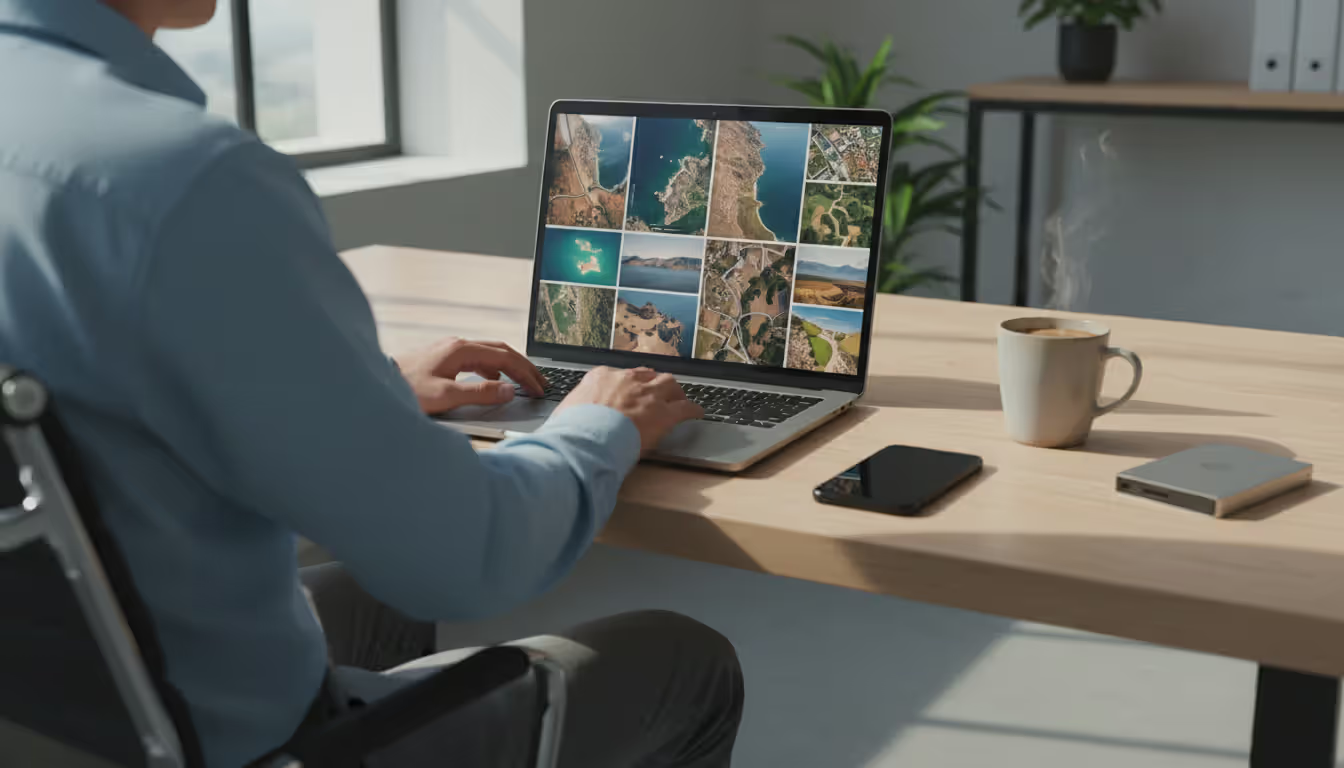
Raw drone footage isn't what you deliver—that's just source material. Professional results require editing software. Adobe Creative Cloud subscriptions run $55 monthly and include Lightroom for photo editing plus Premiere Pro for video work. Specialized mapping applications like Pix4D or DroneDeploy (roughly $350-1,500 annually) generate orthomosaic maps and 3D terrain models from aerial imagery.
Storage needs expand faster than you expect. Every minute of 4K video eats 375MB. Invest in external drives with redundant backups. Cloud storage adds another protection layer. Losing client footage when your laptop crashes destroys your reputation faster than any other mistake.
Initial Investment Breakdown
Realistic startup costs for launching your drone photography business:
Primary drone with camera: $2,500
Backup drone: $1,800
Batteries and accessories: $800
Software subscriptions (first year): $600
Insurance (annual premium): $1,200-2,500
Part 107 certification and study materials: $400
Business registration and permits: $300
Marketing and website development: $500
Miscellaneous supplies and contingency: $400
Total initial investment: $8,500-9,800
This assumes you already own a computer capable of handling 4K footage editing. If not, add another $1,500-2,500 for a workstation with enough processing power and RAM to manage video editing without constant freezing.
Setting Your Drone Photography Prices
Your pricing either builds a sustainable business or traps you in exhausting seventy-hour weeks earning minimum wage. Charge too little and you'll burn out working constantly for minimal profit. Price too aggressively before establishing credibility and you'll justify rates more than booking actual jobs.
Start by researching your local market. Contact real estate agents, construction project managers, and event planners to learn their current aerial photography investment. Review competitor websites and social media for package details. You're establishing the pricing range, not copying exact numbers.
Pricing Models Overview
Three primary approaches: hourly billing, project-based flat rates, and tiered packages. Each works better in specific situations.
Hourly rates ($150-400 per hour) fit assignments with unpredictable scope. Construction documentation varies dramatically based on site conditions, access restrictions, and whether the project manager knows exactly what shots they need. Include a minimum charge—usually two hours—covering travel time and setup.
Project-based pricing gives clients budget certainty and rewards your efficiency. A standard residential real estate shoot might cost $200-350 whether you spend thirty minutes or ninety minutes on location. As you get faster and better, your effective hourly rate climbs.
Package structures simplify client decisions and increase average transaction values. Offer a basic real estate package with fifteen edited photos at $225, a mid-tier option including thirty photos and a short video at $350, and a premium package with fifty photos plus a two-minute cinematic tour at $500. Clients commonly select the middle option—exactly where you want them.
Factors That Affect Your Pricing Rates
Geographic Location and Market Conditions
A luxury beachfront property in La Jolla justifies $600-800 for drone photography. Identical quality work in rural Kansas might bring $200-300. It's market reality driven by local real estate values and client budgets, not fairness.
Competition matters more than population size. A small city with one established drone operator allows near-premium rates. A saturated market with fifteen operators competing mainly on price forces rates downward regardless of your skill.
Experience and Portfolio Quality
While building your portfolio, expect charging 30-50% below established market rates. After completing twenty-five to fifty paying jobs, gradually increase prices toward market average. By job one hundred, you should reach or exceed average rates if your work quality justifies it.
Specialization commands premium pricing. Operators who deeply understand construction workflows, deliver FAA-compliant tower inspection documentation, or produce agricultural NDVI analysis charge substantially more than general aerial photographers accepting whatever comes along.
Assignment Complexity and Risk
Simple jobs deserve straightforward pricing—an empty lot with clear airspace and good weather is basic. Complex assignments involving controlled airspace authorizations, confined area operations, coordination with ground crews, or challenging environmental conditions justify higher compensation.
Risk factors include airport proximity (requiring LAANC authorization), operations over people (needing FAA waivers), flights in marginal weather, or work near high-value property where crashes could cause serious damage. Charge appropriately when jobs push operational limits or increase liability exposure.
Deliverable Requirements
Twenty edited photos require less post-processing than sixty images. A thirty-second social media clip takes less editing than a five-minute property tour with licensed music, color grading, and motion graphics.
Price based on total time investment, not just flight time. A fifteen-minute flight might demand three hours of editing to produce professional results. Bill accordingly or you're working for minimum wage.
Common Pricing Models by Service Type
Different industries establish pricing expectations. Align your rates with sector norms while covering costs and generating profit.
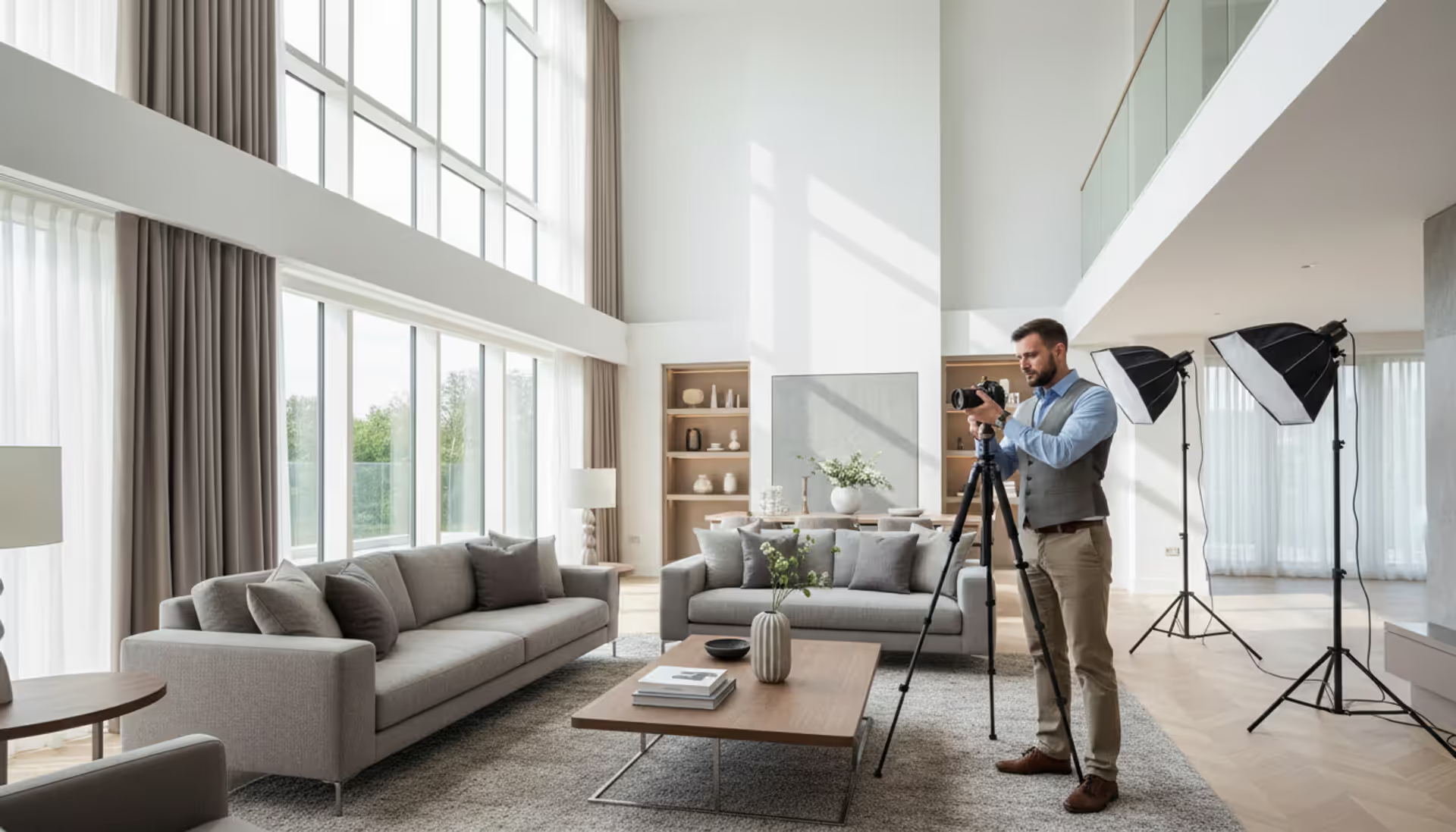
Residential Real Estate Most operators charge $200-$450 per property. Sessions typically run 30-60 minutes on site. Standard deliverables include 15-30 edited images, with optional video add-ons available.
Commercial Properties Pricing ranges from $500-$1,500 depending on property size and complexity. Plan for 1-3 hours on location. Clients receive 30-50 images, aerial footage, and sometimes 3D mapping products.
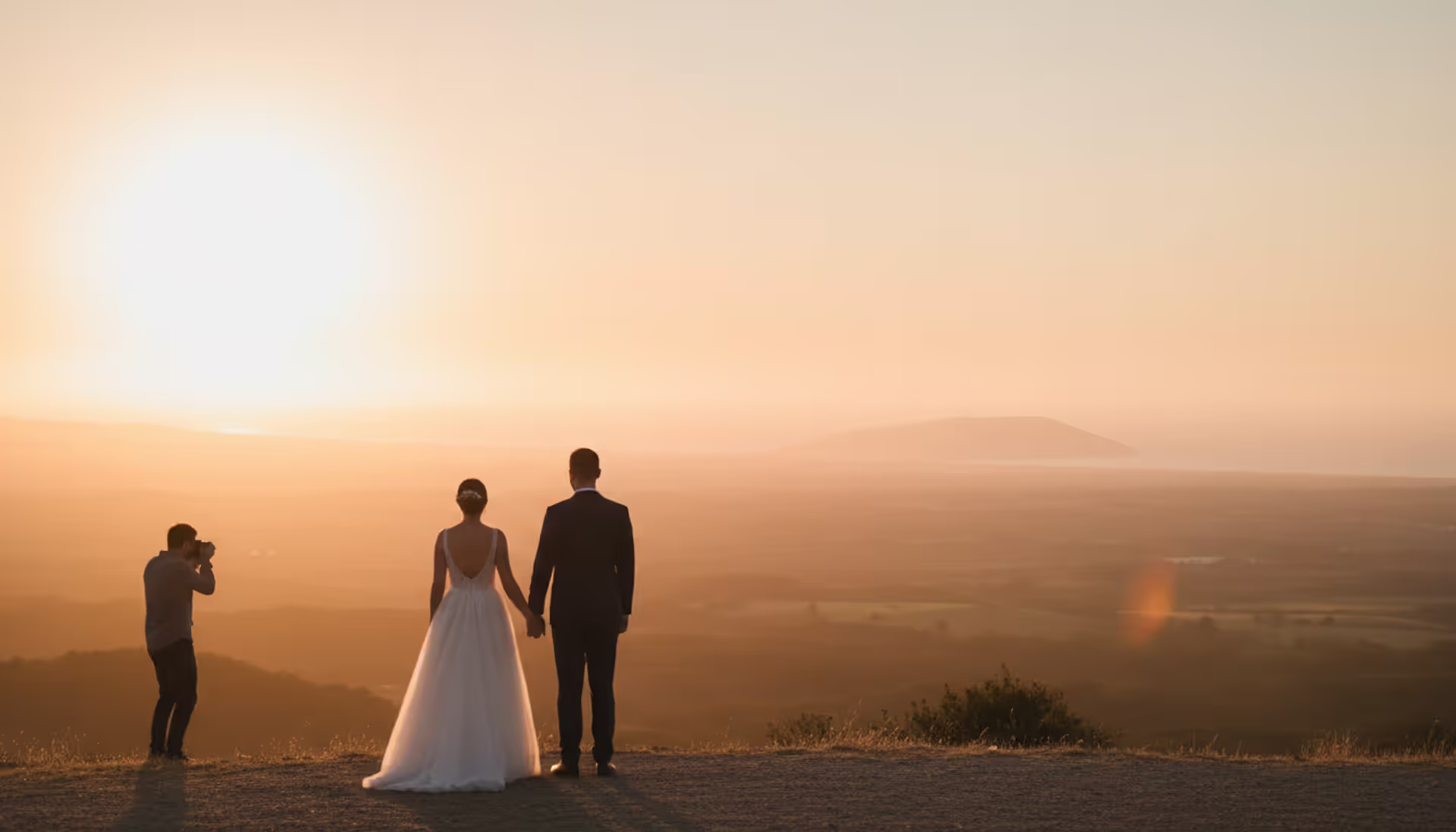
Wedding Coverage Wedding drone photography runs $400-$1,200 based on coverage duration and deliverables. Expect 2-4 hours of shooting time. Typical packages include 40-80 edited images and a 3-8 minute highlight reel.
Construction Documentation Construction progress documentation costs $300-$800 per site visit. Budget 45-90 minutes for comprehensive coverage. Deliverables include 25-40 images, site overlay maps, and progress comparison documentation.
Advertising Campaigns Commercial advertising projects range from $1,000-$5,000. These assignments often require 4-8 hours or multiple site visits. Clients receive both raw and edited footage, with licensing negotiated separately based on usage.
Agricultural Analysis Agricultural drone services run $500-$2,000 depending on acreage covered. Session duration varies with field size. Deliverables include multispectral data capture, crop health mapping, and detailed analysis reports.
These numbers reflect 2026 pricing in mid-sized markets across the United States. Adjust based on your local economy, competitive intensity, and the specific value you deliver to clients.
Value-Based Pricing Strategy
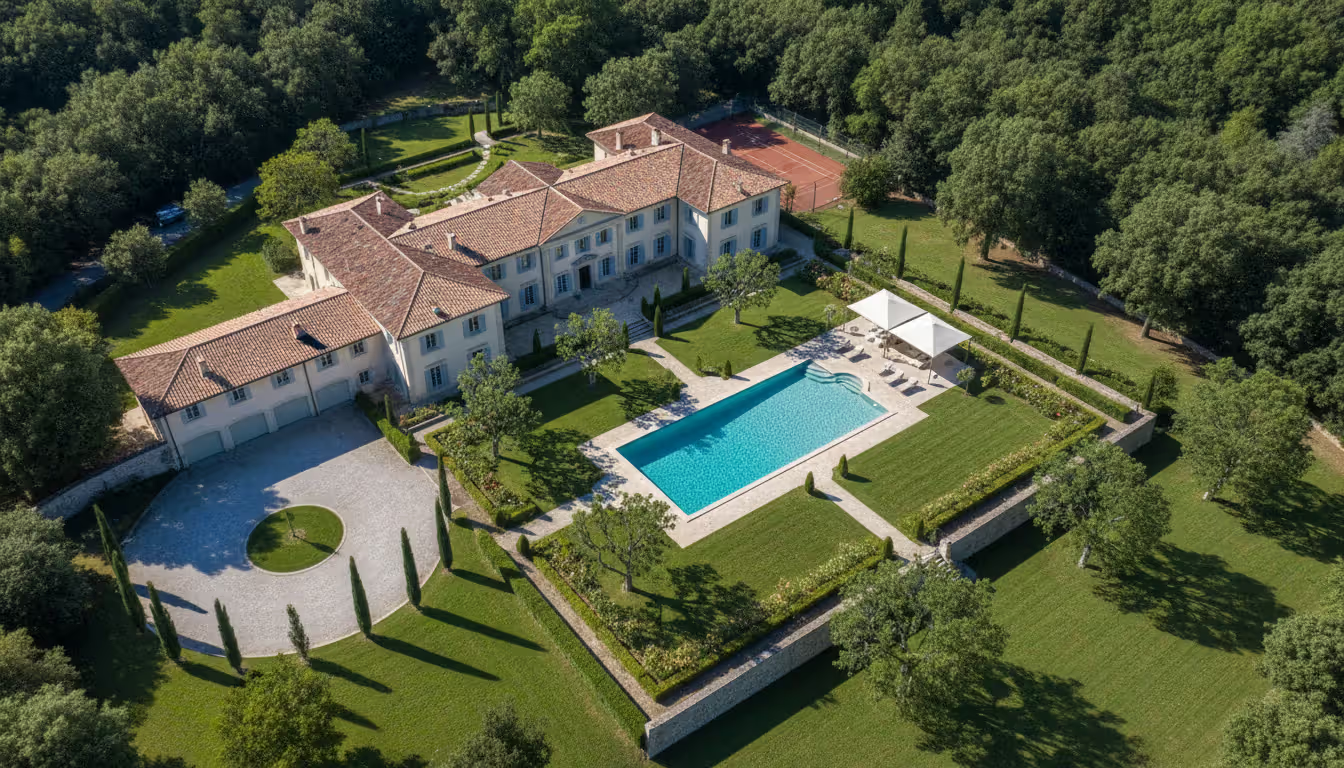
Consider client ROI instead of your costs alone. A real estate agent selling a two-million-dollar home won't question $450 for drone photography that accelerates the sale. That same agent might resist $450 for a $180,000 listing where commission is proportionally smaller.
Commercial clients with substantial marketing budgets evaluate quality and reliability over price. When your footage appears in national advertising campaigns, premium rates make sense because client return on investment is proportionally massive.
Author: Olivia Wrenford;
Source: maryelizabethphoto.com
Insurance Requirements and Risk Management
Operating without insurance gambles with your financial future. A single drone crash causing property damage or personal injury can generate lawsuits exceeding half a million dollars. Your business won't survive that exposure uninsured.
Liability Insurance Coverage
Commercial drone liability policies protect you when third parties claim bodily injury or property damage from your operations. Coverage typically spans one million to five million dollars, with annual premiums between $1,200 and $2,500 depending on limits, claims history, and operation types.
Insurance underwriters evaluate your Part 107 status, total flight hours, assignment types, and whether you operate near crowds or over valuable property. Higher risk translates to higher premiums—standard insurance mathematics.
Most commercial clients refuse contracts without proof of insurance. Real estate brokerages and construction companies commonly require two million minimum with them listed as additional insured parties on your policy. No insurance equals no contract.
Hull Coverage for Equipment
Liability insurance excludes your own gear. Hull coverage (similar to comprehensive auto insurance) reimburses you when drones get damaged, stolen, or lost. Annual premiums typically run 5-8% of equipment value.
Insuring a $3,000 drone costs roughly $150-240 annually with deductibles around $250-500 per claim. Whether hull coverage makes financial sense depends on equipment value. Self-insuring a $1,500 entry-level drone might be smarter than paying premiums. For $5,000+ platforms, coverage provides valuable catastrophic loss protection.
Client Contracts and Liability Waivers
Written agreements prevent disputes by clarifying deliverables, usage rights, payment terms, and liability limitations. Specify exactly how many edited images you'll provide, delivery timeframe, revision policy, and procedures when weather prevents flying on scheduled dates.
Address image licensing explicitly. Are clients purchasing unlimited usage rights, or are photos licensed for specific purposes with defined time limits? Commercial advertising work often involves separate licensing fees beyond base shooting rates.
Include liability waivers when appropriate, though enforceability varies by state. Waivers won't protect against gross negligence but may limit exposure for minor incidents.
Risk Mitigation Practices
Insurance addresses financial consequences, but preventing incidents protects your reputation and maintains affordable premiums. Conduct pre-flight inspections checking propellers for cracks, battery charge levels, gimbal function, and GPS lock quality. Review NOTAMs and temporary flight restrictions before every flight.
Maintain visual line of sight even when regulations technically permit extended operations. Cancel flights when weather deteriorates—no job justifies risking equipment and safety. Wind exceeding 20 mph, any precipitation, or temperatures outside manufacturer specifications create unnecessary hazards.
Document everything. Maintain detailed flight logs noting locations, weather conditions, and unusual occurrences. This record demonstrates professionalism if incidents occur and insurance claims get filed.
Concentrate on industries with recurring needs rather than one-time consumers. A single real estate agent photographs dozens of listings annually. Construction companies document project progress monthly for years. Event planners coordinate multiple weddings and corporate functions each season.
Agricultural clients need crop monitoring throughout growing seasons. Solar installation companies require periodic panel efficiency inspections. Cell tower maintenance firms contract ongoing structural documentation.
B2B relationships provide steadier income streams than consumer-focused marketing where each client represents a single transaction and you're constantly hunting for the next one.
Portfolio Development
Your portfolio demonstrates capability more convincingly than anything you claim about yourself. New operators should offer discounted rates to initial clients in exchange for permission using resulting images in promotional materials.
Shoot personal projects showcasing recognizable local landmarks, interesting architecture, or seasonal landscapes. These images populate your website and social media accounts while you build experience with actual paying clients.
Organize portfolio samples by industry segment. Real estate agents want seeing property photography, not wedding footage. Construction firms care about progress documentation examples, not artistic landscape compositions.
Digital Presence and SEO
A professional website serves as your primary credibility indicator. Include organized portfolio galleries, clear service descriptions with transparent pricing (or minimum "starting at" rates), client testimonials with full names and companies, and multiple contact methods.
Optimize for local search terms like "drone photography Chicago" or "aerial real estate photography Orange County." Set up your Google Business Profile appearing in map results when prospects search nearby services.
Post consistently on Instagram and Facebook where visual content performs well. Share behind-the-scenes flight footage, before-and-after editing comparisons, and completed project highlights. Tag clients (with permission) expanding your reach into their networks.
Networking and Referral Development
Participate in local real estate investor associations, construction trade groups, and general business networking organizations. Face-to-face relationship building still generates high-quality leads despite everyone's digital marketing obsession.
Develop partnerships with complementary businesses. Wedding photographers not offering aerial coverage can refer couples to you for drone shots. Land surveyors might recommend your mapping capabilities to surveying clients. Interior photographers can bundle your services with theirs.
Create a referral incentive program offering existing clients $50-100 credits toward future services for every new customer they send who actually books.
Cold Outreach Strategies
Identify potential clients and contact them directly. Research real estate agents listing higher-end properties without aerial photography—they're literally leaving money on the table and probably realize it. Email them specific examples showing how drone imagery improves listing presentations and selling speed.
Monitor building permit databases identifying new construction projects in your area. Contact developers and general contractors offering progress documentation services before they've engaged another provider.
Personalize every outreach message. Generic mass emails get deleted instantly. Reference specific properties or projects proving you researched their business and understand their actual needs.
Author: Olivia Wrenford;
Source: maryelizabethphoto.com
Common Mistakes When Starting Out
New drone photography businesses stumble over predictable obstacles. Benefit from other operators' costly errors rather than repeating them yourself.
Underpricing Services
Competing exclusively on price attracts clients valuing cost over quality. These customers generate razor-thin margins, demand excessive revisions, leave negative reviews when you can't meet unrealistic expectations, and never refer anyone.
Calculate your true costs including equipment depreciation, insurance premiums, software subscriptions, vehicle expenses, and time spent on administrative tasks not involving flying. Charge rates covering expenses and providing reasonable profit, even when that means booking fewer jobs initially.
Building a reputation for quality work at fair market rates creates sustainable growth. Rock-bottom pricing creates a treadmill where you're perpetually busy but never profitable.
Inadequate Insurance Coverage
Avoiding insurance or carrying insufficient coverage saves money until an incident occurs. A single property damage claim can financially devastate an uninsured operator. Court judgments don't disappear through bankruptcy—they follow you for decades.
Some operators mistakenly assume homeowner's or renter's insurance covers commercial operations. These policies explicitly exclude business activities in fine print. Purchase proper commercial drone insurance before accepting your first paying assignment, not after your first crash.
Poor Client Communication
Unclear expectations cause disputes and negative reviews. Clients assuming they're receiving fifty edited photos become dissatisfied when you deliver twenty, even when your contract clearly specified that number.
Overcommunicate everything—deliverables, timelines, revision policies, weather contingencies. Send confirmation emails after booking calls restating exactly what you discussed. Provide updates if editing takes longer than expected.
Respond to inquiries within twenty-four hours maximum. Prospects contacting multiple drone photographers often hire whoever replies first with professional, detailed information.
Equipment Failures Without Backup Plans
Arriving at scheduled shoots with malfunctioning equipment and no backup instantly destroys client relationships. Battery failures, gimbal calibration errors, GPS signal problems, and firmware glitches happen without warning.
Always maintain backup drones, redundant batteries, and spare propellers. Test every piece of equipment the evening before jobs. Have contingency plans for rescheduling if weather or technical issues prevent safe flying.
Ignoring Continuing Education
Drone technology, FAA regulations, and client expectations evolve constantly. Operators who passed their Part 107 exam three years ago may be completely unaware of recent rule changes or new operational authorizations expanding business opportunities.
Follow FAA regulatory updates through official channels. Join professional organizations like the Drone Service Providers Alliance. Invest in advanced training covering specialized applications like thermal imaging, photogrammetry, or agricultural analysis.
Your competition is improving skills and upgrading equipment. Standing still means falling behind.
Your brand is what other people say about you when you're not in the room
— Jeff Bezos
Frequently Asked Questions
Do I need a license to start a drone photography business?
Federal law requires a Remote Pilot Certificate under Part 107 for any commercial drone operation—photography, videography, inspections, mapping—anything performed for compensation. You cannot legally accept payment for drone work without this certification. Operating commercially without credentials can trigger FAA fines reaching $1,100 per violation. Getting certified involves passing an aeronautical knowledge exam at an FAA testing facility and clearing a TSA background check.
How much does drone photography insurance cost?
Commercial drone liability coverage runs $1,200-2,500 annually for one to two million dollars in coverage. Your actual premium varies based on coverage amounts, what operations you perform, your experience level, and whether you've filed previous claims. Hull coverage protecting your equipment against physical damage costs roughly 5-8% of your gear's value each year. Insuring a $3,000 drone would run approximately $150-240 annually against damage or theft. Bundled policies combining liability and hull coverage often discount compared to purchasing separately.
What should I charge for drone photography services?
Your pricing depends on local market conditions, your experience level, and what service you're providing. Residential real estate photography runs $200-450 per property in most markets. Commercial real estate ranges from $500-1,500 based on property size and what you're delivering. Wedding and event coverage costs $400-1,200 depending on duration and deliverables. Construction progress documentation averages $300-800 per site visit. Research what competitors in your area charge, calculate your actual costs (equipment depreciation, insurance, software, time investment), then set profitable rates. While building your portfolio, starting somewhat below market rates makes sense. Increase prices as you accumulate experience, testimonials, and reputation.
What drone equipment do I need to start a business?
You need a professional-quality drone with at least a one-inch sensor ($1,500-3,000), a backup aircraft for when your primary drone malfunctions, six to eight battery packs, neutral density filters, spare propellers, a protective carrying case, and a controller with a display bright enough for outdoor use. Budget $4,000-5,000 for core flying equipment. Add editing software subscriptions like Adobe Creative Cloud ($55/month), external storage drives with redundant backups, and potentially specialized software like Pix4D for mapping work. Don't overlook essential non-equipment items: liability insurance, Part 107 certification costs, business registration fees, and website development.
How long does it take to get FAA Part 107 certified?
Most people study two to four weeks before attempting the Part 107 knowledge exam, though intensive preparation can compress readiness. The exam itself takes roughly two hours at an FAA testing center. After passing, TSA background check processing typically requires two to four weeks before your Remote Pilot Certificate arrives. Total timeline from starting study to holding your certificate averages four to eight weeks. Faster timelines are possible with intensive full-time study and quick background check processing, but plan for two months to be safe.
Can I operate a drone photography business part-time?
Many successful drone photographers started part-time while maintaining other employment. Part-time operation lets you build skills, test market demand, and establish client relationships without the financial pressure of replacing full-time income immediately. Focus on weekend assignments like real estate photography or events that won't conflict with weekday work schedules. As your client base grows and revenue increases, you can evaluate transitioning to full-time operation. Part-time businesses still require proper licensing, adequate insurance coverage, and professional operating standards—there's no such thing as "casual commercial" drone operation.
Launching a drone photography business combines piloting skills, creative vision, regulatory knowledge, and business fundamentals. Success requires more than purchasing equipment and passing your Part 107 exam—you need smart pricing strategies, comprehensive insurance protection, and consistent marketing generating sustainable client flow.
Entry barriers have dropped as drone technology became more accessible and affordable, but professional operations still demand significant investment in equipment, training, and business infrastructure. Operators treating this as a legitimate business rather than a casual side hustle build reputations commanding premium rates and generating consistent referrals.
Prioritize delivering exceptional results for your first clients, even when that means accepting lower rates initially. Those satisfied early customers become your most effective marketing channel through word-of-mouth recommendations and testimonials convincing skeptical prospects to hire you.
Avoid predictable mistakes sinking new operators: inadequate insurance coverage, unsustainable pricing, poor client communication, and arriving at jobs without backup equipment. Learn from experienced professionals, participate in industry associations, and continuously improve both technical and business skills.
The commercial drone industry keeps expanding into new applications across construction management, precision agriculture, infrastructure inspection, and media production. Photographers developing deep expertise in specific niches often achieve better profitability than generalists competing primarily on price.
Your success depends on consistent execution across multiple areas—maintaining regulatory compliance, delivering quality work on promised timelines, communicating clearly with clients, and marketing services effectively. Master these fundamentals and your drone photography business can generate substantial income while providing creative satisfaction that desk jobs never offer.
ports photography captures athletes in motion, freezing split-second moments that tell stories of competition and achievement. This specialized field demands technical precision, anticipation skills, and athletic understanding that separates it from other photography genres
Wedding photography styles define how your celebration gets captured and remembered. From traditional posed portraits to candid documentary coverage, fine art aesthetics to editorial drama, understanding these approaches helps you find a photographer whose vision matches yours and ensures your images reflect your authentic story
Traditional portrait photography creates polished, timeless images through controlled lighting, deliberate posing, and classic composition. Learn what defines this formal approach, how it differs from modern styles, what to expect during sessions, and how to prepare for studio, senior, children's, and couple portraits
Professional real estate photography increases property views by 118% and reduces time on market by 32%. Choosing the right photographer requires understanding service types, evaluating portfolios, verifying credentials, and recognizing common hiring mistakes that cost sellers thousands
The content on this website is provided for general informational and educational purposes only. It is intended to explain concepts related to running a photography business, insurance coverage, marketing, websites, and professional development.
All information on this website, including articles, guides, and examples, is presented for general educational purposes. Outcomes may vary depending on business size, location, and individual choices.
This website does not provide professional legal, insurance, financial, or business advice, and the information presented should not be used as a substitute for consultation with qualified professionals.
The website and its authors are not responsible for any errors or omissions, or for any outcomes resulting from decisions made based on the information provided on this website.