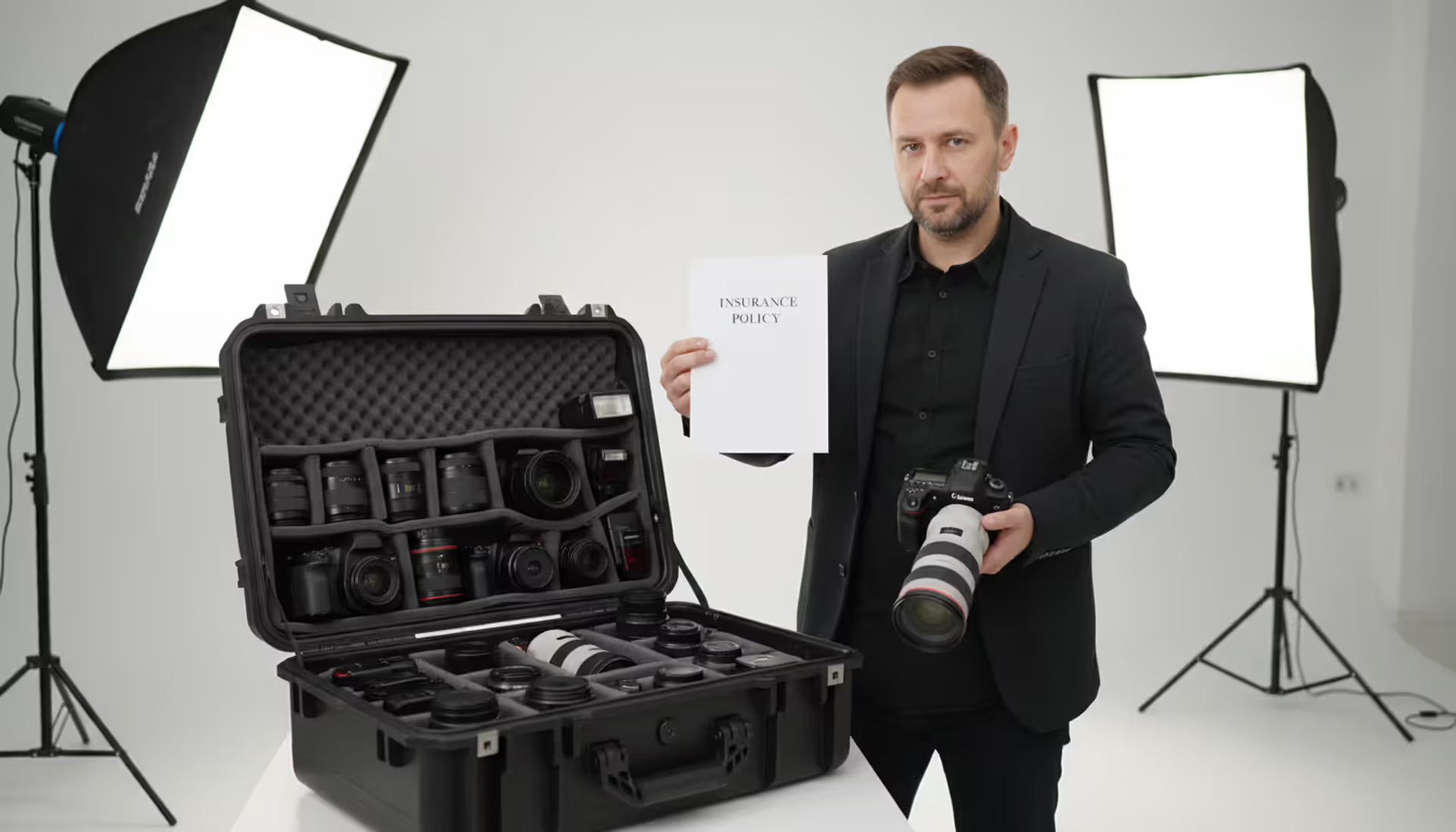
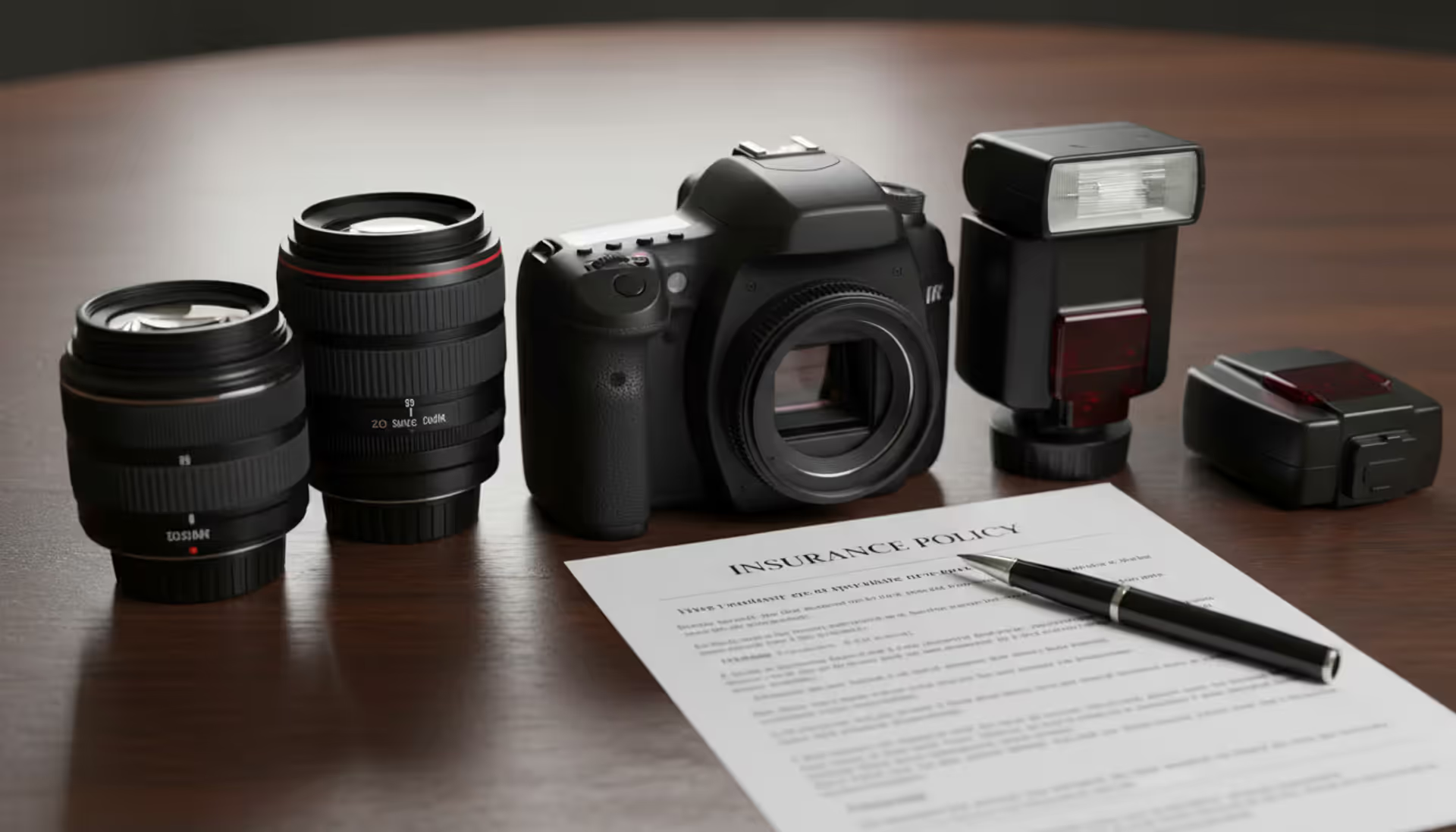
Here's something nobody tells you when you're starting out: your entire photography business can collapse from a single mishap you didn't see coming. Last year, a Chicago wedding photographer watched her business implode after venue sprinklers malfunctioned during a reception, destroying guest belongings. She got sued for $89,000. No insurance.
Another photographer I know had $22,000 in Canon bodies and L-series lenses stolen from his hotel room during a destination wedding in Cabo. His personal insurance denied the claim—commercial use wasn't covered under his homeowners policy. He borrowed money to rent equipment and finish the job, then spent three years paying off debt.
These aren't edge cases. Talk to any photographer who's been working for more than five years, and they'll share a horror story—either their own or someone they know personally.
The photographers still in business after these disasters? They had proper coverage.
What Is Photography Insurance and Why Do Photographers Need It
Photography insurance handles the specific liabilities you face when getting paid to take pictures. Your homeowners policy won't help you here—read the fine print and you'll find commercial activities are explicitly excluded.
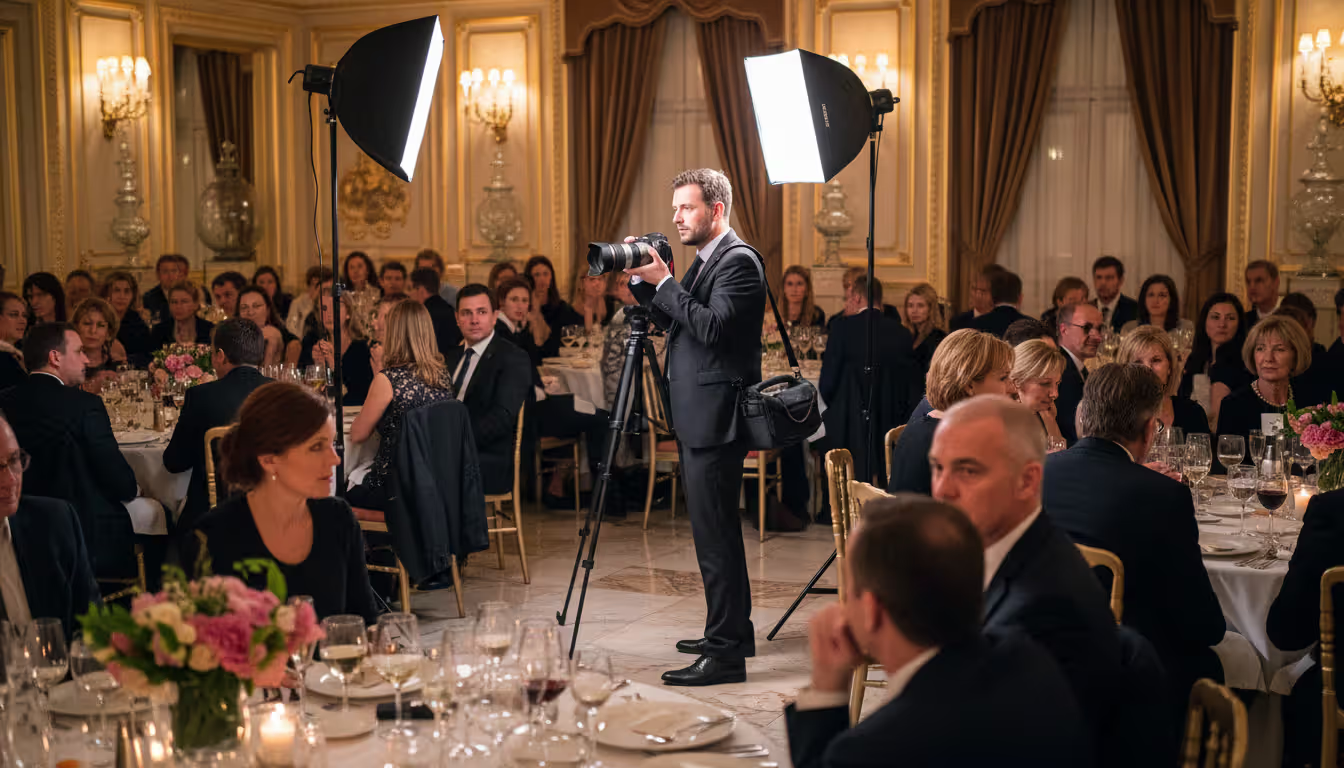
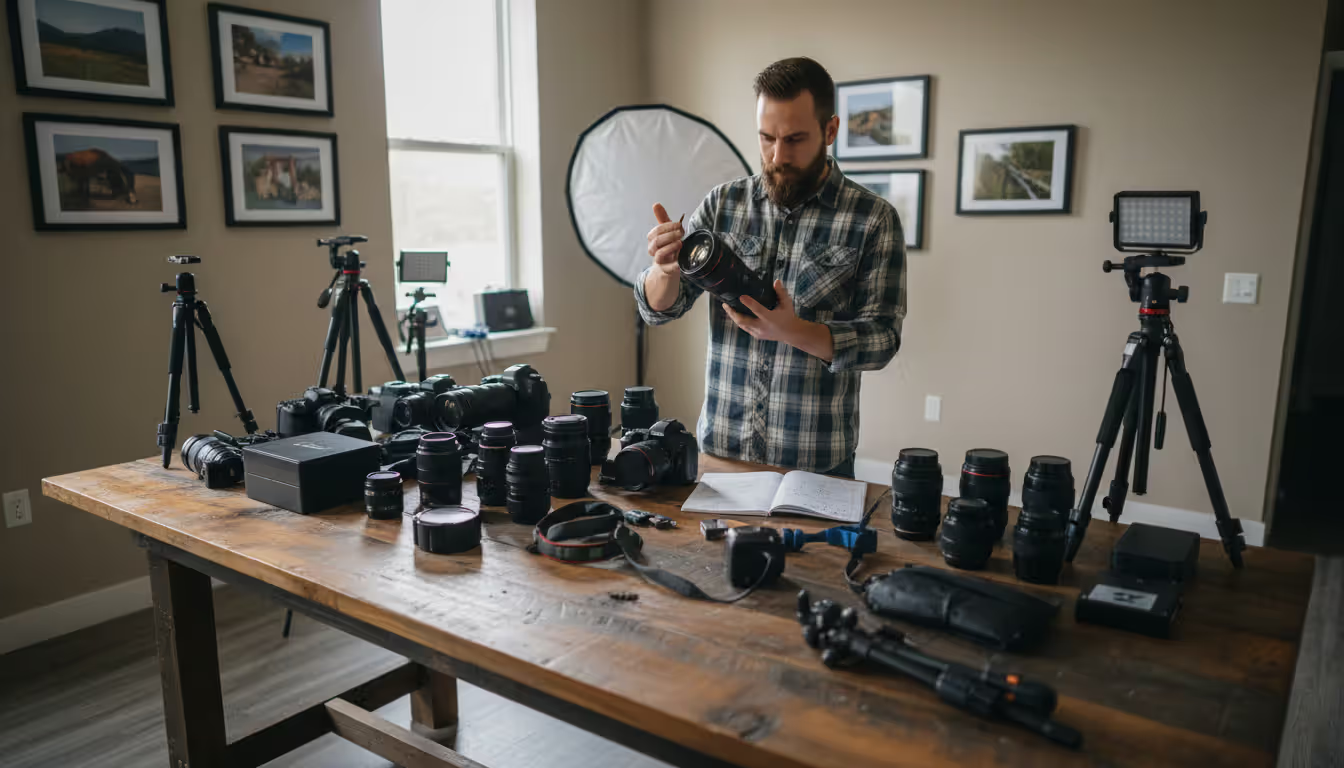
The exposure profile for photographers looks different than most service businesses. You haul $15,000+ in fragile electronics to venues you've never seen before. You set up equipment in spaces packed with people who've been drinking. You're contracted to document moments that literally cannot happen again—there's no "redo" option for a first kiss or cake cutting.
Think about this scenario: You're shooting a corporate gala at a museum. While moving your backdrop stand, you bump a pedestal. A $12,000 sculpture crashes to the floor and shatters. The museum's coming after someone for that loss, and your homeowners insurance won't answer the phone.
Author: Caleb Renshaw;
Source: maryelizabethphoto.com
Or this one: Your backup system fails the same weekend your primary hard drive corrupts. You just lost every single image from a $8,000 wedding. The couple's attorney sends a demand letter for $60,000—the cost to recreate and restage their wedding with all vendors and guests. Sound crazy? It's happened, and courts have sided with the couple.
Photography insurance tackles three distinct risk categories. First, bodily injury or property damage you cause while working. Second, loss or theft of your equipment during commercial use. Third, financial harm resulting from professional errors or failure to deliver services.
Standard business policies typically carve out photography-specific situations. Equipment in vehicles, liability for missing shots, coverage for rented gear—these require specialized policy language that generic small business insurance doesn't include.
I've watched photographers lose their homes over claims that cost less than two years of proper insurance premiums..Once you take payment for photography work—even $200 for senior portraits—you're operating a commercial venture. Your personal policies become worthless the moment money changes hands
— Maria Chen
The distinction gets tested during claims investigations. Carriers examine whether damaged or stolen equipment was being used to generate income. If you file a personal property claim for gear used in paid shoots, expect denial. Photography insurance removes this ambiguity by explicitly covering commercial operations.
Types of Coverage Included in Photographers Insurance
Photography insurance bundles multiple protection layers into a single policy. You need to understand each component's function to spot dangerous gaps in your coverage.
General Liability Insurance
This pays for bodily injury and property damage you cause to others while working. It's also the coverage every venue requires before you set foot on their property.
Here's what it looks like in practice: You're photographing a restaurant's new menu launch. While adjusting your lighting setup, you knock your C-stand into the pastry display case. Glass shatters, destroying $1,800 in desserts and injuring the sous chef's hand. General liability handles the property damage and medical bills.
Most policies offer limits from $1M to $2M per incident, with aggregate limits (total payout for all claims in the policy year) typically at $2M. Nearly every venue in America requires $1M per occurrence and $2M aggregate at minimum. They'll also want themselves listed as additional insureds on your certificate.
The aggregate limit matters more than people realize. Three separate $800,000 claims in one year would max out a $2M aggregate, leaving you exposed for any additional incidents until the policy renews.
General liability also covers advertising injury—if your marketing materials allegedly defame a competitor or violate copyright, this section pays your legal defense.
Author: Caleb Renshaw;
Source: maryelizabethphoto.com
Equipment Coverage
Equipment coverage (sometimes called inland marine or business personal property) protects your cameras, lenses, lighting, computers, and accessories against theft, damage, and loss anywhere in the world. Your vehicle, shoot locations, your studio, airport baggage claim—all covered.
You'll encounter two valuation methods: replacement cost and actual cash value. Replacement cost pays whatever you'd spend today to buy equivalent new gear. Actual cash value pays current replacement cost after subtracting depreciation. That three-year-old Sony A7R IV might cost $3,000 to replace new, but actual cash value might only give you $1,700 after depreciation calculations. Replacement cost costs maybe 10% more in premium but pays 75% more on claims. Always choose replacement cost.
Deductibles typically run $250 to $1,000 per claim. Some insurers let you schedule individual high-value items (think $8,000+ lenses) separately with zero deductible, which makes sense for your most expensive gear.
Watch for common exclusions: gradual wear and tear, mysterious disappearance (can't explain where it went), flood damage, and earthquakes unless specifically added. Photographers in Florida or California need to address these gaps explicitly.
Professional Liability (Errors & Omissions)
Professional liability insurance—the industry calls it E&O coverage—pays damages from professional mistakes. This includes failure to deliver contracted services, technical errors that destroy photos, and contract breach claims.
Wedding photographers face maximum exposure here. Memory card corruption during a ceremony could trigger a lawsuit for tens of thousands in damages. I've seen couples sue for the cost of restaging their entire wedding, emotional distress claims, plus attorney fees.
Other real-world scenarios: You accidentally send a tech company's unreleased product photos to a journalist who publishes them. You miss the groom's grandmother in family portraits because nobody told you she was important, but the couple claims professional photographers should know to ask. A venue sues because you posted reception photos on Instagram that violated their social media policy—which you didn't know existed.
Professional liability operates on a claims-made basis. The policy must be active when the incident happened AND when the claim gets filed. This differs from general liability's occurrence basis, which covers incidents from the policy period regardless of when the lawsuit arrives. When canceling a claims-made policy, consider buying tail coverage (extended reporting period) to protect against future claims from past work.
Coverage limits range from $500K to $2M. Wedding photographers should carry minimum $1M given the emotional stakes and litigation frequency. I'd recommend $2M if you're booking weddings over $5,000.
Author: Caleb Renshaw;
Source: maryelizabethphoto.com
Photography Insurance Cost and What Affects Your Premium
Photography insurance pricing spans a wide range based on your annual revenue, coverage limits, loss history, and specialization. Understanding these pricing factors helps you budget accurately and identify premium reduction strategies that don't sacrifice protection.
Photographer Type
Entry-Level Annual Premium
Mid-Range Annual Premium
High-End Annual Premium
Standard Coverage Included
Occasional/Part-time
$350–$525
$525–$775
$775–$1,150
$1M liability / $10K gear
Full-time Portrait/Commercial
$825–$1,175
$1,175–$1,775
$1,775–$2,600
$2M liability / $25K gear / $1M E&O
Wedding Specialist
$975–$1,475
$1,475–$2,150
$2,150–$3,400
$2M liability / $35K gear / $2M E&O
Multi-Photographer Studio
$1,750–$2,450
$2,450–$3,900
$3,900–$5,800
$2M liability / $50K+ gear / $2M E&O
Your annual revenue impacts pricing more aggressively than any other variable. Insurance companies assume higher revenue equals more shoots, more client touchpoints, and proportionally higher claim probability. Someone earning $125,000 annually pays dramatically more than someone at $28,000, even with identical coverage specifications.
Equipment value directly scales your premium. Insuring $60,000 in gear costs considerably more than $12,000 in coverage. Don't undervalue your equipment to save $150 annually—that strategy backfires spectacularly when your claim gets settled at 60% of actual loss.
Your photography specialty significantly affects rates. Wedding photographers pay premium pricing because wedding-related claims run expensive and emotionally volatile. Sports and action photography also carries higher rates due to elevated injury probability. Portrait and product photographers typically land in the lowest rate classes.
Claims history haunts you for years. A single claim can spike premiums 25-45% for the next three to five years. Multiple claims within a short period might render you uninsurable with standard carriers, pushing you into high-risk markets with premiums double the standard market.
Geography matters substantially. Photographers in Los Angeles, Manhattan, and Miami pay significantly more than someone in rural Montana due to elevated theft rates and lawsuit frequency. California, New York, and Florida consistently show the highest premiums nationwide.
Deductible selection offers your clearest premium control lever. Bumping your equipment deductible from $500 to $1,000 typically reduces annual premium by 18-28%. If you've got $1,500 in emergency savings, the higher deductible makes mathematical sense.
Best Photography Insurance Providers and Policy Options
Several carriers specialize in photographer coverage, while others incorporate it into small business policies. Each structures their policies with different features, making coverage comparison more important than simple price shopping.
Hill & Usher writes exclusively for photography and video production professionals. They bundle general liability, equipment protection, and professional liability into a single package with no deductible on liability claims. Monthly payment plans come without financing charges, which helps seasonal photographers manage cash flow. Equipment coverage extends to $100,000 with automatic inclusion of rental gear. Their claims department operates 24/7 for theft and damage reporting—a huge advantage when your gear gets stolen at 11 PM on a Saturday.
Author: Caleb Renshaw;
Source: maryelizabethphoto.com
State Farm delivers photography insurance through their business owner policy framework. You'll interact with a local agent, which some photographers value for the personal relationship. Equipment coverage integrates with your personal auto policy, so gear stolen from your vehicle gets covered. The downside: professional liability isn't standard—you must specifically request it as an add-on. Pricing often runs competitive if you already carry State Farm auto or homeowners policies due to bundling discounts.
The Hartford provides photography coverage through their small business platform. They offer substantial equipment limits (up to $250,000) and automatically include coverage for rented or borrowed equipment up to $10,000. Their professional liability includes defense costs outside the policy limit, which means legal expenses don't reduce your available coverage. One limitation: they require minimum $15,000 annual revenue, excluding very part-time photographers.
Travelers structures photography insurance as a customizable package policy. They include business interruption coverage, which replaces lost income if covered property damage forces you to cancel shoots. Their equipment coverage includes an innovative "new equipment" provision—gear purchased mid-policy gets automatically covered for 30 days up to 25% of your equipment limit. This protects you when you buy a new camera body and forget to update your policy immediately.
Hiscox specializes in freelancer and small business coverage. Their online quote system takes roughly 10 minutes, with immediate policy issuance. They offer dynamic pricing based on your revenue, with quarterly adjustments. This benefits photographers with seasonal income patterns. Equipment coverage uniquely includes mysterious disappearance, which most carriers specifically exclude. Their professional liability automatically includes cyber coverage for data breaches—increasingly relevant as more photographers store client galleries in cloud platforms.
When evaluating providers, verify whether rental equipment, international coverage, and hired/non-owned auto liability come standard or require separate add-ons. Some policies automatically protect you when driving a rental car to shoots; others create a coverage gap. International destination wedding photographers should confirm coverage extends beyond US borders.
Wedding Photography Insurance Requirements and Considerations
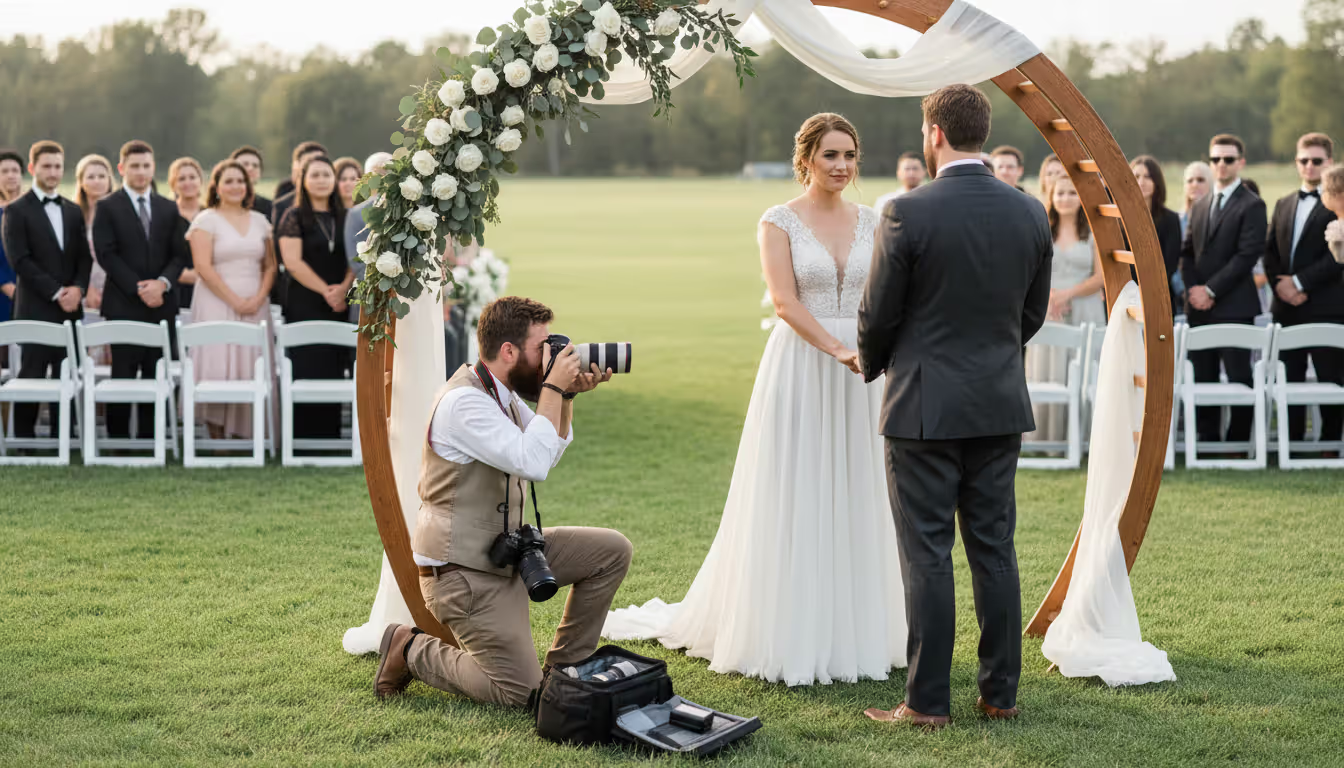
Wedding photographers navigate insurance challenges that don't exist elsewhere in the photography world. The intersection of high emotional stakes, premium venues, and once-in-a-lifetime moments creates liability exposure exceeding virtually every other photography specialty.
Venues universally demand proof of insurance before vendor access. They'll request a certificate showing minimum $1M per occurrence and $2M aggregate coverage, with their property listed as an additional insured. Expect to provide this certificate 2-4 weeks pre-event, so last-minute insurance shopping creates problems.
The additional insured requirement extends your liability coverage to protect the venue for claims arising from your work. If a guest injured by your equipment sues both you and the property, your insurance defends both parties. Venues require this protection because they refuse to tap their own coverage for vendor-caused incidents.
Certain venues also mandate liquor liability coverage even though you're not serving alcohol. They want protection if a guest alleges you contributed to an alcohol-related incident. This coverage typically adds $50-$125 annually but proves essential for venues with comprehensive insurance requirements.
Wedding photography contracts should explicitly reference your coverage while incorporating limitation of liability clauses. Standard contract language limits your total liability to fees paid for your services. If a couple paid $5,000 and sues for $75,000, this clause theoretically caps exposure at $5,000 (though your E&O coverage would still manage the claim). These clauses don't always hold up in court, but they establish expectations and potentially discourage frivolous litigation.
The emotional intensity of weddings amplifies claim severity. A corporate client with mediocre event photos might post a negative review. A bride with mediocre wedding photos might file a $100,000 lawsuit claiming you destroyed the most important day of her life. Courts have actually awarded emotional distress damages in wedding photography cases, which justifies $2M professional liability limits for wedding specialists.
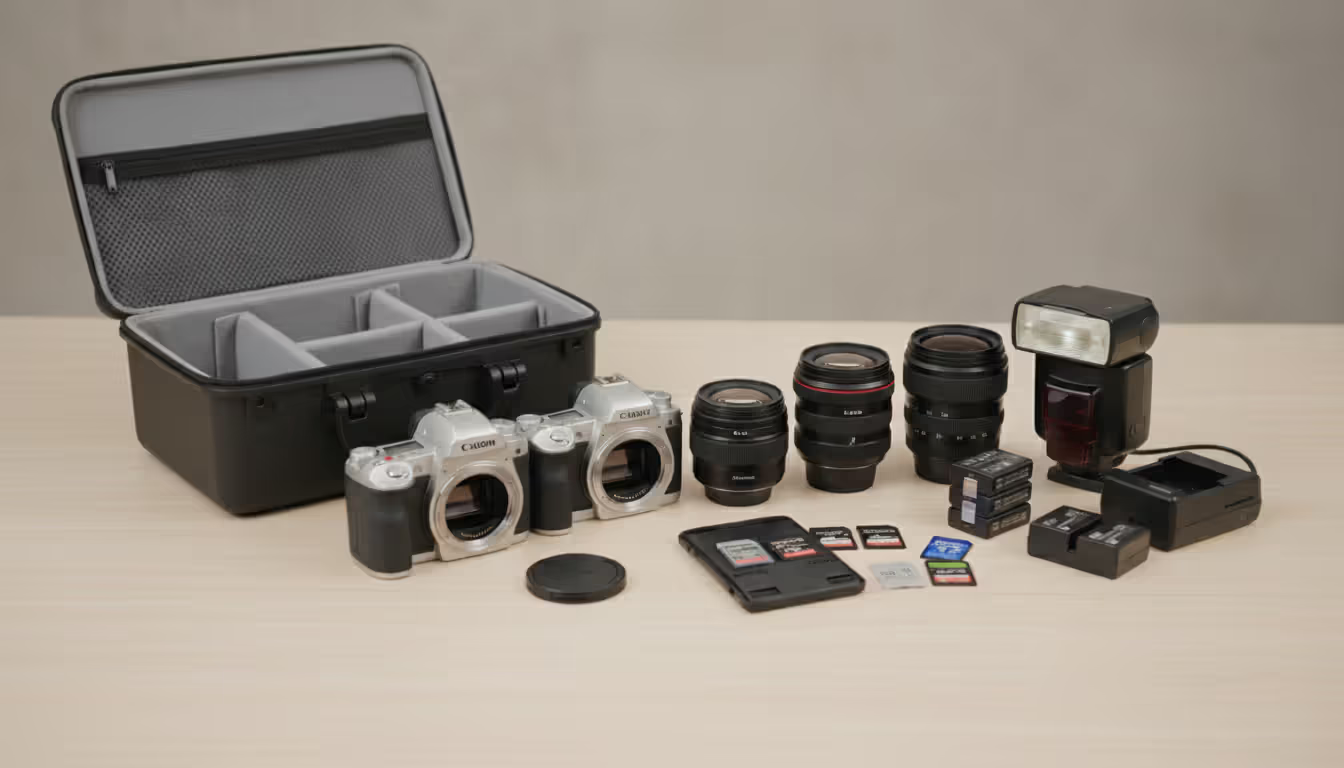
Backup equipment isn't just smart practice—many E&O policies require it. If your primary camera dies during vows and you lack a backup, your professional liability claim might get denied for failing to maintain professional standards. Always carry backup bodies, lenses, and memory cards.
Destination weddings demand verification that coverage extends to the shoot location. Most US policies automatically cover Canada, Mexico, and US territories, but international destination work might require policy endorsements or separate coverage. Confirm this before accepting international bookings.
How to Choose the Right Photo Insurance for Your Business
Selecting appropriate photography insurance requires methodically matching coverage to your risk profile. A systematic approach prevents both overpaying for unnecessary protection and leaving catastrophic gaps.
Calculate your total equipment replacement value first. Inventory every item you'd need to replace to continue operations: camera bodies, lenses, lighting gear, stands, backdrops, computers, external drives, and software licenses. Include accessories like batteries, memory cards, camera bags, and lens filters. Use current replacement pricing, not original purchase prices. Your equipment limit should match this total.
Evaluate your liability exposure based on work locations and photography type. Studio photographers working primarily in controlled environments face substantially lower liability risk than those shooting at public venues, outdoor locations, or events with 200+ attendees. Wedding and event photographers need higher general liability limits than product photographers shooting exclusively in home studios.
Author: Caleb Renshaw;
Source: maryelizabethphoto.com
Calculate necessary professional liability limits by examining your average project value and client profile. If your typical wedding package runs $4,000, a $500K E&O limit provides 125x coverage—probably adequate. If you're booking high-end weddings at $12,000-$20,000, bump to $1-2M. Corporate clients with legal departments justify higher limits because they sue more readily and can fund aggressive litigation.
Review actual venue and client insurance requirements. If most properties you work at require $2M aggregate liability, that becomes your baseline. Some corporate clients mandate $3M or higher for vendor insurance. Build your policy around the highest requirement you regularly encounter rather than purchasing umbrella coverage for occasional high-limit situations.
Assess your financial capacity for deductibles and coverage gaps. Could you absorb a $1,000 equipment loss without business disruption? Then select a $1,000 deductible to reduce premiums. If a $1,000 loss would create cash flow problems, maintain a $250-$500 deductible despite higher premiums.
Ask insurers these specific questions before purchasing:
Does equipment coverage include mysterious disappearance, or only theft with forced entry evidence?
Are rented lenses and camera bodies covered under my equipment limit or separately?
Does international coverage require a policy endorsement, and what does it cost?
Is hired/non-owned auto liability included for driving to shoots?
Does professional liability cover delivery failure from equipment malfunction or only negligence?
What's the claims reporting timeline—24 hours, 72 hours, or "as soon as reasonably possible"?
Common coverage gaps you must address: Most policies exclude flood and earthquake damage unless specifically added by endorsement. Florida and California photographers need these perils explicitly added. Cyber liability for data breaches usually requires separate coverage or an endorsement—critical if you store client photos digitally. Drone photography demands specialized aviation liability that standard photography policies categorically exclude.
Adjust coverage limits as your business expands. Review your policy annually, increasing equipment limits when buying new gear, raising liability limits when increasing prices or booking larger events, and adding professional liability when transitioning from hobby to professional status.
Consider umbrella coverage once annual revenue exceeds $100K or you regularly work high-value events. Umbrella policies layer above your primary coverage, adding $1-5M in liability protection for $275-$550 annually. They protect against scenarios where claims exceed primary policy limits.
Frequently Asked Questions About Photography Insurance
Do I need insurance if I only shoot part-time or as a side business?
Absolutely—the moment you accept payment for photography work, professional coverage becomes mandatory. Your homeowners or renters policy specifically excludes business activities and won't cover commercially-used equipment or liability from paid shoots. Part-time photographers face identical lawsuits as full-timers from injured clients or damaged venue property. Many part-time policies cost $375-$625 annually—minimal compared to defending a $40,000 lawsuit without coverage.
Does photography insurance cover damaged or lost client photos?
Professional liability (E&O) insurance covers financial damages from lost or damaged client photos, including legal defense costs when clients sue. Coverage applies to accidental loss or technical failures, not intentional acts or gross negligence. Hard drive failure before backing up photos? Covered. Accidentally formatting a memory card before downloading? Covered. Never backing up photos despite universal industry standards? Your claim likely gets denied for failing to follow professional protocols.
Is my equipment covered when traveling internationally?
Most photography insurance provides worldwide equipment coverage, but verify this specifically with your carrier. Some policies limit international coverage to 30-90 days per trip or require advance notification for extended international assignments. Coverage typically protects against theft and physical damage but might exclude certain high-risk countries or regions with political instability. Regular destination wedding photographers should confirm their policy includes unrestricted worldwide coverage.
How do occurrence and claims-made policies differ?
Occurrence policies protect incidents happening during the active policy period, no matter when the actual claim gets filed. Say you carry an occurrence policy in 2026 and a client sues in 2029 for an incident from 2026—you're covered even after switching insurers. Claims-made policies require active coverage both when the incident occurred and when the claim gets filed. Professional liability typically uses claims-made structure, while general liability uses occurrence. With claims-made coverage, you might need tail coverage (extended reporting period) when canceling to protect against future claims from past work.
Do I need separate insurance for drone photography?
Yes—standard photography insurance excludes aviation-related activities, including commercial drone operations. Drone insurance requires specialized aviation liability protecting against bodily injury and property damage from drone crashes or malfunctions. The FAA mandates liability insurance for commercial drone operators, and most venues require drone coverage proof before allowing aerial photography. Drone insurance typically costs $475-$1,400 annually depending on drone value and flight frequency.
Can I purchase coverage for a single event, then cancel afterward?
Some carriers offer event-specific or short-term policies for occasional photographers. These policies cover individual events or specific timeframes (one month, one weekend) and cost $85-$275 depending on coverage limits and event complexity. However, if you shoot more than 3-4 events yearly, annual coverage costs less than stacking multiple short-term policies. Event-specific coverage makes sense for true hobbyists or photographers testing whether to transition professional.
Photography insurance shifts from abstract expense to business necessity the instant you face your first serious claim. Stolen gear, an injured client, or a lawsuit over missing photos—proper coverage determines whether these incidents become manageable setbacks or business-ending catastrophes.
Photographers building sustainable long-term businesses treat insurance as operational infrastructure, not an optional expense. They maintain adequate limits for their specialty, update coverage as revenue grows, and understand exactly what their policies cover before emergencies force them to find out.
Your specific requirements depend on annual revenue, equipment value, photography focus, and personal risk tolerance. Wedding photographers need robust professional liability given the emotional nature and high stakes of their work. Studio photographers might emphasize equipment coverage over general liability. Commercial photographers serving corporate clients need elevated limits across all coverage categories.
Get quotes from minimum three providers, comparing coverage details, deductibles, and exclusions rather than just price. Verify equipment coverage uses replacement cost valuation, not actual cash value. Confirm professional liability addresses the specific scenarios you're most likely to encounter. Check that general liability limits satisfy requirements at venues where you regularly work.
Audit your coverage annually, particularly after major equipment purchases, significant revenue increases, or changes to your photography specialization. The policy that worked perfectly as a part-time portrait photographer becomes dangerously inadequate when you transition to full-time wedding photography.
Insurance won't prevent accidents, equipment failures, or lawsuits. But it ensures these inevitable business challenges don't demolish everything you've built. That protection justifies the annual premium many times over.
Wedding photographers face unique risks requiring specialized insurance coverage. Learn about liability protection, equipment coverage, one-day vs. annual policies, venue requirements, and how to choose insurance that protects your business from lawsuits, equipment loss, and professional errors
Running a photography business means investing thousands in gear and facing liability risks at venues and events. The right insurance protects your equipment and livelihood when accidents happen. Learn what coverage you need, costs by business type, and mistakes to avoid
Photography insurance costs range from $200 to $2,000+ annually depending on your business size and coverage needs. This comprehensive guide breaks down average costs by photographer type, explains factors affecting quotes, and shows you how to compare policies effectively while avoiding common mistakes
Professional photographers invest thousands in gear that can disappear in seconds through theft, accidents, or disasters. Photography equipment insurance typically costs $150-$900 annually, with rates varying based on gear value, coverage limits, and location. Understanding pricing factors helps you budget appropriately
The content on this website is provided for general informational and educational purposes only. It is intended to explain concepts related to running a photography business, insurance coverage, marketing, websites, and professional development.
All information on this website, including articles, guides, and examples, is presented for general educational purposes. Outcomes may vary depending on business size, location, and individual choices.
This website does not provide professional legal, insurance, financial, or business advice, and the information presented should not be used as a substitute for consultation with qualified professionals.
The website and its authors are not responsible for any errors or omissions, or for any outcomes resulting from decisions made based on the information provided on this website.