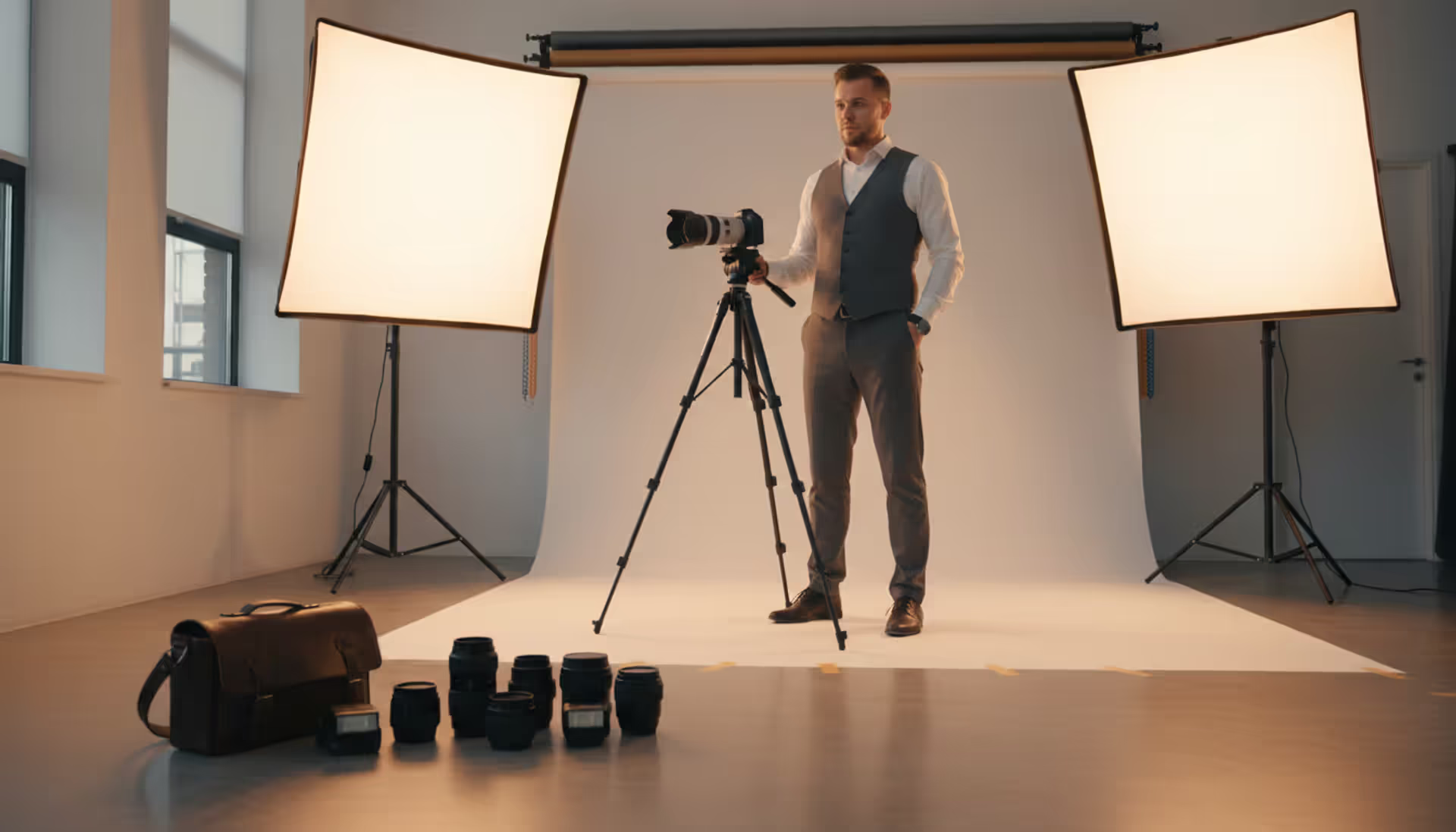
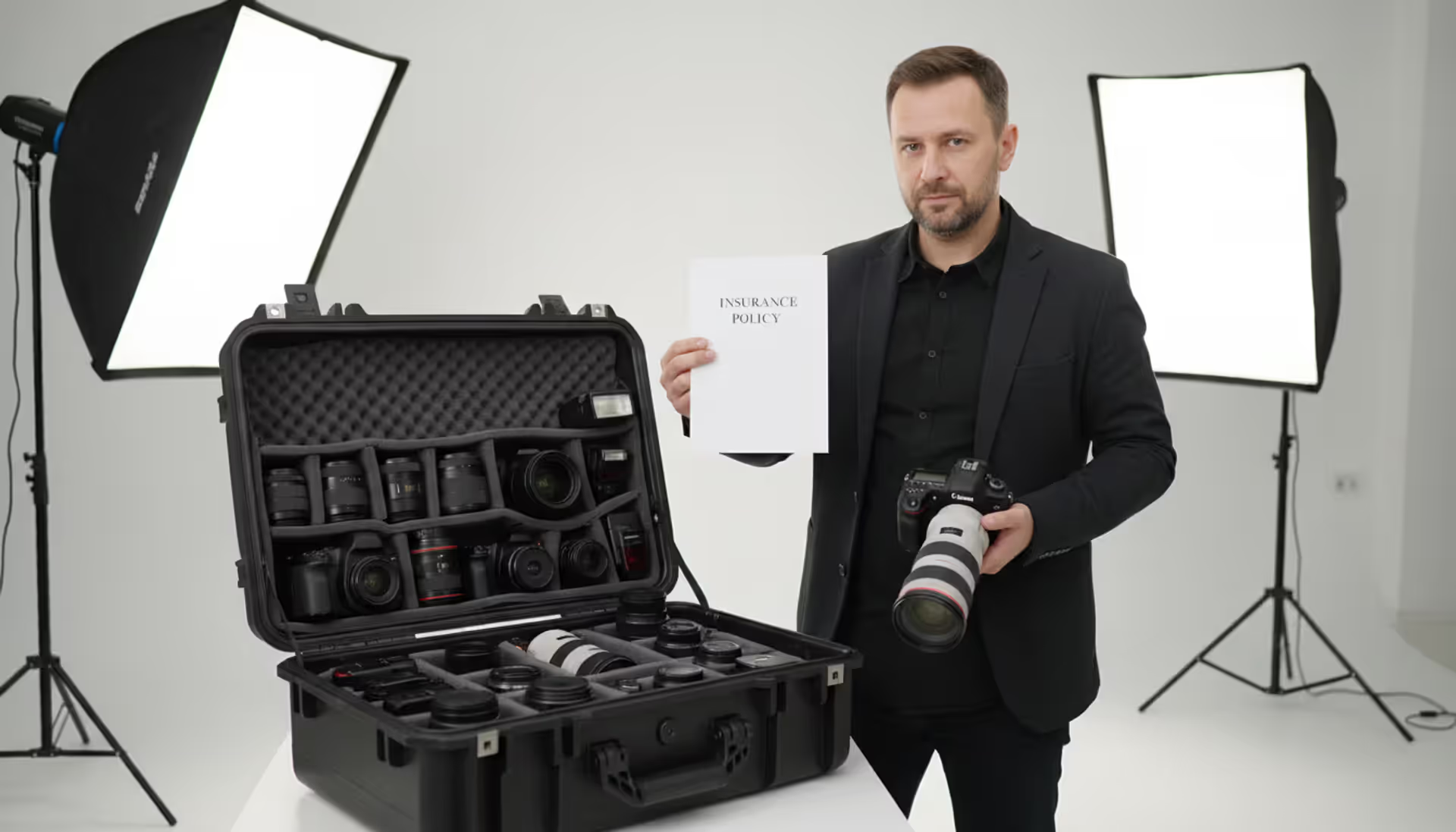
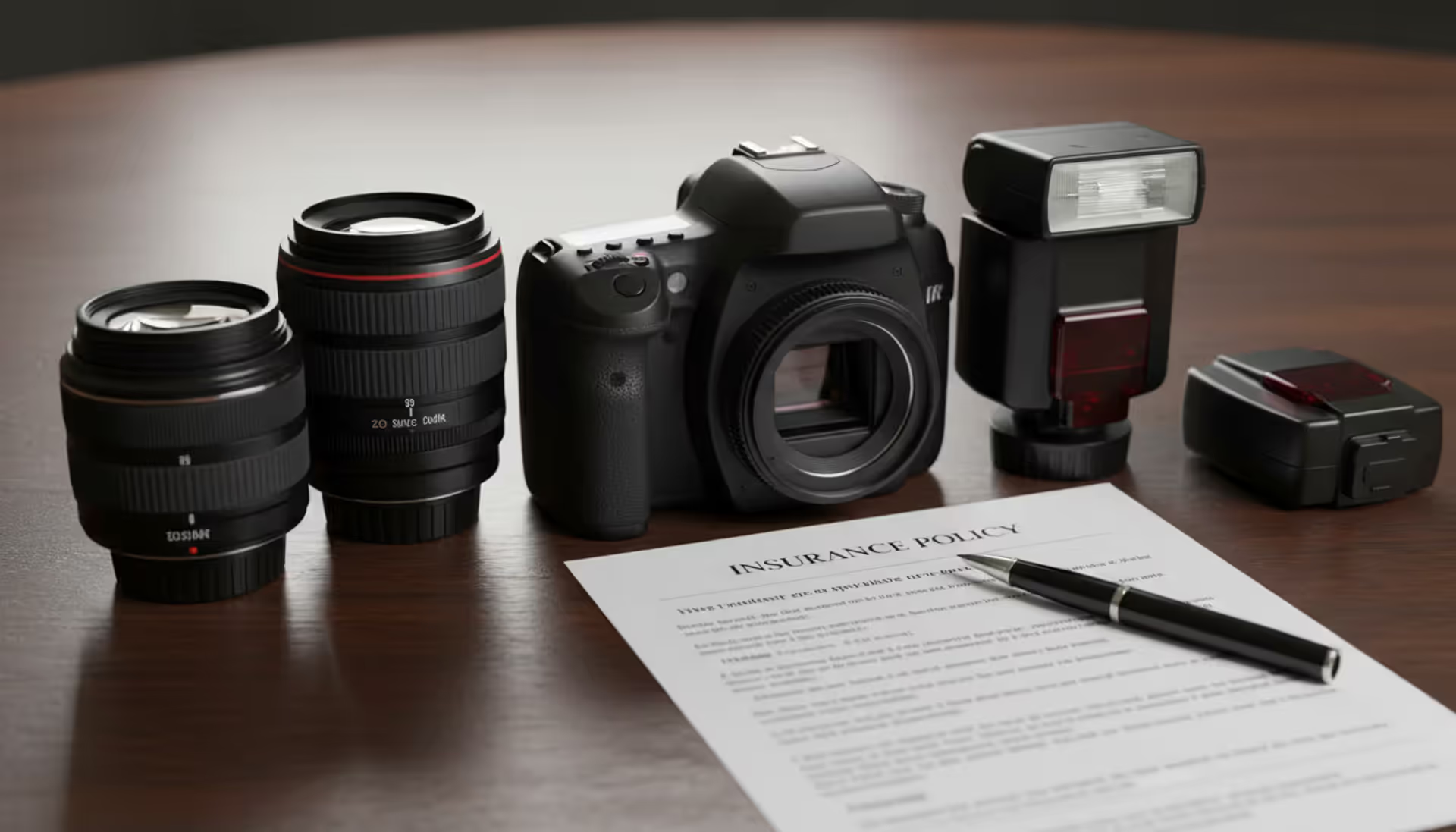
You've just invested $8,000 in a new Sony mirrorless setup. Three weeks later, someone breaks into your car at a wedding venue and your entire kit disappears. Or picture this: a tipsy groomsman backs into your softbox, which crashes onto the cake table, destroying a $1,200 custom wedding cake. These aren't hypothetical scenarios—they happen to working photographers every single week.
Here's the problem: your homeowners policy? It'll cover maybe $2,500 of that stolen gear, and absolutely nothing from that cake disaster. Most photographers don't realize they're operating completely exposed until they're staring down a lawsuit or replacing thousands in equipment out of pocket.
If you're shooting professionally—even part-time—you need actual business coverage. That includes wedding photographers, portrait studio owners, and especially photo booth operators who haul equipment into venues every weekend.
What Does Photography Studio Insurance Cover?
Think of photography coverage as three separate shields protecting different parts of your operation. You'll typically need all three working together, since each one handles distinct problems that crop up when you're running a photo business.
General liability jumps in when you hurt someone or break their stuff. Picture yourself at a backyard family session. Your light stand tips over, smashing through the client's sliding glass door—that's a $3,500 replacement right there. Or someone trips on your camera bag during a corporate event and fractures their ankle. They sue for medical bills plus lost wages. General liability covers your legal defense and pays settlements up to your policy limits.
This same coverage handles property damage you cause at venues. Scratched hardwood from dragging equipment? Covered. Backdrop stand that punched a hole in drywall? Yep. Wine stain on the venue's carpet from your assistant? That too.
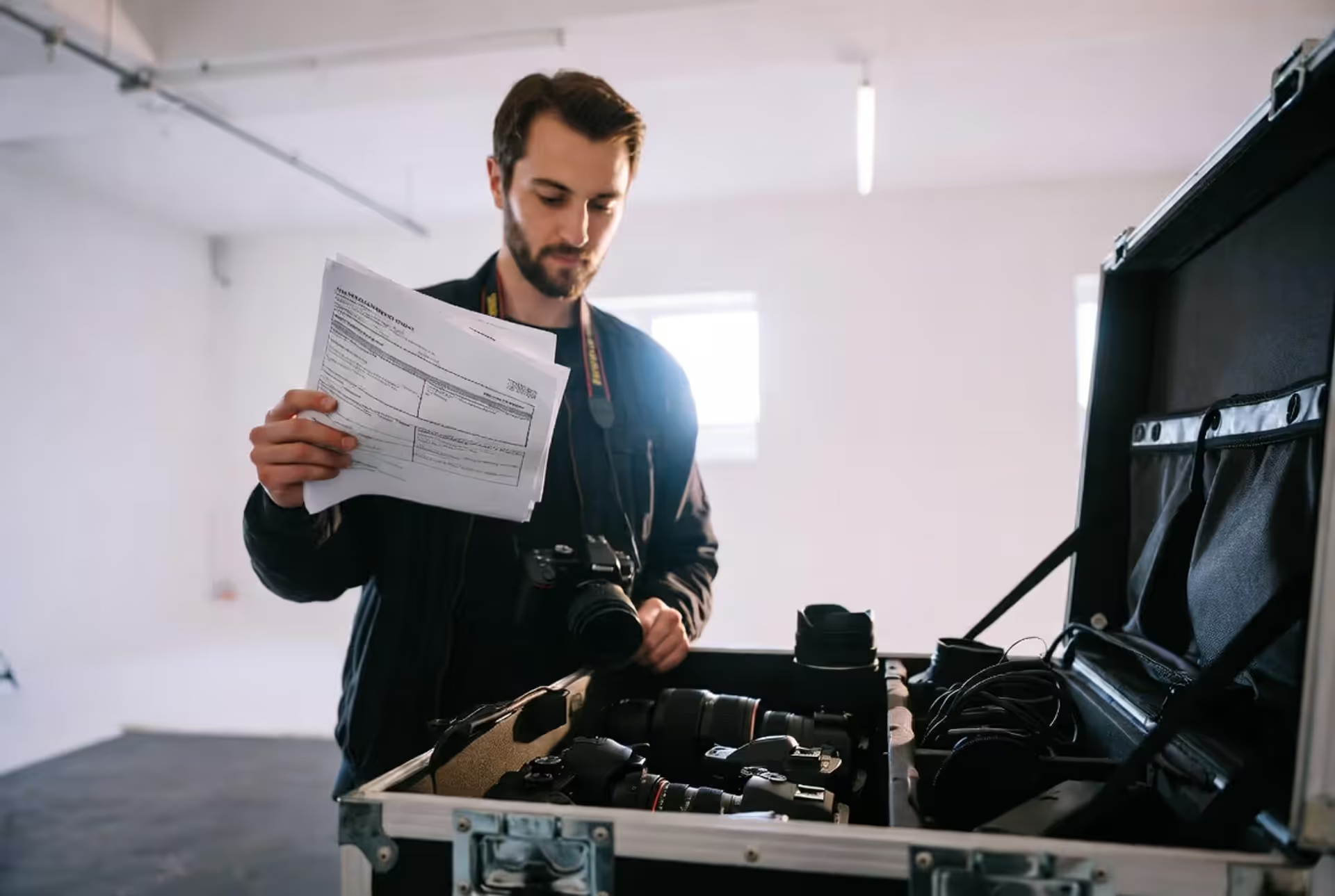
Equipment protection (the insurance industry calls it inland marine coverage, weirdly) keeps your actual gear safe. We're talking cameras, lenses, strobes, modifiers, laptops, hard drives—basically everything you'd grab if your studio caught fire.
The big difference from regular property insurance: this follows your equipment everywhere. To the beach for sunset engagement photos. On a plane to destination weddings. In your car trunk between sessions. If it gets stolen, dropped, or ruined by a sudden rainstorm, you're covered for replacement cost.
Here's what makes it valuable: say you're shooting a wedding and your camera body dies mid-ceremony. Equipment coverage pays for emergency rentals while yours gets repaired. That's the difference between fulfilling your contract and refunding a furious couple.
Author: Derek Halston;
Source: maryelizabethphoto.com
Professional liability (also called errors and omissions) protects you from claims about your actual work. This matters more than most photographers expect.
A Colorado wedding photographer had their memory cards corrupted—every single reception photo gone. The couple sued for $18,000 to recreate the reception. Professional liability covered the legal defense and settlement. Without it? That comes straight from your bank account.
Other scenarios: you miss a flight and can't make it to a destination wedding. Client claims you promised 500 edited images but only delivered 350. Someone alleges you used their photo in advertising without proper permission. All professional liability claims.
One real example: a newborn photographer in Texas faced a lawsuit when a baby rolled off a posing pillow during a session, resulting in injuries. Even though the parents signed a waiver, the legal defense costs alone hit $22,000 before the case settled. Professional liability handled everything.
Types of Insurance Every Photography Business Needs
Let's break down each policy type so you know exactly what you're buying and why it matters for your specific situation.
General Liability Insurance for Photographers
This is your baseline must-have coverage. Most policies start at $1 million per incident, with $2 million total for all claims during the year. Though lately, venues have started demanding $2 million per occurrence instead.
Here's when it kicks in:
Guest at a bar mitzvah trips over your equipment case, breaking their arm
Your backdrop stand falls during a shoot, damaging the client's antique furniture
Venue claims your assistant scratched their marble floors while moving gear
Parent alleges their toddler had an allergic reaction to props you brought to a session
One clause to understand: "products and completed operations" coverage. This protects you after you've finished and left. If a client claims that a printed canvas you delivered fell off their wall and injured someone, this coverage responds.
You also get advertising injury protection. Someone claims you stole their photo for your website? Used a client's image without the right permissions? Made defamatory statements about a competitor? General liability covers your legal defense.
Most venues won't let you through the door without a certificate of insurance naming them as "additional insured." Your insurance company can generate these in minutes, but you need the underlying policy first.
Equipment and Gear Coverage
Your camera bodies, glass, lighting, computers, and drives represent a massive chunk of capital. Equipment insurance protects this investment in ways your homeowners policy simply can't match.
Coverage travels with you: Shooting a wedding in Cabo? Covered. Lens gets stolen from your hotel in Chicago? Covered. Camera drowns during a beach engagement session in Hawaii? Still covered.
Zero deductible options exist: Many photographers skip deductibles on expensive items. Sure, it costs more monthly, but when your $3,200 lens gets stolen, you get $3,200 back—not $2,200 after a $1,000 deductible.
Replacement cost, not depreciation: Quality policies pay current market replacement cost. If you bought a camera for $2,500 three years ago, but replacement costs $2,900 today, you get $2,900. Cheap policies pay depreciated value—maybe $1,800 for that same camera.
Rental reimbursement matters: Your primary camera dies during wedding season. Equipment coverage pays for rentals while yours is being repaired, so you don't miss paid gigs.
Mysterious disappearance coverage: This is huge. You set your 70-200mm down during a wedding... and it's just gone. You didn't see it stolen, you can't file a police report with suspects. Regular insurance won't touch this. Equipment policies often cover it.
Common mistake: you insured $25,000 in gear back in 2021. Since then you've added another body, three lenses, and upgraded your laptop. You're now carrying $38,000 in equipment but only insured for $25,000. That $13,000 gap? You're self-insuring it.
Professional Liability Insurance
E&O coverage handles claims about your services and professional mistakes. This is where photographers think they're safe but actually face the most frequent claims.
Real claims that happen constantly:
Hard drive failure wipes out an entire wedding gallery
You get severely ill and miss a booked session, client sues for deposits plus consequential damages
Couple claims you guaranteed specific family members would be in portraits, but you didn't capture them
Someone alleges you violated copyright by posting images that included copyrighted artwork in the background
Client says you missed the deadline outlined in your contract, causing them financial harm for a product launch
Camera malfunction (you didn't notice settings were wrong) and every image is unusable
Professional liability operates on a "claims-made" basis. This means your policy must be active when the incident happens AND when the claim gets filed. Drop your coverage? You lose protection for everything you shot while covered. This differs from general liability's "occurrence" basis, which covers incidents that happened during the policy period regardless of when claims appear.
Legal defense costs typically hit $15,000-$25,000 even when you win. Professional liability pays these costs above and beyond your coverage limit. Without it, those legal fees come from your business account.
Photo Booth Insurance Requirements and Coverage
Photo booth operations combine expensive equipment with drunk guests, dim lighting, and venue requirements—a perfect storm requiring specific insurance considerations.
Every venue contract demands proof of coverage. Usually $1-2 million in general liability, with the venue listed as additionally insured. No certificate? You're not setting up, and you're probably breaching your client contract.
Traditional photo booth coverage needs to address several unique exposures:
Guest spills an entire cosmopolitan into your printer (happens monthly somewhere)
Drunk wedding guest yanks the backdrop, pulling your lighting rig down
Equipment damaged during load-in/load-out (cracked iPad screens, dented printer cases)
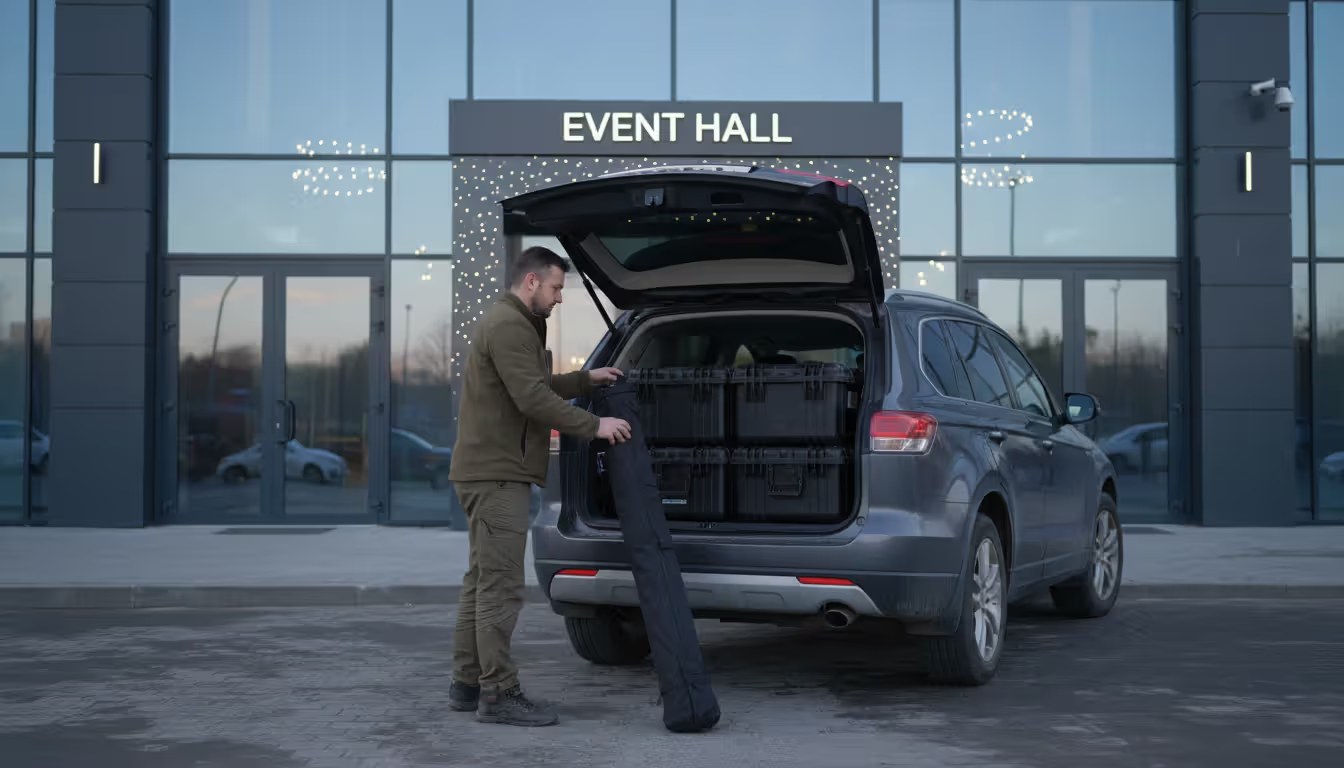
Theft from venues (photo booths left in banquet halls overnight get stolen)
360 photo booth insurance creates additional headaches because of moving parts. That rotating camera arm? Someone's getting smacked if they lean in at the wrong moment. Guests fall off the platform after a few drinks. The motor mechanism is complex and expensive to repair.
Some insurers charge 15-20% higher premiums for 360 booths compared to traditional setups because of documented higher claim frequency. The good news: specialized photo booth insurers understand these risks and price them reasonably.
Other coverage photo booth operators should consider:
Hired and non-owned auto: Your employee uses their Honda CR-V to transport a booth to an event. They cause an accident. Their personal auto insurance might deny the claim since it was business use. This coverage fills that gap.
Cyber liability: You're collecting email addresses and phone numbers from every event guest. Data breach exposes 5,000 people's information. Cyber liability covers notification costs, credit monitoring, and legal defense.
Business interruption: Someone steals your $18,000 in photo booth equipment. You've got 12 events booked over the next six weeks. Business interruption replaces lost revenue while you're unable to operate and waiting for insurance to replace equipment.
Photo booth businesses typically operate on 40-50% profit margins. One uninsured equipment loss can eliminate an entire quarter's profit. A $20,000 360 booth getting destroyed represents 35-45 events worth of work for most operators.
Author: Derek Halston;
Source: maryelizabethphoto.com
How Much Does Photography Business Insurance Cost?
Premiums vary wildly depending on your revenue, what you shoot, claims history, and where you operate. Wedding and event photographers usually pay more than studio portrait shooters because they're hauling equipment around and working in environments they don't control.
Average Photography Insurance Costs by Business Type
Business Type
General Liability (yearly)
Equipment Coverage (yearly)
Professional Liability (yearly)
Solo portrait photographer
$350–$600
$200–$400 ($15K in gear)
$400–$700
Wedding photographer
$500–$900
$400–$800 ($30K in gear)
$600–$1,200
Photo booth business
$600–$1,200
$500–$1,000 ($25K in gear)
$500–$900
Commercial studio
$800–$1,800
$600–$1,500 ($50K in gear)
$800–$1,500
What makes your premiums go up:
Higher annual revenue (insurers figure more revenue means more exposure)
Bundle everything with one insurer (often saves 10-20%)
Accept higher deductibles on equipment
Install tracking devices on gear and upgrade studio security systems
Maintain claims-free status year after year
Pay annually instead of monthly (usually saves 5-8%)
Join professional organizations offering group rates (PPA, ASMP)
Equipment protection typically runs 1.5-3% of the total insured value each year. So $20,000 in gear might cost $300-$600 annually, while $50,000 in equipment could run $750-$1,500.
I tell every photographer to budget 2-4% of gross revenue for insurance. Yeah, it feels expensive when you're starting out. But I've personally watched three photographers go bankrupt over single uninsured incidents. One lawsuit can cost more than 15 years of premiums
— Sarah Mitchell
How to Choose the Right Insurance for Your Photo Business
Selecting appropriate coverage requires understanding what could actually go wrong in your specific photography niche and comparing real policy details, not just premium costs.
Step 1: Create a complete equipment inventory with current values. List cameras, lenses, strobes, modifiers, computers, drives, props, backdrops, bags, accessories. Don't overlook the small stuff—memory cards, batteries, cables, and gaffers tape add up to $2,000-$3,000 quickly.
Step 2: Check what venues and clients actually require. Pull up your last five venue contracts. What are the minimum liability limits? Do they require additional insured status? Some commercial clients demand $5 million in coverage. Your policy needs to meet these thresholds or you'll lose booking opportunities.
Step 3: Honestly assess your professional liability risk. Shooting unrepeatable events like weddings? E&O is essential. Studio portraits can be reshot if something goes wrong, but you should still consider coverage. High-end commercial work? Definitely get professional liability since those clients sue fast.
Step 4: Request quotes from photography-specific insurers. Companies specializing in photographer coverage understand your business. They know what "gaffer's tape" means and why your laptop counts as essential equipment. General commercial insurers don't get it and often provide inappropriate coverage.
Step 5: Compare actual coverage details, not just the price tag. That $400/year policy looks great until you discover it has a $2,000 deductible, uses actual cash value instead of replacement cost, and excludes equipment in vehicles overnight. Read every exclusion section carefully.
Step 6: Test the claims process before you need it. How quickly can they issue certificates of insurance? Can you file claims online? Do they offer 24-hour rental reimbursement for emergency gear? Some companies provide same-day certificates; others require three business days.
Step 7: Choose policies that scale with your growth. Can you add equipment online or do you need full underwriting review each time? Some insurers let you increase coverage limits instantly through a portal; others make you call and wait for approval.
Major red flags: insurers who don't ask about your photography specialty, policies with vague language about what's covered, companies with terrible reviews on claims payment, and premiums significantly below market (usually means inadequate coverage or surprise exclusions).
Author: Derek Halston;
Source: maryelizabethphoto.com
Common Photography Insurance Mistakes to Avoid
Even experienced pros make insurance mistakes that leave them dangerously exposed.
Undervaluing equipment by failing to account for price changes: You bought that 70-200mm f/2.8 for $1,900 four years ago. Replacement cost today? $2,600. If you insured at purchase price and never adjusted, you're facing a $700 shortfall after any claim.
Assuming your homeowners policy covers business gear: Most homeowners policies exclude business equipment entirely or cap it at $2,500-$5,000. Even when they cover theft from your residence, they won't cover gear stolen from your vehicle or damaged at a client location.
Skipping E&O while carrying other coverage: Tons of photographers buy general liability and equipment insurance but skip professional liability. Yet E&O claims happen way more frequently—dissatisfied clients alleging you failed to deliver promised work show up constantly.
Forgetting to notify insurers when adding new services: Started with portraits, added real estate photography, then bought a drone last year. Drone operation creates completely new liability that your original policy might not touch. Always inform your insurer when expanding what you offer.
Missing the additional insured step for venues: Venues require being specifically named as additionally insured on your certificate. This gives them direct protection under your coverage. Skipping this can get you kicked out of events or put you in breach of contract.
Canceling coverage during slow seasons: Some photographers drop insurance November through February to save money. This creates dangerous gaps in claims-made professional liability and leaves you completely exposed if anything happens during those "off" months.
Ignoring policy exclusions until claim time: Your policy might exclude coverage for equipment in unattended vehicles after 9 PM, damage from normal wear and tear, or losses during international travel to certain countries. Discover these exclusions before filing a claim, not during.
Relying on personal auto insurance for business driving: Regularly transporting equipment or driving to shoots for pay? Personal auto policies often exclude business use. You need commercial auto or hired/non-owned coverage to fill these gaps.
Author: Derek Halston;
Source: maryelizabethphoto.com
Frequently Asked Questions About Photography Insurance
Do I need insurance if I only shoot part-time?
Absolutely. Your risk of getting sued or losing equipment doesn't magically decrease because photography is your side gig instead of full-time work. When a client sues over lost wedding photos or your gear gets stolen, the financial consequences hit just as hard whether you're part-time or full-time. Many insurers offer hobbyist or part-time policies at reduced rates, but you definitely need coverage. Plus, venues requiring proof of insurance don't care about your employment status—they'll still demand certificates showing adequate limits.
Does photography insurance cover damaged client photos?
Professional liability protects you from claims arising from lost or damaged images, covering your legal defense and any settlements. But it won't pay to reshoot sessions—it covers your financial liability to the client when they sue. Some policies include "redo coverage" paying reshoot costs up to certain limits, typically $5,000-$10,000. Equipment insurance protects your physical gear but not the photos themselves or your contractual obligation to deliver images.
Will my homeowners insurance cover my camera gear?
Homeowners coverage offers extremely limited protection for business equipment, usually capping at $2,500-$5,000, and typically only for theft occurring at your residence. It won't cover equipment damaged during shoots, stolen from vehicles, or lost while traveling. More critically, homeowners policies completely exclude business liability, leaving you totally exposed to lawsuits. You need separate business coverage for legitimate protection.
What's the difference between occurrence and claims-made policies?
Occurrence coverage protects incidents happening during your policy period, no matter when claims get filed. Something occurs in 2026 while you're covered? You're protected even if the lawsuit arrives in 2028 after you've switched carriers. Claims-made coverage requires your policy being active both when the incident happens and when someone files the claim. Professional liability typically uses claims-made structures, which is why you need "tail coverage" when canceling—it extends your reporting period for past incidents.
Do venues require proof of insurance for photo booth rentals?
Almost every single one, yes. Hotels, country clubs, banquet halls, and event spaces require photo booth operators providing certificates showing general liability of at least $1 million, frequently $2 million. The venue must be specifically named as additionally insured on that certificate. Most insurers generate certificates within a few hours, though some venues want them submitted weeks before the event, so plan accordingly.
How quickly can I get insured before an event?
Many photography insurance companies offer same-day binding coverage and issue certificates within hours of your application. Some specialized insurers have online platforms providing instant quotes and same-day coverage activation. However, requesting higher limits or having complicated business structures might require 1-3 business days for underwriting review. For one-time gigs, several companies sell short-term event policies covering just specific days or weekends.
Insurance feels like throwing money away—until you desperately need it. Then it becomes the smartest investment you ever made.
A single equipment theft, lawsuit, or professional liability claim can easily cost more than you'd spend on premiums over an entire decade. The math just makes sense.
Proper coverage lets you focus on creating exceptional work instead of constantly worrying about disaster scenarios. Venue needs a certificate? You email it over in five minutes. Client threatens legal action over a contract dispute? Your insurer provides experienced legal defense. Your gear gets stolen the night before a major wedding? You rent replacements immediately and fulfill your commitment.
Start by requesting quotes from insurers specializing in photographer coverage. Compare actual policy details carefully, not just monthly costs. Verify your equipment values reflect current replacement costs, not what you originally paid. Review everything annually as your business evolves.
Photography insurance protects way more than just your gear—it safeguards your reputation, client relationships, and ability to keep operating when unexpected disasters strike. The photographers building sustainable long-term businesses treat insurance as essential infrastructure, not optional overhead.
One uninsured catastrophe can end your photography business permanently. Proper coverage ensures that doesn't happen.
Wedding photographers face unique risks requiring specialized insurance coverage. Learn about liability protection, equipment coverage, one-day vs. annual policies, venue requirements, and how to choose insurance that protects your business from lawsuits, equipment loss, and professional errors
Photography insurance costs range from $200 to $2,000+ annually depending on your business size and coverage needs. This comprehensive guide breaks down average costs by photographer type, explains factors affecting quotes, and shows you how to compare policies effectively while avoiding common mistakes
Photography insurance protects your business from lawsuits, equipment loss, and professional liability claims. Learn what coverage photographers need, how much policies cost, and how to choose the right protection for your specialty—from wedding photography to commercial work
Professional photographers invest thousands in gear that can disappear in seconds through theft, accidents, or disasters. Photography equipment insurance typically costs $150-$900 annually, with rates varying based on gear value, coverage limits, and location. Understanding pricing factors helps you budget appropriately
The content on this website is provided for general informational and educational purposes only. It is intended to explain concepts related to running a photography business, insurance coverage, marketing, websites, and professional development.
All information on this website, including articles, guides, and examples, is presented for general educational purposes. Outcomes may vary depending on business size, location, and individual choices.
This website does not provide professional legal, insurance, financial, or business advice, and the information presented should not be used as a substitute for consultation with qualified professionals.
The website and its authors are not responsible for any errors or omissions, or for any outcomes resulting from decisions made based on the information provided on this website.