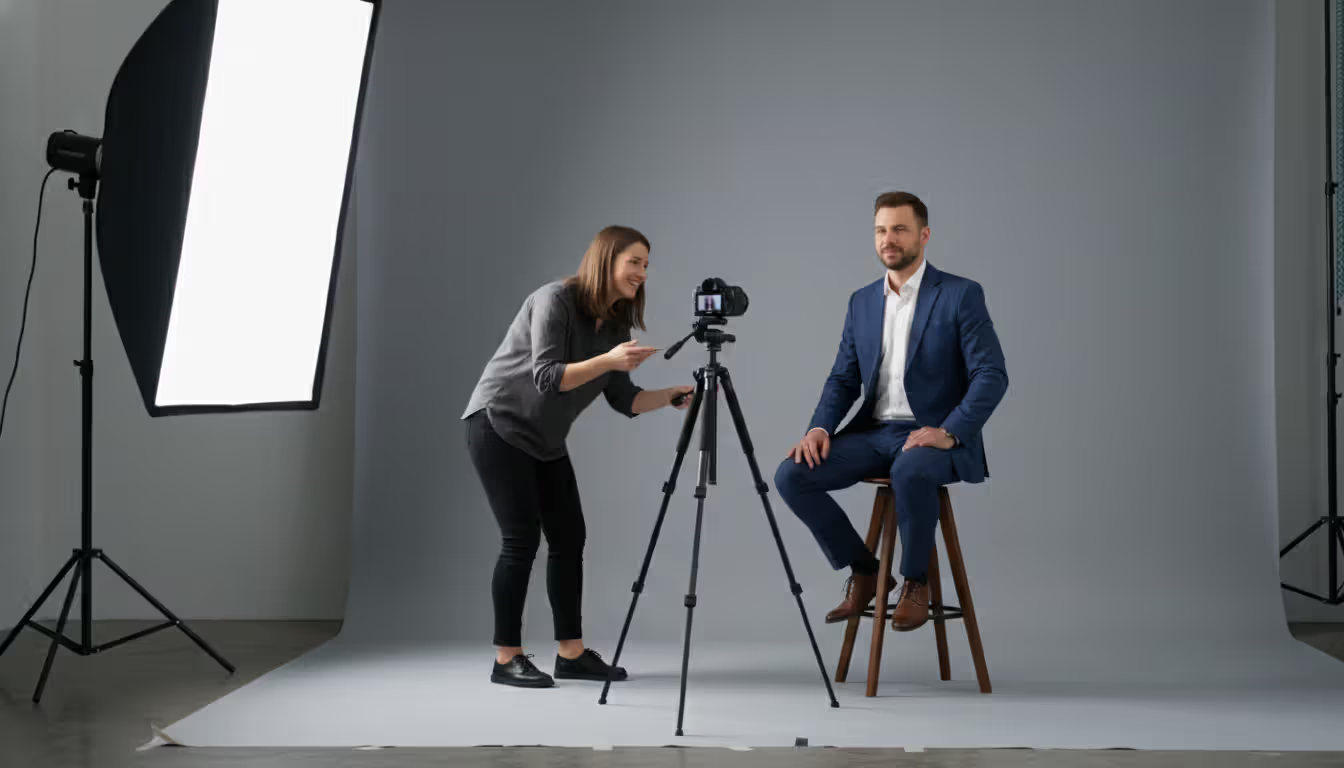
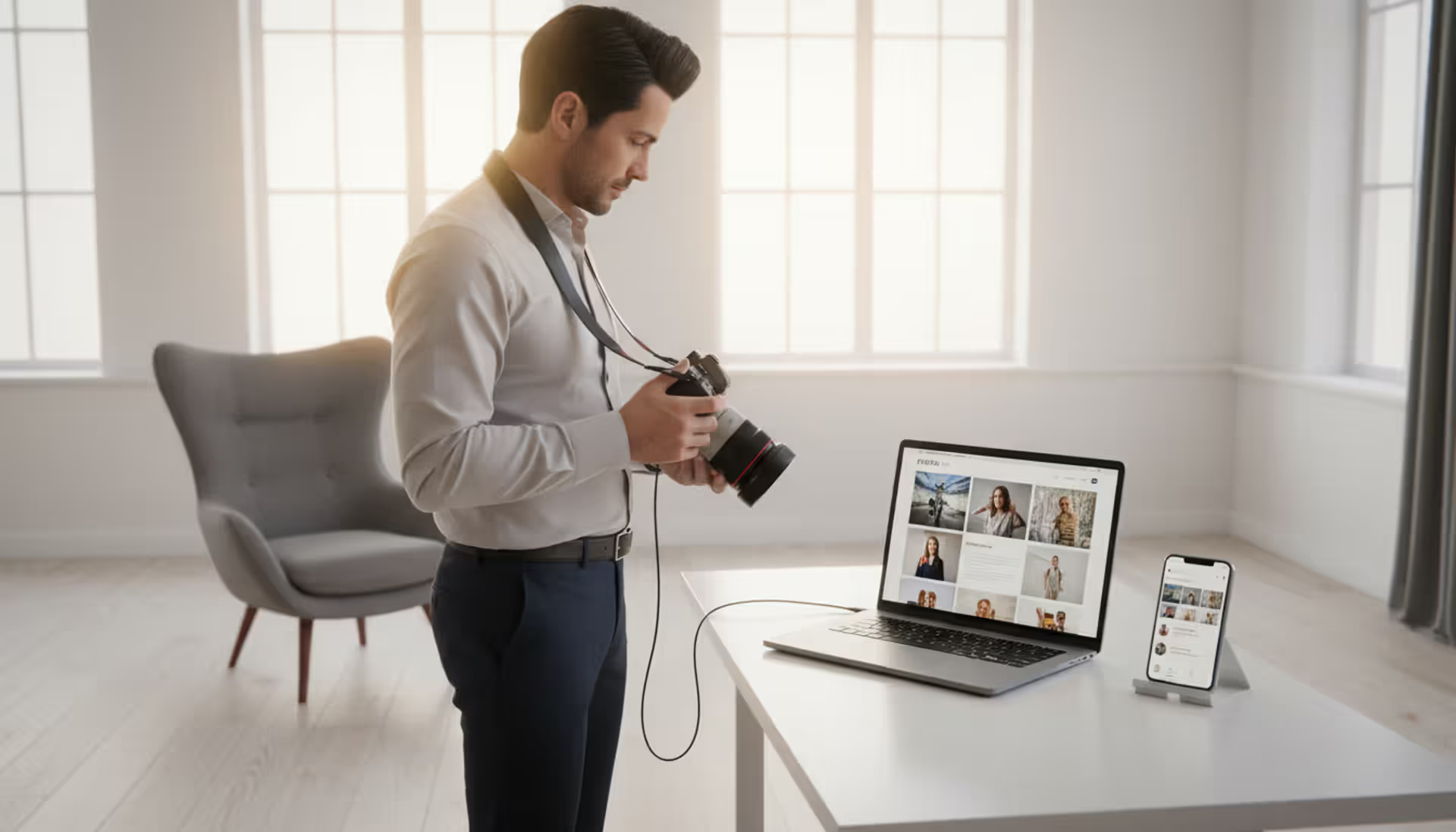
Professional photographer standing in a bright studio holding a camera next to lighting equipment with a laptop showing a photo gallery in the foreground
Here's the uncomfortable truth: most photographers hate talking about money. They'd rather discuss aperture settings or composition techniques all day than justify why they charge $4,000 for a wedding. But avoiding the pricing conversation doesn't make it go away—it just creates confusion and wastes everyone's time.
A proper price list changes this dynamic completely. Instead of playing email tennis with prospects who might not even have half your minimum budget, you put your rates out there from day one. Some people will bounce immediately. That's the point. The ones who stick around? They're ready to have a real conversation about booking.
Now, if you're shopping for a photographer instead of being one, you've probably noticed how maddeningly vague some pricing can be. "Investment begins at $3,000" tells you almost nothing. What does that entry-level package actually include? This guide breaks down exactly how photographers structure their pricing across different specialties—and what you should actually expect to pay in 2025.
What Is a Photography Price List
Think of a photography price list as a menu at a restaurant. It shows what's available, what each option includes, and what it'll cost you. Simple enough, right?
The difference between a price list and a custom quote comes down to standardization. If you're booking a two-hour family portrait session, the photographer probably has a set rate—maybe $650 for the session plus 40 digital images. That's price list territory. But if you need a photographer to document your three-day corporate retreat in Aspen with specific shot lists and same-day editing? You're getting a custom quote because too many variables exist to publish a standard rate.
Price lists work great for photographers who've nailed down their process. A headshot photographer knows exactly how long each session takes, how many shots they'll deliver, and what their time costs. They can confidently say "$350 per person" because they've done it 200 times. Compare that to an editorial photographer shooting for magazines—every assignment looks different, so they quote project by project.
These days, you'll rarely see printed price lists. Most photographers email PDFs or embed pricing directly on their websites. The digital approach makes sense—update your rates once, and every prospective client sees current numbers. Printed menus lock you into last year's pricing, which gets awkward when your costs have jumped 15%.
Author: Olivia Wrenford;
Source: maryelizabethphoto.com
That said, some photographers still bring printed materials to wedding expos or keep them in their studio for consultations. There's something tangible about flipping through a physical booklet that scrolls on a screen can't replicate.
The transparency debate never really ends. Some photographers swear by publishing exact prices online. Others insist on discovery calls before revealing numbers, arguing that pricing without context leads to sticker shock. Both camps have valid points. What's definitely changed: couples and corporate clients in 2025 expect at least ballpark figures before they'll schedule a meeting. The "contact us for pricing" approach increasingly reads as either astronomically expensive or weirdly secretive.
Average Photography Rates by Service Type
Photography pricing makes more sense when you stop thinking about it as "cost per hour" and start thinking about "cost per outcome." A surgeon doesn't charge by the hour either—they charge for successfully completing a procedure, even if they could do it faster than a less experienced colleague.
That caveat aside, hourly rates do exist and they cluster around predictable ranges. Entry-level pros in smaller markets charge $75–$125 per hour. Established photographers in metro areas? More like $200–$350. Specialists dealing with technical complexity—think architectural interiors or surgical documentation—can hit $400+ hourly because the expertise and equipment requirements jump considerably.
But here's what actually happens in practice: most photographers abandoned pure hourly billing years ago. Why? Because it punishes efficiency. Get faster at your job, earn less money. Terrible incentive structure.
Package pricing solved this problem. Instead of "I charge $250/hour for portraits," it becomes "My signature portrait experience is $895 and includes a 90-minute session, professional hair and makeup, wardrobe consultation, and 50 fully edited images in an online gallery." The client knows exactly what they're getting. The photographer gets paid for their value, not just their time.
Geography matters enormously. A wedding photographer in Manhattan charging $7,500 isn't necessarily better than one in Tulsa charging $2,800—they're just operating in completely different economies. Your Brooklyn apartment probably costs more than a mortgage on a four-bedroom house in Oklahoma. Photographers' pricing reflects their local market realities.
Interestingly, some smaller markets actually support premium pricing better than saturated metros. When you're the only experienced wedding photographer within 75 miles, you can charge more than if you're competing against 200 other photographers in a 10-mile radius.
Service Type
Hourly Rate Range
Package Rate Range
Typical Deliverables
Wedding Photography
$150–$400
$2,500–$7,500
Full-day coverage (6–10 hours), 400–800 edited images, online gallery with download rights
Corporate Headshots
$125–$300
$800–$2,500 (team sessions)
Multiple outfit options per person, professional retouching, high-res files formatted for various uses
Ecommerce Product
$25–$75 per product
$500–$3,000 (bulk catalogs)
Clean white-background images, multiple angles (typically 3–5), basic retouching included
Coverage spanning 3–8 hours, 200–600 edited images, fast turnaround (often within one week)
Wedding Photography Pricing Structures
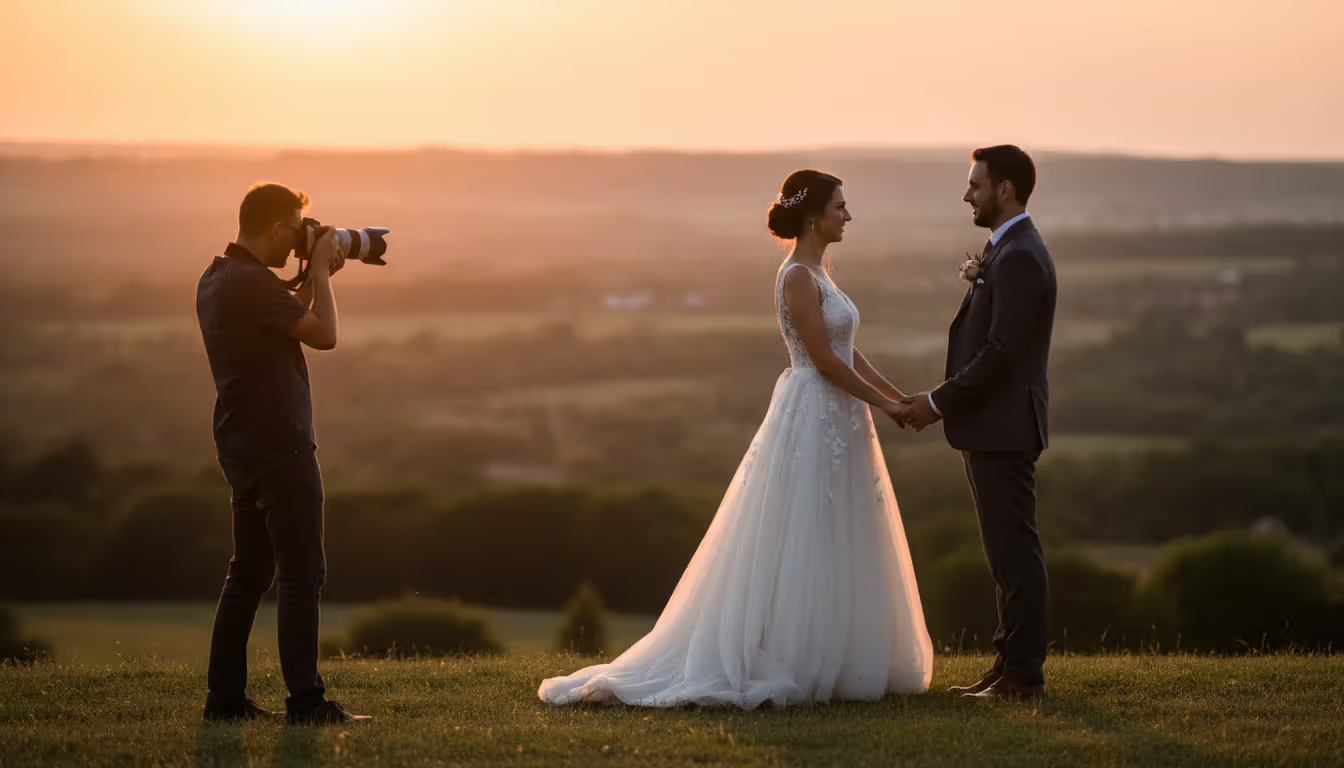
Wedding photography packages confuse people because they're trying to price something that's equal parts technical service, artistic creation, and emotional insurance policy. Nobody wants to look back at their wedding and realize the photographer missed the ceremony because they booked the cheapest option on Craigslist.
Most wedding photographers gave up hourly billing around 2010. Packages just work better when you're dealing with events that have defined timelines. The standard structure includes coverage hours (commonly 6, 8, or 10 hours), number of photographers (one or two), deliverable count (usually 400–800 edited images), and delivery method (online gallery, USB drive, or both).
In most mid-sized US cities, expect to pay $3,200–$5,500 for solid mid-range coverage. That typically gets you eight hours with one photographer, maybe a second shooter for part of the day, and a full gallery of edited images delivered within a month. Premium packages climbing toward $6,000–$12,000 might add engagement sessions, custom albums, parent albums, or extended coverage from getting ready through the grand exit.
Half-day packages (4–6 hours) have gotten popular for intimate weddings and elopements. These usually run $1,800–$3,200 and focus on ceremony plus portraits. You're skipping getting-ready shots and late-night reception dancing. Totally fine if you're having a 30-person ceremony and dinner. Less ideal if you want documentation of your entire celebration.
Author: Olivia Wrenford;
Source: maryelizabethphoto.com
Full-day coverage remains the norm for traditional weddings. Eight to ten hours means the photographer arrives while the bride's getting her makeup done and stays through the cake cutting and first few dances. Some couples want absolutely everything—morning prep through sparkler exit—which can stretch to 12–14 hours and adds $800–$1,500 to base pricing.
Engagement shoots serve double duty. They get you comfortable in front of the camera before the high-pressure wedding day, and they give you images for save-the-dates or your guest book. High-end photographers often include engagement sessions in their premium packages. Others charge $400–$750 as an add-on. Either approach works—just know that skipping the engagement session means your first time being photographed together is when you're already stressed about 150 other wedding day details.
Destination weddings add complexity and cost. The photographer needs to account for travel days, airfare, hotel, meals, and the opportunity cost of blocking out three or four days when they could book other jobs. Some photographers charge their normal package rate plus actual expenses. Others build in a flat destination fee of $1,000–$2,500 on top of reimbursables. Critical detail: clarify whether travel days count toward coverage hours. They shouldn't, but some photographers try this.
Corporate and Commercial Photography Pricing
Corporate photography gets complicated because you're not just paying for images—you're paying for the right to use those images in specific ways. That headshot might take 15 minutes to capture, but if you're putting it on a billboard, the licensing value skyrockets.
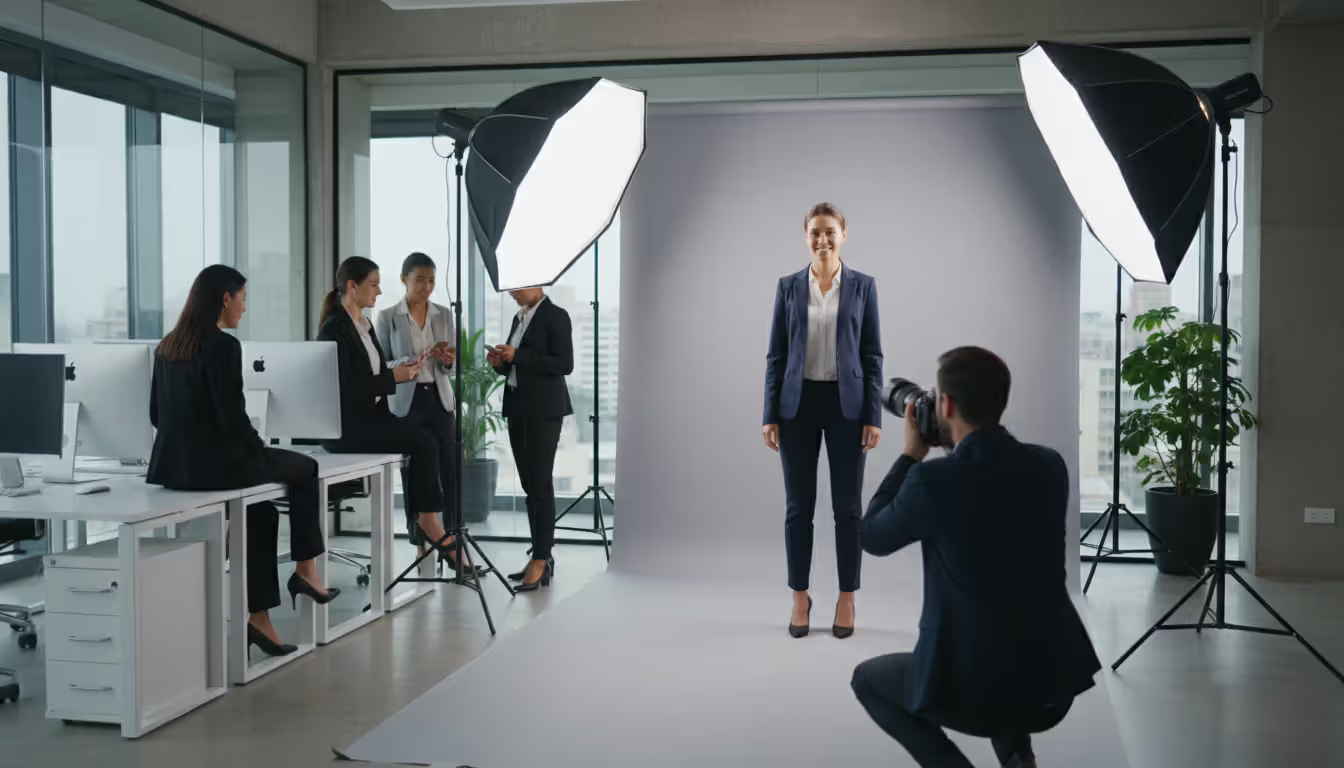
Individual executive headshots typically cost $250–$600 per person. You get a few background options, professional retouching, and digital files. Team headshot sessions become more economical at scale. Twenty employees might run $125–$200 per person. Photograph 50+ people in a day, and you can often negotiate down to $75–$150 per person. The photographer's setup gets amortized across more subjects, making bulk pricing attractive for everyone.
Author: Olivia Wrenford;
Source: maryelizabethphoto.com
Corporate event coverage—conferences, product launches, holiday parties—follows package structures similar to weddings but with different priorities. Half-day conference coverage (four hours) might cost $1,200–$2,200 and includes candid shots of attendees networking, speakers presenting, and branded details like signage or product displays. Full-day conference coverage with two photographers can reach $3,500–$6,000, especially if you need same-day social media selects delivered before the event even ends.
Now we get to licensing and usage rights, where many corporate clients get surprised by additional costs. That headshot licensed only for your company website costs less than the same image licensed for advertising, trade show banners, and unlimited duration. Smart commercial photographers structure pricing around usage tiers:
Internal use only (employee directory, intranet, internal presentations) sits at the base rate. Marketing and advertising (website, social media, email campaigns, brochures) typically adds 50–100% to the base. Unlimited commercial rights (anything, anywhere, forever) can double or triple the base rate.
Here's a concrete example: a product photo licensed for a single email campaign might cost $200. Unlimited perpetual rights to that same image could run $800–$1,500. The photograph is identical—you're paying for expanded usage permission.
Savvy corporate clients negotiate comprehensive usage rights upfront instead of coming back six months later asking to expand licensing. Photographers typically charge 50–200% of the original shoot fee to retroactively expand rights. Buy broader licensing initially if there's any chance you'll need it. Much cheaper.
Product and Ecommerce Photography Rates
Ecommerce photography pricing depends heavily on product complexity and volume. Photographing 500 similar jewelry items? Very different from photographing 50 pieces of furniture that each require elaborate staging.
Per-product pricing dominates ecommerce work. Simple products like jewelry, cosmetics, or small electronics photographed on white backgrounds typically cost $25–$50 per item for three to five standard angles. That rate includes basic retouching—dust removal, color correction, shadow cleanup. Nothing fancy, just clean product images ready for your website.
Complex products change the equation. Furniture photographed from multiple angles might cost $75–$150 per piece. Apparel on models jumps to $100–$200 per outfit when you factor in model fees, styling, and additional retouching. Large machinery or technical equipment can hit $150–$300 per item if it requires specialized lighting or technical accuracy.
Volume discounts make large catalogs affordable. A photographer charging $40 per product for small batches might drop to $28 per product for 100–250 items, and $20 per product for 500+ items. The efficiency of photographing similar items in succession justifies lower per-unit pricing. But volume discounts usually require consistency—you can't mix simple earrings with complex furniture and expect the lowest tier.
Studio versus on-location shoots create another cost variable. Studio product photography offers controlled lighting and efficient workflow. On-location shoots—furniture in a showroom, equipment at a construction site, food at a restaurant—introduce travel time, location challenges, and lighting complications that typically increase rates by 30–50%. That $35 studio product shot might cost $50–$60 on-location.
Lifestyle and contextual product photography commands premium pricing because it requires creative direction, styling, props, and often models. A white-background coffee mug shot might cost $30. That same mug photographed in a styled kitchen scene with steam, morning light, and carefully chosen props? Easily $150–$300 when you account for the photographer's creative time, prop sourcing, and the limited number of setups possible in a day.
Factors That Affect Photographer Service Pricing
The camera represents maybe 15% of what you're actually paying for. The rest? That's where it gets interesting.
Experience and portfolio quality create the most obvious pricing gaps. A photographer two years into their career with 15 weddings under their belt might charge $2,200. Another photographer with 10 years and 200 weddings commands $5,500 for similar deliverables. What's the extra $3,300 buying you? Reliability. The experienced photographer has seen it all—family drama, timeline disasters, terrible lighting, equipment failures—and knows exactly how to handle each situation smoothly.
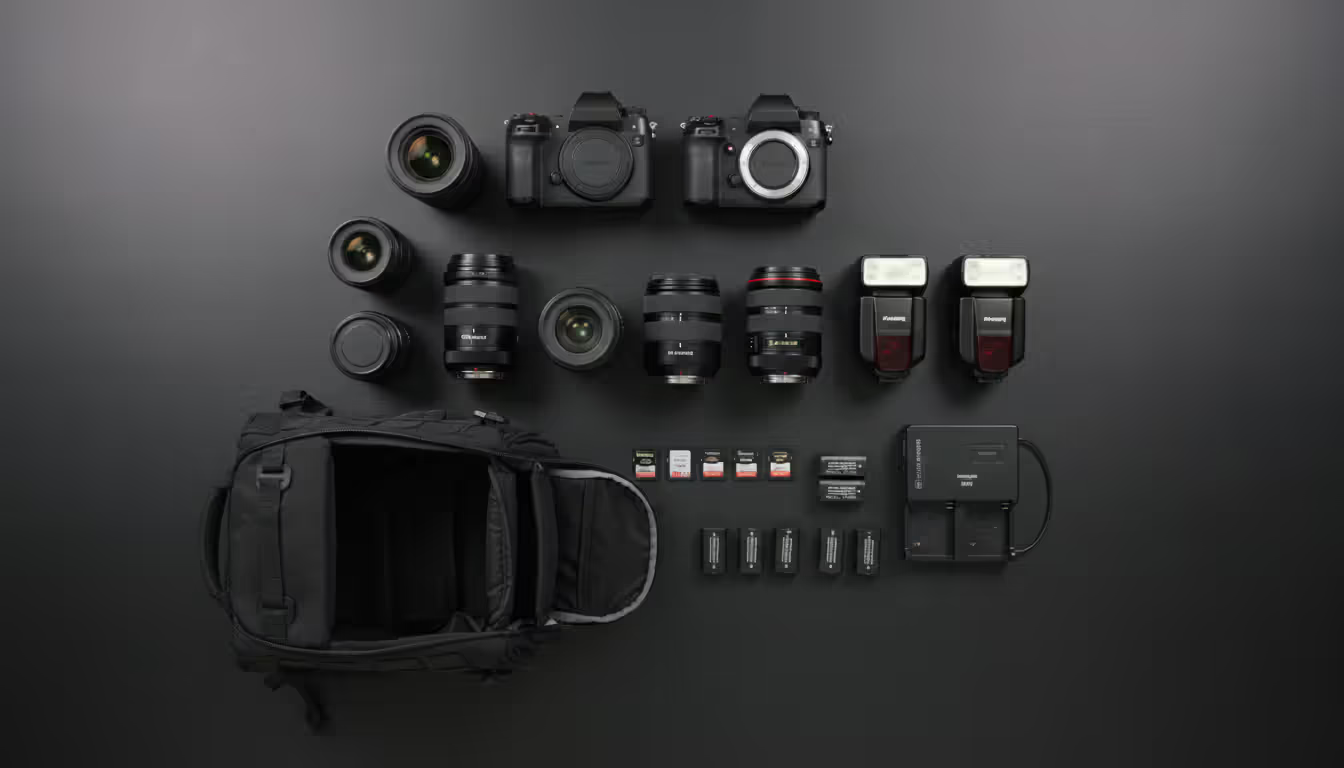
Equipment costs add up faster than most people realize. Professional camera bodies run $2,500–$6,500 each, and serious photographers own two for redundancy. Lenses cost $800–$2,800 apiece, and specialists might own 5–8 lenses to handle different scenarios. Add lighting equipment, tripods, memory cards, backup drives, and you're looking at $3,000–$8,000 in supporting gear. Annual software subscriptions—Adobe Creative Cloud, gallery platforms, booking systems—total $1,200–$2,000. These costs get divided across every booking, but they explain why professional photographers can't compete with Uncle Bob's $200 wedding offer.
Author: Olivia Wrenford;
Source: maryelizabethphoto.com
Travel expenses, permits, and assistant fees vary by project but can substantially increase total costs. Many photographers include 30–50 miles of travel in their base rate, then charge $0.65 per mile beyond that. Permits for shooting in parks, government buildings, or commercial properties range from $50 to $500 depending on location and bureaucracy involved. Assistant fees run $150–$350 per day and become necessary for complex lighting, large events, or situations where someone needs to wrangle equipment while the photographer focuses on capturing moments.
Turnaround time dramatically affects pricing for clients with urgent needs. Standard delivery happens 2–4 weeks after the shoot. Rush delivery within 3–5 business days often carries a 25–50% surcharge because the photographer needs to bump other clients and work evenings to meet your deadline. Same-day or next-day delivery for corporate events or product launches can double the base rate. It requires the photographer to cancel other commitments and pull all-nighters editing.
Post-production time frequently exceeds shooting time, especially for events. A 10-hour wedding generates maybe 2,500 images that need culling, color correction, and selective retouching. That's easily 20–30 hours of editing work. Clients requesting extensive retouching—blemish removal, body contouring, background replacements—beyond standard color correction should expect additional fees of $25–$75 per image. That Instagram-perfect skin and perfect backgrounds doesn't happen automatically.
How to Create or Evaluate a Photography Price List
Creating an effective price list means finding the sweet spot between clarity and flexibility. Too much detail overwhelms clients and boxes you into corner-case pricing. Too little detail triggers endless clarification emails.
Essential elements include service categories, package contents, deliverable quantities and formats, typical turnaround times, and booking terms. A wedding price list might show three tiers—let's say Essential ($3,200), Signature ($4,800), and Premium ($6,500)—with coverage hours, photographer count, image quantities, and included products clearly specified. Avoid vague language like "extensive coverage" or "numerous images." Specific numbers prevent misunderstandings.
Transparency versus competitive positioning creates real tension. Publishing exact prices online attracts qualified prospects who can actually afford you—but it also hands competitors your pricing strategy and gives clients negotiation ammunition. Many photographers split the difference by showing package tiers with starting prices ("Wedding collections from $3,200") while reserving detailed line-item pricing for serious inquiries after initial contact. This filters out bargain hunters while maintaining pricing flexibility.
Customization matters even with published rates. Maybe a couple loves your $4,500 package but only needs six hours instead of eight. Or they want to add a second photographer to your $3,200 package. Smart photographers design packages with common modifications clearly priced: second photographer (+$800), additional hour (+$350), engagement session (+$500), album (+$1,200). This modular approach lets clients customize without requiring fully custom quotes.
Price list design affects perceived value more than you'd think. A plain text document listing prices feels commodity-grade. A professionally designed PDF with sample images, package comparison charts, and clear value propositions positions you as premium. If you're targeting mid-to-high-end clients, investing $300–$500 in graphic design pays dividends.
Review and update your pricing at least annually. Costs increase. Your skills improve. Market conditions shift. Many photographers raise prices 5–15% yearly to account for inflation and skill development. Honor original pricing for clients who've already booked, but new inquiries should always see current rates. No apologies needed—you're running a business, not a charity.
The biggest mistake photographers make with pricing? Hiding it or making it unnecessarily complicated.Your price list should answer the questions clients are already asking themselves: what do I get, how much does it cost, and what happens if I need something different? When you make people jump through hoops just to get basic pricing information, you're training them to shop based purely on price instead of value. Transparency builds trust, and trust closes sales far more effectively than any slick marketing copy
— Jennifer Martinez
Frequently Asked Questions
What should be included in a photography price list?
Your price list needs to specify the service category (wedding, portrait, corporate, product), what's bundled in each package (coverage hours, image count, physical products), how you'll deliver files (online gallery, USB drive, prints), and when clients can expect delivery. Include your travel radius covered by the base price and any fees for going beyond that distance. Common add-on pricing (extra coverage hours, rush delivery, additional photographers) should be listed too. Basically, answer the questions clients ask most frequently so you're not repeating yourself in every inquiry email.
How much do wedding photographers charge on average?
Most couples in mid-sized US markets pay $3,200–$5,800 for full wedding coverage. That usually includes eight hours of shooting, one or sometimes two photographers, 400–700 edited images, and an online gallery. Budget packages start around $1,800–$2,500 with reduced hours and fewer deliverables—totally acceptable for intimate weddings. Premium photographers in major metros charge $6,500–$12,000+ for luxury packages including albums, engagement sessions, and extended coverage. Geographic location and photographer experience level create huge variations, so these ranges serve as general guidelines rather than absolute rules.
Do photographers charge more for commercial use rights?
Absolutely. Commercial usage rights significantly increase costs because images used in advertising, marketing, or product packaging generate revenue for clients. A corporate headshot licensed only for internal purposes (employee directory, company intranet) might cost $300, while that identical image licensed for advertising campaigns could run $800–$2,000. Commercial photographers typically structure pricing around usage tiers: internal use, marketing and promotion, or unlimited commercial rights. Clarify intended usage before the shoot to avoid expensive licensing negotiations later when you suddenly need to put photos on billboards.
What's the difference between hourly and package pricing for photographers?
Hourly pricing charges a set rate per hour of shooting—typically $100–$350 depending on the photographer and specialty. This works for unpredictable projects where scope might change. Package pricing bundles shooting time, deliverables, and sometimes physical products into fixed-price tiers. Packages simplify decision-making for clients, often deliver better value than straight hourly rates, and help photographers increase average sales through good-better-best options. Most wedding and portrait photographers strongly prefer packages. Corporate event photographers might use either approach depending on project complexity.
How do ecommerce photography rates compare to other types?
Ecommerce photography typically costs less per hour of photographer time than weddings or portraits, but the per-product pricing model makes direct comparison tricky. Simple product shots run $25–$50 per item for white-background images. Lifestyle product photography costs $75–$200 per item with styling and context. Volume discounts reduce per-unit costs significantly for large catalogs. Compared to $250/hour portrait rates or $300/hour wedding coverage, ecommerce work might generate $100–$150 per hour—but the predictable workflow and volume potential make it profitable for photographers who specialize in this niche and optimize their process.
Should I negotiate photographer prices or accept the price list?
Most professional photographers build modest flexibility into their pricing, so respectful negotiation is fine—especially for package customization. You might ask about removing elements you don't need (fewer coverage hours, skipping the engagement session) or bundling services for a discount (booking wedding and engagement together). But aggressive price-cutting requests often backfire. Photographers who agree to steep discounts may cut corners on service quality or prioritize higher-paying clients when conflicts arise. If a photographer's pricing exceeds your budget by 40%+, you're probably not a good match. Find photographers whose standard rates align with your budget rather than expecting major discounts.
Photography pricing reflects way more than the time someone spends behind a camera. Equipment investments, years of skill development, editing hours, business overhead, insurance, taxes, and usage rights all factor into the rates you see on a price list.
For photographers, a well-structured price list streamlines your sales process, attracts qualified clients who can actually afford you, and establishes clear value propositions. For clients, understanding how photographers structure their pricing helps you evaluate whether rates reflect fair value and which package options match your needs and budget.
The most successful photography businesses in 2025 embrace pricing transparency while maintaining flexibility for custom projects. Whether you're comparing wedding photography pricing across vendors, evaluating corporate photography pricing for company headshots, or researching ecommerce photography rates for your online store, focus on complete value rather than just the lowest price. The photographer charging 30% more but delivering superior service, reliability, and consistent results almost always provides better value than the budget option who misses key moments or delivers inconsistent quality.
If you're building your first photography price list, invest real time in understanding your costs, researching your local market, and designing packages that make decisions easy for clients. If you're hiring a photographer, use price lists as conversation starters rather than final contracts—the right photographer will work with you to customize services matching your vision and budget without unnecessary upselling or confusing add-ons.
Photographers who master their craft still struggle to fill their calendars. The gap between technical skill and business success often comes down to marketing execution. Learn niche-specific strategies, channel comparisons, and when to hire agencies versus DIY approaches that actually generate bookings
Photography invoicing software automates billing, payment processing, and client management for professional photographers. This guide covers essential features, pricing models, common selection mistakes, and how standalone invoicing tools compare to full studio management platforms
Getting paid for your creative work shouldn't feel like pulling teeth. This guide covers everything photographers need to know about invoicing: what to include, how to create invoices in 5 steps, free templates, common mistakes, and the key differences between invoices, quotes, and contracts
Learn how to create bulletproof photography contracts that protect your business and clarify client expectations. Covers wedding photography contracts, newborn session agreements, essential clauses, payment terms, and common mistakes photographers make when drafting contracts
The content on this website is provided for general informational and educational purposes only. It is intended to explain concepts related to running a photography business, insurance coverage, marketing, websites, and professional development.
All information on this website, including articles, guides, and examples, is presented for general educational purposes. Outcomes may vary depending on business size, location, and individual choices.
This website does not provide professional legal, insurance, financial, or business advice, and the information presented should not be used as a substitute for consultation with qualified professionals.
The website and its authors are not responsible for any errors or omissions, or for any outcomes resulting from decisions made based on the information provided on this website.