Building your photography portfolio on Squarespace? Smart move—but you'll want to see what actually works before diving in.
Here's the thing: platforms like Squarespace handle the technical headaches (hosting, security, mobile optimization), which means you can focus on what matters—showing your best work. I've analyzed dozens of successful photographer portfolios on Squarespace, and the patterns are clear. Some approaches consistently attract clients; others waste your time and money.
This breakdown shows you real portfolios that work, explains why they're effective, and gives you the exact steps to build something similar for your own photography business.
What Makes a Strong Photography Portfolio Website
Your portfolio has one job: let your images do the talking. Everything else is support infrastructure.
High-quality images that don't tank your load speed. This balance matters more than most photographers realize. I've seen stunning portfolios lose half their visitors because pages took six seconds to load. The sweet spot? Export at 2000-2500 pixels on the longest side, then compress to roughly 200-300KB per file. Go bigger and you'll frustrate mobile users. Go smaller and your work looks muddy on retina displays.
Navigation that feels invisible. The moment someone has to think about finding your wedding gallery, you've lost them. Keep your main menu to 4-6 crystal-clear options. Portfolio. About. Contact. Maybe Services or Journal if you'll actually maintain them. Skip the fancy dropdown menus with three levels—they look impressive to you and confusing to everyone else.
Layouts that give your images breathing room. White space directs attention. It's not empty—it's intentional. Cramming your homepage with eight different images and three calls-to-action tells visitors you don't know what you want them to see first. Pick one strong image or a simple grid. Add generous margins. Let each photograph command attention.
Mobile experiences that work like you designed them that way. Over 60% of portfolio traffic comes from phones and tablets now. Your site can't just "work" on mobile—it needs to feel intentional. Text should be readable without pinching and zooming. Images should stack in a logical order. Navigation buttons need to be thumb-sized, not cursor-sized.
Visual branding that matches your photographic style. A portrait photographer specializing in corporate headshots shouldn't use the same design language as someone shooting moody fine art nudes. Your typography, color palette, and layout choices should reinforce what your images already communicate. When everything aligns, potential clients remember you.
Author: Olivia Wrenford;
Source: maryelizabethphoto.com
One thing photographers consistently underestimate: load speed kills conversions. Three seconds feels quick when you're building your site. To an impatient visitor on a phone, it's forever. Squarespace optimizes most technical elements automatically, but you still need to upload sensibly sized files.
Real examples reveal what actually works versus what sounds good in theory. These portfolios demonstrate different approaches across multiple photography specialties.
Wedding Photography Portfolios
Sarah Carpenter Photography built her site on the Foster template, leading with a grid that instantly shows couples the full scope of a wedding day. Her homepage features a full-width slideshow—first dances, emotional ceremony moments, sunset portraits. Smart choice: she organizes galleries by venue, not date. Couples searching for "vineyard wedding photographer" can immediately see relevant work. Each gallery contains 30-40 carefully selected images. Enough to tell the complete story, not so many that people zone out.
Michael Chen Weddings went vertical with the Horizon template. Full-bleed images, scroll-triggered transitions, emphasis on candid moments over stiff portraits. His About page includes a 90-second video showing him working at a wedding—building trust faster than three paragraphs of text ever could. He embeds testimonials directly into project galleries instead of burying them on a separate page nobody visits.
The Storytelling Studio solves the dual-photographer challenge elegantly. This husband-wife team uses the Bedford template with individual portfolios for each shooter, plus a combined "Our Favorite Moments" section. They include behind-the-scenes shots of them working together, which resonates with couples who value the two-photographer coverage.
Commercial and Editorial Portfolios
Jessica Torres Studio shoots product photography for e-commerce brands. The Wells template gives her a masonry grid that handles horizontal product shots and vertical lifestyle images equally well. Each project page lists the client, deliverables, and 2-3 sentences about creative direction. She rotates her homepage monthly with recent projects, archiving older work into a separate section that doesn't clutter the main navigation.
Marcus Bell Photography does editorial portraits for major publications. His Align template opens with a text-based homepage listing clients—Vogue, GQ, The New York Times—before showing a single image. Instant credibility. Individual project pages include publication name, assignment date, and brief context. He caps each project at 8-12 images. Just enough range, zero repetition.
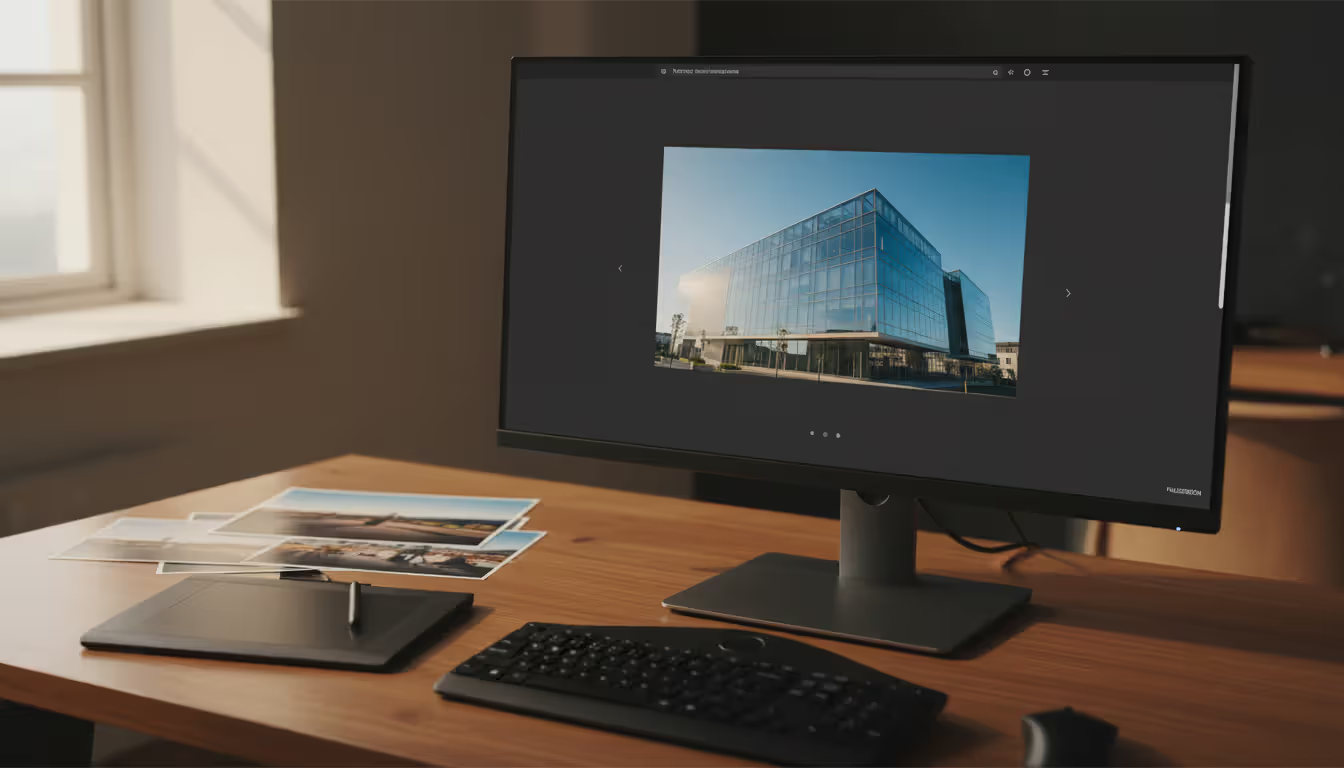
Bright Light Commercial specializes in architectural photography. Pacific template, full-screen images, subtle fade transitions between shots. Every project page credits the architect, lists the location, and notes the completion date. Work is organized by building type (residential, commercial, institutional) rather than chronologically, making it dead simple for potential clients to find relevant examples.
Author: Olivia Wrenford;
Source: maryelizabethphoto.com
Fine Art and Landscape Portfolios
Elena Rodriguez Fine Art sells limited-edition landscape prints. Avenue template creates a gallery-style layout that mimics walking through a physical exhibition. Each image shows dimensions, edition size, and pricing. Squarespace's integrated e-commerce lets her sell prints directly without disrupting the viewing experience—no jarring transition to a separate store.
David Park Landscapes focuses on national parks and wilderness areas. Skye template, full-width images, minimal text. Galleries organized by location instead of chronologically—visitors searching for "Yosemite photography" find it immediately. Each gallery opens with a short paragraph about the location and shooting conditions. Context without overwhelming the images.
Monochrome Vision shoots exclusively black-and-white fine art. Forte template with a dark background that makes high-contrast images pop dramatically. Artist statements accompany each series, explaining conceptual framework and intention. This works for fine art; it would feel absurdly pretentious for commercial work.
Coastal Light Photography does seascapes and coastal landscapes. Ishimoto template with clean grid layout and generous white space. The entire portfolio contains maybe 40-50 images total. That's it. Every single one exceptional. This selective approach makes each photograph feel important instead of diluting quality with volume.
Anna Kim Photography captures urban landscapes and street scenes. Marquee template with a bold, full-screen slideshow dominating the homepage. She refreshes that homepage slideshow monthly with new work—keeps the site feeling current and active. Her About page includes an interactive map showing where she's photographed, adding personality without gimmicks.
Wilderness Moments combines landscape photography with environmental advocacy. Talva template integrates blog posts about conservation issues alongside portfolio galleries. This hybrid attracts both print buyers and editorial clients looking for photographers who understand environmental storytelling.
How to Make a Photography Portfolio Website on Squarespace
Building on Squarespace follows a logical sequence. Small decisions early on significantly impact your final result.
Step 1: Create your account and activate the trial. You get 14 days to build everything—no credit card needed upfront. Full access to every template and feature. Your site stays private until you select a paid plan and hit publish. Nothing gets charged automatically when the trial expires.
Step 2: Preview templates with your specific needs in mind. Squarespace offers 100+ templates, but only 15-20 actually work well for photography. Filter by "Portfolio" to narrow options. Open your top 4-5 choices in separate browser tabs. Click through the demo content. Notice how galleries behave, how navigation flows, whether the overall vibe matches your style.
Step 3: Pick your template foundation. You can customize colors, typography, and spacing extensively—but the core structure stays put. A grid-based template won't magically transform into a slideshow design. Choose the template whose fundamental layout aligns with how you envision presenting your work.
Step 4: Adjust design settings to match your brand. Navigate to Design > Site Styles for colors, fonts, and spacing controls. Stick with 1-2 fonts maximum. One for headings, one for body text. More creates visual chaos. Select colors that complement your photography instead of fighting it. Neutral backgrounds—white, light gray, charcoal—work for most styles.
Step 5: Build your core page structure. Essential pages: Home, Portfolio (or Gallery), About, Contact. Add more only if they serve clear purposes. Delete demo pages you won't use. Leftover placeholder content screams "I didn't finish setting this up."
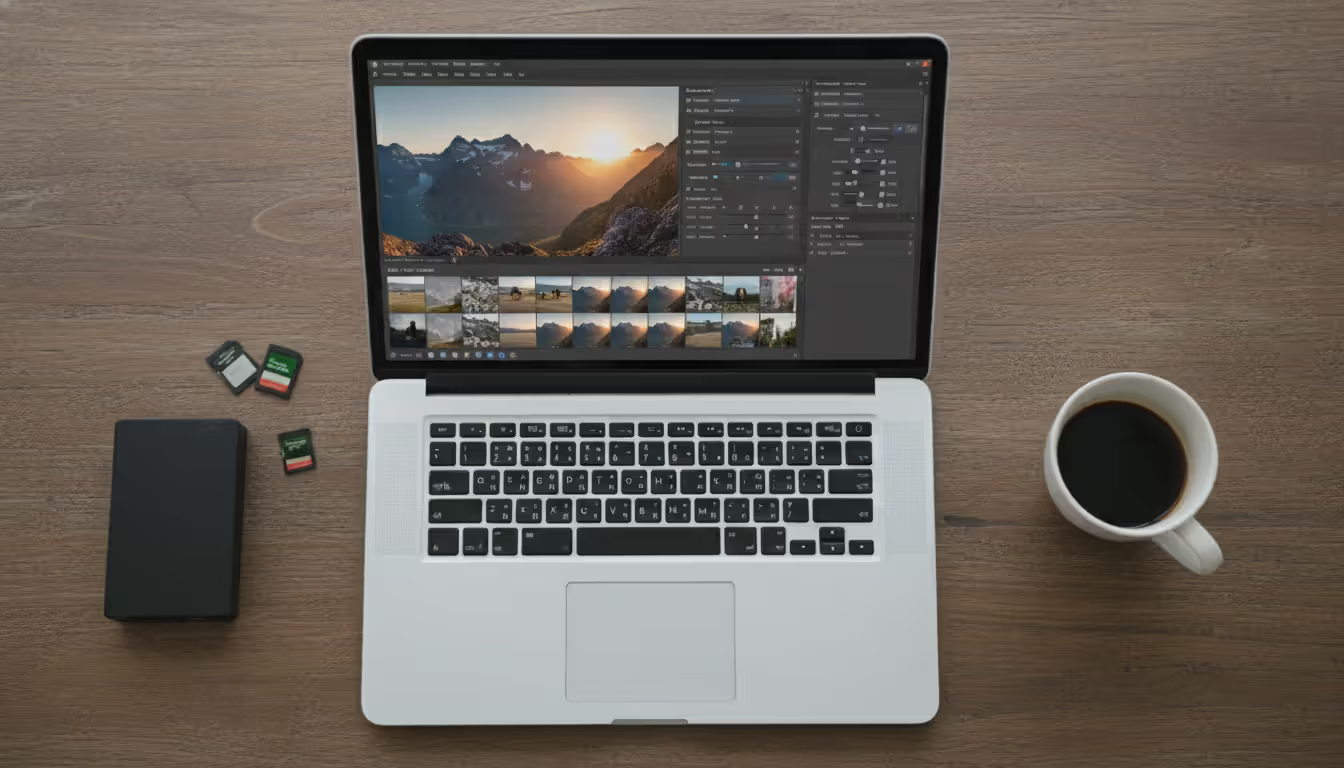
Step 6: Prepare and upload your images properly. Before uploading, rename files descriptively (not IMG_1234.jpg—that helps nobody). Upload in batches organized by project or category. Squarespace automatically generates multiple sizes for different devices, but you need to start with properly optimized originals.
Author: Olivia Wrenford;
Source: maryelizabethphoto.com
Step 7: Create your gallery pages. Squarespace offers grid, slideshow, carousel, and stacked gallery styles. Grids show multiple images simultaneously. Slideshows focus attention on individual photographs. Test different approaches to see what suits your work. Enable captions if context matters, but keep them brief—three sentences maximum.
Step 8: Craft your About page. Include a current professional headshot (not a logo), a concise bio around 150-200 words, and clear contact information. Mention your location, what you specialize in, notable clients or publications if relevant. Skip generic phrases like "passionate about capturing moments"—show personality through specific details about your approach and background.
Step 9: Configure your Contact page. Add a contact form, direct email, and phone number if you accept calls. Set expectations—"I respond to all inquiries within 24 hours on weekdays." Some photographers add pricing guides or FAQs here to prequalify leads and reduce time-wasting conversations.
Step 10: Handle basic SEO settings. Go to Settings > SEO for site-wide title, description, and keywords. On individual pages, click the gear icon to add page-specific descriptions. Write for humans using natural language, not keyword-stuffed robot text. Add alt text to images describing what's actually in the photograph.
Step 11: Test the mobile experience thoroughly. Use Squarespace's preview tool, then check on actual phones and tablets. Desktop navigation often needs adjustment for touchscreens. Verify images display at appropriate sizes and text stays readable without zooming.
Step 12: Go live when ready. Select a plan (Personal for portfolio-only, Business for e-commerce), connect your custom domain, and publish. Everything you built during the trial transfers to your live site—you won't lose work.
Selecting the Right Template for Your Photography Style
Your template choice establishes the foundation for everything else. Squarespace templates cluster into distinct categories based on layout philosophy.
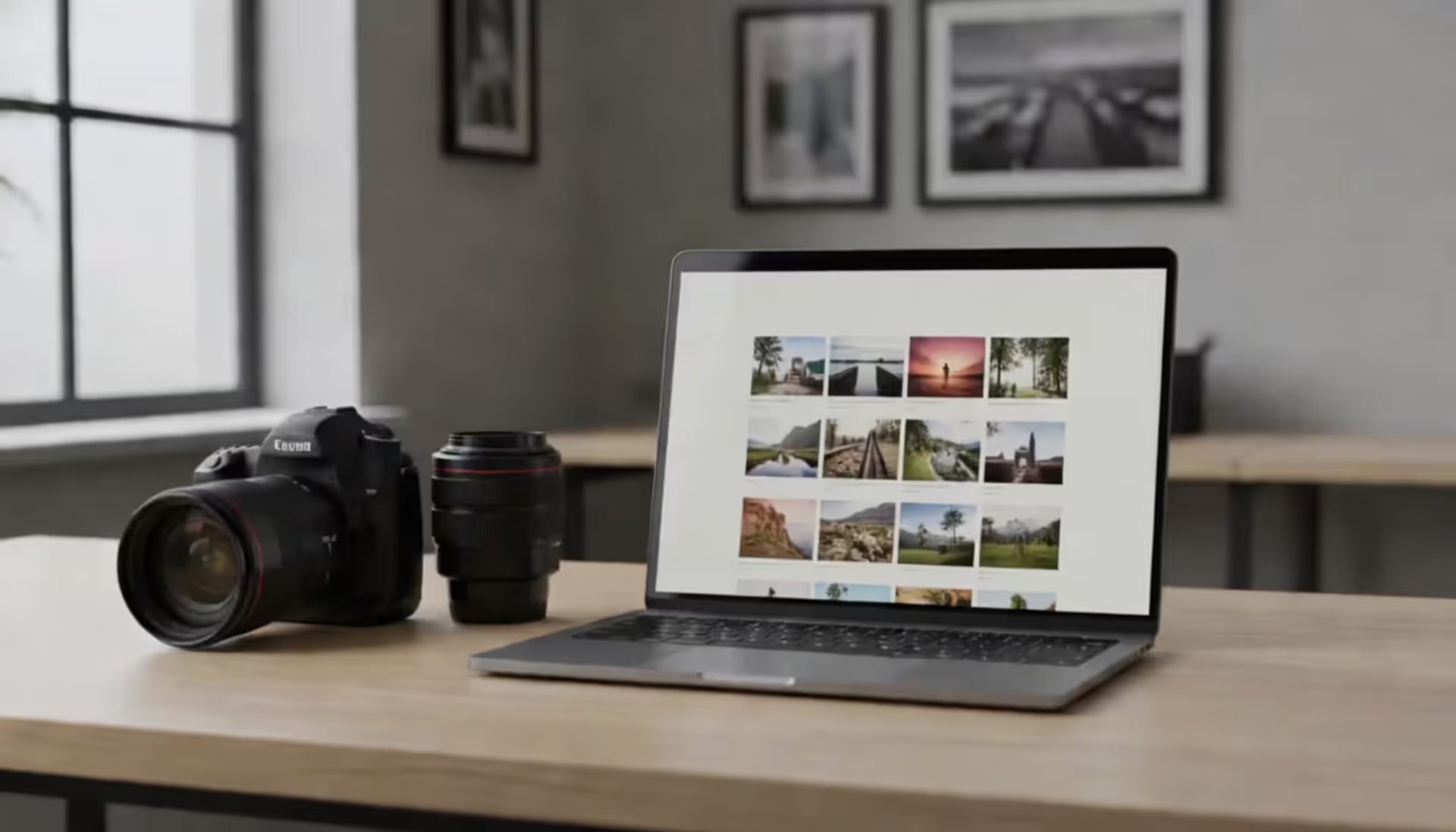
Grid-based options (Wells, Forte, Ishimoto) show multiple images at once in organized rows and columns. Perfect for photographers with diverse portfolios who want to demonstrate range immediately. Grids also translate better to mobile since images naturally stack vertically.
Full-screen templates (Horizon, Marquee, Skye) emphasize singular large images, often with scroll-triggered transitions. These suit photographers whose work demands large display sizes—think landscapes, architecture, fine art. Trade-off: visitors see fewer images per session, which can be problematic if you need to demonstrate versatility quickly.
Slideshow-focused designs (Foster, Avenue, Pacific) use automatic or manual image transitions. Creates a curated, gallery-like viewing experience but gives visitors less control over pacing. Works well for wedding and event photographers telling sequential stories through their images.
Hybrid approaches (Bedford, Talva, Align) combine multiple gallery styles—grids on some pages, slideshows on others. Maximum flexibility but requires more design decisions during setup.
Think about your typical project size when selecting templates. Wedding photographers delivering 50+ images per event need templates that handle large galleries gracefully. Commercial photographers showing 8-10 highly curated images per project benefit more from templates emphasizing individual image quality over quantity.
Organizing Your Work into Collections
How you categorize work determines whether potential clients find relevant examples of your capabilities.
By photography discipline works for generalists shooting multiple niches. Weddings, Portraits, Commercial, Events. Helps visitors immediately navigate to the type of photography they're hiring for.
By industry or subject matter suits commercial specialists. Food, Fashion, Architecture, Products. This organization speaks directly to potential clients in those specific industries.
By project or thematic series works for fine art photographers. Each gallery represents a cohesive body of work with unified themes or concepts. Emphasizes artistic vision over commercial categories.
By geographic location appeals to travel and landscape specialists. Galleries organized by country, region, or landmark help visitors find images from places they care about.
Chronological organization rarely serves anyone well. Your oldest work is probably your weakest, and visitors don't care about shooting dates—they care about relevance to their needs.
Most photographers benefit from 4-8 primary categories. Fewer suggests limited range; more creates decision paralysis. Within categories, curate mercilessly. Twenty exceptional images outperform fifty decent ones every time.
Build a "Featured" or "Best Work" gallery on your homepage pulling the strongest 15-20 images from across all categories. Gives visitors an immediate quality assessment without requiring them to explore individual galleries.
Author: Olivia Wrenford;
Source: maryelizabethphoto.com
Free vs Paid Squarespace Photography Templates
Squarespace doesn't maintain permanently free plans, but understanding the trial structure and pricing tiers helps you make informed decisions.
The trial period lasts 14 days and grants complete access to every template and feature. No payment details required upfront. Build your entire site—upload images, customize design, create all pages—during this window. Your site remains private until you select a paid plan and publish. When the trial ends, Squarespace doesn't automatically charge anything.
Personal tier ($16/month, annual billing) covers basic portfolio needs without e-commerce capabilities. Includes custom domain, unlimited bandwidth and storage, SSL security, fundamental SEO tools. Works perfectly if you only need a portfolio. You can't sell products or process payments, but contact forms and external booking system links work fine.
Business tier ($23/month, annual billing) unlocks e-commerce functionality for selling prints, photobooks, or digital downloads directly from your portfolio. Includes 3% transaction fees on sales, professional Google email, promotional pop-ups, advanced analytics. Most working photographers land on this tier.
Commerce tiers ($27-49/month) eliminate transaction fees and add sophisticated e-commerce features—abandoned cart recovery, subscription options, customer account management. Only makes sense if you're running substantial product sales through your portfolio site.
Every plan provides access to identical templates. Differences lie in features, not design options. You can switch plans whenever needed—starting with Personal and upgrading to Business when you're ready to sell prints works perfectly fine.
Templates come included with your plan—no separate template purchases. After selecting a template, extensive customization is possible. If you switch templates later, Squarespace migrates content automatically, though you'll need to review and adjust design elements.
Domain registration costs roughly $20-30 annually through Squarespace, or connect a domain you already own from another registrar. Plans with annual billing include one free custom domain for the initial year.
The absence of a permanently free tier means maintaining a Squarespace photography portfolio requires ongoing investment. However, the trial period lets you build and thoroughly test everything before committing financially.
Common Photography Portfolio Mistakes to Avoid
Most photographers treat their Squarespace portfolios like digital storage units when they should function as curated exhibitions. Think about walking into a gallery opening—you see carefully selected, thoughtfully sequenced work, not every photograph someone's ever taken dumped on the walls. Squarespace provides excellent tools for creating that gallery experience, but the discipline to edit ruthlessly? That's entirely on you
— Rachel Kim
Even with excellent templates, specific missteps undermine portfolio effectiveness.
Including too many images dilutes overall impact. Each additional image raises the threshold for what qualifies as portfolio-worthy. Show 200 images and visitors assume your standards are lower than if you display 40. Edit ruthlessly—when you're uncertain whether an image is strong enough, it isn't. Remember: potential clients judge you by your weakest included image, not your strongest excluded one.
Uploading massive unoptimized files creates painful load times. Dumping 5MB files straight from your camera makes pages crawl, especially on mobile connections. Export specifically for web display: 2000-2500 pixels on the longest edge, compressed to 200-300KB using Lightroom, Photoshop, or free tools like Squoosh. Squarespace compresses further, but starting with reasonable sizes prevents quality degradation.
Hiding or forgetting contact information actively costs you clients. Contact details should be one click from anywhere on your site. Provide multiple options—form, email, phone—since people have different preferences. Respond to inquiries within one business day; slower response times signal you're not actively seeking work.
Creating confusing navigation frustrates visitors. Multi-level dropdown menus, vague category labels, inconsistent page structures make people work too hard to see your photography. Use simple, obvious labels. "Wedding Photography" crushes "Celebrations of Love" every time. Test navigation by having someone unfamiliar with your site find specific image types.
Applying inconsistent branding signals carelessness. Three different fonts, multiple color schemes, varying logo treatments across pages suggest you don't sweat details. Select a visual identity and apply it consistently. This extends to social media—your Instagram, Facebook, and website should obviously belong to the same photographer.
Auto-playing anything annoys most visitors. Background music might've worked in 2008; in 2025, it's intrusive. Videos should be click-to-play with visible controls. Slideshows should give visitors pacing control rather than forcing automatic transitions nobody asked for.
Displaying outdated work exclusively raises red flags. If your newest portfolio images date from 2022, potential clients wonder whether you're still shooting. Refresh your portfolio every 3-4 months with recent work. Not shooting regularly? Revisit and re-edit older projects with fresh perspective.
Skipping the About page or writing generic copy wastes relationship-building opportunities. Potential clients want to understand who they'll work with. Include an actual photo of yourself (logos don't build trust), specific background information and approach details, personality elements that help people connect with you. "I've photographed 150+ weddings across the Pacific Northwest over eight years and genuinely love working with couples who embrace unpredictable weather" beats "I'm passionate about capturing your special day" by miles.
Ignoring mobile users alienates your majority audience. Don't settle for your site merely "working" on mobile—ensure it provides an intentional, optimized experience. Text readable without zooming, images displaying at appropriate sizes, navigation functioning smoothly with thumbs. Test on physical devices, not just desktop preview tools.
Providing no clear next steps leaves interested visitors uncertain. Every page should guide people toward specific actions: view additional work, learn about your services, reach out about projects. Include obvious calls-to-action like "See Complete Wedding Gallery" or "Discuss Your Project."
Squarespace Photography Templates Comparison
Template
Layout Type
Gallery Styles
Mobile Optimization
E-Commerce Ready
Best For
Wells
Grid-based
Masonry, Grid, Slideshow
Excellent - clean vertical stacking
Yes
Product and commercial work needing versatile layouts
Forte
Minimal grid
Grid, Carousel
Excellent - optimized dark mode
Yes
Fine art and black-and-white work wanting dramatic presentation
Horizon
Vertical scroll
Full-bleed, Stacked
Good - demands proper image optimization
Yes
Landscape and wedding work emphasizing large image display
Foster
Slideshow-focused
Slideshow, Grid
Very Good - intelligent automatic resizing
Yes
Wedding and event work telling sequential narratives
Ishimoto
Clean grid
Grid, Simple galleries
Excellent - fast load times
Yes
Portrait and editorial work preferring minimal design
Pacific
Full-screen
Full-screen, Fade transitions
Good - performs best with horizontal orientation
Yes
Architectural and interior work requiring visual impact
FAQ
How much does a Squarespace photography portfolio cost?
Expect to pay $16-49 monthly depending on which plan fits your needs. The Personal tier at $16/month (billed annually) handles basic portfolios without selling capabilities. Business tier at $23/month (annual billing) adds print sales and includes professional email. Commerce tiers ($27-49/month) suit photographers running significant product sales businesses. Every tier includes unlimited bandwidth, storage, and complete template access. Domain registration adds $20-30 yearly, though annual plans include one free domain for year one.
Can I create a free photography portfolio website on Squarespace?
You get 14 days to build your complete portfolio without entering payment information. Upload images, customize everything, set up all pages—full access during this trial. But Squarespace doesn't offer permanent free plans. You'll select a paid tier to publish and make your site publicly accessible. The trial provides enough runway to build and test thoroughly before spending money. If you absolutely need permanent free hosting, platforms like Wix or WordPress.com offer restricted free tiers—with significant limitations and forced advertising.
What is the best Squarespace template for photographers?
Depends entirely on your photography style and presentation preferences. Wells excels for commercial and product photographers needing flexible grid layouts. Forte suits fine art photographers wanting minimal, dramatic presentation. Foster works beautifully for wedding photographers telling sequential stories through slideshows. Horizon appeals to landscape photographers prioritizing full-screen impact. Instead of chasing the "best" template overall, pick one whose fundamental structure matches your vision. You can customize colors and typography extensively, but core layout structure stays fixed.
How many images should I include in my photography portfolio?
Display 30-50 of your absolute strongest images across your complete portfolio, organized into 4-8 categories. Within individual project galleries, show 15-30 images for weddings and events, 8-15 for commercial assignments, 10-20 for fine art series. Quality crushes quantity—every additional image raises expectations for what qualifies as portfolio-worthy. When uncertain whether an image is strong enough, leave it out. Refresh quarterly, replacing older work with stronger recent images.
Do I need coding skills to build a Squarespace photography portfolio?
Zero coding knowledge required for professional results. Squarespace uses drag-and-drop editors and visual customization tools—adjust colors, fonts, layouts, content entirely through point-and-click interfaces. Add pages, upload images, create galleries, customize design without writing a single line of code. The platform does allow custom CSS and JavaScript for advanced users wanting additional control, but these remain completely optional. Squarespace handles hosting, security, mobile optimization, and fundamental SEO automatically.
Can I sell prints directly from my Squarespace portfolio?
Absolutely—if you choose Business plan or higher. Business tier ($23/month) includes e-commerce functionality with 3% transaction fees. Commerce tiers ($27-49/month) eliminate transaction fees and add sophisticated features like abandoned cart recovery. Set up product listings with multiple size and framing options, integrate print fulfillment services, accept credit cards and digital payments, manage orders through Squarespace's dashboard. The e-commerce integration maintains your portfolio's visual design instead of feeling like a bolted-on separate store.
Creating an effective Squarespace photography portfolio boils down to three priorities: showcasing only your strongest work, making navigation effortless, and maintaining visual consistency throughout.
The platform handles technical complexity automatically, freeing you to focus on curation and presentation. Start by studying successful portfolios in your specific niche—understand what works in practice versus theory. Select a template whose core layout matches your image presentation vision. Grid for versatility, full-screen for impact, slideshow for narrative storytelling.
Edit your portfolio mercilessly. Show only work that genuinely makes you proud. Organize images into clear categories helping potential clients quickly find relevant examples. Avoid predictable mistakes: excessive images, poor optimization, confusing navigation, inconsistent branding. Test thoroughly on mobile devices where most visitors will experience your work. Update regularly with new projects signaling you're actively shooting.
Your portfolio represents you to potential clients who may never meet you face-to-face. Make it count by treating it like a curated exhibition, not a complete archive. With Squarespace's tools and disciplined curation, you can build a portfolio that showcases your photography effectively and attracts the exact clients you want to work with.
Photography businesses that rank on Google's first page win the clients—everyone else competes for scraps. This guide reveals exactly how to optimize your photography website for search, dominate local results, and convert organic traffic into bookings without spending on ads
Your photography website collects more personal data than you might realize. Every contact form, gallery password, and booking creates legal obligations. Learn what to include in your privacy policy, platform-specific requirements, and common mistakes photographers make
Finding the right website template can make or break your photography business's online presence. A well-chosen template saves hundreds of hours compared to building from scratch while still delivering a professional showcase for your work
Building a photography website requires more than uploading images to a template. The platform you choose determines how clients experience your work, whether you can close sales efficiently, and how much time you'll spend on maintenance versus shooting
The content on this website is provided for general informational and educational purposes only. It is intended to explain concepts related to running a photography business, insurance coverage, marketing, websites, and professional development.
All information on this website, including articles, guides, and examples, is presented for general educational purposes. Outcomes may vary depending on business size, location, and individual choices.
This website does not provide professional legal, insurance, financial, or business advice, and the information presented should not be used as a substitute for consultation with qualified professionals.
The website and its authors are not responsible for any errors or omissions, or for any outcomes resulting from decisions made based on the information provided on this website.