Selecting the right school to study photography is more than browsing rankings or picking the campus with the best Instagram feed. You're investing years and significant tuition dollars into developing both technical skills and a creative vision that will define your career. The decision requires weighing factors like curriculum depth, equipment access, faculty experience, and whether the program aligns with your specific goals—whether that's shooting for Vogue, documenting conflict zones, or exhibiting in galleries.
Photography education has evolved dramatically. Schools now offer everything from traditional four-year BFA programs with darkroom training to fully online degrees emphasizing digital workflows. Some programs push conceptual fine art; others drill commercial studio techniques. Understanding these distinctions before you apply will save you from discovering halfway through sophomore year that your school's strength in landscape photography doesn't help your fashion ambitions.
What to Look for in a Photography Program
Accreditation matters, but it's just the baseline. Regional accreditation (through bodies like NASAD for art schools) ensures your credits transfer and federal aid applies. Beyond that checkbox, dig into who's actually teaching. Are faculty working photographers with recent exhibitions or editorial credits, or are they primarily academics who stopped shooting professionally years ago? A professor who still hustles for clients understands current industry standards and can open doors through their network.
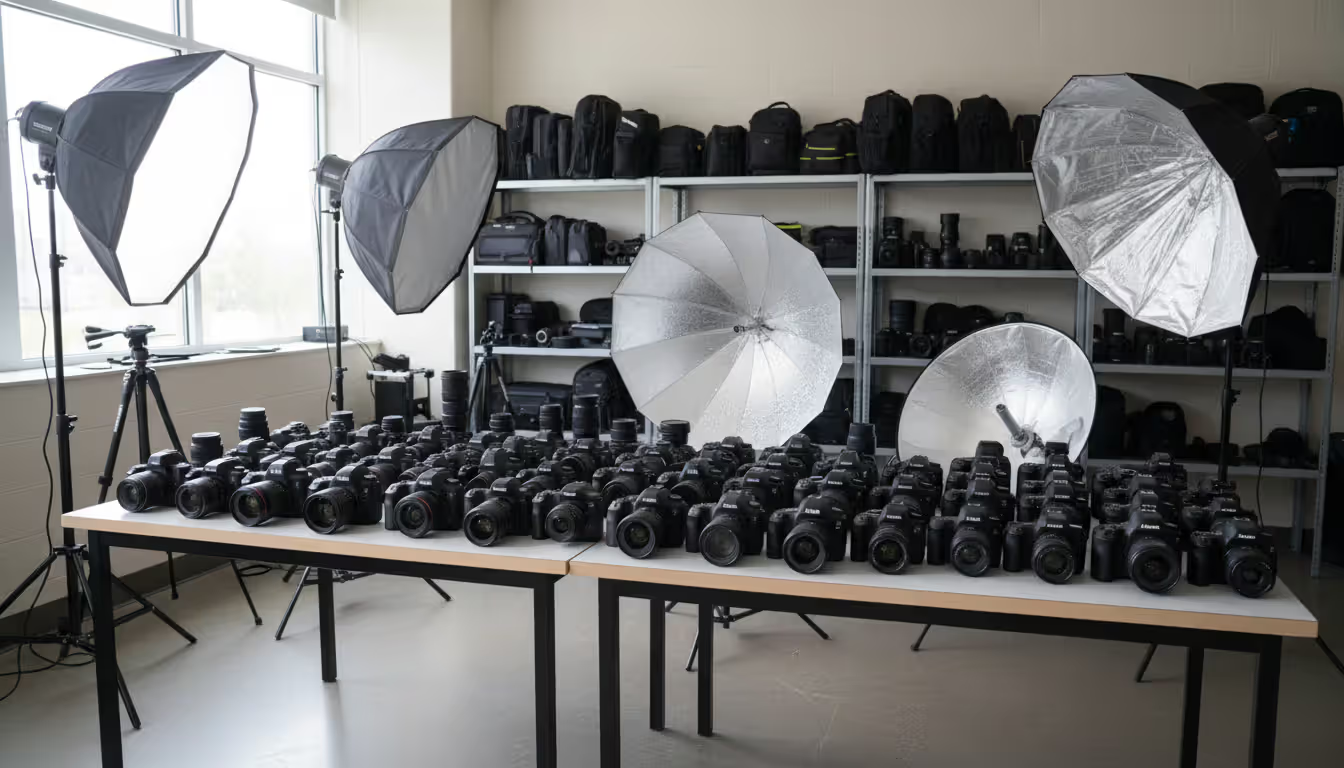
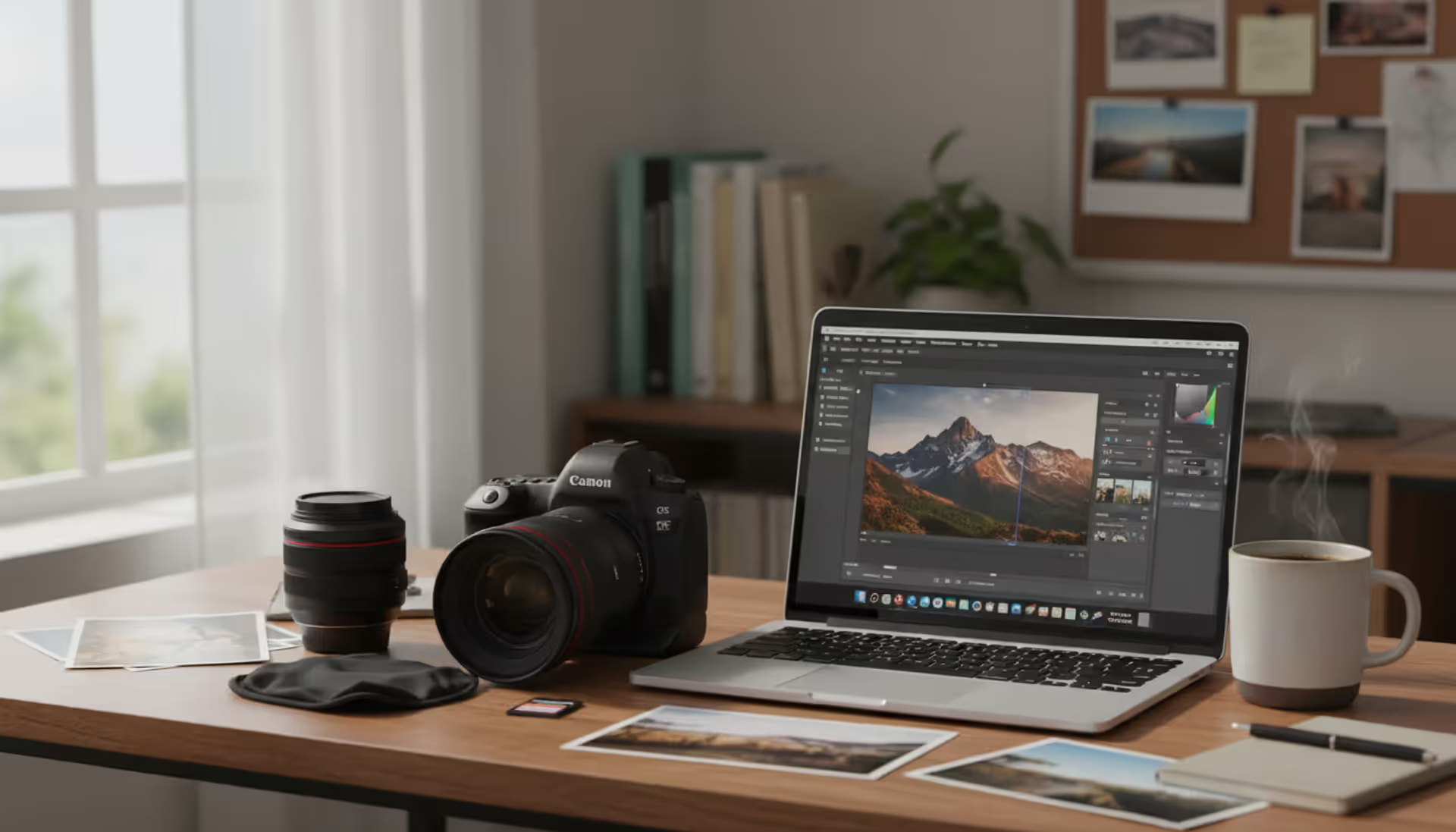
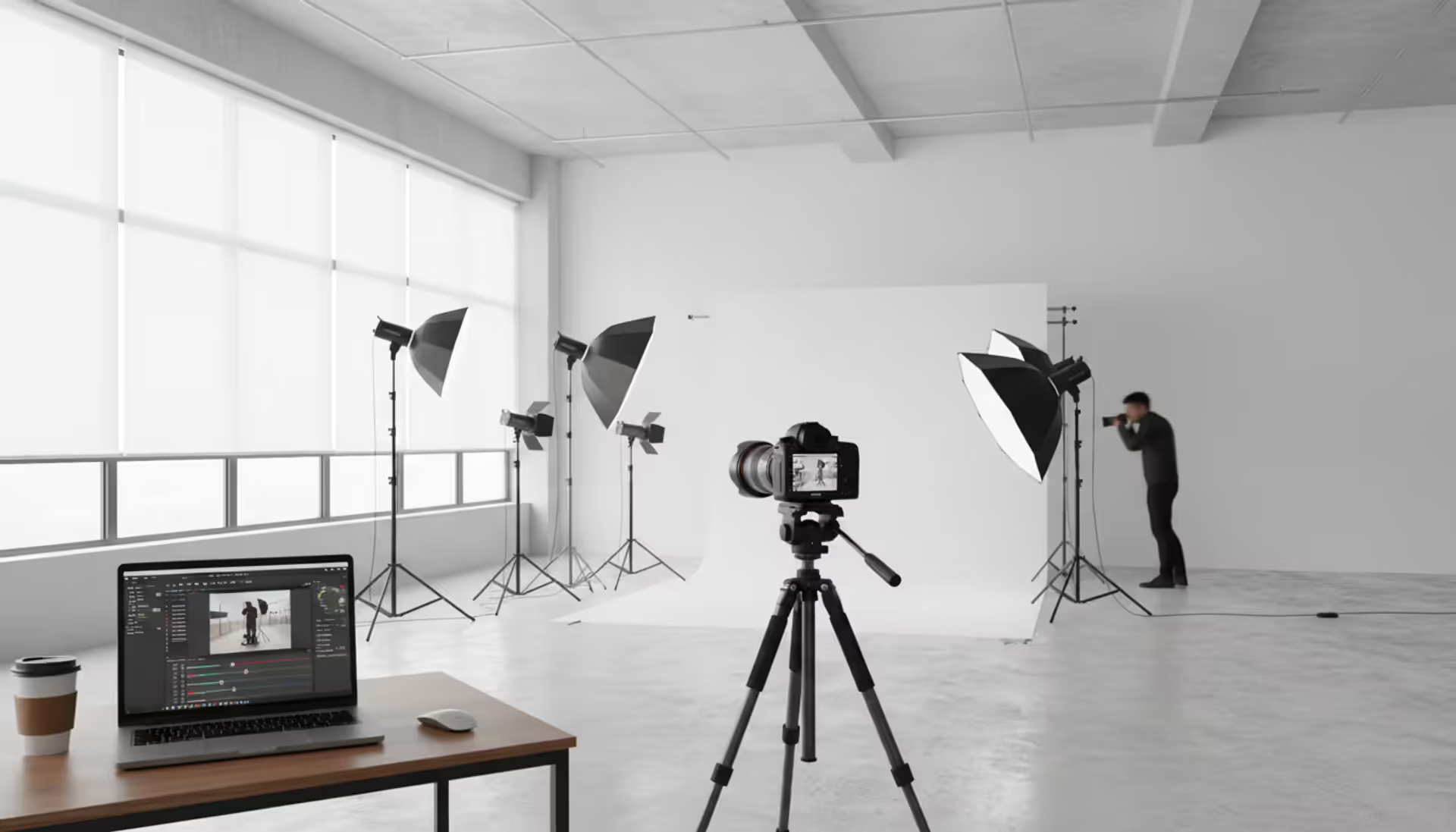
Equipment and facilities reveal a program's priorities. The best colleges for photography maintain current-generation DSLRs and mirrorless cameras, professional lighting setups, and both traditional darkrooms and digital labs. But hardware alone doesn't tell the whole story. Ask about student-to-equipment ratios and checkout policies. A school with $500,000 in gear that limits students to two-hour slots once weekly is less useful than one with slightly older equipment available 24/7.
Curriculum focus deserves careful scrutiny. Some programs treat photography as fine art, emphasizing conceptual development, art history, and gallery exhibition. Others function as trade schools, drilling commercial techniques like product photography, retouching, and client management. Neither approach is inherently better, but mismatches cause frustration. If you want to shoot weddings and corporate headshots, a program obsessed with deconstructing the male gaze through self-portraiture will feel like a waste of time.
Author: Olivia Wrenford;
Source: maryelizabethphoto.com
Industry connections separate colleges for photography that launch careers from those that produce hobbyists with expensive degrees. Look for internship placement rates, visiting artist programs, and whether the school hosts portfolio reviews with working professionals. Schools in major markets—New York, Los Angeles, Chicago—naturally offer more opportunities to assist established photographers or land internships at magazines and studios.
Traditional vs. Online Photography Programs
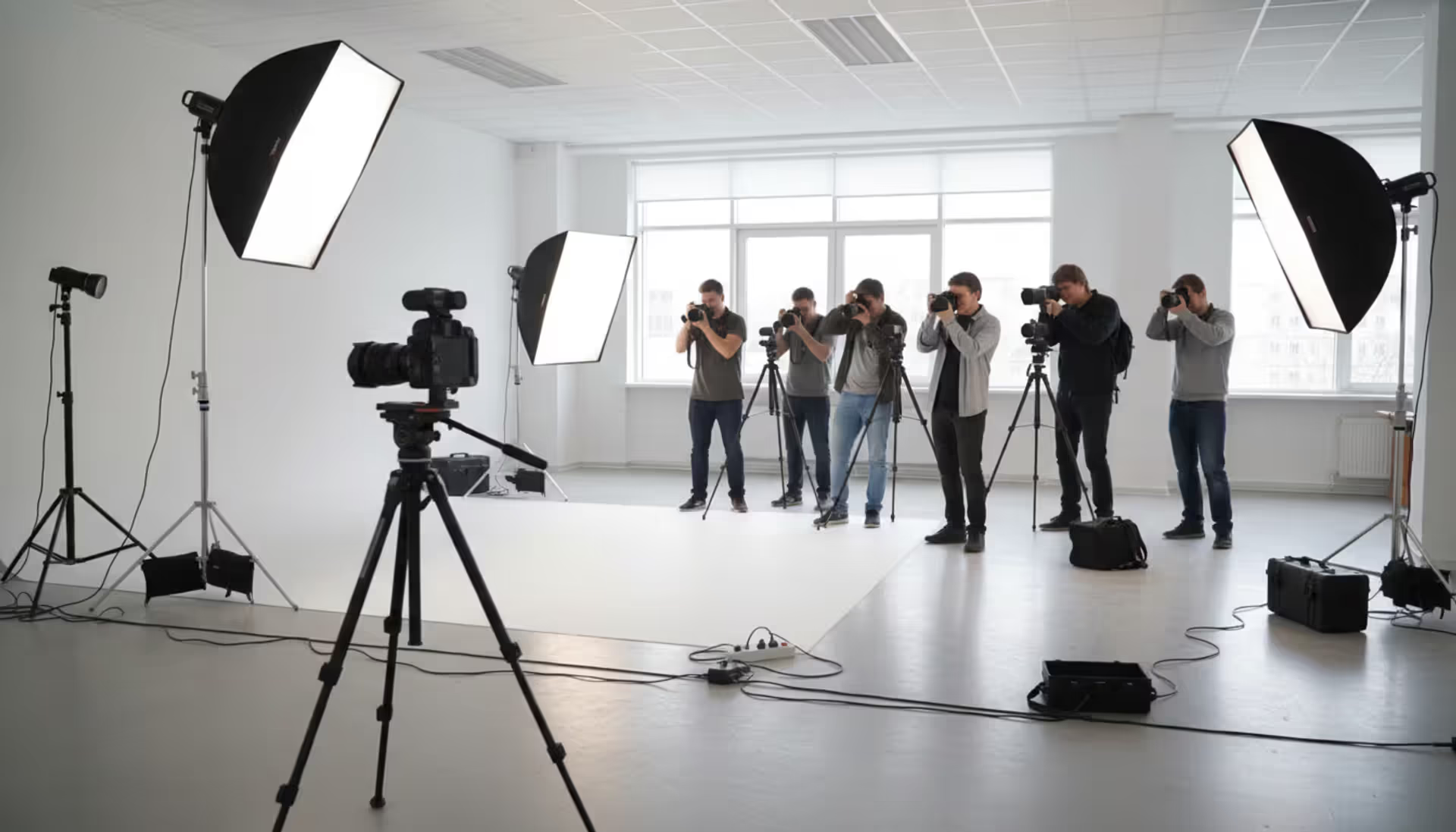
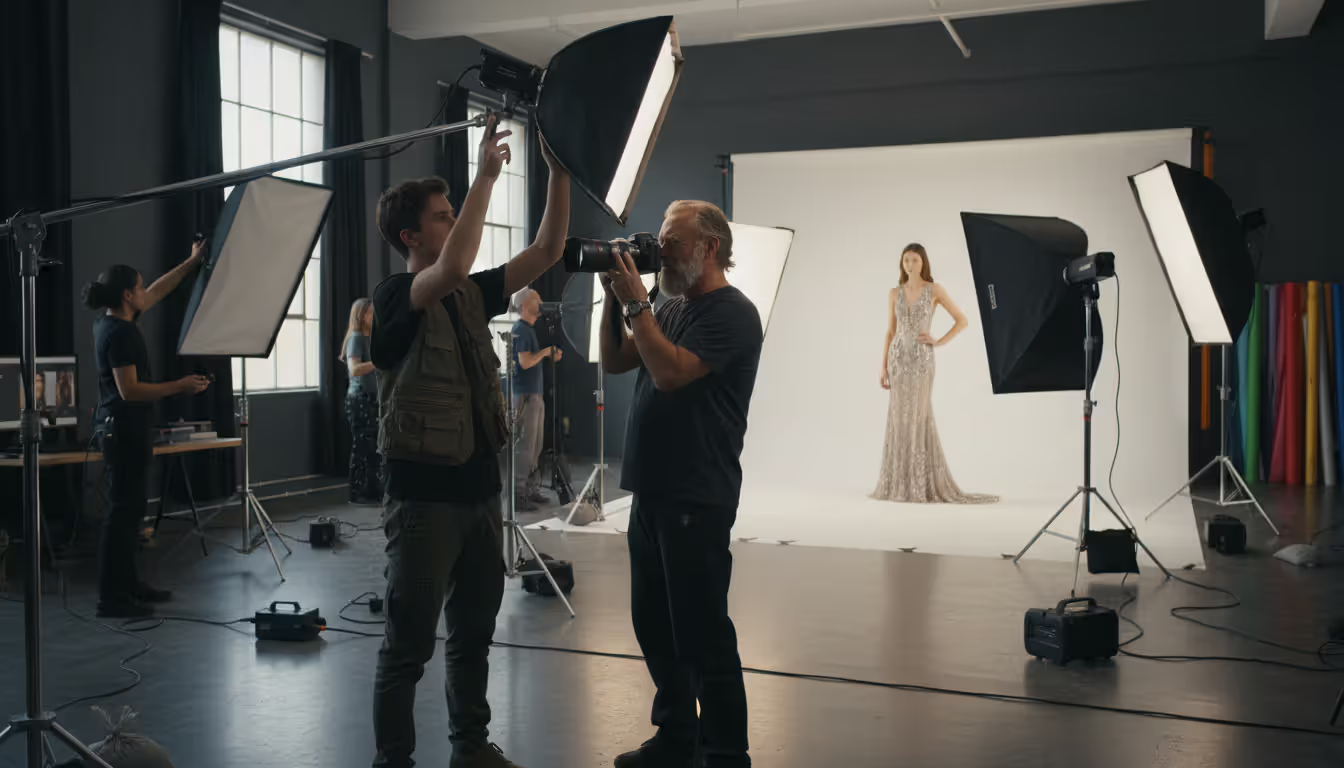
The traditional four-year campus experience offers irreplaceable advantages. You'll spend hours in studios learning to shape light with modifiers, troubleshoot strobes, and work with models or still-life setups. Critique sessions with peers force you to articulate your vision and defend creative choices. You'll also make mistakes on the school's equipment rather than your own, which matters when you accidentally fry a $3,000 strobe pack.
Campus programs build networks organically. Your classmate today might be the photo editor who hires you in five years. Late-night darkroom sessions and collaborative shoots create relationships that endure professionally. Faculty write recommendation letters with actual knowledge of your work, not just your discussion-board posts.
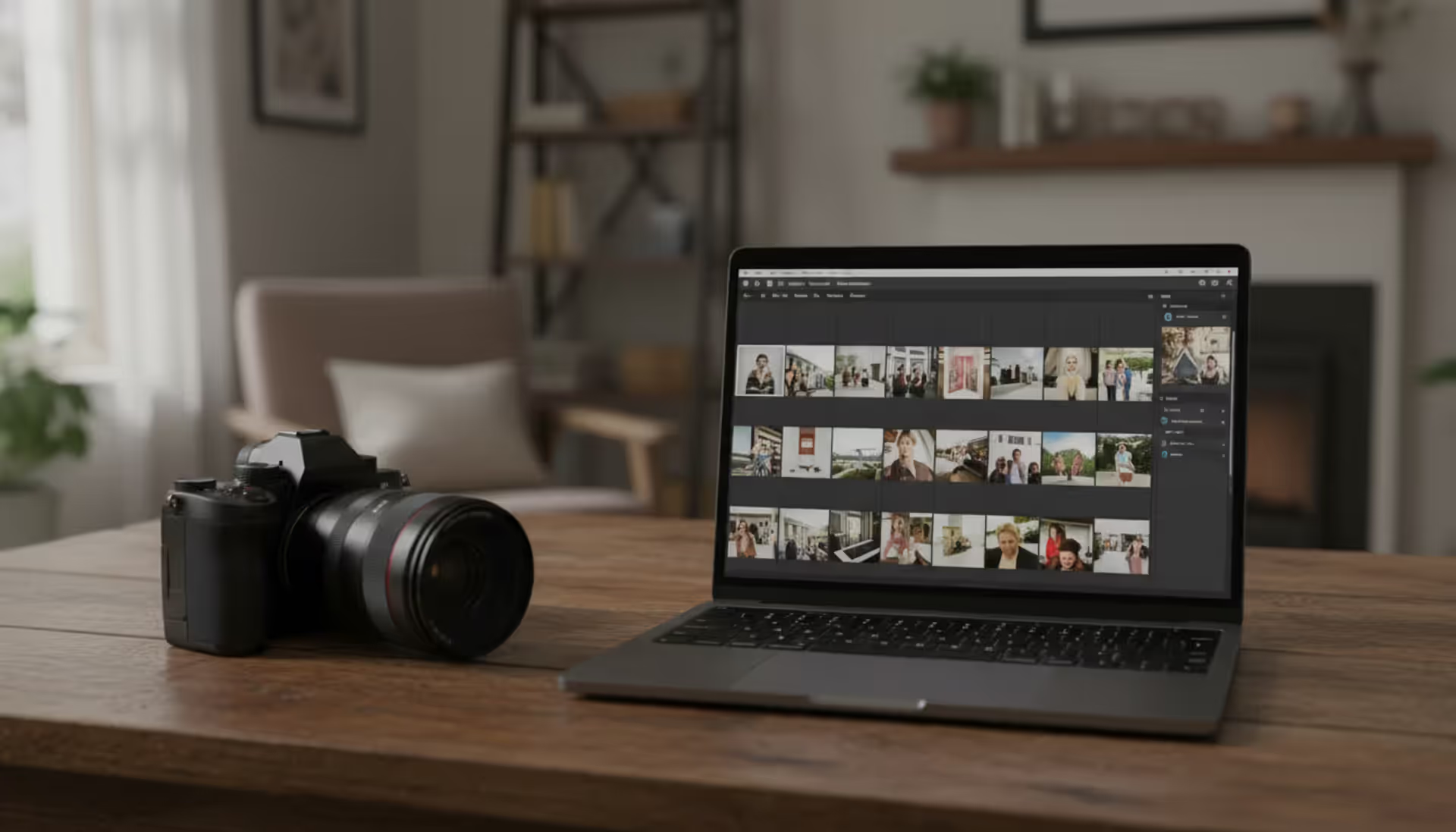
Online colleges for photography have improved substantially, but they require self-discipline and resourcefulness. You'll need to acquire or rent equipment, find your own shooting locations, and create opportunities to photograph people beyond family members. The flexibility appeals to working adults or those with family obligations, and tuition often runs 30–40% less than residential programs.
Quality varies wildly among online options. The strongest programs require synchronous critiques via video conference, provide detailed feedback on assignments, and structure projects that push technical growth. Weak programs offer little more than pre-recorded lectures and automated quizzes. If you're considering online education, verify that instructors actually review your images individually and that you'll complete a capstone portfolio project.
Author: Olivia Wrenford;
Source: maryelizabethphoto.com
The networking disadvantage is real but not insurmountable. Online students must work harder to attend portfolio reviews, join local photography groups, and assist professionals in their area. You won't have classmates down the hall, so building community requires intentional effort.
Comparing Top Photography Schools by Specialization
Photography programs develop reputations for particular strengths. Choosing a school whose focus matches your goals accelerates your development and connects you with the right alumni network.
Schools for Commercial and Fashion Photography
Commercial programs emphasize client work, studio lighting, and business skills. Fashion Institute of Technology (FIT) in New York places students directly into the fashion industry ecosystem, with opportunities to shoot for student publications and assist on professional sets. The program drills technical precision—a fashion client won't accept images with incorrect white balance or poor retouching.
Brooks Institute (now closed, but its legacy continues through partnerships) pioneered commercial photography education, and several top photography colleges have adopted its model of simulating real-world client scenarios. Students complete assignments with art directors, manage budgets, and deliver images on deadline.
Rochester Institute of Technology (RIT) combines commercial rigor with technical depth, including courses in imaging science that explain the physics behind sensors and optics. Graduates understand not just how to use equipment but why it behaves certain ways, valuable when troubleshooting complex lighting setups.
Schools for Fine Art and Documentary Photography
Fine art programs prioritize conceptual development and personal vision. School of the Visual Arts (SVA) in New York treats photography as contemporary art, expecting students to engage with critical theory and position their work within art historical contexts. Critiques can be intense, focusing on whether images successfully communicate ideas rather than just technical execution.
California Institute of the Arts (CalArts) pushes experimental approaches, encouraging students to combine photography with installation, video, and performance. If you want to make work for galleries and museums rather than magazines, this environment nurtures that ambition.
For documentary and photojournalism, Missouri School of Journalism has trained generations of working photojournalists. Students cover real news for the Columbia Missourian, learning to shoot under pressure and navigate ethical dilemmas. The program maintains strong connections with newspapers and wire services, though students should understand the challenging economics of journalism careers.
International Center of Photography (ICP) in New York offers intensive certificate programs alongside degrees, focusing on documentary storytelling and social justice themes. The concentrated format suits career changers and those who already have undergraduate degrees.
School
Degree Types
Tuition Range (Annual)
Notable Specializations
Acceptance Rate
Rhode Island School of Design
BFA
$58,000–$62,000
Fine art, conceptual photography
19%
School of Visual Arts
BFA, MFA
$52,000–$54,000
Fine art, commercial, photo/video
71%
Rochester Institute of Technology
BFA, BS
$54,000–$56,000
Imaging science, commercial, photojournalism
67%
California Institute of the Arts
BFA, MFA
$56,000–$58,000
Experimental, interdisciplinary
24%
Savannah College of Art and Design
BFA, MA, MFA, Online
$38,000–$40,000
Fashion, advertising, sequential art
82%
Parsons School of Design
BFA, MFA
$54,000–$56,000
Fashion, editorial, design integration
63%
Columbia College Chicago
BA, BFA
$30,000–$32,000
Documentary, photojournalism, commercial
88%
Arizona State University
BA, BFA, Online
$28,000–$31,000 (out-of-state)
Digital imaging, fine art, accessible online program
90%
Cost and Financial Aid for Photography Students
Photography degrees carry the same tuition as other majors, but equipment costs add up. Budget $2,000–$5,000 for a camera body, lenses, laptop, and software during your program, though many students spread these purchases across four years or buy used gear.
Tuition at private art schools ranges from $50,000 to $62,000 annually, while public universities charge $12,000–$18,000 for in-state students and $28,000–$35,000 for out-of-state. Over four years, the difference between a private BFA and public BA can exceed $150,000—money that buys a lot of camera equipment and runway for your early career.
Portfolio scholarships reward strong applicants at most art schools. Submitting a compelling portfolio during the application process can reduce tuition by $10,000–$25,000 annually. These awards typically renew each year if you maintain satisfactory academic progress.
Federal financial aid applies to accredited programs, including Pell Grants and subsidized loans. Complete the FAFSA regardless of your family's income; many institutional scholarships use FAFSA data to determine eligibility. Private art schools often have larger endowments for need-based aid than you might expect.
Return on investment deserves honest consideration. The Bureau of Labor Statistics reports median photographer income around $40,000, though successful commercial and fashion photographers earn six figures. Graduating with $100,000+ in debt makes building a sustainable career extremely difficult, especially during the early years when you're establishing your client base and reputation.
Students often choose schools based on prestige without considering whether the curriculum matches their actual career goals. A photographer planning to shoot commercial work needs different training than someone pursuing gallery representation. The best colleges for photography are the ones that align with where you want to be in ten years, not just which has the most impressive alumni list
— Jennifer Martinez
Application Requirements and Portfolio Tips
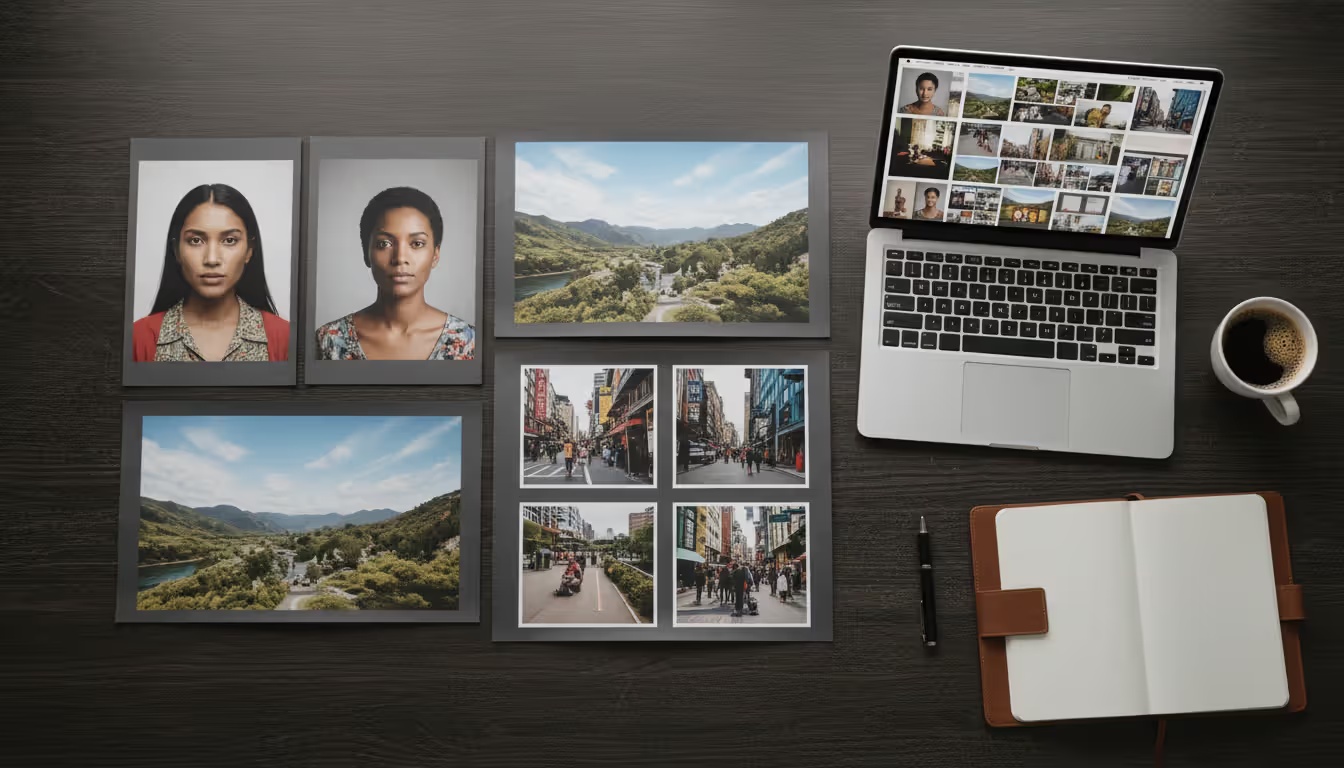
Most photography programs require a portfolio of 10–20 images demonstrating technical competence and creative vision. Admissions committees aren't expecting professional-level work—they're assessing potential and whether you've developed a point of view.
Include variety in subject matter and approach, but ensure images relate to each other. A portfolio with landscapes, portraits, still lifes, and street photography shows versatility but can feel scattered. Better to show depth in two or three areas. If you shoot both color and black-and-white, group them rather than alternating.
Technical quality matters. Images should be sharp (unless blur is intentional), properly exposed, and thoughtfully composed. Avoid heavy filters or presets that scream "beginner." If you shoot film, include some darkroom work to demonstrate traditional skills.
Author: Olivia Wrenford;
Source: maryelizabethphoto.com
Many students make the mistake of including too many similar images. If you have five portraits with the same lighting setup and expression, choose the strongest one. Committees review hundreds of portfolios; editing ruthlessly shows professional judgment.
Write an artist statement explaining your interests and influences. Keep it under 500 words, avoid pretentious jargon, and be specific. "I'm interested in exploring themes of identity through environmental portraiture" works better than vague statements about "capturing the human experience."
Application deadlines typically fall between December and February for fall admission. Some schools offer early action or rolling admissions, which can improve scholarship opportunities. Submit materials as early as possible—portfolio scholarships often go to the first qualified applicants.
Career Outcomes and Alumni Success
Job placement rates for photography graduates vary dramatically by program and specialization. Schools with strong industry connections place 60–80% of graduates in photography-related positions within six months, while programs with weaker professional networks see rates below 40%.
Internship opportunities during school matter enormously. Students who complete internships at studios, magazines, or with established photographers have portfolios featuring real client work and professional references. They also understand industry expectations before graduating, avoiding the shock of discovering that passion alone doesn't pay rent.
Author: Olivia Wrenford;
Source: maryelizabethphoto.com
Notable alumni provide clues about a program's culture and connections. If a school's famous graduates all work in fine art, it's unlikely to be the best fit for aspiring commercial photographers. Research recent alumni (graduated within five years) rather than just celebrated names from decades ago—the industry has changed significantly.
Industry partnerships reveal whether programs stay current. Schools that host portfolio reviews with photo editors, maintain relationships with stock agencies, or facilitate assistantships with working photographers give students advantages beyond classroom instruction.
The reality is that most photographers cobble together income from multiple sources early in their careers—some commercial work, some editorial, maybe teaching workshops or retouching for other photographers. Programs that teach business skills, client management, and marketing prepare students for this reality better than those focused purely on artistic development.
Frequently Asked Questions
Do I need a degree to become a professional photographer?
No, photography is one of the few creative fields where formal education isn't mandatory. Many successful photographers are self-taught or learned through assisting professionals. However, degree programs provide structured skill development, access to expensive equipment, networking opportunities, and time to develop your vision without immediate financial pressure. If you're disciplined and can create your own learning path, you might skip the degree. Most people benefit from the structure and community a program provides.
What's the difference between a BFA and a BA in photography?
A BFA (Bachelor of Fine Arts) dedicates roughly 70% of coursework to photography and related studio arts, with limited general education requirements. You'll take more advanced technique courses, spend more time in critique, and develop a larger body of work. A BA (Bachelor of Arts) balances photography with broader liberal arts education—more writing, science, and humanities courses. BFA programs suit students certain about photography careers; BA programs offer flexibility if your interests might shift or you want a more rounded education.
Are online photography degrees respected by employers?
Respect depends on the specific program and how you leverage it. Online degrees from established institutions like SCAD or Arizona State University carry weight because the curriculum matches their on-campus programs. Employers care more about your portfolio quality and professional experience than where you earned your degree. Online programs require you to work harder to build a network and gain hands-on experience, but graduates from strong programs find employment at similar rates to campus-based students.
How important is location when choosing a photography college?
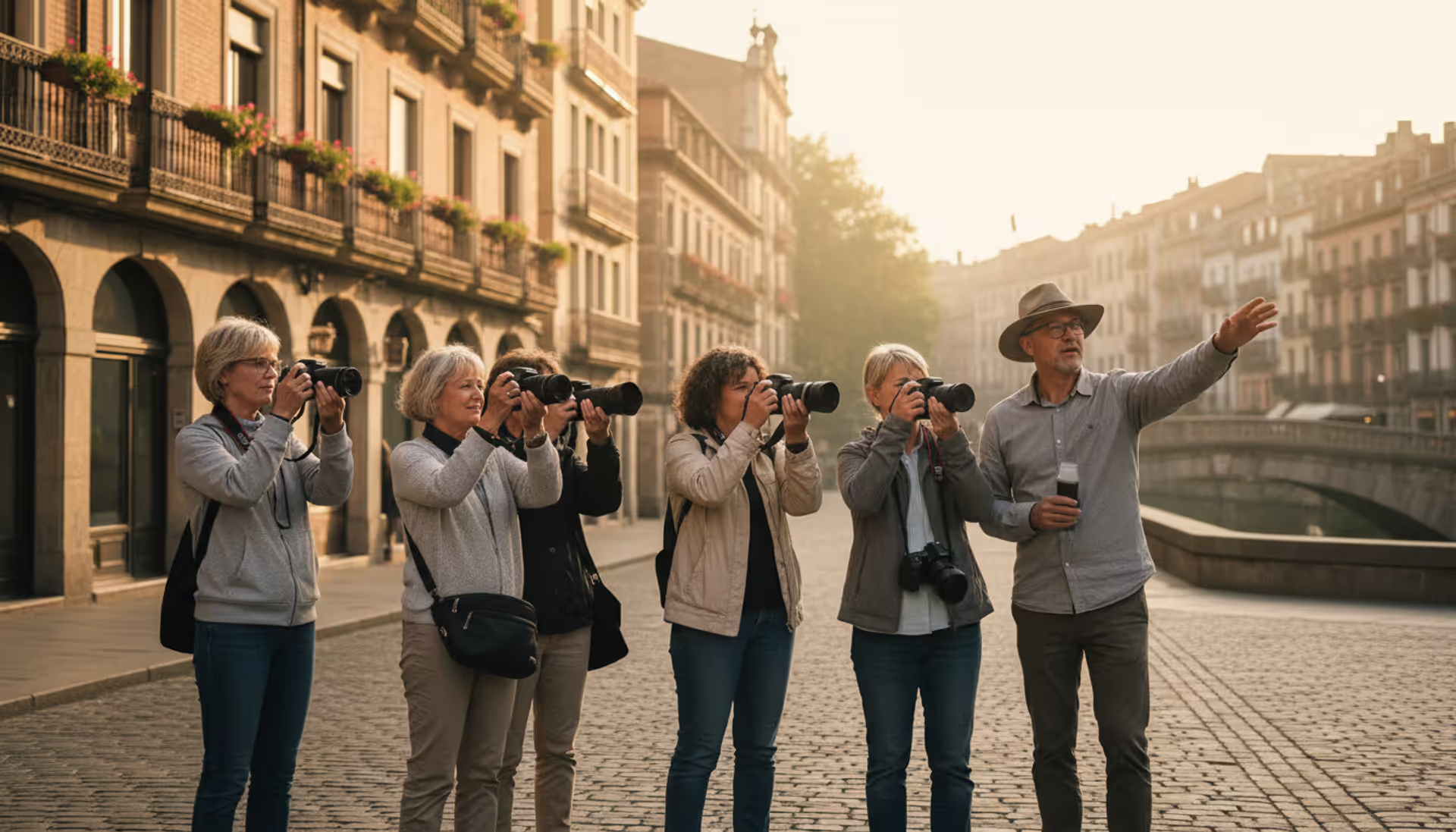
Very important if you're pursuing commercial, fashion, or editorial photography. Schools in New York, Los Angeles, and Chicago offer access to professional studios, publications, and photographers who can provide internships and mentorship. You'll also build a network in the city where you study, which helps when launching your career. For fine art photography, location matters less—you can develop a gallery practice from anywhere, especially with the rise of online exhibitions. Consider where you want to live after graduation, since staying in your school's city makes leveraging alumni connections easier.
Can I get financial aid for photography school?
Yes, photography students qualify for the same federal financial aid as other majors—Pell Grants, subsidized and unsubsidized loans, and work-study programs. Complete the FAFSA to determine eligibility. Many art schools also offer substantial institutional aid based on portfolio quality and financial need. Apply for external scholarships from photography organizations, camera manufacturers, and arts foundations. Some students reduce costs by completing general education requirements at community college before transferring to a specialized photography program for their final two years.
What should I include in my photography portfolio for college applications?
Include 10–20 of your strongest images showing technical skill and creative vision. Admissions committees want to see that you understand composition, lighting, and exposure, and that you're developing a personal perspective. Mix projects rather than submitting 20 variations of the same idea. If you work in multiple styles (documentary, portrait, conceptual), show that range. Quality matters more than quantity—15 excellent images beat 20 mediocre ones. Include an artist statement explaining your interests and influences in 300–500 words. Avoid gimmicks or heavy editing that masks weak fundamentals.
Choosing where to study photography shapes not just your technical skills but your creative identity, professional network, and career trajectory. The right program matches your specific goals—whether that's commercial work, fine art, or photojournalism—and provides equipment access, faculty mentorship, and industry connections that accelerate your development.
Don't let prestige alone drive your decision. A highly ranked school with a fine art focus won't serve you well if you want to shoot fashion editorials. Similarly, the most affordable option might cost more in the long run if weak industry connections leave you struggling to find work after graduation.
Visit campuses when possible, review student work from recent graduates, and talk to current students about their experiences. Ask hard questions about job placement, equipment access, and whether the curriculum matches your ambitions. The investment of time researching programs now prevents the much larger cost of discovering two years in that you're at the wrong school.
Your photography education is the foundation for a creative career, but it's only the beginning. The skills, relationships, and portfolio you build during those years will open doors, but sustaining a photography career requires business acumen, adaptability, and continuous learning long after you receive your diploma.
Photography has never been more accessible, but finding quality instruction that matches your learning style, budget, and goals can feel overwhelming. This comprehensive guide breaks down every major learning path—from free YouTube tutorials to university programs—helping you make an informed decision about where to invest your time and money
Finding the right photography workshop can transform your skills faster than solo practice. Learn what makes quality hands-on training, compare workshop types, and discover how to find local programs that match your skill level and goals
Selecting the right online photography program means balancing career goals, budget, and learning style. With options from weekend workshops to four-year degrees, you need to evaluate accreditation, instructor expertise, technical requirements, and program structure before enrolling
Selecting the right photography education shapes your career trajectory. Learn how to evaluate programs based on curriculum, format, accreditation, cost, and equipment access. Compare traditional vs online photography schools, understand financial aid options, and avoid common mistakes when choosing your program
The content on this website is provided for general informational and educational purposes only. It is intended to explain concepts related to running a photography business, insurance coverage, marketing, websites, and professional development.
All information on this website, including articles, guides, and examples, is presented for general educational purposes. Outcomes may vary depending on business size, location, and individual choices.
This website does not provide professional legal, insurance, financial, or business advice, and the information presented should not be used as a substitute for consultation with qualified professionals.
The website and its authors are not responsible for any errors or omissions, or for any outcomes resulting from decisions made based on the information provided on this website.