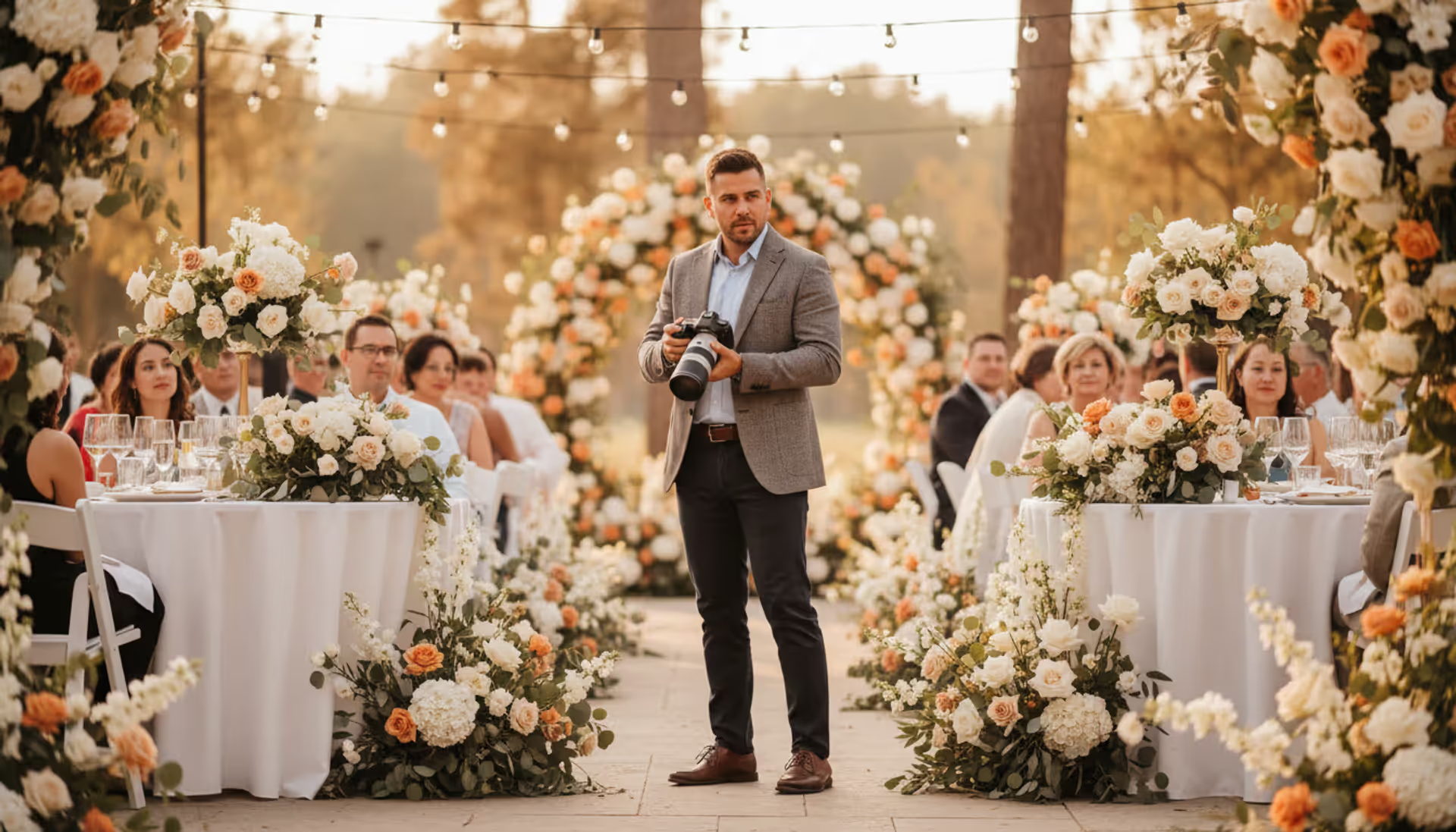
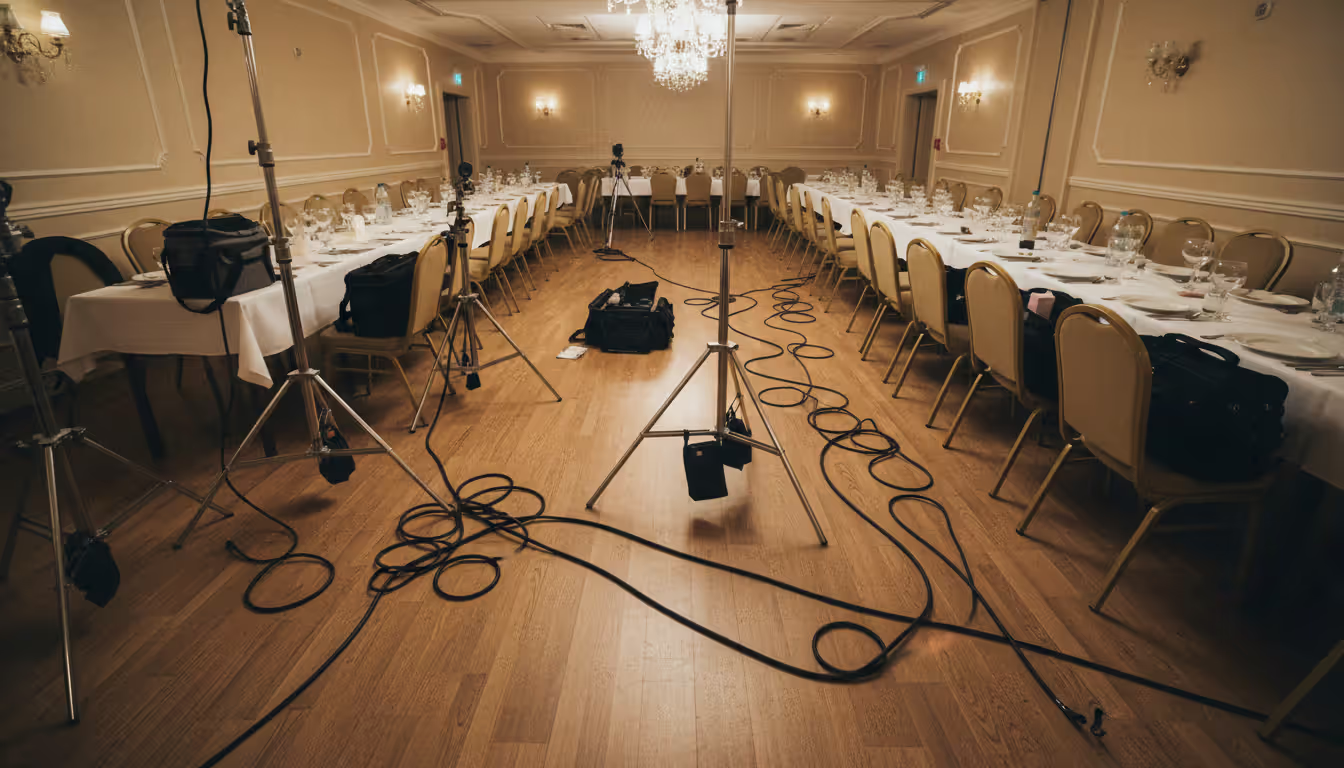
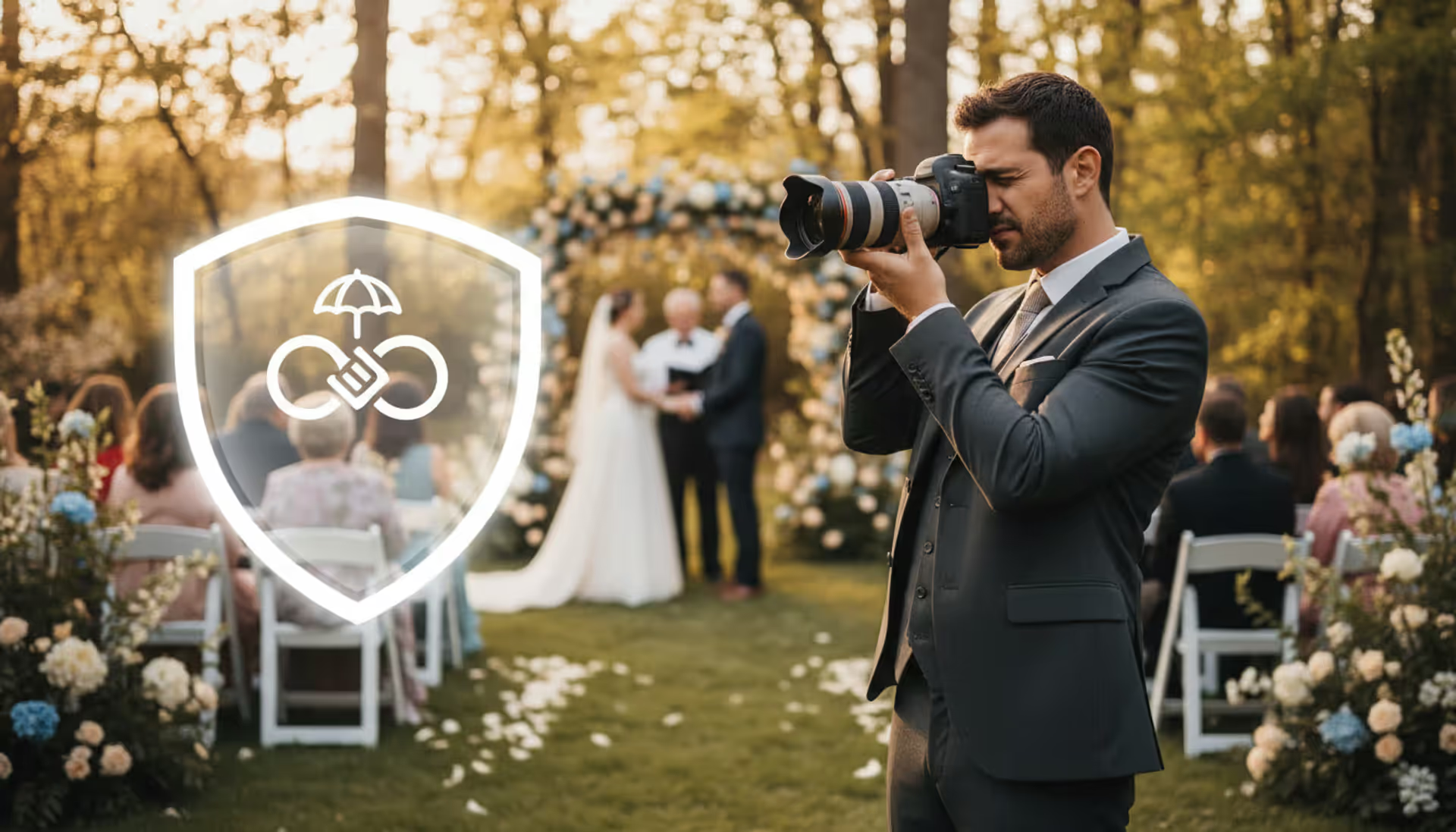
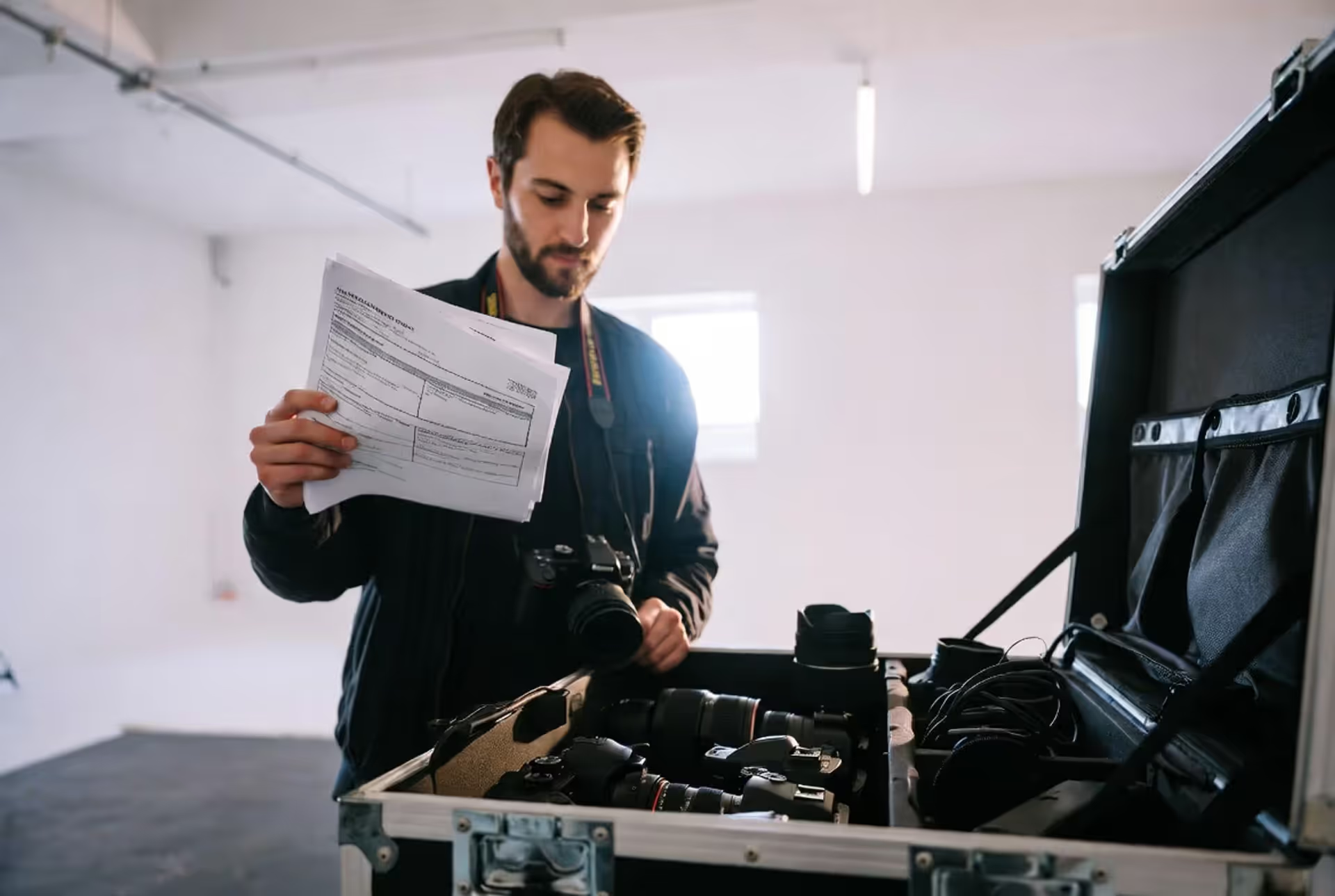
Running a photography business exposes you to risks most people never consider until something goes wrong. A guest trips over your lighting cable at a wedding reception. A client claims you missed critical shots during their product launch. Your camera bag scratches a hardwood floor during a newborn session. Each scenario can trigger a lawsuit that costs tens of thousands of dollars to defend—even if you did nothing wrong.
Liability insurance for photographers exists to protect your business from these financial disasters. Yet many photographers operate without proper coverage, assuming their skills alone will keep them safe or that insurance represents an unnecessary expense. This guide explains what coverage you actually need, how much it costs, and how to avoid the mistakes that leave photographers financially vulnerable.
What Is Liability Insurance for Photographers?
Liability insurance for photographers comes in two distinct forms that protect against different risks. Understanding the difference determines whether you're actually covered when problems arise.
General liability insurance for photographers protects against third-party bodily injury and property damage claims. This coverage responds when your business activities cause physical harm or damage to someone else's property. If a client trips over your equipment and breaks their wrist, general liability covers their medical bills and your legal defense. If you knock over an expensive vase while setting up a shoot, this policy pays for the replacement.
Professional liability insurance for photographers—also called errors and omissions (E&O) insurance—covers claims related to your actual work product and professional services. This includes allegations of missed shots, failure to deliver promised images, copyright infringement, defamation through published photos, or breach of contract. When a bride claims you ruined her wedding by failing to capture key moments, professional liability handles the lawsuit.
Most photographers need both types. General liability protects your physical presence at shoots; professional liability protects the quality and delivery of your creative work. Neither substitutes for the other. A single policy that bundles both coverages—often called a Business Owner's Policy (BOP)—typically costs less than purchasing them separately.
Public liability insurance for photographers is essentially another term for general liability in the US market. The terminology differs slightly from UK usage, but the coverage remains the same: protection against injury and property damage claims from third parties.
Why Photographers Need Liability Insurance
The financial exposure from a single claim can exceed what most photographers earn in an entire year. Consider these real scenarios:
A wedding photographer's assistant trips while carrying equipment down stairs at a venue, colliding with a guest who suffers a concussion and misses two weeks of work. The guest's medical bills total $8,400, but their lost wages and pain-and-suffering claim reaches $45,000. Without general liability coverage, the photographer pays these costs personally or faces bankruptcy.
An architectural photographer delivers images for a commercial client's marketing campaign. Three months later, the client discovers the photographer accidentally included copyrighted artwork visible in the background. The artwork's owner files a copyright infringement lawsuit seeking $75,000 in damages. Professional liability insurance covers the legal defense and settlement.
Author: Caleb Renshaw;
Source: maryelizabethphoto.com
During a newborn session at a client's home, a photographer's camera bag scratches the client's newly refinished hardwood floors. Repairs cost $3,200. The photographer's general liability policy covers the damage, minus a $500 deductible.
A real estate photographer fails to deliver edited images on time due to a hard drive failure, causing the listing agent to miss their marketing deadline. The agent sues for $12,000 in lost commission from a delayed sale. Professional liability insurance defends the claim and covers the settlement.
Without coverage, each scenario requires paying legal fees (often $300-$500 per hour), settlement costs, and potential judgments from your personal assets. Most photographers lack the savings to weather even a single lawsuit, making insurance essential rather than optional.
Many venues and clients now require proof of insurance before allowing photographers to work. Wedding venues routinely mandate $1-2 million in general liability coverage. Commercial clients expect both general and professional liability before signing contracts. Operating without insurance increasingly means losing high-value opportunities.
What Does Liability Insurance Cover?
General Liability Coverage
General liability insurance for photographers typically includes:
Bodily injury protection: Medical expenses, lost wages, and pain-and-suffering damages when someone gets hurt during your business activities. This covers injuries to clients, their guests, venue staff, or bystanders at your shoots.
Property damage protection: Repair or replacement costs when you damage someone else's property. This includes venue damage (scratched floors, broken decorations, stained carpets), damaged client possessions, or harm to rented equipment.
Personal and advertising injury: Coverage for claims of slander, libel, copyright infringement in your advertising, or misappropriation of someone's likeness in your marketing materials.
Medical payments: Immediate medical expense coverage (typically $5,000-$10,000) for minor injuries, regardless of fault. This helps resolve small incidents before they become lawsuits.
Legal defense costs: Attorney fees, court costs, and settlement expenses. Defense costs often exceed the actual claim value, making this coverage particularly valuable.
Standard exclusions include intentional acts, damage to your own equipment, professional errors, and employee injuries (which require workers' compensation insurance).
Professional Liability Coverage (Errors & Omissions)
Professional liability insurance for photographers covers:
Failure to deliver: Claims that you didn't provide promised services, missed important shots, or failed to meet contract specifications.
Copyright infringement: Allegations that your photos violate someone else's copyright or that you improperly licensed images.
Defamation and privacy violations: Lawsuits claiming your photos damaged someone's reputation or invaded their privacy.
Breach of contract: Claims that you violated your service agreement, missed deadlines, or failed to perform as promised.
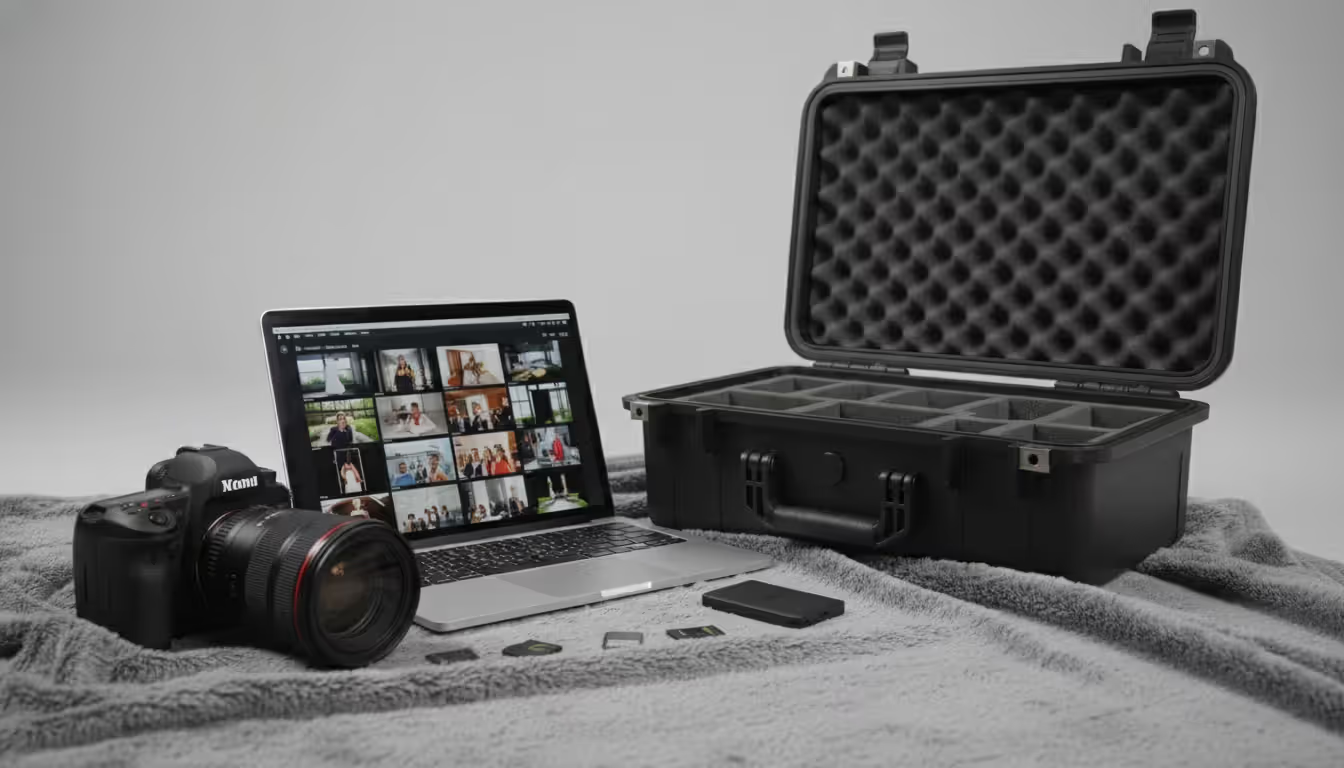
Loss of work product: Coverage when you lose images due to equipment failure, theft, or corruption—though this typically requires proof you followed reasonable backup procedures.
Professional liability operates on a "claims-made" basis, meaning the policy must be active both when the incident occurs and when the claim is filed. This differs from general liability's "occurrence" basis, which covers incidents that happened during the policy period regardless of when claims arise.
Equipment Coverage vs. Liability Coverage
Photographers often confuse equipment insurance with liability coverage. They serve completely different purposes:
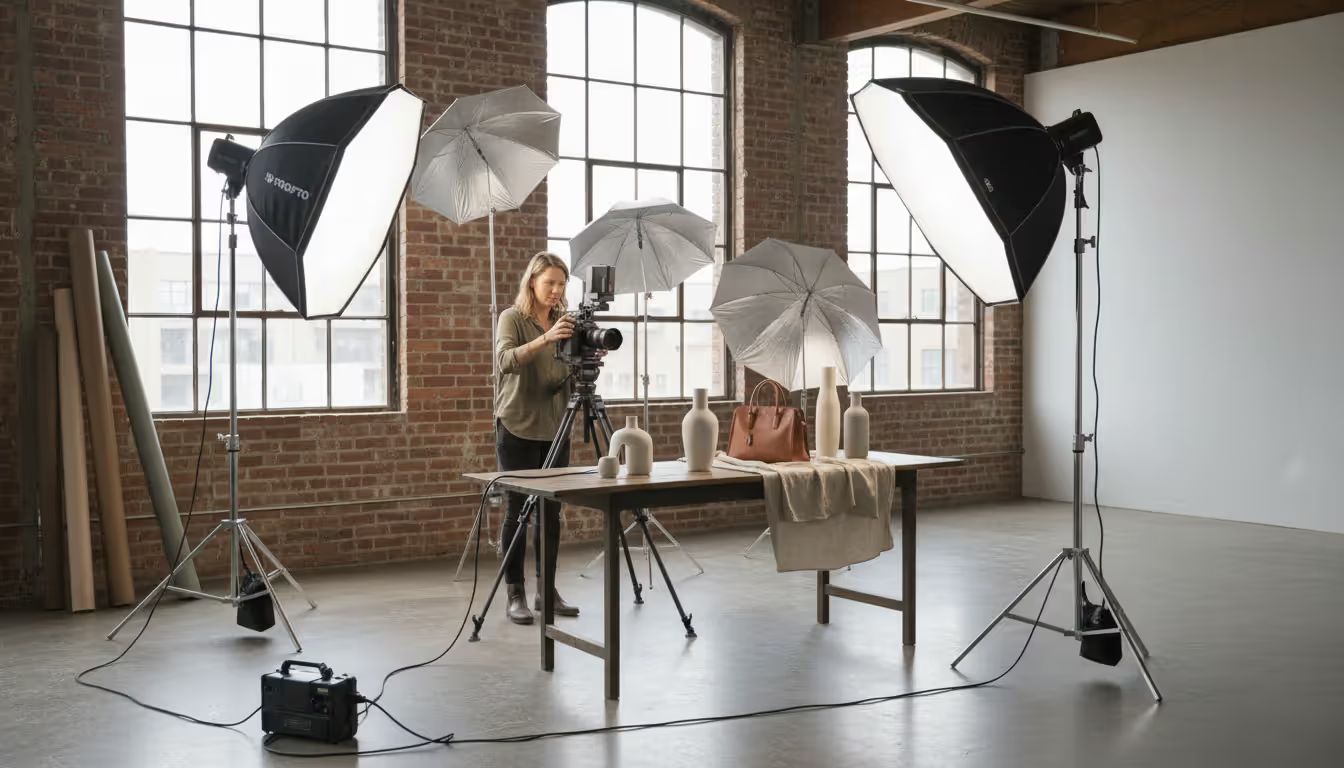
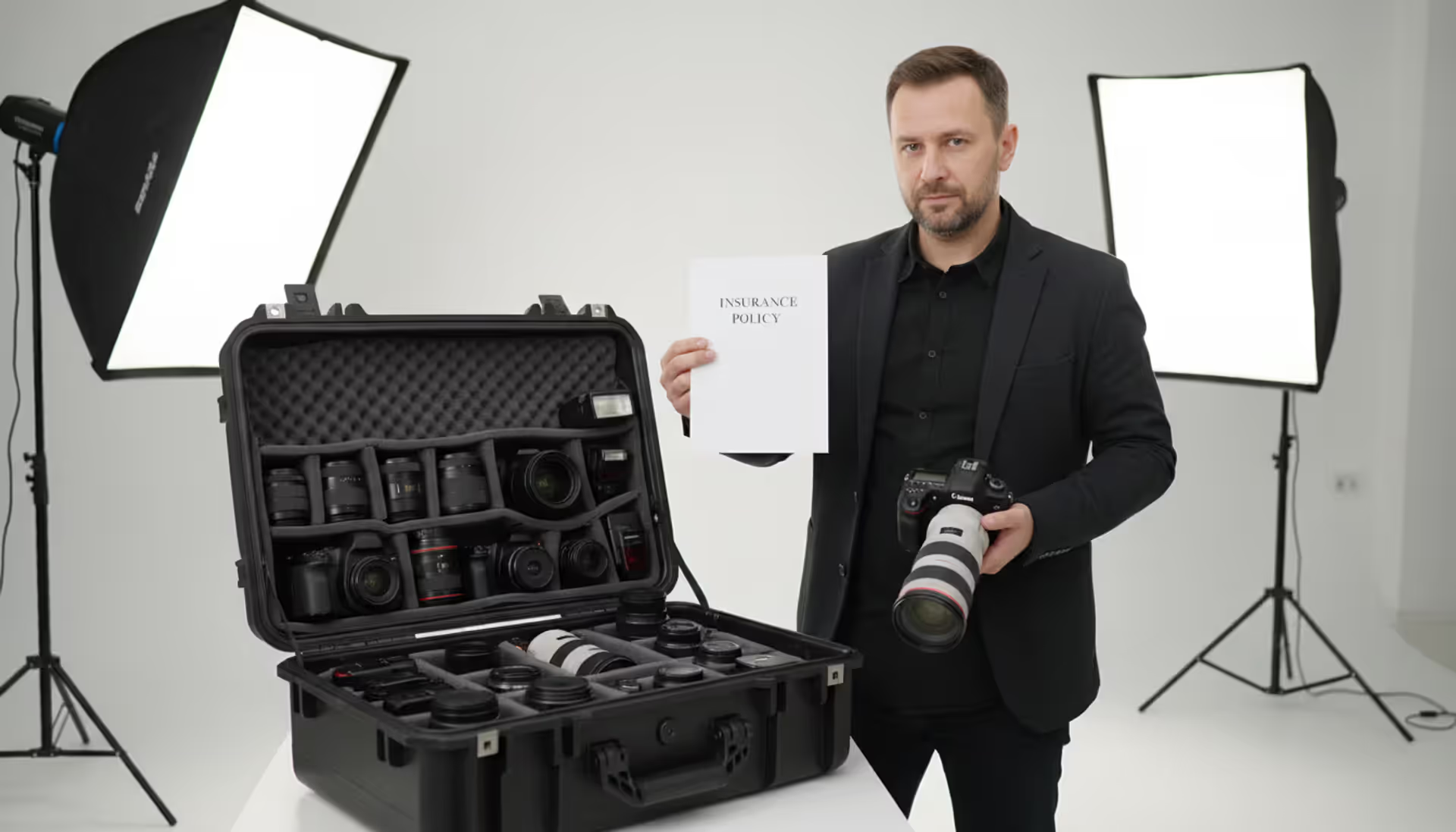
Equipment insurance (inland marine or business property coverage) protects your cameras, lenses, lights, computers, and other gear against theft, damage, or loss. This coverage reimburses you for replacing your own equipment.
Liability insurance protects you against claims from other people. It doesn't cover your gear—it covers the financial harm your business activities cause to others.
You need both. Equipment insurance keeps you operational after gear loss; liability insurance keeps you solvent after lawsuits.
Author: Caleb Renshaw;
Source: maryelizabethphoto.com
How Much Does Liability Insurance Cost for Photographers?
Liability insurance for photographers typically costs between $400 and $1,500 annually, depending on coverage types, limits, and risk factors.
General liability insurance alone usually runs $300-$600 per year for $1 million per occurrence / $2 million aggregate coverage. This represents the minimum most venues and clients require.
Professional liability insurance costs $400-$900 annually for $1 million in coverage when purchased separately. Pricing varies significantly based on your annual revenue and the types of photography you perform.
Bundled coverage (BOP combining general and professional liability) typically costs $500-$1,200 per year—often 20-30% less than purchasing policies separately.
Several factors affect your premiums:
Annual revenue: Higher earnings signal more client activity and exposure. Photographers grossing under $50,000 pay less than those earning $200,000+.
Photography specialty: Wedding and event photographers face higher premiums than portrait photographers due to increased risks at crowded venues. Commercial and fashion photographers pay more because client contracts involve larger financial stakes.
Coverage limits: Increasing from $1M/$2M to $2M/$4M coverage typically adds $150-$300 to annual premiums.
Claims history: Previous claims increase future premiums, sometimes by 25-50% per claim.
Experience level: Photographers with less than two years of experience may pay 15-20% higher premiums than established professionals.
Location: Urban areas with higher lawsuit rates and larger settlements typically see 10-30% higher premiums than rural regions.
Coverage Type
What It Protects
Typical Annual Cost
Who Needs It
General Liability
Bodily injury and property damage caused by your business activities
$300-$600
All photographers working on location or with clients
Professional Liability (E&O)
Errors, omissions, copyright claims, and contract disputes related to your work product
$400-$900
Photographers delivering client work, especially weddings and commercial projects
Equipment Insurance
Theft, damage, or loss of your cameras, lenses, and gear
$200-$800
Anyone with more than $5,000 in equipment
The best liability insurance for photographers balances adequate coverage limits with affordable premiums. Skimping on coverage to save $200 annually makes little sense when a single uncovered claim could cost $50,000.
How to Choose the Right Liability Insurance Policy
Selecting appropriate coverage requires evaluating several factors beyond price:
Coverage limits matter more than you think. While $1 million per occurrence seems substantial, medical costs and legal fees accumulate quickly. Serious injury claims routinely exceed $500,000. Consider $2 million per occurrence if you photograph large events, work in high-risk environments, or serve commercial clients with deep pockets who might pursue larger claims.
Aggregate limits—the total amount your policy pays for all claims during the policy period—should be at least double your per-occurrence limit. A $1M/$2M policy means $1 million maximum per incident and $2 million maximum for all incidents combined annually.
Evaluate deductibles carefully. General liability policies often carry $0-$500 deductibles, while professional liability deductibles range from $500-$2,500. Higher deductibles reduce premiums but increase your out-of-pocket costs when claims occur. Choose a deductible you could comfortably pay from savings without financial hardship.
Read exclusions thoroughly. Standard exclusions that might affect photographers include:
Drone photography (requires separate aviation liability)
International shoots (may need special endorsements)
Adult/boudoir photography (some insurers exclude or charge extra)
Subcontracted photographers (may not be covered under your policy)
Compare specialized insurers versus general business insurers. Companies focusing on photographers and creative professionals (like Hill & Usher, Thimble, or insureon) often provide better coverage for photography-specific risks at competitive prices. General business insurers may offer lower premiums but include exclusions that leave photographers underprotected.
Ask these questions before buying:
Does professional liability cover copyright infringement claims?
Are subcontractors or second shooters covered under my policy?
Does coverage extend to international shoots?
What's the claims-made retroactive date for professional liability?
Are drone operations covered, or do I need additional coverage?
Does the policy cover digital asset loss (corrupted files, lost images)?
Review annually as your business grows. Revenue increases, new service offerings, and additional employees all change your risk profile. Policies adequate for a part-time portrait photographer become insufficient when you start booking $10,000 weddings or hiring assistants.
Author: Caleb Renshaw;
Source: maryelizabethphoto.com
Common Mistakes Photographers Make With Insurance
Underinsuring to save money: Choosing $500,000 in coverage instead of $1 million saves perhaps $100-$150 annually but leaves you exposed to six-figure claims. The premium difference rarely justifies the risk reduction.
Assuming homeowner's or renter's insurance covers business activities: Personal policies explicitly exclude business-related claims. If you operate a photography business from home and a client trips on your property during a consultation, your homeowner's policy likely won't cover the claim. You need business liability coverage.
Skipping professional liability: Many photographers carry general liability but skip professional liability, assuming their contract protections suffice. Contracts don't prevent lawsuits—they just provide defenses. Professional liability pays for that defense and any settlement, while contracts alone leave you paying legal fees from pocket.
Not updating coverage as the business grows: The $1 million policy that worked when you charged $500 per session becomes inadequate when you're booking $8,000 weddings. Review and increase coverage as your revenue and client sophistication grow.
Author: Caleb Renshaw;
Source: maryelizabethphoto.com
Failing to get certificates of insurance in advance: Many photographers wait until a venue requests proof of insurance to purchase coverage. This creates unnecessary stress and may force you to accept whatever policy you can get quickly rather than shopping for the best coverage.
Dropping coverage during slow seasons: Some photographers cancel policies during winter months to save money, then restart coverage in spring. This creates gaps that leave you exposed and may result in higher premiums when you reapply. Claims-made professional liability policies require continuous coverage to remain effective.
Not reading the actual policy: Relying on sales materials or summaries without reading your actual policy document means you won't discover coverage gaps until you file a claim. Spend an hour reading your policy when it arrives to understand exactly what's covered and excluded.
Photographers often view insurance as an expense rather than an investment in their business sustainability. I've seen talented professionals lose everything—their savings, their homes, even their businesses—because a single lawsuit exceeded their coverage or they had no coverage at all. The question isn't whether you can afford insurance; it's whether you can afford to operate without it
— Jennifer Marks
Frequently Asked Questions About Photographer Liability Insurance
Do I need liability insurance if I only shoot part-time?
Yes. Part-time status doesn't reduce your legal liability when something goes wrong. If a client trips over your equipment or sues you for missing shots, you face the same financial exposure as full-time photographers. Many part-time photographers actually face higher risks because they lack the systems and experience that help professionals avoid claims. Fortunately, part-time photographers typically qualify for lower premiums based on reduced annual revenue.
Does general liability cover copyright infringement claims?
No. General liability specifically excludes professional errors and intellectual property violations. Copyright infringement claims fall under professional liability (errors and omissions) coverage. This distinction catches many photographers by surprise—they assume their general liability policy covers all business risks. You need both types of coverage for comprehensive protection.
Will my homeowner's insurance cover my photography business?
Almost never. Homeowner's and renter's policies contain business exclusions that deny coverage for commercial activities. Even if you only shoot occasionally or consider photography a hobby, accepting payment typically triggers these exclusions. Some insurers offer small business endorsements to homeowner's policies, but these usually provide minimal coverage (often $2,500-$5,000) insufficient for serious claims. Proper business liability insurance is essential once you start charging clients.
What coverage limits should a wedding photographer carry?
Most wedding photographers should carry at least $1 million per occurrence / $2 million aggregate in general liability, plus $1 million in professional liability. Wedding venues frequently require these minimums. Consider increasing to $2 million per occurrence if you photograph luxury weddings, work at high-end venues, or serve affluent clients more likely to pursue larger claims. The premium difference between $1M and $2M coverage (typically $150-$250 annually) provides substantial additional protection.
Can I get liability insurance if I'm just starting out?
Yes. Most insurers offer coverage to new photographers, though premiums may be slightly higher during your first two years. Some insurers require proof of professional training or a minimum number of completed shoots (often 5-10) before issuing professional liability coverage. Starting with general liability immediately and adding professional liability after your first few paid shoots represents a common approach. Don't wait until you book your first big client—get covered before you need it.
Is liability insurance tax-deductible for photographers?
Yes. Business insurance premiums qualify as ordinary and necessary business expenses, making them fully tax-deductible for self-employed photographers and photography businesses. This effectively reduces the real cost of coverage by your marginal tax rate. A photographer in the 22% tax bracket paying $800 for insurance saves $176 in taxes, making the actual cost $624. Consult your tax professional about properly categorizing insurance expenses on your Schedule C or business tax return.
Liability insurance transforms catastrophic financial risks into manageable monthly expenses. The difference between a minor inconvenience and business-ending disaster often comes down to whether you carry adequate coverage when problems arise.
Most photographers will never face a major lawsuit. But the ones who do face claims without insurance often lose more than money—they lose the businesses they spent years building. Insurance premiums of $40-$100 monthly represent a fraction of what you'd spend defending even a frivolous lawsuit.
Start by obtaining quotes from specialized photography insurers. Compare coverage details, not just prices. Verify that policies cover your specific photography activities, including any drone work, international shoots, or specialized services you offer. Ensure both general and professional liability coverage are included.
Review your coverage annually as your business evolves. What protects a photographer earning $30,000 annually becomes insufficient at $100,000. Adjust your limits, update your insurer about new services, and maintain continuous coverage to avoid gaps.
The best liability insurance for photographers is coverage you purchase before you need it, from an insurer who understands your profession, with limits sufficient to protect your personal assets. Every shoot you complete without insurance is a calculated gamble that your skills, contracts, and luck will prevent expensive claims. Professional photographers don't gamble with their livelihoods—they transfer risk to insurance companies designed to absorb it.
Wedding photographers face unique risks requiring specialized insurance coverage. Learn about liability protection, equipment coverage, one-day vs. annual policies, venue requirements, and how to choose insurance that protects your business from lawsuits, equipment loss, and professional errors
Running a photography business means investing thousands in gear and facing liability risks at venues and events. The right insurance protects your equipment and livelihood when accidents happen. Learn what coverage you need, costs by business type, and mistakes to avoid
Photography insurance costs range from $200 to $2,000+ annually depending on your business size and coverage needs. This comprehensive guide breaks down average costs by photographer type, explains factors affecting quotes, and shows you how to compare policies effectively while avoiding common mistakes
Photography insurance protects your business from lawsuits, equipment loss, and professional liability claims. Learn what coverage photographers need, how much policies cost, and how to choose the right protection for your specialty—from wedding photography to commercial work
The content on this website is provided for general informational and educational purposes only. It is intended to explain concepts related to running a photography business, insurance coverage, marketing, websites, and professional development.
All information on this website, including articles, guides, and examples, is presented for general educational purposes. Outcomes may vary depending on business size, location, and individual choices.
This website does not provide professional legal, insurance, financial, or business advice, and the information presented should not be used as a substitute for consultation with qualified professionals.
The website and its authors are not responsible for any errors or omissions, or for any outcomes resulting from decisions made based on the information provided on this website.