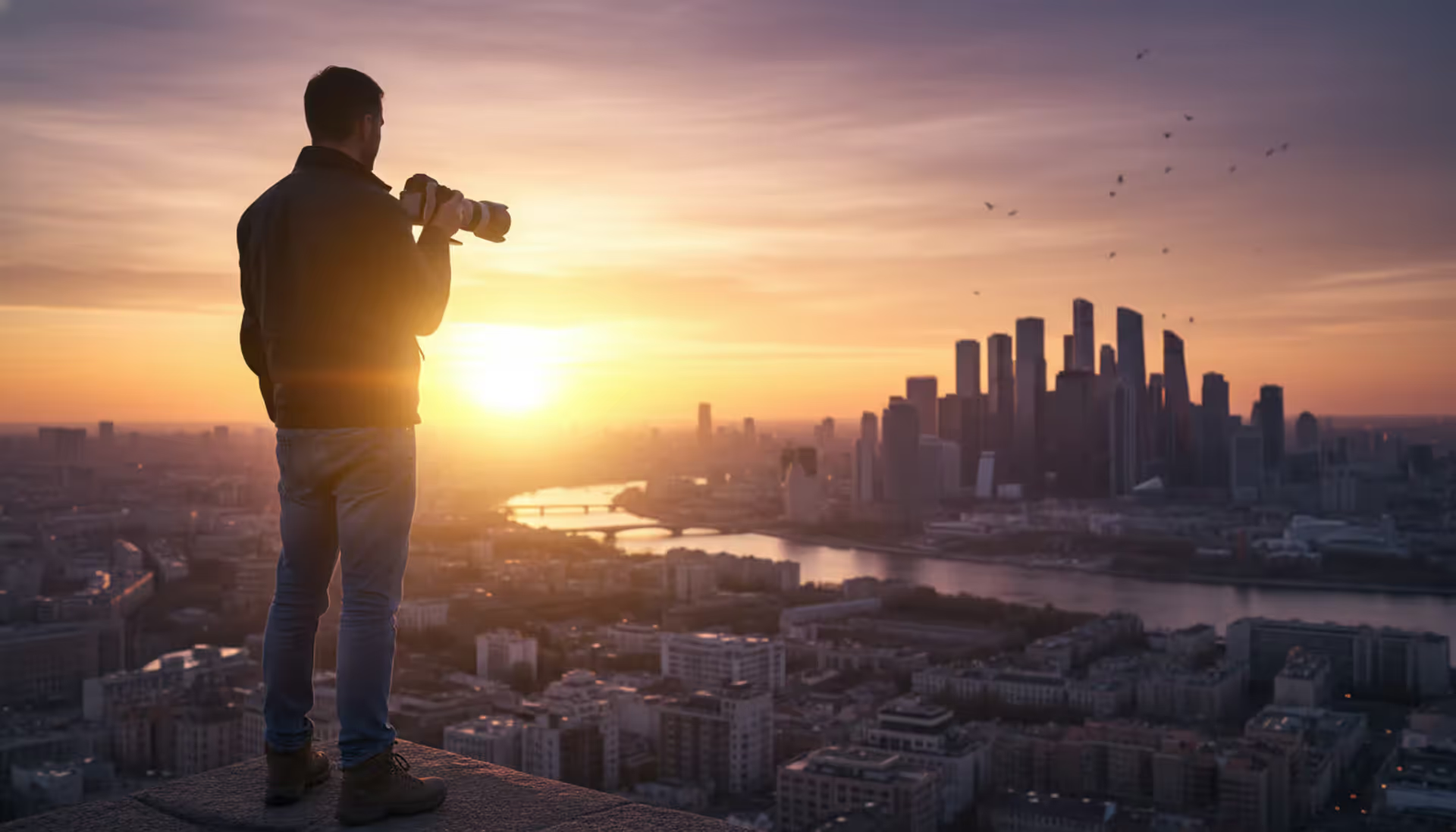
So you're thinking about making money with a camera? Here's what nobody tells you upfront: you'll spend maybe half your time actually taking pictures. The rest? Marketing yourself, answering emails at 11 PM, explaining to your uncle why you can't shoot his neighbor's wedding for $200, and dealing with hard drive failures.
But let's back up. Some photographers work their way up by carrying equipment for established pros. Others post on Instagram until clients start DMing them. There's no secret formula here—just different routes that work for different people. What matters is knowing what you're getting into before you quit your day job and buy a $4,000 camera.
Is Photography a Good Career in 2026?
Can you actually pay rent doing this? Yes. Will it be easy? Absolutely not.
The government says photographers make around $42,000 a year. That number is basically useless. I know wedding photographers in Austin pulling $120,000. I also know photojournalists in the Midwest making $33,000. Same industry, completely different financial realities.
Here's what's changed: newspapers aren't hiring staff photographers like they used to. That job market has shrunk hard. But at the same time, every restaurant, every real estate agent, every person selling stuff on Shopify needs photos constantly. A coffee shop might bring you in twice a month just for Instagram content. That wasn't a thing ten years ago.
The photographers who love their work? They've usually figured out what they want to shoot and who'll pay for it. You get to control your schedule (mostly). You create things instead of sitting in meetings. Your office could be a beach or a warehouse or someone's backyard.
But let's talk about the stuff that sucks. Your income will be all over the place, especially years one through three. Some months you'll book six jobs. Other months, nothing. Equipment costs are brutal—a professional camera body runs $2,500 to $6,500, and that's before lenses, lights, backup gear, and a computer that won't crash when you're editing 2,000 RAW files. You're also covering your own health insurance and retirement. No employer match on your 401(k).
Author: Samantha Corbett;
Source: maryelizabethphoto.com
Weather matters. Wedding photographers book twenty weekends between May and October, then maybe three from November through February. You'd better save during those good months.
Is the field oversaturated? Depends where you look. General portrait photography in the suburbs? Yeah, pretty crowded. Everyone's cousin just bought a camera and is offering "$100 mini sessions." But architectural photography? Aerial drone work? Scientific imaging? Way less competition because you need actual specialized knowledge or licenses.
Types of Photography Careers and Specializations
Commercial photographers work with businesses—shooting products for catalogs, food for menus, headshots for corporate websites. You're often in a studio, controlling every detail of the lighting. Clients don't really care if you're "inspired" that day. They care that you deliver properly formatted files by Thursday. Day rates run anywhere from $500 to $3,000 depending on what rights they're buying.
Portrait photographers capture families, high school seniors, personal branding shots. This category includes everything from JCPenney portrait studios photographing hundreds of kids per week to boutique operations charging $2,500 for a two-hour family session. Your people skills matter as much as your camera skills—making a nervous five-year-old smile is harder than nailing exposure.
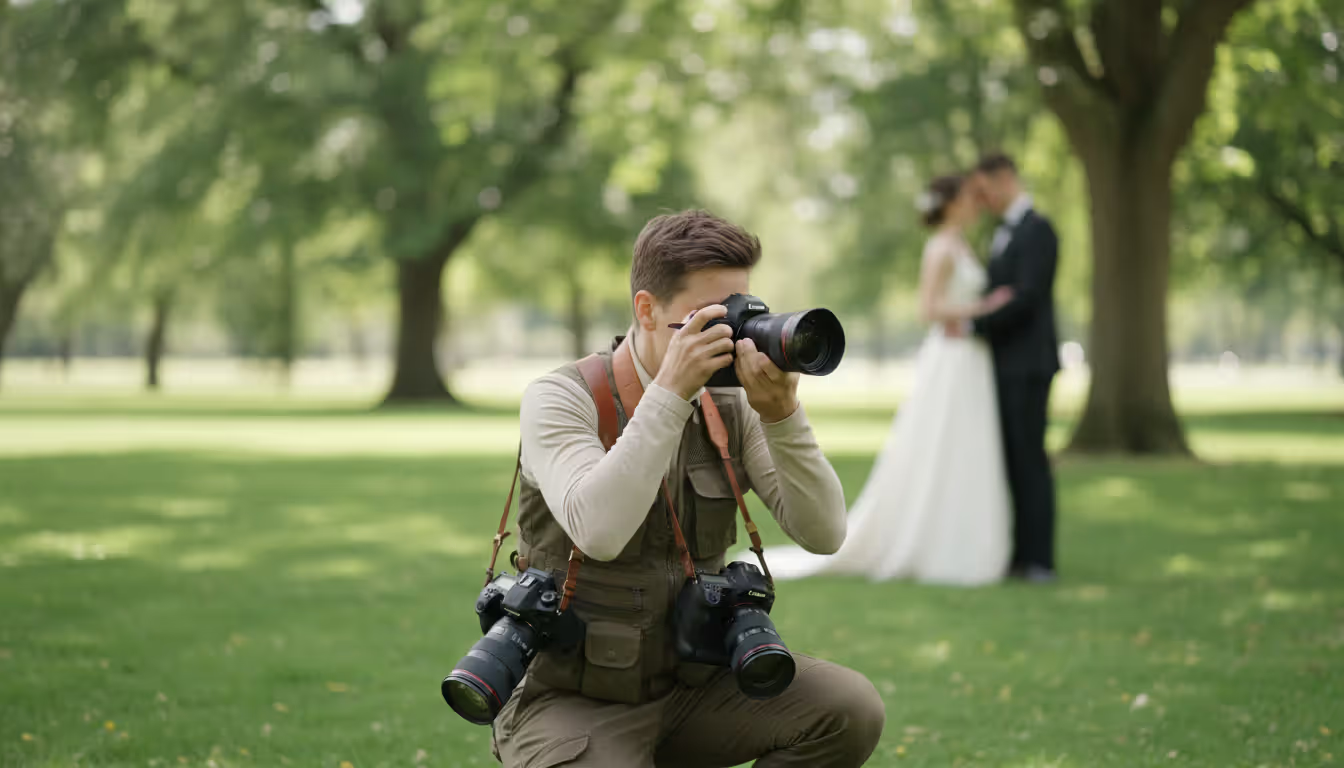
Wedding photography is physically exhausting. You'll be on your feet for eight to ten hours carrying 15 pounds of gear, anticipating moments, and managing drunk relatives who want to "help" with the group photos. Couples typically receive 400 to 800 edited images. Packages start around $2,000 and go past $10,000 in major cities. Every Saturday from April through October is booked. Hope you didn't have weekend plans.
Author: Samantha Corbett;
Source: maryelizabethphoto.com
Wildlife and nature photographers rarely make their entire income from just shooting animals. Most teach workshops, lead photo tours, license images to magazines, or sell prints. Breaking in requires serious patience, travel budgets, and often those $12,000 telephoto lenses. National Geographic isn't calling beginners.
Fashion photography happens mostly in New York, LA, and Miami. You'll probably spend years assisting before anyone trusts you with a major campaign. The work involves coordinating with stylists, makeup artists, art directors—it's collaborative in ways wildlife photography isn't. The commercial side pays well. Editorial shoots for magazines? They might pay $500 for a full day because you're building your portfolio. That's the trade-off.
Photojournalism has taken a beating as newspapers cut staff. Still, documentary photographers find work with nonprofits, NGOs, and digital publications covering social justice issues. You're telling stories with multiple images, not just capturing one perfect moment. Unless you're winning grants or selling to major international outlets, don't expect big paychecks.
Real estate photography offers steady, predictable work. You shoot three to five properties daily, deliver edited images within 48 hours, charge $150 to $400 per property. Add drone aerials or twilight shots, and you can bump those rates. It's repetitive—lots of wide-angle shots of empty living rooms—but the work is consistent in active housing markets.
Sports photography needs fast reflexes and expensive gear. Those 400mm and 600mm lenses aren't cheap. Staff positions exist with major publications and professional teams, but most sports photographers freelance, licensing images to wire services and athlete clients. Access is restricted too—you can't just walk into an NFL game with a camera.
Career Type
Average Salary
Education Required
Work Environment
Job Outlook
Wedding Photography
$45K–$95K
Portfolio matters more than degrees
Events, mostly outdoors
Steady—people keep getting married
Commercial Photography
$50K–$120K
Bachelor's helps for agency jobs
Studios and client locations
Growing—e-commerce needs product shots
Photojournalism
$35K–$65K
Journalism or photography degree typical
Wherever news happens
Shrinking staff positions, more freelance
Fashion Photography
$40K–$150K+
Your portfolio and assistant experience
Studios and exotic locations
Highly competitive, concentrated in big cities
Real Estate Photography
$40K–$75K
Technical skills; drone license helps
Residential and commercial properties
Growing where housing markets are active
Wildlife Photography
$30K–$60K
Mostly self-taught or workshop training
Remote locations, lots of travel
Few full-time opportunities
How to Start Your Photography Career
Do you need a degree? Not really. A bachelor's in photography or visual arts gives you structured learning, critique sessions, networking, and access to expensive equipment while you're figuring things out. But plenty of successful photographers never set foot in a college photography class. They learned from YouTube, online courses, workshops, and shooting constantly.
What clients actually care about is your portfolio. They're hiring you based on whether your existing work matches their vision. Want to shoot weddings? Photograph friends' ceremonies for free or cheap to build a wedding gallery. Want commercial work? Create conceptual product shoots or offer discounted rates to small businesses.
Your first clients almost always come from people you know. Tell friends you're available. Post on social media. Just don't work for free forever—even discounted rates establish that this is professional work, not a favor. Common mistake: pricing so low you only attract people who don't value photography. Maybe start 30% below market rates, not 90% below.
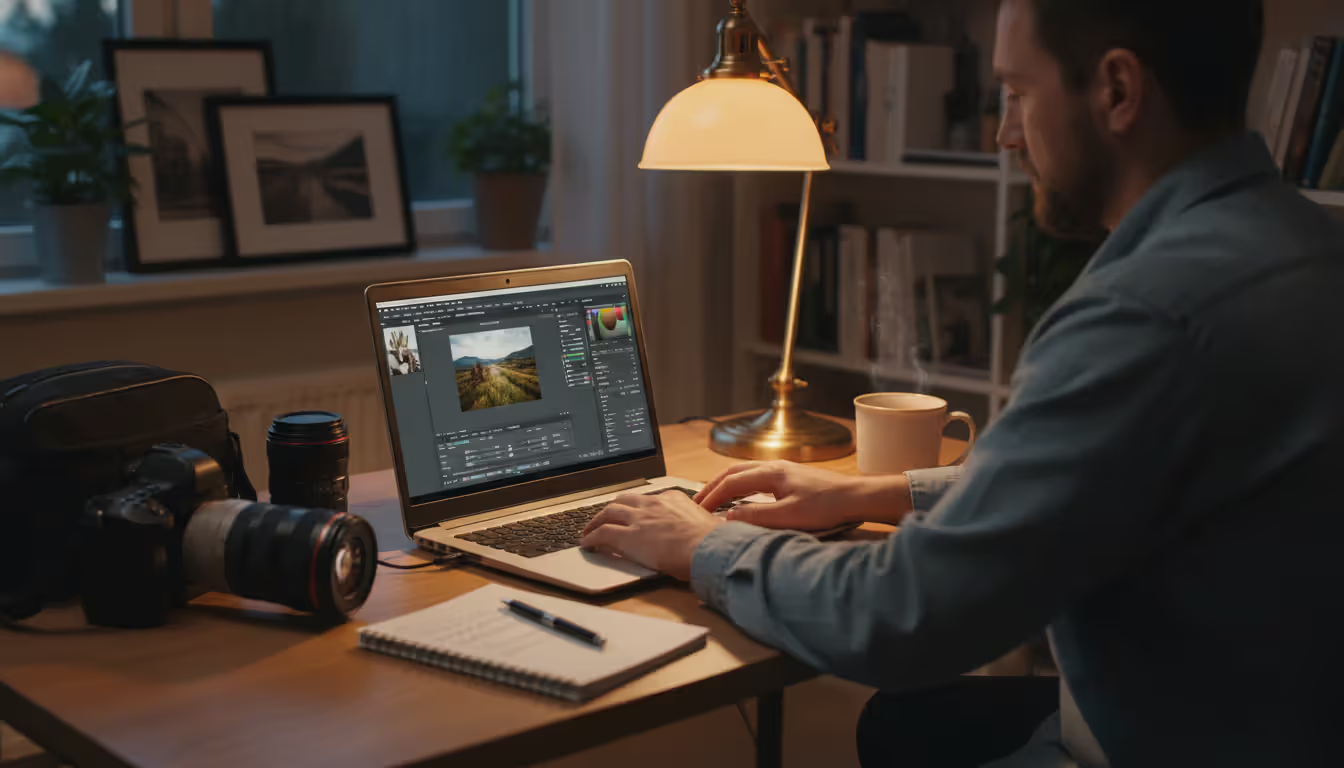
Finding ongoing clients takes consistent effort. Update your website with your best 30 to 50 images—not everything you've ever shot. Instagram and Pinterest work well for discovery in many specializations. Set up your Google Business Profile for local searches. After a few years, referrals become your main lead source, but only if you deliver great service and actually ask satisfied clients to recommend you.
Author: Samantha Corbett;
Source: maryelizabethphoto.com
Certifications are optional in most areas. The Professional Photographers of America offers a Certified Professional Photographer designation after you pass a written exam and submit images. Some corporate or government clients prefer certified photographers. Drone photography legally requires an FAA Part 107 Remote Pilot Certificate—you'll need to pass an aeronautical knowledge test.
Assisting established photographers is like a paid apprentorship. You'll see how pros handle difficult clients, solve problems on the fly, and manage complex lighting setups. Assistants typically make $150 to $300 per day carrying equipment, adjusting lights, managing props, maybe handling some admin work. Many photographers assist for two to five years before going independent. The learning curve is steep, but you're getting paid while you climb it.
Director of Photography and Advanced Roles
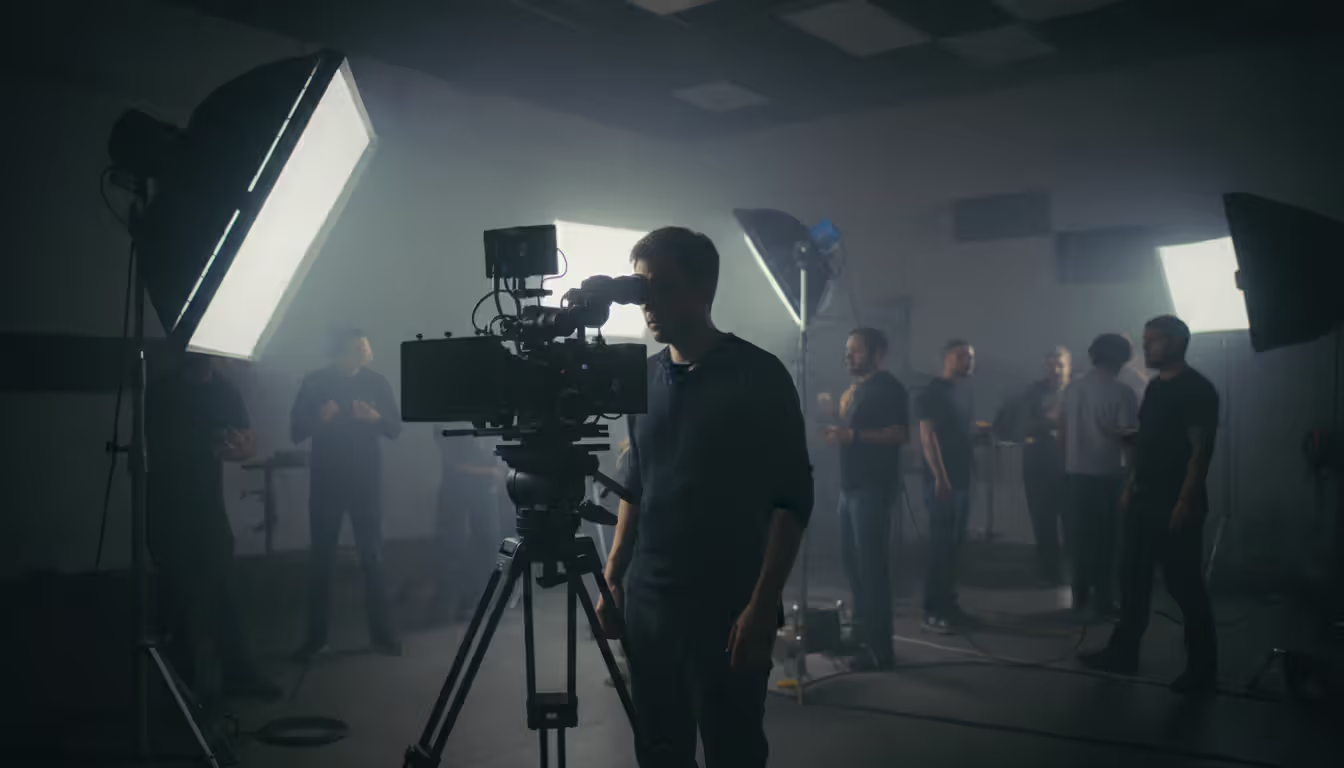
Director of photography (DoP or DP)—also called cinematographer—is a completely different animal from still photography. You're creating moving images for film, TV, commercials, and video content. This means thinking about camera movement, lighting that works as actors move through scenes, and collaborating closely with directors on the overall cinematic look.
Director of Photography Job Description
The DoP makes the big visual decisions: which cameras to use, which lenses, how to light each scene, what color palette serves the story. You're supervising the entire camera department—operators, focus pullers, gaffers running the lights. Before shooting starts, you're scouting locations, creating shot lists, planning how to achieve specific looks within budget constraints.
Technical knowledge goes way beyond basic photography. You need to understand frame rates, aspect ratios, color science, dynamic range, how different cameras render skin tones. Your exposure decisions factor in how footage will be color-graded later. Lighting for video is its own discipline because subjects move and scenes play out over time instead of freezing a single moment.
You're also managing people—anywhere from five to fifty crew members depending on the production size. That means translating abstract creative ideas from directors into concrete plans the crew can execute. Budget matters too. Sometimes you can't afford the ideal camera or lighting setup, so you're finding creative solutions that still achieve the desired look.
How to Become a Director of Photography
Most DoPs start as camera assistants. First AC (first assistant camera) positions involve pulling focus during takes, maintaining cameras, managing lenses—technical work that builds deep understanding of camera systems. This path typically takes five to ten years before you're calling the shots.
Film school is one route in. Programs at USC, NYU, AFI give you access to equipment and projects to work on. You're also networking with future directors and producers. But plenty of working cinematographers learned on the job, starting with small independent projects and gradually building demo reels.
Your reel is everything. Ninety to 120 seconds showcasing diverse lighting, camera movement, and visual storytelling. Early-career DPs often shoot music videos, short films, and commercials for modest pay just to build this reel. Each piece should demonstrate specific skills—maybe one shows naturalistic documentary work while another displays stylized commercial lighting.
The International Cinematographers Guild (IATSE Local 600) is the union for this work. Membership gets you access to major studio productions but requires meeting experience requirements and passing evaluations. Union DPs on features make $5,000 to $15,000+ per week depending on the budget tier. Non-union work on indie projects might pay $500 to $2,000 daily.
Can still photographers transition to cinematography? Sometimes. Your lighting knowledge and compositional sense transfer over, but video introduces new considerations: how shots cut together, maintaining visual continuity, designing for movement within the frame rather than a single frozen image. Expect a learning curve.
The best advice I ever got was to work for free. Not forever, but in the beginning. I assisted photographers whose work I admired, and I learned more in those years than I could have anywhere else. You're not just learning photography—you're learning how to run a creative business
— Chase Jarvis
Photography Income and Salary Expectations
Let's get specific about money because the averages don't tell you much.
Staff photographers at organizations earn predictable salaries but cap their income potential. A newspaper staff photographer might make $40,000 to $55,000 with benefits. A freelance commercial photographer in the same city could gross $120,000—but they're also dealing with irregular income and paying for their own health insurance.
Wedding photographers show the range clearly. Charge $2,000 per wedding, shoot 25 events yearly, that's $50,000 gross. Charge $8,000 per wedding, book 30 events, that's $240,000. What's the difference? Experience, portfolio quality, market positioning, reputation. Most wedding photographers need three to five years to reach premium pricing.
Freelance commercial work runs on day rates. You might charge $1,500 for a product shoot day. But that "day" doesn't include pre-production planning, shot list creation, post-production editing, client revisions, invoicing, and all the other unbilled hours. Your effective hourly rate often runs 40% to 60% below your stated day rate once you factor in everything.
Licensing and usage rights dramatically impact what you earn. A single image licensed for unlimited global advertising might command $5,000 to $25,000. That same image for one-time regional use? Maybe $500 to $1,500. Photographers who understand licensing create multiple revenue streams from single shoots.
Stock photography provides passive income, though it's nowhere near what it used to be. Microstock sites commoditized the whole thing. Successful stock photographers typically have 5,000+ images in their libraries and earn $500 to $5,000 monthly.
Location affects rates massively. New York and LA photographers charge two to three times what photographers in smaller markets get for comparable work. Of course, your rent and competition are proportionally higher too. Some photographers strategically locate in mid-sized cities where there's less competition while still having clients who value quality.
Year one typically generates minimal income—$10,000 to $25,000 is common while you're building your portfolio and client base. Years two through four see gradual increases as referrals multiply and you raise rates. Many photographers keep part-time jobs during this stretch. By year five, successful photographers usually earn enough to rely solely on photography, though "successful" might mean $45,000 in Omaha and $85,000 in Seattle.
Passive income can supplement shooting. Teaching workshops generates $500 to $3,000 per event. Online courses can produce ongoing revenue if you market them well. Landscape and fine art photographers sell prints. Some photographers earn substantial income from YouTube or Patreon, though building those audiences requires consistent content creation beyond your photography work.
Common Mistakes When Choosing a Photography Career
Talented photographers fail all the time because they can't run a business. You might create stunning images but struggle to find clients, price appropriately, or manage finances. Around 60% of photography businesses fail within three years—usually not because the photos weren't good enough, but because the business fundamentals weren't there. Successful photographers spend 30% to 50% of their time on marketing, client communication, bookkeeping, and admin work that has nothing to do with cameras.
Picking your specialization based purely on what you enjoy shooting is risky. Maybe you love photographing abandoned buildings. Cool. But almost nobody pays for that. Sustainable careers align what you love with what people actually need. Lots of photographers shoot commercial work that pays the bills while pursuing personal projects on the side. Expecting every creative interest to immediately generate income leads to frustration and financial stress.
Author: Samantha Corbett;
Source: maryelizabethphoto.com
Pricing too low is epidemic among beginners. Charging $500 for a wedding when market rates are $3,000 doesn't just undervalue your work—it attracts clients who don't respect photography as a profession and expect unreasonable deliverables. Low pricing rarely brings enough volume to compensate for thin margins. Calculate your actual costs (gear, insurance, software, taxes, retirement) and time investment before setting rates.
Skipping contracts and legal protection causes preventable disasters. Clients who seem great during booking can dispute deliverables, refuse payment, or use images beyond agreed terms. Written contracts specifying deliverables, timeline, payment terms, usage rights, and cancellation policies protect everyone. Liability insurance (around $500 to $1,200 yearly) covers equipment damage and injury claims.
Comparing your beginning to others' middle stages breeds discouragement. Social media shows polished results, not the years of skill development, failed shoots, and gradual client building that came before. Most "overnight success" stories in photography actually represent five to ten years of consistent work that wasn't publicly visible.
Over-investing in equipment before you're making money creates financial strain. A $6,000 camera doesn't generate income—your skills and client relationships do. Many successful photographers started with entry-level gear and upgraded as revenue justified it. Renting specialized equipment for specific jobs often makes more sense than buying gear you'll use occasionally.
Refusing to specialize makes marketing nearly impossible. "I shoot everything" signals inexperience, not versatility. Clients hire specialists who demonstrate deep expertise in their specific needs. You can absolutely shoot multiple specializations, but your marketing should speak directly to distinct audiences rather than trying to appeal to everyone.
Frequently Asked Questions About Photography Careers
Do you need a degree to become a professional photographer?
Nope. Clients hire based on your portfolio and reputation, not where you went to school. That said, a photography or visual arts degree provides structured learning, equipment access, professional critique, and networking. Some corporate or institutional clients prefer working with degreed professionals. Self-taught photographers absolutely build successful careers through workshops, online education, assisting established pros, and shooting constantly. What matters is the quality of your work and your ability to deliver reliable results, not what's on your diploma.
How long does it take to build a successful photography career?
Most photographers need three to five years of active work to reach sustainable income. Year one is typically building a portfolio and landing initial clients, often while you're still working another job. Years two through four involve expanding your client base, refining what you specialize in, and gradually increasing what you charge. By year five, successful photographers usually have enough recurring clients and referrals to rely primarily on photography income. But "successful" varies wildly—some people reach comfortable income faster in high-demand specializations or markets, while others take longer in competitive fields. Don't trust anyone promising shortcuts.
Can you make a living as a freelance photographer?
Yeah, many photographers earn full-time income freelancing, but you've got to treat photography as a business, not just a creative hobby. Sustainable freelancing involves consistent marketing, professional client management, appropriate pricing, financial planning for irregular income, and diversifying how you make money. Successful freelancers typically have multiple client types or income sources instead of depending on one specialization. The first few years are financially challenging for most freelancers—many keep part-time employment during this stretch. Those who develop strong business skills alongside photographic abilities can build comfortable freelance careers.
What photography specialization pays the most?
Commercial and advertising photography typically offer the highest earning potential—established photographers can make $100,000 to $300,000+ annually. Corporate and industrial photography pay well too, especially for specialized technical work. Wedding photography can be highly lucrative in major cities where photographers charge $5,000 to $15,000 per event. Fashion photography pays extremely well at the top tier, but there are limited positions and intense competition. Here's the thing though: income depends more on business skills, market positioning, and experience than specialization alone. A mediocre commercial photographer might earn less than an excellent wedding photographer who knows how to run their business.
Is the photography industry oversaturated?
Depends where you're looking. General portrait photography in suburban areas? Pretty crowded because anyone with a camera can offer sessions. But specialized fields like architectural photography, scientific imaging, or aerial drone work? Less competition because you need specific technical knowledge or certifications. Even in competitive specializations, there's always demand for photographers who deliver exceptional quality, professional service, and reliable results. Instead of asking if the industry is saturated, ask whether you can differentiate yourself and provide value that justifies your pricing in your chosen niche. That's the real question.
What equipment do you need to start a photography career?
Bare minimum: a professional or advanced amateur camera body ($1,200–$3,000), two versatile lenses like a 24-70mm and 70-200mm ($1,500–$3,000 combined), a reliable computer for editing ($1,000–$2,000), and editing software like Adobe Lightroom and Photoshop ($120–$240 yearly subscription). Add backup storage drives ($200–$400), a professional website ($150–$500 annually), and liability insurance ($500–$1,200 per year). Specific specializations need additional gear—wedding photographers need external flashes and backup camera bodies; product photographers need studio lighting and backdrops. Starting costs typically run $5,000 to $12,000, though you can begin with less and upgrade as income allows. Many photographers rent specialized equipment for specific jobs instead of buying everything upfront.
Photography careers offer creative fulfillment and entrepreneurial opportunity if you're willing to develop artistic and business skills simultaneously. It's not easy—expect financial uncertainty early on, constant learning as technology changes, and significant time spent on business tasks that have nothing to do with taking pictures. But photographers who specialize strategically, price appropriately, and treat their work professionally instead of as a hobby build sustainable careers.
Success requires honest assessment of your strengths and market realities. Research what photographers in your area and specialization actually charge, not what you wish they charged. Invest in developing skills before buying expensive equipment. Build relationships within your community and industry. Most importantly, create work consistently—your portfolio next year should noticeably surpass this year's work.
The photographers who thrive aren't always the most talented artists. They're usually the ones who combine creative vision with business discipline, who deliver reliable results on deadline, who communicate clearly with clients, and who continuously adapt to changing market conditions. If you're prepared to develop these capabilities alongside your photography skills, a rewarding career is within reach.
Photography has never been more accessible, but finding quality instruction that matches your learning style, budget, and goals can feel overwhelming. This comprehensive guide breaks down every major learning path—from free YouTube tutorials to university programs—helping you make an informed decision about where to invest your time and money
Finding the right photography workshop can transform your skills faster than solo practice. Learn what makes quality hands-on training, compare workshop types, and discover how to find local programs that match your skill level and goals
Selecting the right online photography program means balancing career goals, budget, and learning style. With options from weekend workshops to four-year degrees, you need to evaluate accreditation, instructor expertise, technical requirements, and program structure before enrolling
Selecting the right photography education shapes your career trajectory. Learn how to evaluate programs based on curriculum, format, accreditation, cost, and equipment access. Compare traditional vs online photography schools, understand financial aid options, and avoid common mistakes when choosing your program
The content on this website is provided for general informational and educational purposes only. It is intended to explain concepts related to running a photography business, insurance coverage, marketing, websites, and professional development.
All information on this website, including articles, guides, and examples, is presented for general educational purposes. Outcomes may vary depending on business size, location, and individual choices.
This website does not provide professional legal, insurance, financial, or business advice, and the information presented should not be used as a substitute for consultation with qualified professionals.
The website and its authors are not responsible for any errors or omissions, or for any outcomes resulting from decisions made based on the information provided on this website.