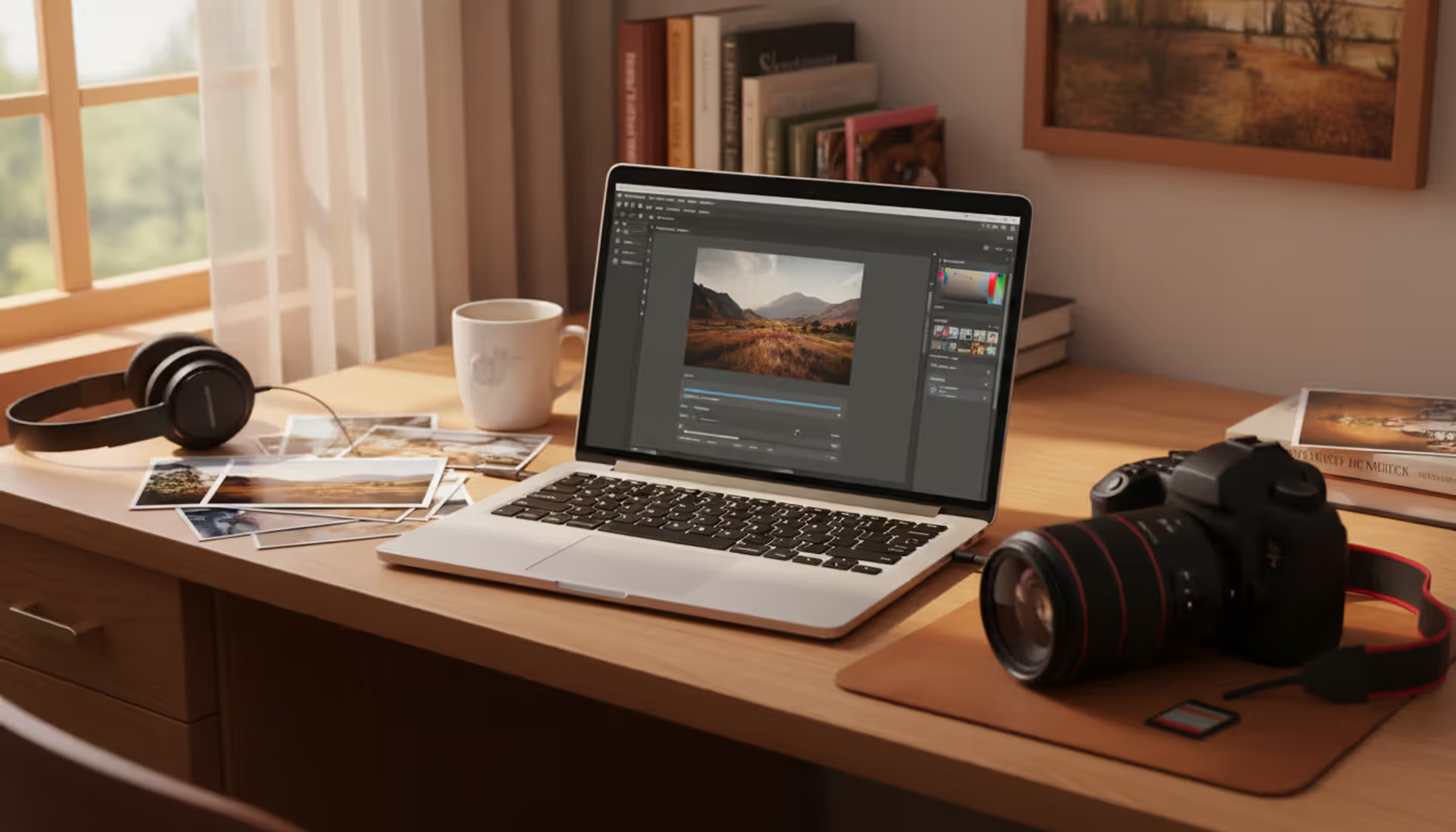
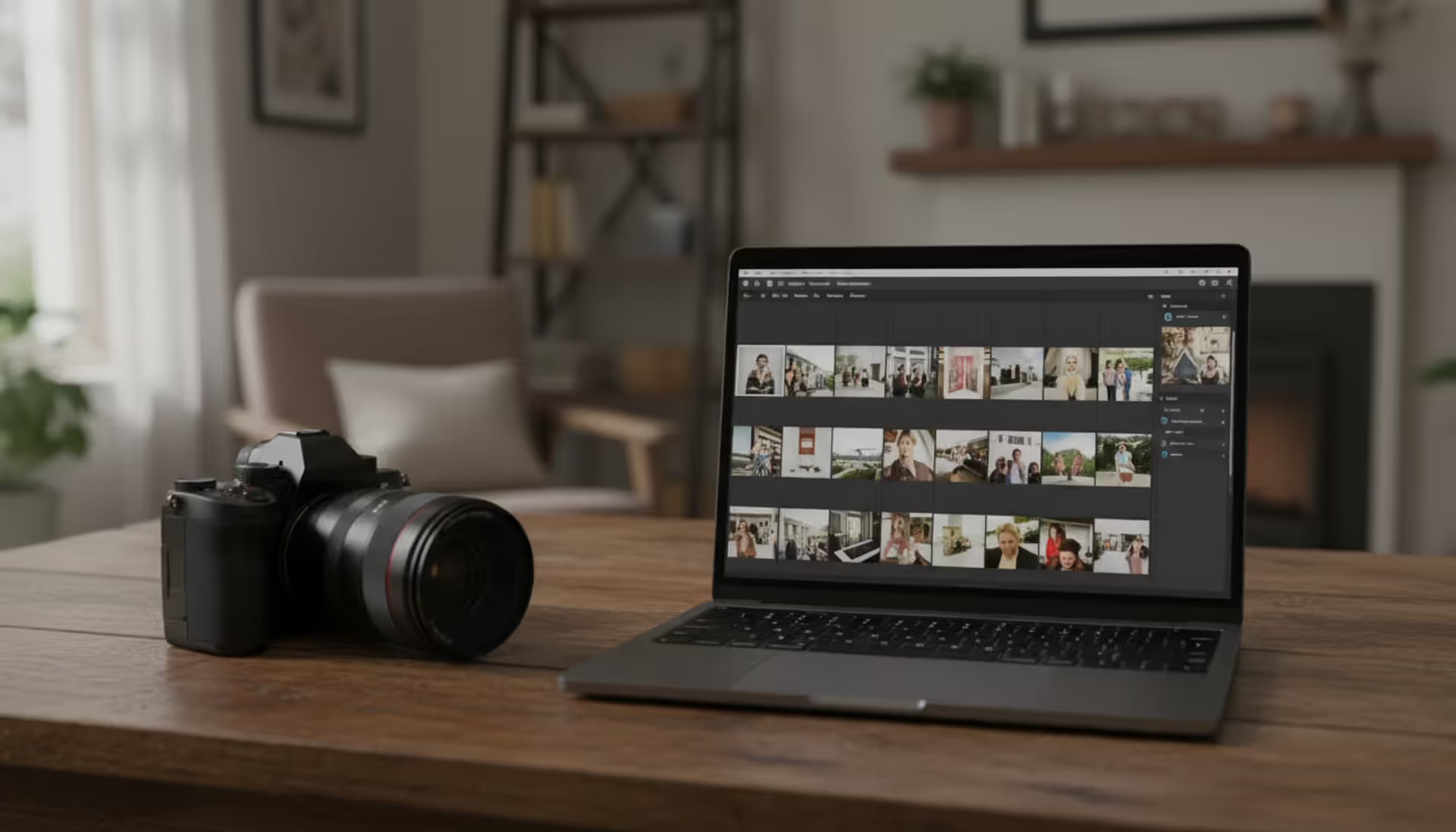
A photographer's home workspace with an open laptop showing photo editing software, a DSLR camera and lens placed on the desk, soft natural window light
Can you actually learn photography staring at a laptop screen instead of standing in a darkroom? Turns out you can. Thousands of full-time photographers built their careers this way.
Here's what nobody mentions upfront: some online programs deliver incredible value while others just burn through your savings. The difference between them isn't always obvious from glossy websites and enrollment counselor pitches.
Three things separate worthwhile programs from expensive mistakes—the credential type you're chasing, who's actually accrediting the school, and whether the specialization aligns with real job opportunities in your market. We'll walk through each one.
Types of Online Photography Programs Available
You've got four main options. Each one works for completely different situations.
Associate degrees pack about 60 credits into roughly 24 months if you're attending full-time. Half your coursework digs into photography essentials—how exposure works, why composition matters, building simple lighting setups, processing files from RAW to final export.
The other half? General education that feels disconnected from photography. You'll suffer through English composition, basic algebra, maybe an intro to psychology. Frustrating when you just want to shoot pictures all day. But those boring gen-ed classes serve one crucial purpose—your credits move to other schools later if you decide to finish a bachelor's somewhere else.
Community colleges run most associate programs. Tuition stays manageable. Graduates land entry-level positions—assistant photographer gigs, photo lab work, staff jobs at portrait chains. Not Instagram-famous careers, but legitimate starting points that pay rent.
Bachelor's degrees stretch across four years, totaling 120 credits give or take. Photography coursework gets significantly more intense. You're not just memorizing that f/2.8 creates shallow depth of field. You're analyzing how different apertures change how viewers interpret your images, studying major photographic movements from the 1800s forward, building thesis projects that establish your artistic perspective.
Art history becomes mandatory. Visual theory goes deep fast. Most programs force you into internships—galleries, publications, commercial studios. The credential unlocks competitive positions nobody considers for associate-degree holders. Staff photographer at regional magazines. Commercial studio management. Gallery curator roles. Museum archival positions.
Author: Derek Halston;
Source: maryelizabethphoto.com
Master's degrees compress 30-45 credits into two intense years. You'll need a bachelor's first, though plenty of career-switchers arrive with unrelated degrees—business, journalism, even engineering. These programs obsess over conceptual development instead of technical fundamentals. Expect dense critical theory readings, advanced artistic research methods, thesis projects judged mainly on originality.
Who enrolls? Photographers targeting college teaching jobs. Artists chasing gallery representation. Curators building exhibition credentials.
Certificate programs strip everything down to pure photography training. Zero general education. Just 12-30 credits focused entirely on camera operation, lighting techniques, editing workflows, maybe some client management basics. Timeline runs anywhere from four months to twelve.
Here's the confusing part—some certificates grant legitimate college credit that appears on official transcripts. Others don't. They're professional development proving you completed training, but offering nothing that transfers anywhere else.
This distinction matters more than schools admit. Credit-bearing certificates sometimes stack toward associate or bachelor's degrees if you continue later. Non-credit certificates teach identical skills but academically go nowhere.
Plenty of students test photography through certificates before committing four years to a bachelor's. Smart approach—you figure out if you genuinely love this work without massive financial risk.
How to Choose an Accredited Online Photography Degree Program
Accreditation sounds bureaucratic and dull. It's actually the single factor separating legitimate programs from sophisticated scams.
Regional accreditation comes from seven organizations evaluating entire colleges and universities throughout the US. Schools earning regional accreditation meet rigorous standards covering faculty qualifications, student success rates, financial stability, educational quality. This accreditation unlocks federal financial aid and guarantees credits transfer to other regionally accredited institutions.
Programs lacking regional accreditation? Skip them completely.
NASAD—the National Association of Schools of Art and Design—provides specialized accreditation exclusively for art and design programs. It's voluntary, meaning schools actively seek it out. When photography programs earn NASAD accreditation, reviewers have examined curriculum structure, faculty credentials, equipment quality, student work standards. Think of it like a quality seal stacked on top of basic institutional accreditation.
Credit transfer deserves serious investigation before you enroll anywhere. Even regionally accredited credits don't always move smoothly between schools. Policies swing wildly based on individual agreements, state regulations, how similar the programs actually are. Planning grad school eventually? Call admissions offices at those target programs. Verify they'll accept credits from schools you're considering. Some employers check accreditation status too—government agencies and large corporations especially.
Portfolio requirements reveal program quality fast. Strong programs either require portfolios for admission or mandate them for graduation. Often both. This signals the school values artistic development equally with technical competency.
Look for programs offering regular portfolio reviews—ideally every semester. Structured critique sessions where faculty and peers analyze your work? Essential. Professional presentation training covering everything from print mounting to website design? Equally important.
Faculty credentials matter more than recruitment materials suggest. You want instructors holding MFA degrees, maintaining active photography practices—exhibitions, publications, commercial clients—and demonstrating actual teaching experience. Not just industry professionals teaching occasional workshops, though adjuncts bring valuable industry connections. Full-time faculty provide consistent mentorship and academic advising crucial for actually finishing degrees.
Author: Derek Halston;
Source: maryelizabethphoto.com
Technology requirements vary dramatically between programs. Some mail complete equipment kits to enrolled students. Others assume you already own a professional camera body, multiple lenses, portable lighting, current Adobe Creative Cloud licenses. Ask specific questions before enrolling. What's included in technology fees? Will any campus visits be required for intensive workshops? What computer specs handle RAW files efficiently?
Best Online Photography Certificate Programs by Specialization
Certificates let you target exactly what you need without sitting through unrelated coursework.
Commercial photography certificates prepare you for product shoots, advertising campaigns, corporate clients. Curriculum covers complex studio lighting configurations, advanced Photoshop retouching workflows, usage rights negotiations, collaborating with demanding art directors under tight deadlines. These programs suit photographers chasing work with brands, retailers, advertising agencies, e-commerce businesses—either freelance or staff positions.
Portrait photography specializations emphasize people skills matching technical abilities. You'll practice posing techniques that flatter different body types, expression coaching that draws out genuine emotion, working with squirmy toddlers, newborn safety protocols. Programs typically address business operations heavily—pricing session packages profitably, managing unrealistic client expectations, handling sales consultations that actually close. Most graduates launch independent studios or join established portrait operations.
Photojournalism certificates develop visual storytelling under brutal deadlines. Documentary shooting techniques, photo essay narrative structure, media law basics, ethical considerations when photographing vulnerable subjects. You'll practice writing captions that complement images without repeating obvious information and editing photo sequences that tell complete stories. These prepare you for news organizations, magazine assignments, freelance editorial work.
Fine art photography programs prioritize concept development and critical thinking over commercial viability. Building cohesive series around unified themes, writing artist statements that articulate your vision without sounding pretentious, understanding gallery representation models, studying contemporary art theory. Target audience? Photographers pursuing exhibition opportunities, art fair participation, teaching positions requiring demonstrated artistic practice.
Timeline varies by enrollment intensity. Most certificate programs span six to twelve months for part-time students balancing jobs or family obligations. Students dedicating full-time attention sometimes finish within sixteen weeks. Costs range from roughly $3,000 at community colleges to $12,000 at specialized photography schools with industry-connected faculty.
Author: Derek Halston;
Source: maryelizabethphoto.com
Certificate vs. Degree: Which Path Is Right for You
Certificates make most sense when you need specific skills immediately. Maybe you already hold a bachelor's in marketing and want to add photography capabilities to your professional toolkit. Or you're career-switching at 35 and need credentials fast without repeating general education coursework you completed fifteen years ago.
Degrees carry more weight in competitive hiring situations—just reality. Employers filling salaried photographer positions often list bachelor's degrees as minimum requirements, even when actual job duties don't technically demand one. Degrees also preserve grad school as future option and typically get required for teaching at accredited colleges.
Consider your starting point. No college credits yet? A degree builds your entire academic record from scratch. Already accumulated credits from previous college attempts? Verify whether they'll transfer and potentially shorten your timeline. Sometimes an associate degree takes barely longer than a certificate when you've got previous credits to apply.
Your career target should drive this decision. Freelance photographers absolutely build thriving businesses with certificates and exceptional portfolios—credentials matter less when you're self-employed. But photographers wanting institutional employment—museums, universities, corporations—usually need degrees just to land interviews. Spend an hour browsing job postings in your target niche. Patterns in credential requirements versus preferences become obvious quickly.
Free Online Photography Courses and Credentials
Free photography education saturates the internet, but understanding limitations matters as much as recognizing opportunities.
Platforms like Coursera, edX, and FutureLearn host photography courses created by actual universities. You can audit most courses at zero cost—streaming lectures, downloading materials, following along with assignments. You just don't receive graded feedback, instructor interaction, or completion certificates.
Paying $50-$200 on these platforms unlocks graded assignments, some instructor feedback, completion certificates. These verify you finished coursework but don't grant college credit. Employers view them as professional development, not formal education credentials equivalent to degrees or even credit-bearing certificates.
YouTube creators and photography bloggers publish endless technique tutorials. Need to master off-camera flash? Two hundred free tutorials exist. Want frequency separation retouching explained? Dozens of step-by-step videos await. These excel for targeted skill-building but offer zero structure, no feedback on your specific work, obviously no credentials.
Free resources work brilliantly for hobbyists or testing whether you genuinely enjoy photography before investing thousands in formal education. They also help working photographers quickly acquire new techniques—say, learning product photography basics when a commercial opportunity appears unexpectedly.
The tradeoff is straightforward. Free costs nothing except your time investment. Paid programs cost real money but deliver credentials employers recognize, structured learning progressions, portfolio critique from experienced faculty, classmates who become professional contacts years later.
Many photographers blend both approaches—exploring interests through free content, then enrolling in paid programs once they've identified specialization and confirmed serious career interest.
Check whether your local community college offers free non-credit photography workshops for residents. Why pay for generic online courses covering identical content when subsidized local options exist?
Cost Breakdown for Online Photography Degree Programs
Here's what you'll actually spend, including costs schools bury in fine print.
Certificate programs at community colleges run between $2,000 and $6,000 for in-state residents—occasionally less if you qualify for specific grants. Private institutions and specialized photography schools charge $8,000 to $15,000 for comparable programs. Per-credit rates range from approximately $150 at community colleges to $800 at private universities.
Associate degrees cost roughly $8,000-$20,000 total at public colleges for in-state students. Out-of-state tuition often doubles these numbers. Private colleges charge $30,000-$50,000 for identical two-year credentials. Some online programs charge flat tuition regardless of state residency, which occasionally works in your favor if you live outside the school's home state.
Bachelor's degrees at public universities run $40,000-$80,000 across four years for in-state students. Private universities charge $100,000-$200,000. Online programs sometimes cost less than on-campus versions due to reduced facility overhead, but don't assume this—compare specific numbers for your target schools.
Master's degrees range from $20,000 to $60,000 depending on credit requirements and public versus private institution status. Low-residency MFA programs require periodic campus visits for intensive workshops or thesis reviews, so factor in flights, hotels, meals for those weeks.
Now for hidden costs absent from recruitment materials. Technology fees appear on every semester bill—typically $150-$400 covering server access, tech support, software licensing. Adobe Creative Cloud runs about $20 monthly with student discounts, jumping to $55 monthly after graduation when discounts expire. If you don't own camera equipment yet, budget $800-$2,000 minimum for a decent starter kit. Some programs require brief campus residencies for portfolio reviews or capstone presentations—that's travel and accommodation you'll cover out-of-pocket.
Author: Derek Halston;
Source: maryelizabethphoto.com
Federal financial aid works for online programs at accredited institutions, assuming at least half-time enrollment. Pell Grants, subsidized loans, work-study programs all apply identically to traditional programs. Professional organizations like the Professional Photographers of America offer scholarships specifically targeting photography students—applications typically require portfolio submissions and essays describing career goals.
Return on investment varies dramatically by career path and geographic market. Commercial photographers in expensive cities like New York or Los Angeles earn $50,000-$80,000 annually with strong portfolios and business sense. Fine art photographers rarely support themselves through gallery sales alone—most teach, maintain commercial work on the side, or hold unrelated employment while building artistic practices. Photojournalists face shrinking opportunities with median salaries around $45,000 at news organizations still hiring staff positions.
Don't ignore opportunity cost. Four years attending school full-time means four years not earning full-time income. Online programs let many students work while studying, which reduces this financial hit considerably compared to traditional on-campus enrollment.
What You'll Learn in an Online Photography Degree Program
Students in our online photography programs consistently produce more resourceful work than on-campus students. Without school studios or equipment rooms to rely on, they develop problem-solving skills serving them throughout entire careers. They learn creating professional results regardless of circumstances
— Jennifer Martinez
Photography degree programs balance hands-on technical training with conceptual thinking and practical business skills clients never see.
Technical foundations begin with the exposure triangle—how aperture, shutter speed, ISO interact to create properly exposed images in varying conditions. You'll learn when to prioritize each setting based on subject matter: freezing athletic motion demands different settings than creating dreamy landscape shots. Lighting courses progress from working with available light to building portable flash setups to designing complex studio configurations with multiple lights, reflectors, modifiers.
Digital workflow training covers the complete process from memory card to final delivery. RAW file processing fundamentals, monitor calibration ensuring accurate colors, organizing thousands of images efficiently, backup strategies that actually protect your work from hard drive failures. You'll spend substantial time in Lightroom mastering batch editing and catalog management. Photoshop instruction covers non-destructive editing techniques, layer-based workflows, retouching that looks natural rather than obviously manipulated. Some programs add Capture One or other professional software depending on industry focus.
Composition and visual theory extends far beyond the rule of thirds. You'll analyze how visual elements create meaning, direct viewer attention through frames, evoke specific emotional responses. Programs study work by masters—Ansel Adams' zone system, Diane Arbus' confrontational portraits, Steve McCurry's color theory—not to copy them but understanding the thinking behind artistic choices. Art history classes provide context for why contemporary photography looks the way it does and what movements influenced current aesthetics.
Genre-specific courses let you specialize in landscape, architecture, fashion, documentary, sports, or other areas. Each genre demands unique technical skills and follows distinct aesthetic conventions. Fashion photography requires completely different knowledge than landscape work—different equipment, different client relationships, different post-processing approaches.
Business training covers unglamorous but essential operations: pricing work profitably while remaining competitive, writing client contracts that protect you legally, understanding copyright law and usage licensing, marketing yourself effectively in crowded markets. You'll learn crafting project proposals, managing difficult client conversations, building sustainable business models. Many programs now include social media strategy and website development since most photographers get discovered online rather than through traditional advertising.
Capstone projects synthesize everything into cohesive portfolio pieces. Typically you'll create 15-25 images exploring unified themes, write artist statements explaining your vision and process, present work professionally. Faculty and classmates critique your work throughout development, helping refine both images and conceptual framing before final presentation.
Online delivery happens through demonstration videos, assigned readings, discussion boards, virtual critique sessions via video conferencing. You'll upload images for review, comment thoughtfully on classmates' submissions providing constructive feedback, sometimes join live video calls for real-time Q&A or demonstrations.
Expect weekly shooting assignments—usually 10-30 new images depending on course level. You'll need access to varied shooting locations and patient subjects willing to let you practice repeatedly. Some assignments specify exact conditions like "shoot portraits during golden hour" or "create high-key product images on white backgrounds," which requires advance planning and sometimes multiple attempts achieving desired results.
Comparison of Online Photography Programs
School
Credential Type
How Long It Takes
What You'll Pay Annually
Accreditation Status
What You'll Study
Academy of Art University
BFA, MFA
4 years / 2 years
$24,000-$28,000
NASAD, WSCUC
Commercial, Fashion, Photojournalism, Fine Art
RMCAD Online
BFA, Certificate
4 years / 1 year
$18,500 / $8,200
HLC, NASAD
Commercial, Editorial, Studio
Southern New Hampshire University
BA, Certificate
4 years / 6 months
$9,600 / $2,400
NECHE
Digital Photography, Portraiture
New York Institute of Photography
Certificate
6-12 months
$4,995
Not accredited
Complete Photography, Genre specializations
Savannah College of Art and Design
BFA, MFA
4 years / 2 years
$38,000
SACSCOC, NASAD
Advertising, Fashion, Photojournalism
Ashford University
BA
3-4 years
$12,000
WSCUC
Digital Photography, Visual Communication
Sessions College
Certificate, AOS
9-18 months / 2 years
$6,750-$16,500
DEAC
Professional Photography, Commercial
Penn Foster
Certificate
4-12 months
$899
DEAC
Photography Fundamentals
Frequently Asked Questions About Online Photography Education
Can you earn a photography degree without visiting campus?
Yes—many regionally accredited universities now offer bachelor's and master's degrees in photography requiring zero physical campus visits. Everything happens remotely: streaming video lectures, online critique sessions, digital portfolio submissions. Some programs follow low-residency models requiring one or two brief campus visits yearly for intensive workshops or final portfolio reviews, but core coursework still happens online. Always verify specific program requirements before enrolling if traveling to campus creates barriers for you due to location, disability, family obligations.
Do hiring managers value online photography degrees?
Your portfolio quality and relevant experience matter far more to employers than delivery method for your education. What actually matters to hiring managers: Did you attend an accredited institution? That's crucial. How you accessed the coursework? Rarely mentioned. Many employers never even discover which degrees were earned online unless you volunteer that information. For freelance photographers, clients focus exclusively on whether your work matches their needs and whether you're reliable and professional. Credential delivery method never enters conversations.
What timeline should I expect for photography certificate completion?
Timeline depends on credit requirements and whether you study full-time or part-time around other obligations. Certificate programs requiring 12-15 credits take approximately four months when you study full-time, or roughly eight months part-time. More comprehensive certificates with 24-30 credits need nine to twelve months full-time, potentially stretching to eighteen months part-time. Non-credit professional certificates often let you work at your own pace, with completion times ranging from three months to a year based on weekly time dedication.
What camera equipment do online photography programs require?
Most online photography programs expect you to own or have consistent access to a DSLR or mirrorless camera with manual controls. Beginner-level programs might accept advanced smartphones initially, but you'll need professional equipment once you reach intermediate courses. Typical requirements include a camera body, at least one lens (usually a 50mm prime or 24-70mm zoom), memory cards, a computer powerful enough to run editing software smoothly. A handful of programs include equipment kits in tuition and ship them to enrolled students. Others provide detailed buying guides helping you purchase appropriate gear. Starting from scratch? Plan on spending $800-$2,000 for adequate equipment meeting program requirements.
Does federal financial aid cover photography certificate programs?
Federal financial aid eligibility depends on whether the institution has proper accreditation and whether the program grants college credit—not on subject matter. Certificate programs at regionally accredited colleges qualify for federal aid when they award credits and you enroll at least half-time. Non-credit professional certificates typically don't qualify for federal aid, though some employers cover them through tuition reimbursement or professional development budgets. Private student loans can cover any accredited program including non-credit certificates, but interest rates and terms are significantly worse than federal loans. Complete the FAFSA first discovering what federal aid you qualify for before considering private loan options.
How do photography certificates differ from photography degrees?
Certificates focus purely on photography coursework and eliminate general education requirements entirely. No college algebra, no biology labs, no English composition—just photography classes. This makes them faster (four to eighteen months versus two to four years) and cheaper than degrees. Degrees include 30-60 credits of general education alongside your photography courses, giving you broader education and more career flexibility long-term. Degrees carry substantially more weight when applying to institutional employers or graduate programs. Certificates work well for people who already hold degrees in other fields or who need specific skills quickly without general education courses. Degrees better serve students just starting higher education or anyone wanting maximum career options. Some schools let you apply certificate credits toward degrees if you decide continuing later, though policies vary between institutions.
Choosing among photography degrees online comes down to matching program type, specialization, cost against your specific career goals and current life circumstances. Need focused skills quickly? Certificates deliver. Want comprehensive education and maximum career flexibility? Associate or bachelor's degrees make more sense. Pursuing teaching, curatorial work, advanced artistic practice? Master's degrees open those doors.
Prioritize regional accreditation—it protects your investment and ensures your credential carries professional weight. NASAD accreditation adds another quality layer for photography-specific programs. Compare total costs including technology fees, equipment purchases, software subscriptions before committing anywhere. Free courses and MOOCs supplement formal education effectively but rarely replace it when credentials matter for employment.
Here's what actually determines career success though: your portfolio quality. Choose programs emphasizing structured critique, professional business practices, cohesive project development. The strongest online photography education combines technical mastery, conceptual depth, business training, enough flexibility to build your portfolio while managing work and family commitments.
Start by clarifying exactly what you need. Do target employers require credentials for jobs you want, or do you mainly need skills for freelance work? Will you study full-time or while working? What specialization matches both your interests and your local market's demand? Your answers point directly toward the right program type and investment level for your specific situation.
Photography has never been more accessible, but finding quality instruction that matches your learning style, budget, and goals can feel overwhelming. This comprehensive guide breaks down every major learning path—from free YouTube tutorials to university programs—helping you make an informed decision about where to invest your time and money
Finding the right photography workshop can transform your skills faster than solo practice. Learn what makes quality hands-on training, compare workshop types, and discover how to find local programs that match your skill level and goals
Selecting the right online photography program means balancing career goals, budget, and learning style. With options from weekend workshops to four-year degrees, you need to evaluate accreditation, instructor expertise, technical requirements, and program structure before enrolling
Selecting the right photography education shapes your career trajectory. Learn how to evaluate programs based on curriculum, format, accreditation, cost, and equipment access. Compare traditional vs online photography schools, understand financial aid options, and avoid common mistakes when choosing your program
The content on this website is provided for general informational and educational purposes only. It is intended to explain concepts related to running a photography business, insurance coverage, marketing, websites, and professional development.
All information on this website, including articles, guides, and examples, is presented for general educational purposes. Outcomes may vary depending on business size, location, and individual choices.
This website does not provide professional legal, insurance, financial, or business advice, and the information presented should not be used as a substitute for consultation with qualified professionals.
The website and its authors are not responsible for any errors or omissions, or for any outcomes resulting from decisions made based on the information provided on this website.